
How Netanyahu’s shifting threat narratives sustain escalation when strategy stalls
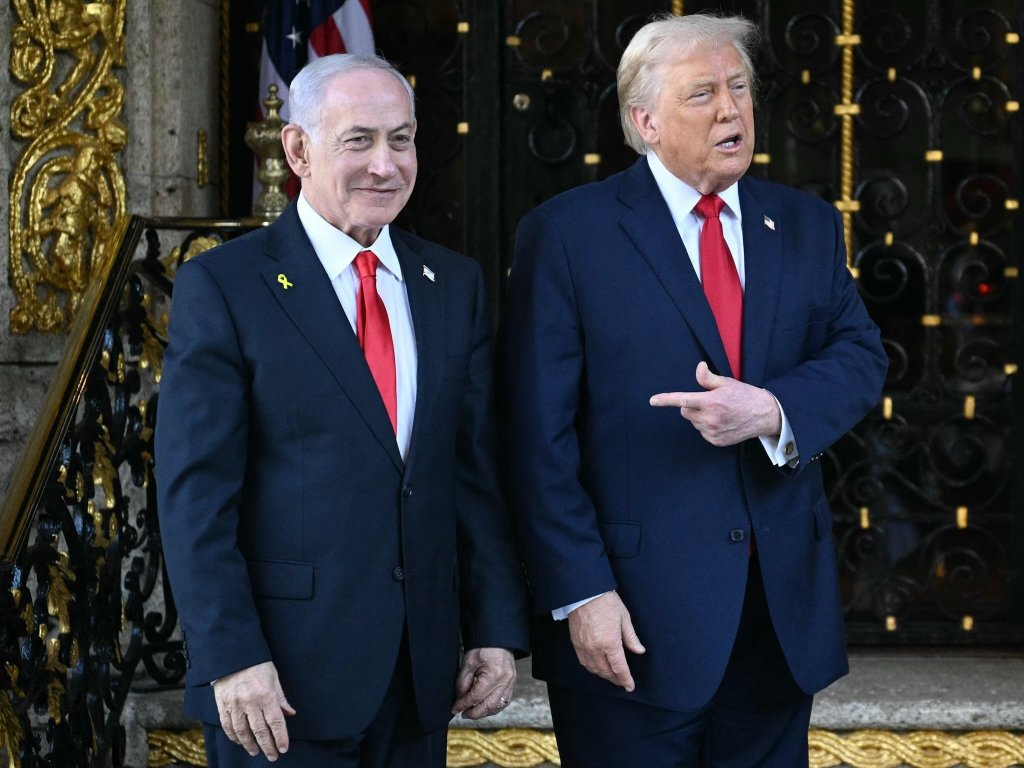
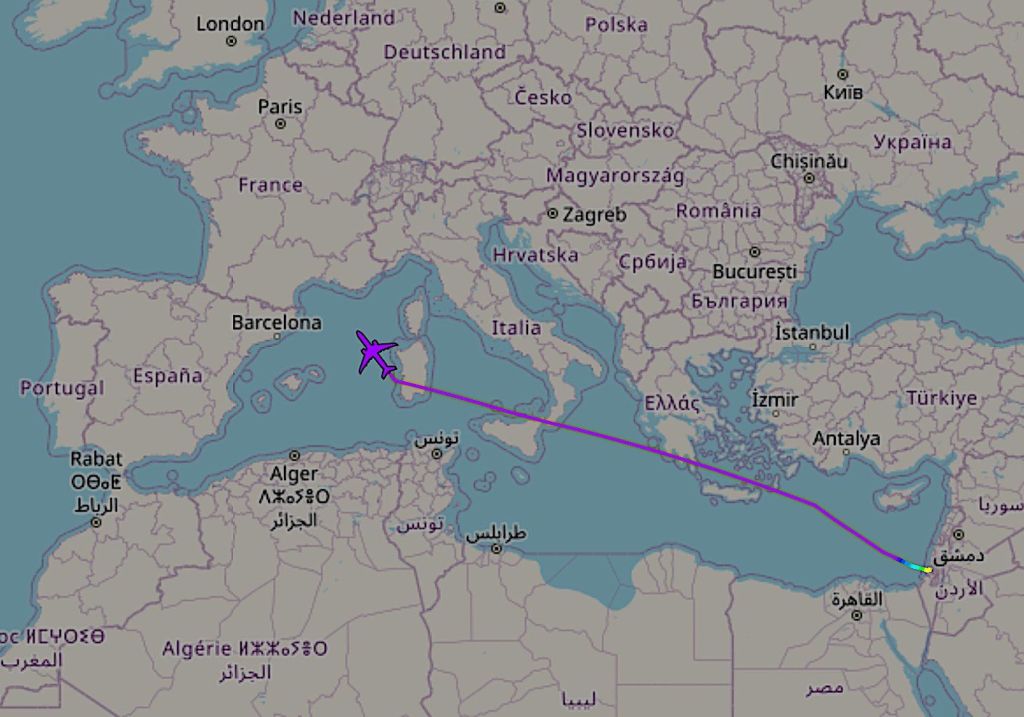
Trump, who continues to refuse the release of the Epstein files, welcomed Netanyahu, a leader travelling under formal pursuit by the International Criminal Court prosecutor, with arrest warrants sought against him for alleged war crimes. His aircraft transited the airspace of several states that are parties to the Court’s statute, none of which acted to detain or restrict his movement despite their treaty obligations. The episode illustrates the selective enforcement that now defines the international legal system, where jurisdiction operates unevenly and compliance follows power rather than law. International law functions in practice as an instrument of imperialism applied against weaker states while being suspended for allied governments when enforcement carries political cost.
Israel’s leadership has returned to familiar ground by presenting Iran as an urgent military problem requiring force rather than containment or negotiation. Public statements, military briefings, and carefully timed media leaks indicate preparation for renewed confrontation, framed now less around uranium enrichment and more around ballistic missile capacity. The shift in emphasis matters because it reveals how threat narratives are adapted when earlier claims lose credibility, while the strategic objective of confrontation remains unchanged.
For more than two decades, Israeli governments argued that Iran’s nuclear programme represented an imminent existential danger. Those claims persisted despite repeated assessments by the International Atomic Energy Agency confirming the absence of an active Iranian nuclear weapons programme and despite United States intelligence estimates reaching similar conclusions. Mohamed ElBaradei, former IAEA Director General, repeatedly stated during his tenure that inspections revealed no evidence of weaponisation, a position later echoed by successive IAEA reporting cycles. When joint United States–Israeli strikes on Iranian nuclear facilities were carried out in June, they occurred against this backdrop of unresolved contradiction between intelligence assessments and political rhetoric.
Following those strikes, Israeli officials rapidly reframed the threat environment. Ballistic missiles replaced enriched uranium as the central danger, described by senior military figures as equivalent in effect to nuclear weapons when used in large salvos. Israeli media briefings began to emphasise missile numbers, range, and production capacity, portraying Iranian industrial recovery as rapid and uncontrolled. The rhetorical move served a practical purpose, since missiles fall outside the Nuclear Non-Proliferation Treaty framework and therefore evade the inspection regime that constrained earlier nuclear claims.
Seyed Mohammad Marandi, professor at the University of Tehran and former adviser to Iran’s nuclear negotiating team, has argued that this narrative substitution reflects a strategic failure rather than a discovery of new facts. According to Marandi, missile development has been openly acknowledged by Tehran for decades, with Iranian officials consistently describing it as defensive and non-negotiable, particularly after experiences of missile bombardment during the Iran-Iraq war. Missile capability emerged precisely because Iran lacked air power and external security guarantees, a context frequently omitted in Israeli and Western presentations.
Iranian officials have maintained this position publicly and consistently. Statements from the Iranian Foreign Ministry affirm continued adherence to the Nuclear Non-Proliferation Treaty and ongoing cooperation with the IAEA, while explicitly excluding missile forces from negotiation. Major General Amir Hatami, Commander-in-Chief of the Iranian Army, has emphasised preparedness for conventional and asymmetric conflict, framing missile forces as deterrent instruments rather than tools for first use. These statements align with Iran’s documented military doctrine, which prioritises deterrence through denial rather than territorial conquest, as analysed by the Stockholm International Peace Research Institute in multiple assessments of Iranian force posture.
Israeli threat construction increasingly relies on worst-case extrapolation rather than demonstrated intent. Claims that missile salvos could cause damage comparable to nuclear weapons depend on assumptions about numbers, accuracy, and defence saturation that remain contested even within Israeli security circles. Theodore Postol of the Massachusetts Institute of Technology has long challenged optimistic claims regarding missile defence reliability, arguing that interception systems perform poorly under mass launch conditions, while also cautioning against exaggerated claims about offensive certainty. His work suggests that both sides in missile debates often overstate capabilities to support political objectives.
The timing of renewed escalation rhetoric coincides with political pressure on Israel’s leadership. Prime Minister Benjamin Netanyahu faces persistent domestic instability, international legal exposure, and widening diplomatic isolation following the Gaza war. Several analysts, including Israeli historian Ilan Pappé, have argued that external confrontation functions as a mechanism of political survival within Israel’s governing system, allowing emergency powers, coalition cohesion, and deferral of accountability. Crisis politics therefore becomes structural rather than reactive.
Relations with Washington complicate this picture. Reports indicate reluctance within the United States administration to authorise further strikes, reflecting concern over regional escalation and the erosion of diplomatic credibility. John Mearsheimer, writing from a realist perspective at the University of Chicago, has argued that United States alignment with Israeli regional strategy increasingly contradicts American strategic interests by entrenching perpetual conflict without achievable political outcomes. His analysis highlights divergence between alliance loyalty and rational cost assessment.
Despite these tensions, Israeli pressure on Washington continues through intelligence briefings and public signalling. Requests for approval or participation in strikes against missile facilities follow a familiar pattern established during earlier nuclear crises. When negotiations appear likely to constrain unilateral action, Israeli leaders frame diplomatic outcomes as insufficient and shift the object of concern. The result remains escalation justified as prevention.
Iran’s response has combined military signalling with information warfare. Missile exercises conducted by the Islamic Revolutionary Guard Corps triggered immediate alarm in Tel Aviv, despite United States intelligence reportedly indicating no preparation for pre-emptive attack. Such exercises mirror Israeli military drills regularly conducted in view of neighbouring states, yet receive asymmetrical interpretation. Analysts such as Gareth Porter have documented how selective interpretation of military activity reinforces threat narratives while disregarding contextual symmetry.
The reported cyber infiltration of senior Israeli officials’ communications adds another layer to the confrontation. Whether fully substantiated or partly psychological, the episode illustrates Iran’s preference for indirect pressure and deterrence signalling rather than immediate kinetic escalation. Intelligence scholars including Marc Polymeropoulos, former CIA officer turned critic of covert escalation cycles, have warned that such grey-zone actions often precede miscalculation when political leaders treat signalling as provocation rather than communication.
Ballistic missile framing also alters the legal and diplomatic landscape. Nuclear accusations invoked treaty violations and international oversight, creating at least nominal space for multilateral diplomacy. Missile accusations lack equivalent juridical structure, allowing unilateral force to be presented as necessity rather than choice. International law scholars such as Mary Ellen O’Connell have argued that this shift weakens already fragile norms governing the use of force, particularly when preventive war is normalised through rhetorical inflation.
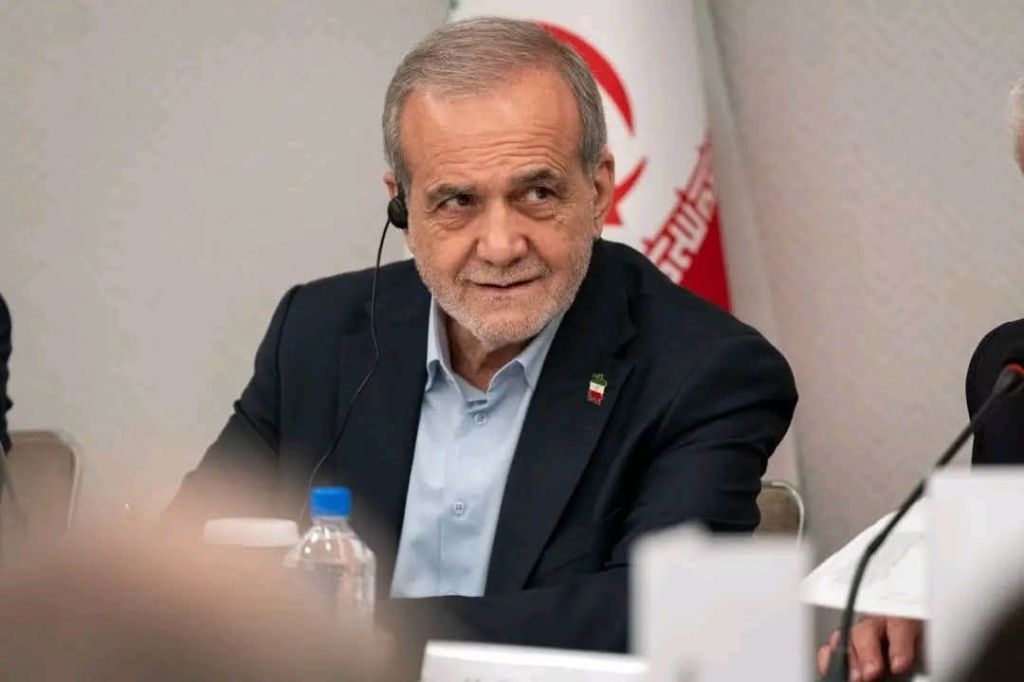
Iranian leadership rhetoric reflects awareness of this dynamic. Statements by President Masoud Pezeshkian describe the current confrontation as broader than previous wars, encompassing sanctions, information warfare, and internal destabilisation efforts. Such framing aligns with scholarship on hybrid warfare, including work by Andrew Korybko, who analyses how economic pressure and narrative construction function alongside military threats to induce political compliance.
Regional consequences of escalation remain insufficiently addressed in Israeli discourse. Hezbollah’s preparedness in Lebanon, ongoing instability in Iraq and Syria, and vulnerability of Gulf infrastructure create a conflict environment where controlled escalation appears implausible. Former United Nations official Lakhdar Brahimi has repeatedly warned that Middle Eastern wars rarely remain localised, given dense alliance networks and unresolved grievances.
The portrayal of ballistic missiles as existential threats equal to nuclear weapons obscures crucial differences. Nuclear weapons alter strategic balance through singular destructive capacity and political taboo, while missiles remain delivery systems whose impact depends on payload and context. Conflating the two simplifies public messaging while avoiding debate over proportionality and deterrence stability. Strategic studies literature, including work by Lawrence Freedman, stresses that such conflation encourages pre-emption by exaggerating immediacy.
Israel’s military superiority remains substantial, yet superiority does not guarantee strategic success. Past conflicts in Gaza and Lebanon demonstrate limits of force when political objectives lack clarity. Independent Israeli analysts, including former intelligence officer Yossi Melman, have argued that repeated reliance on military solutions reflects institutional inertia rather than adaptive strategy. Missiles therefore become symbols within a narrative of perpetual emergency rather than isolated technical concerns.
Iran’s insistence on missile sovereignty also reflects lessons drawn from regional history. States that surrendered deterrent capabilities under external pressure, such as Libya, subsequently lost regime security. Iranian policymakers openly reference this precedent, framing missile forces as insurance against external intervention. This perspective finds support among realist scholars who view deterrence as stabilising when mutual vulnerability exists.
Continued escalation rhetoric risks entrenching a cycle where diplomacy becomes performative and war planning becomes routine. Each round of threat construction narrows political imagination while conditioning domestic audiences for violence presented as unavoidable. The repetition of imminent danger narratives every few months undermines their credibility while simultaneously increasing the risk that misinterpretation triggers actual conflict.
Historical patterns suggest that states governing through permanent crisis eventually confront crises beyond their control. Israel’s current approach treats escalation as manageable and reversible, despite mounting evidence of regional volatility and declining diplomatic cover. Iran, facing sustained pressure, signals resilience rather than retreat, reinforcing deterrence logic on both sides.
Strategic wisdom requires recognising when narrative substitution masks strategic stagnation. Shifting from nuclear alarms to missile alarms avoids reckoning with failed coercion while preserving the posture of urgency. Such manoeuvres may sustain short-term political objectives, yet they corrode long-term security by normalising preventive war as governance.
The present moment demands sober assessment rather than recycled scripts. Missiles did not suddenly appear, Iranian doctrine did not abruptly change, and regional hostility did not emerge in a vacuum. Continuation of escalation through narrative adaptation risks transforming managed hostility into uncontrolled war, with consequences extending far beyond the architects of confrontation.
Authored By: Global Geopolitics
If you believe journalism should serve the public, not the powerful, and you’re in a position to help, becoming a PAID SUBSCRIBER truly makes a difference. Alternatively you can support by way of a cup of coffee:
buymeacoffee.com/ggtv


Leave a comment