
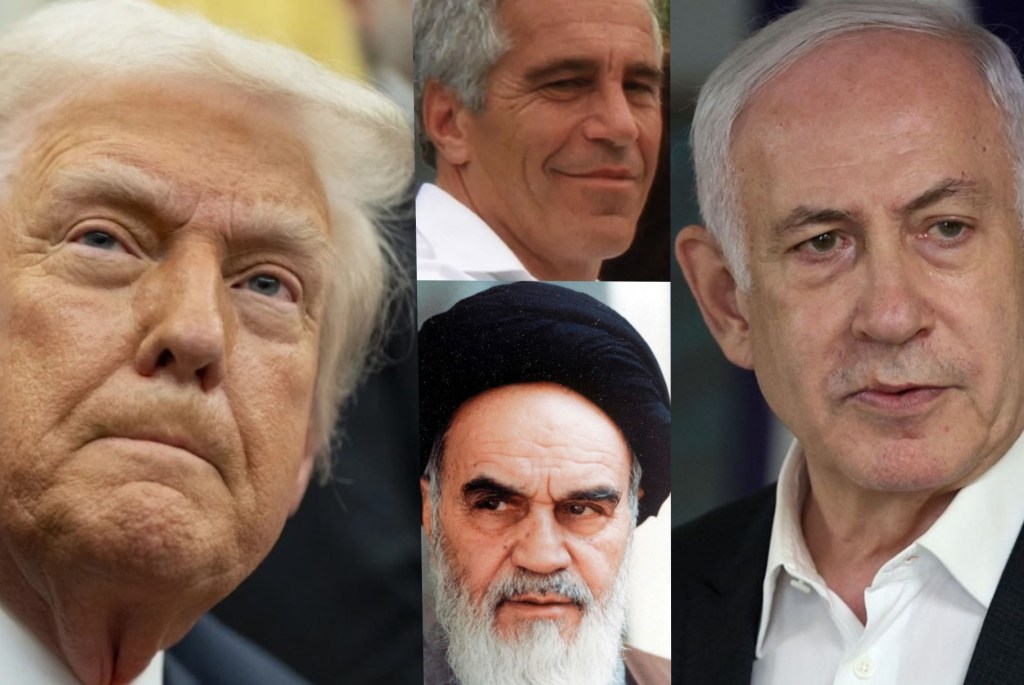
Netanyahu’s Washington Visits, Maximalist Demands, Domestic Vulnerabilities, Strategic Deadlock, and the Risk of Miscalculation on Iran
Benjamin Netanyahu’s seventh visit to the White House within a twelve-month period takes place amid a dense convergence of military escalation, financial instability, and domestic political exposure within both the United States and Israel. Netanyahu arrives in Washington on Wednesday, with the visit framed publicly around Iran while unfolding alongside renewed pressure generated by the Epstein files and their implications for intelligence networks and elite leverage. The frequency alone places the visit outside normal alliance management patterns and signals unresolved strategic instability rather than diplomatic routine. Behind the public framing, Israel is pressing the United States to demand that Iran halt all nuclear programs, reduce its ballistic missile capability to 300 km, and cease funding regional proxies, demands that lie outside the scope of the negotiations Iran has agreed to, which focus solely on civilian nuclear enrichment.
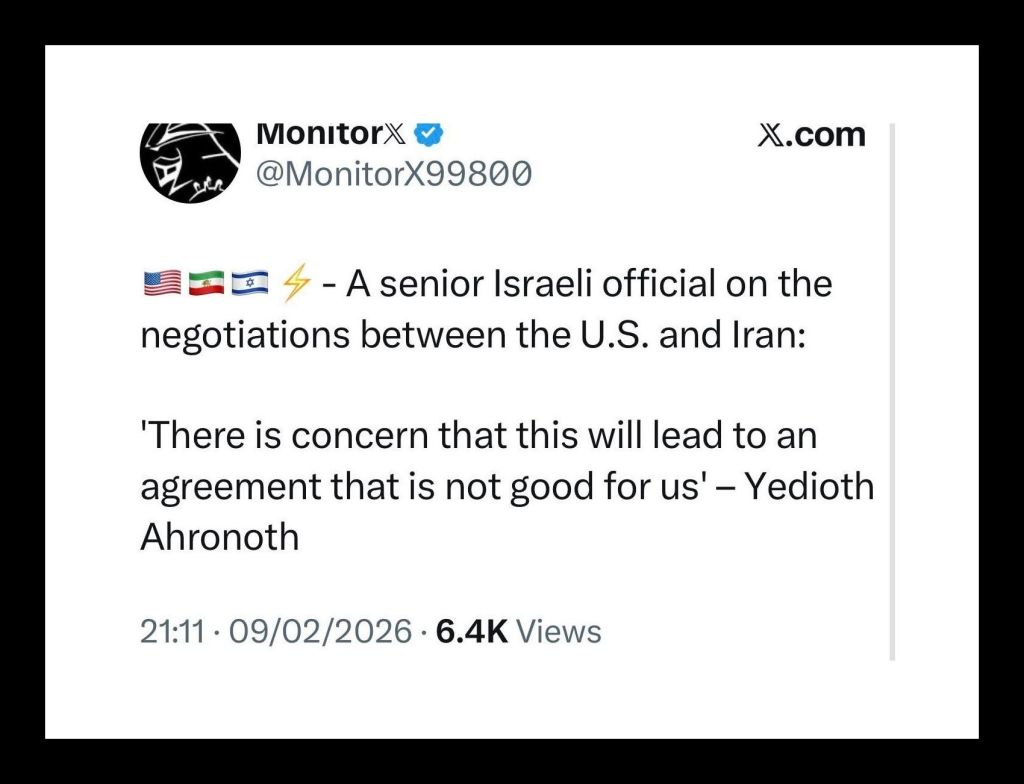
Put plainly, this leaves the United States boxed in. Israel is pushing for a confrontation with Iran, but the dispute is no longer really about nuclear weapons, it is about missiles, because Iranian missiles have already demonstrated their ability to cause serious damage. At the same time, any escalation carries major political and economic risks for Washington, where public appetite for another Middle Eastern war is low and domestic pressures are rising. The result is a collision between Israeli demands, Iranian refusal to disarm, and U.S. political limits.
The cumulative pattern of seven visits within a single year reflects a failure to lock in durable outcomes during previous meetings. Earlier visits centred on Gaza operational latitude, arms replenishment schedules, and rhetorical alignment against Iran, yet none produced a stable deterrence equilibrium or reduced escalation pressure across regional theatres. Game theory identifies repeated engagements of this kind as evidence that prior bargaining rounds failed to establish credible commitments, forcing actors to return repeatedly to reset expectations. Thomas Schelling described such repetition as a marker of deteriorating bargaining power rather than strategic strength, particularly when one party faces mounting external and internal constraints.
Comparison across the visits reveals a narrowing agenda and declining marginal returns. Initial meetings sought broad strategic alignment and political cover, while later encounters increasingly focused on crisis containment and damage control. The present visit differs from earlier ones by occurring under heightened legal, financial, and informational stress within the United States political system. Glenn Diesen has observed that frequent leader-level diplomacy often correlates with alliance asymmetry under strain, where institutional trust erodes and personal access becomes a substitute for formal guarantees. The seventh visit fits that pattern, suggesting diminishing confidence that existing understandings will hold without constant reinforcement.
The negotiations underscore a fundamental deadlock. Iran maintains that its nuclear and missile programs are for civilian defense purposes, and that proxy support is a sovereign matter; it refuses to compromise on either. Israeli demands, by contrast, are maximalist, seeking full cessation of nuclear activity, extreme limits on defensive capabilities, and an end to all proxy funding, despite Israel itself possessing nuclear weapons and an unrestricted defense posture. Iran questions why it should weaken its own defenses while Israel remains unconstrained. As a result, the talks resemble non-negotiations: both sides are effectively buying time while preparing for potential kinetic conflict, with no realistic middle ground in sight.
Unlike earlier visits, this one unfolds alongside reopened scrutiny of the Epstein network files, which reintroduce unresolved questions surrounding intelligence operations, elite compromise mechanisms, and political leverage. Investigative researchers such as Whitney Webb have documented how such networks historically intersected with intelligence services and policy influence structures. The renewed disclosures increase vulnerability among senior political figures and alter bargaining incentives during high-level diplomatic engagements. Political economy literature recognises that elite exposure risk often accelerates external policy commitments as a hedge against domestic instability.
Financial conditions further distinguish the current visit from prior ones. Earlier meetings occurred amid relative market resilience, while this visit takes place under elevated interest rates, tightening credit conditions, and persistent inflationary pressure. Defence financing discussions now carry greater fiscal weight, particularly as United States debt servicing costs approach levels flagged by the Congressional Budget Office as structurally destabilising. Michael Hudson’s analysis of financialised militarism remains relevant, as security commitments increasingly align with debt expansion rather than long-term strategic resolution. His analysis of financialised militarism describes a system where military policy sustains financial structure rather than resolves strategic problems. Modern conflicts persist through debt-funded defence spending that continues regardless of political or military outcomes. Public borrowing finances procurement cycles that generate stable returns for financial and defence interests over long periods. Security commitments discussed at senior level bind governments to future spending without clear end points. Weapons replenishment, missile systems, and deployments require continuous funding even when deterrence gains remain uncertain. Resolution would disrupt budget structures and revenue flows that depend on continuous military spending.
Domestic political pressures on Netanyahu have intensified since earlier visits, with legal proceedings ongoing and coalition stability increasingly dependent on external threat framing. Earlier visits leveraged crisis narratives to consolidate political support, while the present visit reflects a narrowing margin for manoeuvre as public dissent and institutional scrutiny expand. Political science research consistently shows that external escalation incentives increase as domestic legitimacy declines, introducing volatility into strategic decision-making.
United States domestic politics now impose sharper constraints than during Netanyahu’s initial visits of the year. Electoral polarisation and declining public tolerance for Middle Eastern military commitments limit executive flexibility. Polling from the Chicago Council on Global Affairs continues to show resistance to new regional wars, constraining escalation pathways that earlier visits implicitly assumed. Graham Allison’s bureaucratic politics model suggests that repeated leader-centric diplomacy under such conditions heightens miscalculation risk as institutional counterweights weaken.
Strategic messaging during this visit reflects brinkmanship rather than stable deterrence. Statements emphasising narrowing timelines and irreversible decisions differ from earlier language that left room for ambiguity and delay. Schelling’s distinction between deterrence and brinkmanship clarifies the shift, with the latter deliberately increasing shared risk to force concessions. Iranian responses remain calibrated and ambiguous, consistent with analyses by Mohammad Marandi and others who describe Iran’s strategy as endurance-based rather than reactive.
Media behaviour surrounding the visit mirrors patterns observed during previous engagements, though with greater informational strain. Coverage prioritises official narratives while marginalising investigative threads connected to Epstein disclosures, reflecting agenda-setting dynamics long identified by Herman and Chomsky. The persistence of such filtering becomes harder to sustain as disclosures accumulate and cross institutional boundaries.
Viewed through classical strategic thought, the seventh visit reflects an attempt to preserve initiative rather than secure resolution. Sun Tzu warned against prolonged campaigns that drain resources without decisive outcomes, a pattern increasingly evident across the sequence of visits. The repetition itself signals strategic exhaustion rather than momentum, with each meeting addressing symptoms rather than underlying structural drivers.
Taken together, Netanyahu’s seventh White House visit within twelve months signals systemic instability, not diplomatic resolution. Relative to his previous visits, this seventh trip shows diminishing returns, a more tightly focused agenda, and an increase in unintended diplomatic and political repercussions. Iran serves as the visible axis, while economic instability, elite reputational risks stemming from Epstein-related revelations, and declining public trust in institutions create the underlying pressures shaping the political landscape. The maximalist Israeli demands and Iran’s firm stance on sovereignty further crystallize the impasse: the negotiations are unlikely to produce compromise, and the risk of miscalculation now exceeds the capacity for control. Game theory, chaos theory, and classical strategy converge on the conclusion that both sides are operating in a high-stakes environment where diplomatic gestures mask the underlying potential for conflict.
Authored By: Global GeoPolitics
Thank you for visiting. This is a reader-supported publication. You can support by way of a cup of coffee:
https://buymeacoffee.com/ggtv or
References
- Allison, G. (1971). Essence of Decision: Explaining the Cuban Missile Crisis. Boston: Little, Brown.
- Diesen, G. (2019). Russia and the United States: Asymmetric Alliance Dynamics. London: Routledge.
- Hudson, M. (2017). Killing the Host: How Financial Parasites and Debt Destroy the Global Economy. ISLET Publishing.
- Marandi, M. (2020). Iranian Foreign Policy: Strategic Endurance and Regional Influence. Tehran: Institute for Political Studies.
- Schelling, T. C. (1966). Arms and Influence. New Haven: Yale University Press.
- Webb, W. (2021). One Nation Under Blackmail: The Epstein Network and Elite Compromise. Independent Research Journal.
- Herman, E. S., & Chomsky, N. (1988). Manufacturing Consent: The Political Economy of the Mass Media. New York: Pantheon Books.
- Congressional Budget Office. (2025). Budget and Economic Outlook: Fiscal Trends and Risks. Washington, D.C.: U.S. Government Printing Office.
- Sun Tzu. (2005). The Art of War (translated by S. B. Griffith). Oxford: Oxford University Press.
- Chicago Council on Global Affairs. (2025). American Public Opinion on Foreign Policy and Military Engagement. Chicago: CCGA Research Reports.


Leave a comment