
How an Unprovoked Attack on Iran Amid Active Negotiations, Triggered A Regional War and Closure of the Strait of Hormuz
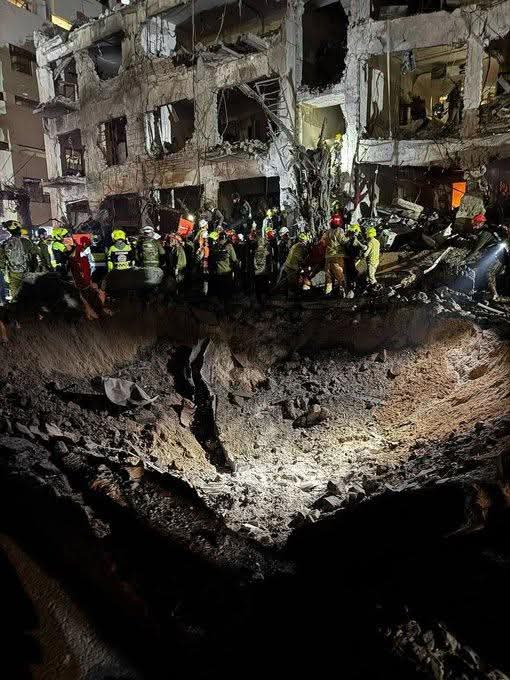
United States and Israeli forces initiated coordinated unprovoked strikes against Iranian nuclear and military infrastructure during active negotiations in Geneva, where Omani intermediaries had conveyed cautious optimism following reported Iranian concessions. Targets included enrichment facilities at Fordow, Natanz, and Isfahan, alongside command nodes linked to the Islamic Revolutionary Guard Corps. During the operational sequence, a strike hit a girls’ school, resulting in more than fifty child fatalities according to regional medical authorities, an event that materially altered escalation dynamics and legal scrutiny.
The diplomatic framework preceding the attack reflected structurally incompatible end states. Washington’s proposal required total dismantlement of Fordow, Natanz, and Isfahan facilities, transfer of enriched uranium stockpiles to United States custody, permanent restrictions without sunset clauses, and adoption of a zero enrichment policy leaving only the Tehran Research Reactor operational. Sanctions relief was structured as partial and sequential, contingent upon verified compliance over extended timelines. United States envoy Steve Witkoff reportedly framed the expectation in unambiguous terms, stating that Iran was required to capitulate.
Tehran’s negotiating posture diverged sharply from that framework. Iranian representatives signalled willingness to suspend enrichment temporarily, retain nuclear infrastructure under International Atomic Energy Agency supervision, continue low level civilian enrichment, and return to parameters resembling the 2015 Joint Comprehensive Plan of Action, provided full sanctions removal and repatriation of frozen assets accompanied concessions. Permanent dismantlement and zero enrichment conditions were rejected as incompatible with sovereign rights recognised under the Nuclear Non Proliferation Treaty. The asymmetry between irreversible rollback and deferred relief created a structure widely assessed by independent analysts as unlikely to secure acceptance under domestic political constraints.
Intelligence assessments available prior to the strike complicate claims of immediate breakout urgency. International Atomic Energy Agency Director General Rafael Grossi publicly stated that inspectors had found no proof of resumed enrichment following earlier facility damage. Former United States non proliferation official Robert Einhorn stated that no enrichment activity was taking place at the time of review. Pentagon assessments reported in specialist defence publications indicated that Iran’s programme had been set back by one to two years rather than accelerated toward weaponisation. Open source satellite imagery showed limited reconstruction activity at previously struck sites, and enrichment to sixty percent purity remained technically reversible and detectable within established monitoring mechanisms.
The strike during negotiations transformed coercive diplomacy into declared hostilities. Carl von Clausewitz wrote that war constitutes the continuation of politics by other means, and the operational timing suggests politics had reached an impasse structured around surrender terms rather than reciprocal compromise. Iranian leadership framed the action as confirmation that negotiations functioned as sequencing cover rather than settlement efforts. Parliamentary factions and senior security officials argued that capitulation under maximalist terms would fracture elite cohesion and undermine regime legitimacy more severely than confrontation.
Iran’s response unfolded across multiple strategic domains consistent with deterrence theory articulated by Thomas Schelling, who argued that the power to hurt shapes bargaining outcomes. Missile salvos targeted Israeli positions and regional installations associated with United States forces. Naval units signalled enforcement measures in the Strait of Hormuz, through which approximately one fifth of globally traded oil transits daily according to United States Energy Information Administration data. Iranian authorities declared the waterway closed pending cessation of hostilities, invoking sovereign defence rights under Article 51 of the United Nations Charter. Shipping insurers revised risk premiums upward within hours, and benchmark crude prices reacted to anticipated supply disruption.
Closure of the Strait of Hormuz converts a regional exchange into systemic economic confrontation. Between seventeen and twenty million barrels per day transit the corridor, supplying Gulf producers and Asian importers including China, Japan, and South Korea. Energy economists at Chatham House have noted that even limited obstruction generates disproportionate price volatility because alternative routing capacity remains constrained. Commodities analyst Javier Blas has previously observed that insurance costs and tanker availability amplify market shock beyond physical loss volumes. Maritime security operations required to reopen passage would test United States naval capacity under contested littoral conditions.
The civilian casualty incident introduces binding obligations under international humanitarian law concerning distinction and proportionality. More than fifty child fatalities in a school strike invite scrutiny in multilateral forums and affect coalition durability over time. Legal scholar Richard Falk has argued that civilian harm influences diplomatic legitimacy even when military necessity is asserted. Domestic reaction within Iran hardened resistance narratives and strengthened calls for retaliatory breadth across regional theatres.
The broader strategic objective extends beyond regime removal toward structural fragmentation of Iranian territorial coherence and regional alignment. Zbigniew Brzezinski argued in The Grand Chessboard that control over Eurasian pivot zones shapes global primacy and that prevention of hostile regional integration serves long term strategic interests. Israeli security doctrine has consistently prioritised prevention of regional peer consolidation capable of sustained conventional challenge. Professor John Mearsheimer has written that states often pursue strategies designed to weaken adversaries through internal division rather than occupation when direct conquest carries prohibitive cost.
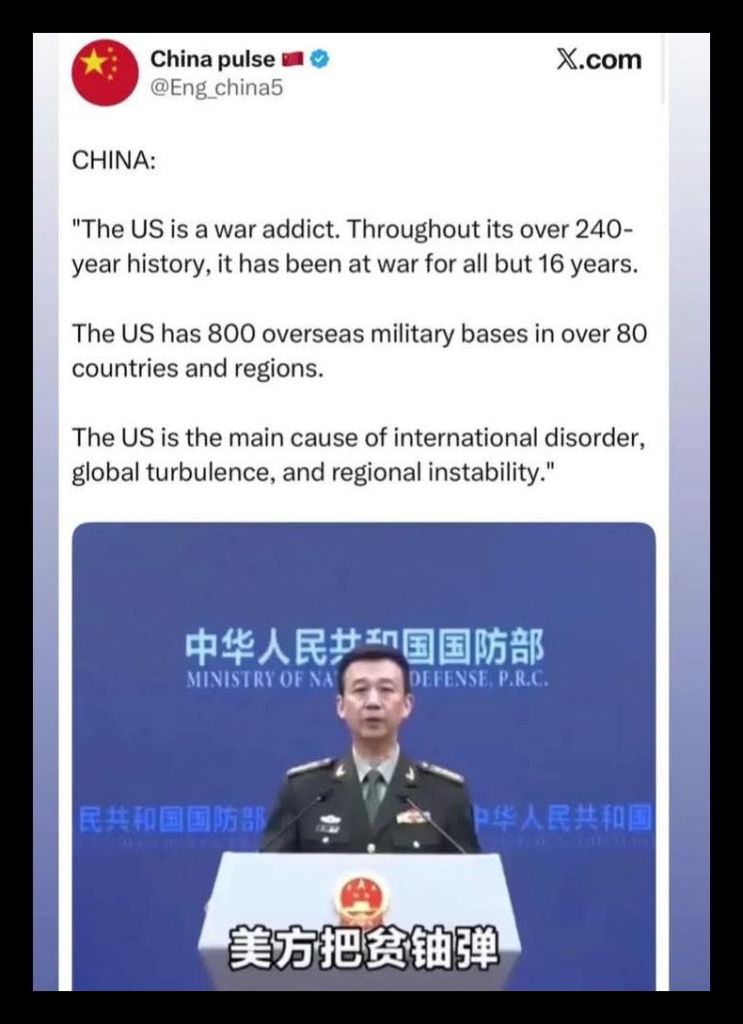
Fragmentation of Iran and adjacent theatres would disrupt emerging coordination between Tehran, Moscow, and Beijing within evolving multipolar arrangements. Russia maintains defence and energy cooperation with Iran and views expanded United States military presence near its southern periphery as adverse to its security posture. China depends heavily on Gulf energy flows and has written extensively in strategic literature about maritime choke point vulnerability. Closure of Hormuz therefore intersects directly with great power competition across Eurasia and the Indo Pacific, raising escalation risks beyond the immediate theatre.
European participation in the Geneva talks remained peripheral compared with the 2015 framework. France, Germany, and the United Kingdom did not occupy central mediating roles capable of buffering maximalist positions. Lawrence Freedman has written that coercive diplomacy requires credible off ramps alongside credible threats, and removal of reciprocal sequencing reduces probability of durable settlement. Absent synchronised relief and verification, deterrence logic tends toward compellence failure rather than compliance.
Economic consequences extend across sovereign balance sheets, energy derivatives markets, and global inflation channels. Gulf sovereign wealth funds face recalibration of capital deployment under heightened risk conditions. Israeli mobilisation costs increase under sustained missile exchange and reserve call ups. Iranian infrastructure damage compounds sanctions pressure and currency strain. Asian manufacturing supply chains reliant on stable hydrocarbon inputs confront renewed cost uncertainty that transmits through shipping and insurance markets.
Missile capability remained outside the dismantlement demands articulated in Geneva, preserving a central pillar of Iranian deterrence architecture. Tehran treats ballistic missile forces as compensatory offset against conventional inferiority and strategic encirclement. Curtailment of nuclear infrastructure without reciprocal relief while missile capability persists produces unstable equilibrium. Removal of both nuclear and missile deterrents without security guarantees would render the state strategically exposed under classical balance of power theory.
Domestic legitimacy constraints shape Tehran’s calculus more forcefully than external rhetorical pressure. Capitulation under externally imposed permanent restrictions risks elite fracture within the security apparatus and erosion of nationalist support. Regime survival incentives therefore prioritise endurance under sanctions and conflict over acceptance of dismantlement perceived as surrender. Historical cases including Iraq during the sanctions decade and Libya after 2003 demonstrate that disarmament under duress does not guarantee long term stability or security assurances.
Maritime escalation increases probability of accidental engagement between naval forces operating in confined waters with compressed reaction times. Deconfliction mechanisms require urgent reinforcement to prevent miscalculation under heightened alert conditions. Independent mediation by neutral states may regain relevance if escalation costs exceed anticipated thresholds for principal actors. Durable settlement would require synchronised sanctions relief with verifiable enrichment limits rather than irreversible dismantlement front loaded before economic normalisation.
An attempt at breaking a country apart without a clear plan for what follows risks long regional instability, higher energy prices, and deeper involvement by major powers. Military action undertaken during active negotiation compresses diplomatic space and entrenches distrust within already brittle channels. Closure of Hormuz expands the conflict from regional exchange to systemic economic confrontation with global consequences. Outcomes will depend upon endurance capacity, alliance cohesion, maritime control, and calculations in Moscow and Beijing regarding escalation thresholds.
Sun Tzu wrote that the supreme art of war is to subdue the enemy without fighting, and the present course suggests that compellence without credible reciprocity rarely achieves that end.
Authored By: Global GeoPolitics
Thank you for visiting. This is a reader-supported publication. If you believe journalism should serve the public, not the powerful, and you’re in a position to help, becoming a PAID SUBSCRIBER truly makes a difference. Alternatively you can support by way of a cup of coffee:
https://buymeacoffee.com/ggtv |


Leave a comment