

Permanent Russian naval presence in the Channel and explicit threats of reciprocal merchant-ship seizures mark a doctrinal shift from protective escort to contested enforcement of maritime trade routes
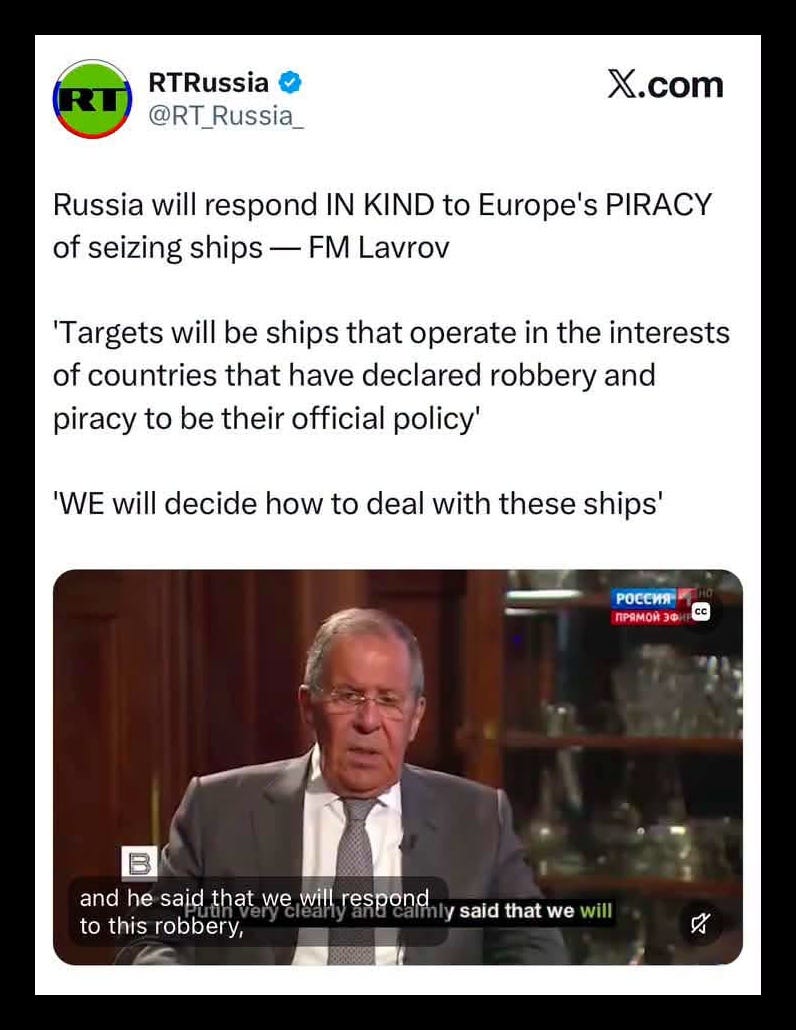
Russian President Vladimir Putin has warned that Moscow will respond “in kind” to European seizures of vessels linked to its oil trade, stating that any such actions constitute piracy and that retaliation need not be confined to the waters where Russian ships are intercepted. The comments, delivered on 12 August 2026 while overseeing Pacific Fleet exercises near Sakhalin, coincide with the sustained presence of a Russian frigate in the English Channel and follow Britain’s high-profile boarding of a sanctioned tanker earlier in the summer.
The frigate *Neustrashimy* has remained on station off Britain’s southern and eastern coasts since relieving the Admiral Grigorovich in mid-July, escorting tankers associated with what Western governments term Russia’s “shadow fleet.” These vessels, typically registered under flags of convenience in jurisdictions such as Panama, Liberia or the Marshall Islands, transport Russian oil outside conventional insurance and regulatory frameworks dominated by London. The Telegraph noted that while the Neustrashimy itself lacks vertical launch tubes for land-attack cruise missiles, successor vessels of the Grigorovich, Gepard or Gorshkov classes would place the whole of Britain within range from Channel waters. The ship has conducted live gunnery exercises in busy shipping lanes and embarked a Ka-27 helicopter, expanding its ability to monitor multiple tankers simultaneously.
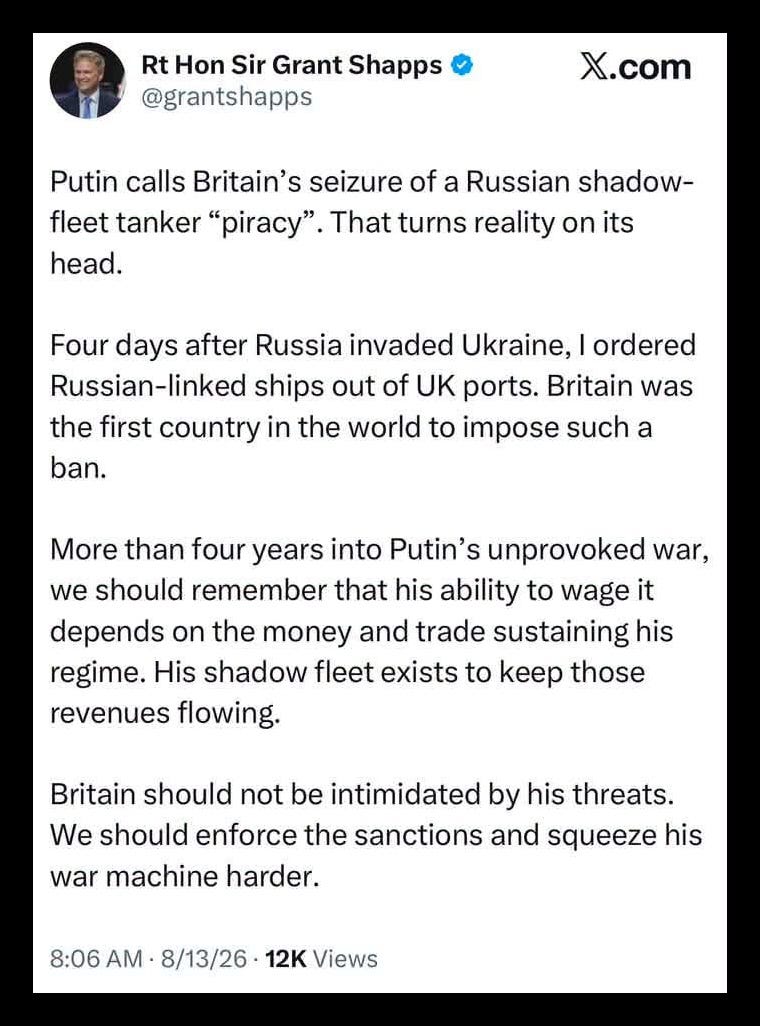
Britain’s seizure of the tanker Smyrtos in June, involving Royal Marine Commandos and National Crime Agency officers in international waters, marked the first direct military interdiction of its kind by UK forces. Former defence secretary Grant Shapps rejected Putin’s characterisation of the action as piracy, recalling that Britain had been the first country to ban Russian-linked ships from its ports days after the 2022 invasion of Ukraine. He argued that the shadow fleet exists precisely to sustain revenues funding the war and that enforcement must intensify. UK officials maintain the boarding complied fully with international law and targeted activity that fuels Russia’s military effort.
Dmitry Medvedev, deputy chairman of Russia’s Security Council, went further, asserting that the majority of Western European merchant vessels also sail under flags of convenience. On that basis, he claimed Russia possesses the reciprocal right to target any merchant ship belonging to “enemy countries” in its own or neutral waters if there are grounds to suspect the cargo serves hostile interests. The commander of the Pacific Fleet, Admiral Viktor Liina, reported to Putin that his forces are prepared to inspect and detain vessels of unfriendly states and their shadow fleets, having analysed traffic patterns in the Asia-Pacific region.
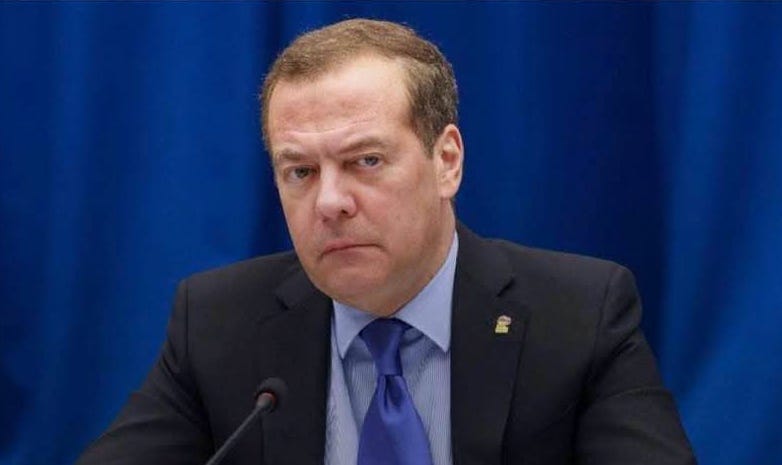
(Dmitry Medvedev)
The episode marks a noticeable hardening of Russian maritime doctrine. For much of the conflict, Moscow relied primarily on naval escorts to protect its oil trade and on diplomatic protests against Western sanctions enforcement. The shift toward explicit threats of reciprocal seizure and potential attack on merchant shipping reflects several converging pressures. Western interdictions and port bans have begun to impose tangible costs on the shadow fleet, while the permanent stationing of a warship in the Channel demonstrates both capability and political willingness to operate in high-traffic European waters. The language of reciprocity under the United Nations Convention on the Law of the Sea, combined with the assertion that Western flags of convenience constitute their own shadow fleet, seeks to reframe enforcement actions as lawless and thereby legitimise symmetrical responses. Expansion of potential operations beyond the Black Sea, referenced by both Medvedev and the Pacific Fleet commander, indicates a deliberate widening of the geographic scope of hybrid naval competition.
Consequences are likely to unfold across several domains. Global shipping insurers and operators face heightened risk premiums and route uncertainty if reciprocal seizures or attacks materialise, particularly in already contested areas such as the Mediterranean, Baltic approaches or Asia-Pacific sea lanes. European navies, already stretched by commitments to Ukraine support and domestic maritime security, must now allocate additional resources to shadow Russian vessels and protect their own commercial traffic.
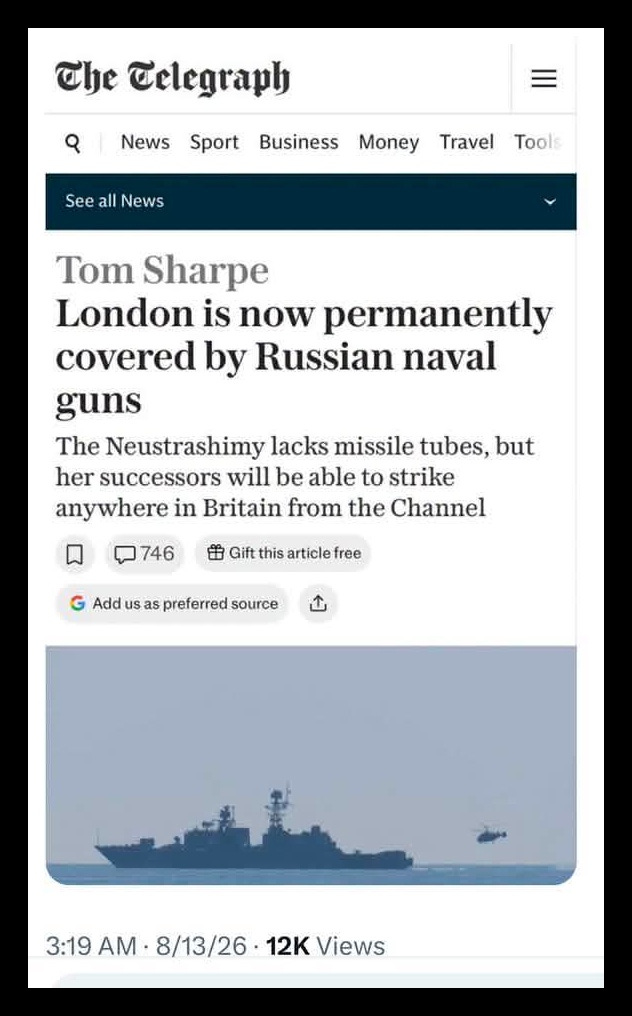
The presence of a Russian warship capable of hosting helicopters and, in successor classes, land-attack missiles within easy range of British territory underscores the limited residual capacity of the Royal Navy’s surface fleet and the vulnerability of critical infrastructure. More broadly, the normalisation of merchant shipping as a legitimate target in great-power confrontation erodes the post-1945 distinction between military and commercial vessels, accelerating the militarisation of global trade routes. Whether the threats remain rhetorical or translate into concrete incidents will depend on the intensity of further European interdictions and Moscow’s assessment of the costs of escalation. For the present, the Channel has become a permanent stage for this contest, and the rules governing merchant navigation are under open challenge.
Authored By: Global GeoPolitics
If you prefer to make a one time donation in support of my work, you can do so by clicking any link below:
https://donate.stripe.com/7sY8wPfvi864don0k3awo07 |
https://buymeacoffee.com/ggtv |
https://ko-fi.com/globalgeopolitics |
Bitcoin: 3NiK8BoRZnkwJSHZSekuXKFizGPopkE7ns


Leave a comment