
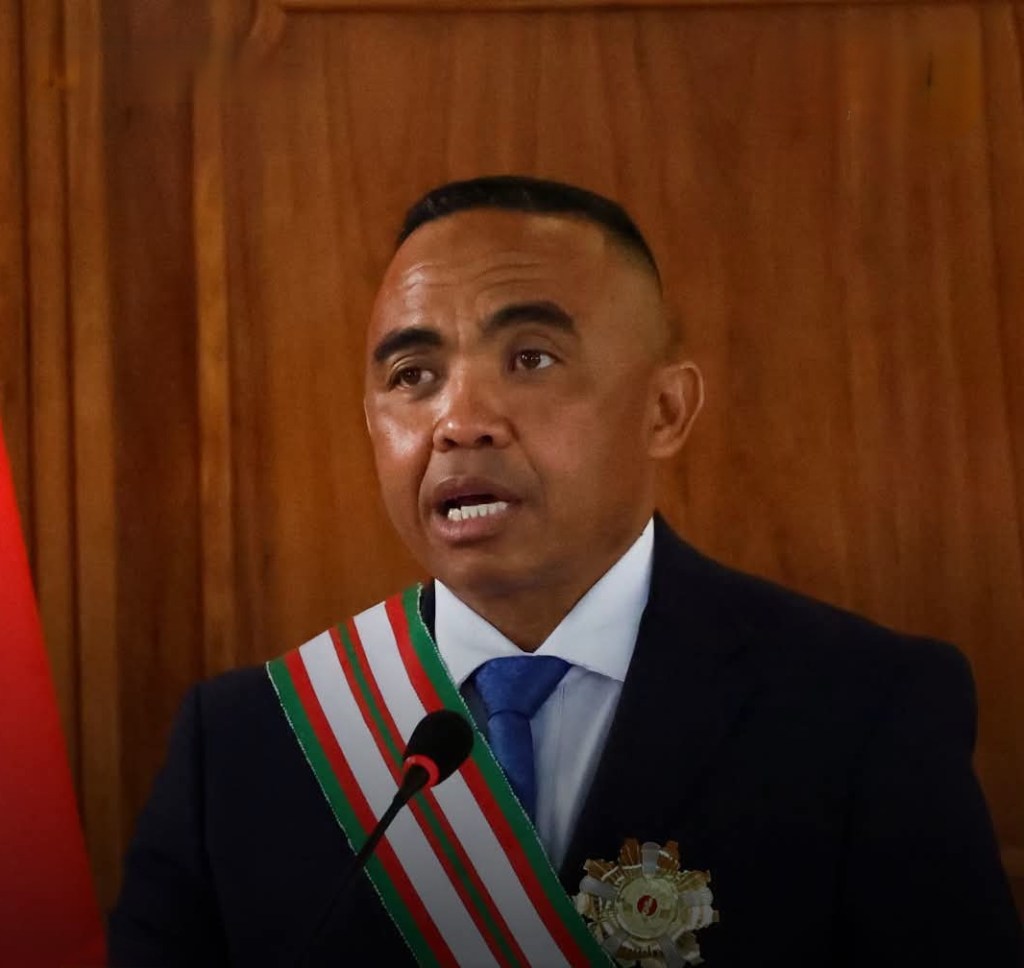
President Michael Randrianirina’s reported directive seeks to hold the political elite accountable for the state of the country’s education system, raising questions about equality, public investment and the limits of political coercion.
General Article | October 2026
Madagascar’s President, Colonel Michael Randrianirina, has reportedly issued a directive prohibiting ministers and government officials from sending their children abroad for education.
The principle behind the reported measure is straightforward: those entrusted with governing the country should have a direct stake in the institutions they administer. If public officials believe that foreign schools offer their children a better education, they must confront the reasons why Madagascar’s own schools are unable to inspire the same confidence. A government cannot credibly demand public trust in its education system while its senior officials appear unwilling to entrust that system with the education of their own children.
The question is one of equality, but also of political accountability. When the children of ministers attend schools in Paris or elsewhere in Europe, while the children of ordinary citizens study in overcrowded classrooms with inadequate facilities, the difference reflects more than a disparity in family income. It reveals a political class with access to alternatives that are unavailable to the majority. Those who can withdraw their families from failing public institutions have less personal incentive to improve them. The result is a system in which the privileged can escape the consequences of poor government, while the wider population must endure them.
Randrianirina came to power in October 2025 following protests led largely by young people that brought down the previous government. His reported restrictions on officials holding dual citizenship or foreign passports, together with the education directive, appear intended to address public anger towards a political establishment widely perceived as detached from the conditions in which ordinary Malagasy people live. The message is that public office should entail obligations, not merely privileges, and that those who exercise power must share some of the risks and consequences of their own decisions.
The controversy surrounding former president Andry Rajoelina provides a further dimension to this argument. Reports that he acquired French citizenship have fuelled criticism of the relationship between political power, foreign connections and personal advantage. Where national leaders maintain privileged access to another country, whether through citizenship, education or financial arrangements, questions naturally arise about their long-term commitment to the institutions and interests of their own country. Such circumstances do not, by themselves, prove disloyalty, but they can deepen public suspicion when domestic services remain inadequate.
Madagascar faces substantial educational and economic challenges. Its public institutions require sustained investment, competent administration, reliable funding and a serious commitment to improving the quality of teaching. These are not problems that can be resolved by presidential declarations alone. They demand practical measures to improve school buildings, train and retain teachers, provide learning materials, strengthen universities and ensure that public money reaches the institutions for which it is intended.
There is, nevertheless, a distinction between compelling political leaders to use domestic services and making those services good enough to command public confidence. A prohibition on foreign education may place pressure on officials to improve the national system, but it does not guarantee that they will do so. Ministers could comply with the restriction while sending their children to the best private schools available within Madagascar, leaving the circumstances of ordinary pupils largely unchanged. Alternatively, a poorly designed prohibition could encourage concealment, the use of relatives or intermediaries, or other arrangements that preserve the same advantages under a different name.
The more fundamental issue is whether the government can establish an education system in which access to a good school depends less on wealth and political connections. That requires transparent education budgets, enforceable standards, effective oversight and public reporting of measurable improvements. Without such measures, a ban risks becoming a symbol of political resolve rather than an instrument of institutional reform.
A realist and material analysis leads to a more measured conclusion. Political leaders are unlikely to surrender advantages voluntarily when those advantages protect their families from the consequences of weak public services. A restriction on foreign education can therefore be understood as an attempt to align the private interests of the governing class with the public interest. If ministers must depend on domestic institutions, they may acquire a stronger personal incentive to improve them. Yet this outcome is not automatic. The same officials may instead seek privileged access to the best schools at home, while ordinary citizens continue to face inferior facilities and limited opportunities.
The material conditions of Madagascar will ultimately determine whether the policy has any lasting value. Poverty, inadequate infrastructure, shortages of qualified teachers and limited public revenue cannot be overcome by appeals to patriotism alone. Nor can the quality of education be improved simply by preventing those with money from looking abroad. The state must possess the administrative capacity and financial resources to deliver better services, while ensuring that public officials cannot divert scarce resources towards their own families or political supporters.
The directive should therefore be judged not by its severity, but by its consequences. If it helps produce better schools, fairer access to education and greater accountability among public officials, it may serve a useful purpose. If it merely restricts the choices of ministers without improving the opportunities available to ordinary children, its effect will be largely symbolic.
The underlying principle remains sound: those who govern Madagascar should not be insulated from the failures they are responsible for correcting. But the real test of leadership is not whether ministers are prevented from sending their children abroad. It is whether, in the years ahead, Malagasy families will have less reason to believe that a decent education can only be found beyond their own borders.
Authored By: Global GeoPolitics
Thank you for visiting. This is a reader-supported publication. If you believe journalism should serve the public, not the powerful, and you’re in a position to help, becoming a PAID SUBSCRIBER truly makes a difference. Alternatively you can support by way of a cup of coffee:
https://buymeacoffee.com/ggtv |
https://ko-fi.com/globalgeopolitics |
Bitcoin: 3NiK8BoRZnkwJSHZSekuXKFizGPopkE7ns


Leave a Reply