
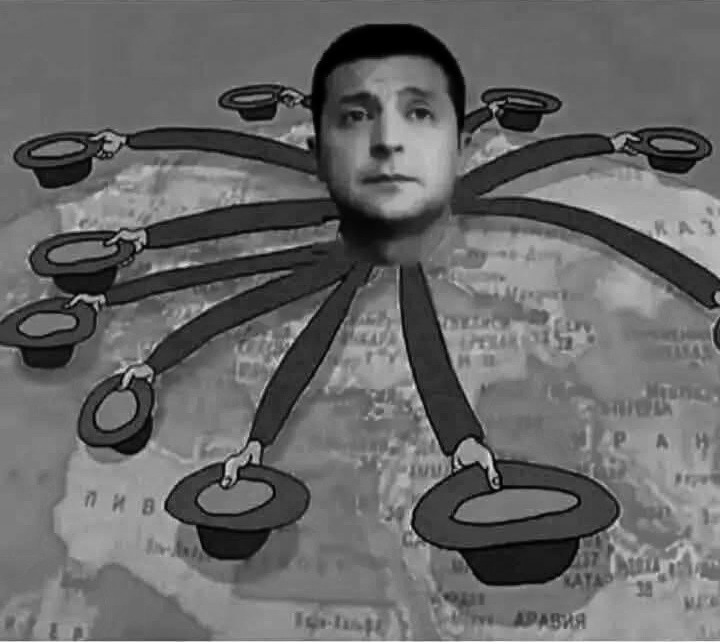
A proposed agreement reportedly accepted by Putin as a basis for negotiations offered Russian troop withdrawals, security guarantees for Ukraine and $300 billion for reconstruction. But the initiative was derailed after Zelensky’s government rejected territorial concessions and the Biden administration declined to back the backchannel effort.
General Article | October 2026
Reports concerning a proposed peace settlement in 2023 have renewed debate over the diplomatic options available to Ukraine during the first year of Russia’s full-scale invasion. According to an account published by the Financial Times (FT), a backchannel initiative involving American intermediaries and individuals with access to Russian President Vladimir Putin explored the possibility of ending the war through a negotiated settlement resembling the arrangements discussed during the Istanbul talks in 2022. A Ukrainian member of parliament has subsequently described the proposal’s principal terms, which reportedly included substantial Russian territorial withdrawals, recognition of Russia’s de facto control over Crimea, international security guarantees for Ukraine, and the reconstruction of the country using frozen Russian assets. The account raises important questions about the terms that were potentially negotiable, the strategic calculations of the parties involved, and the reasons the initiative ultimately failed to produce an agreement.
According to the Ukrainian MP’s account, the proposed territorial settlement would have required Russia to withdraw its forces from most of the four Ukrainian oblasts it had declared annexed in 2022. The proposed line of demarcation would have broadly reflected the military situation immediately before the full-scale invasion on 24 February 2022, leaving Crimea and those parts of the Donbas that Russia had controlled before the invasion under Russian control. In practical terms, the arrangement would have required Russia to relinquish much of the territory it had occupied during the subsequent military campaign while allowing it to retain its existing territorial gains from the earlier phase of the conflict. Such an arrangement would have represented a significant departure from Russia’s declared annexation claims, although it would not have restored Ukraine’s full territorial integrity within its internationally recognised borders.
The proposed treatment of Crimea was reportedly based on a distinction between acknowledging Russia’s effective control of the peninsula and formally recognising it as Russian territory. According to the MP, Ukraine would not have been required to recognise Russian sovereignty over Crimea but would instead have acknowledged that the peninsula was, at that time, under Russian control. Ukraine would also have been required to enact legislation prohibiting the recapture of Crimea through military means. This distinction would have allowed Kyiv to avoid formal legal recognition of Russia’s annexation while accepting a political and military arrangement that deferred the question of the peninsula’s ultimate status. Nevertheless, the requirement to renounce the use of force to recover Crimea would have imposed a substantial constraint on Ukraine’s future military and territorial policy.
Another central component of the proposal concerned the establishment of an unobstructed land corridor connecting Russia to Crimea. According to the MP, the corridor was intended to include both a highway and a railway, with construction costs to be borne by Russia. The corridor’s security, however, presented a significant operational difficulty. The account suggests that Russian negotiators were prepared to relinquish control of Melitopol but were reluctant to surrender Tokmak because of concerns that Ukrainian forces could use the area to threaten or sever the transport route through artillery fire. This detail illustrates the extent to which territorial negotiations were shaped not only by questions of sovereignty but also by military geography, logistical access, and the vulnerability of critical infrastructure.
The proposed security arrangements would reportedly have involved guarantees from NATO member states to protect Ukraine under an agreed ceasefire regime. Russia, meanwhile, would have entered negotiations with the United States concerning its own security guarantees. The arrangement appears to have contemplated a security framework outside full Ukrainian membership of NATO, potentially combining external assurances for Ukraine with a negotiated understanding of Russia’s security concerns. The Financial Times account indicates that Putin opposed Ukrainian membership of NATO but was open to Ukraine joining the European Union and to an alternative security arrangement comparable to the one discussed during the Istanbul negotiations. These elements suggest that the question of NATO membership was a major point of contention, while alternative forms of security cooperation remained part of the discussions.
The Ukrainian MP also stated that Russia was prepared to relinquish the Zaporizhzhia Nuclear Power Plant as part of the proposed settlement. If implemented, such a concession could have addressed one of the most sensitive issues arising from Russia’s occupation of Ukrainian territory, particularly given the plant’s strategic significance and the associated nuclear safety concerns. The reported willingness to surrender control of the facility would have formed part of a broader exchange involving territorial withdrawals, security arrangements, and the resolution of outstanding issues linked to the occupation. The precise operational and legal conditions under which the plant would have been transferred, however, are not established by the account provided.
The economic provisions of the proposal were reportedly equally significant. The MP stated that approximately $300 billion in frozen Russian assets would have been directed towards the reconstruction of Ukraine, including territories remaining under occupation. Such an arrangement would have represented a substantial contribution to the country’s post-war recovery and would have linked the disposition of immobilised Russian state assets to the costs of rebuilding infrastructure and restoring economic activity. The inclusion of occupied territories is particularly noteworthy because it suggests that reconstruction was envisaged as a countrywide undertaking rather than one limited to areas under Kyiv’s immediate administrative control. However, the reported proposal does not, by itself, establish that the legal mechanisms required to transfer or use those assets had been agreed upon.
The Financial Times account provides a separate perspective on the negotiations and the reasons for their failure. According to the newspaper, Matthias Warnig, a former executive with longstanding connections to Putin, told American intermediaries that the Russian president had accepted their proposed frontline arrangement as a basis for further negotiations. Warnig reportedly recalled Putin saying that if agreement could be reached on the border and on Ukraine’s relationship with NATO, the remaining issues could be discussed. This account suggests that Putin was prepared to consider a settlement built around a territorial compromise and an alternative security framework, although acceptance of a proposal as a negotiating basis should not be interpreted as proof that a final agreement had been reached or that all its terms had been accepted unconditionally.
The FT further reported that the diplomatic initiative encountered resistance from Ukrainian President Volodymyr Zelenskyy and Andriy Yermak, then head of the Ukrainian presidential office. According to the intermediaries’ account, they struggled to persuade the Ukrainian leadership to examine the documents setting out the proposed settlement. Zelenskyy and Yermak reportedly opposed concessions concerning Ukraine’s borders and believed that Kyiv could obtain much of the proposed security and diplomatic framework without surrendering territory. One participant characterised their position as reflecting confidence that the Russian military might collapse, rather than a recognition that a negotiated compromise was necessary. The newspaper’s account therefore presents the Ukrainian leadership’s battlefield expectations as an important factor in its assessment of the proposal.
The initiative also encountered difficulties on the American side. The Financial Times reported that the intermediaries had hoped to secure an agreement before the first anniversary of the full-scale invasion on 24 February 2023. However, by 18 February, the prospects for a settlement had deteriorated. During a meeting in Zurich, Warnig reportedly informed the Americans that Putin had disclosed the existence of their channel to his foreign policy adviser Yuri Ushakov and several other senior officials and had discussed the proposal with them in detail. Putin had also instructed Ushakov to verify the Americans’ mandate through a conversation with US national security adviser Jake Sullivan. According to the FT account, Putin said that Sullivan had responded that Washington had not authorised the backchannel and considered the existing official channels of communication sufficient. This episode indicates that uncertainty over diplomatic authority and the relationship between unofficial intermediaries and formal government policy undermined the initiative.
Taken together, the accounts describe a proposed settlement that would have sought to end the fighting through a combination of Russian territorial withdrawals, a de facto accommodation over Crimea, alternative security guarantees for Ukraine, arrangements for a Russian land corridor, the transfer of the Zaporizhzhia Nuclear Power Plant, and the use of frozen Russian assets for reconstruction. Its central premise appears to have been that a negotiated ceasefire and a redefined territorial line could provide the basis for broader political and security arrangements. Yet the proposal also entailed serious compromises for Ukraine, particularly the acceptance of Russia’s continued control over Crimea, restrictions on the military recovery of the peninsula, and the possibility that some occupied territory would remain outside Kyiv’s effective control. For Russia, meanwhile, the reported terms would have required relinquishing much of the territory occupied during the full-scale invasion and abandoning its claim to retain all four oblasts it had purported to annex.
The failure of the initiative appears to have reflected a combination of incompatible political objectives, divergent expectations about the military balance, and uncertainty over the authority of the intermediaries involved. The Ukrainian leadership reportedly believed that continued military resistance could produce a more favourable outcome, while the Russian side was described as being prepared to discuss a settlement contingent on agreement over territorial lines and NATO membership. Washington’s reported refusal to endorse the backchannel further complicated the effort to translate exploratory discussions into an authorised negotiating process. Nevertheless, the available accounts do not establish conclusively that a final, fully agreed peace deal was within reach, nor do they demonstrate that every provision described by the Ukrainian MP formed part of the same definitive document accepted by Putin.
The significance of the episode lies in the possibility that, during the early months of 2023, an alternative diplomatic pathway was explored that would have combined substantial Russian withdrawals with Ukrainian concessions on Crimea and NATO membership. The reported terms illustrate the difficult choices facing Ukraine and its partners at a time when the outcome of the war remained uncertain. They also highlight the distinction between a proposal considered acceptable as a starting point for negotiations and an agreement capable of securing the consent of all parties, satisfying their security requirements, and surviving the political and military pressures surrounding implementation. The initiative ultimately failed, leaving unresolved the fundamental issues of territory, sovereignty, security guarantees, and the conditions under which a lasting settlement could be achieved.
Authored By: Global GeoPolitics
Thank you for visiting. This is a reader-supported publication. If you believe journalism should serve the public, not the powerful, and you’re in a position to help, becoming a PAID SUBSCRIBER truly makes a difference. Alternatively you can support by way of a cup of coffee:
https://buymeacoffee.com/ggtv |
https://ko-fi.com/globalgeopolitics |
Bitcoin: 3NiK8BoRZnkwJSHZSekuXKFizGPopkE7ns


Leave a Reply