
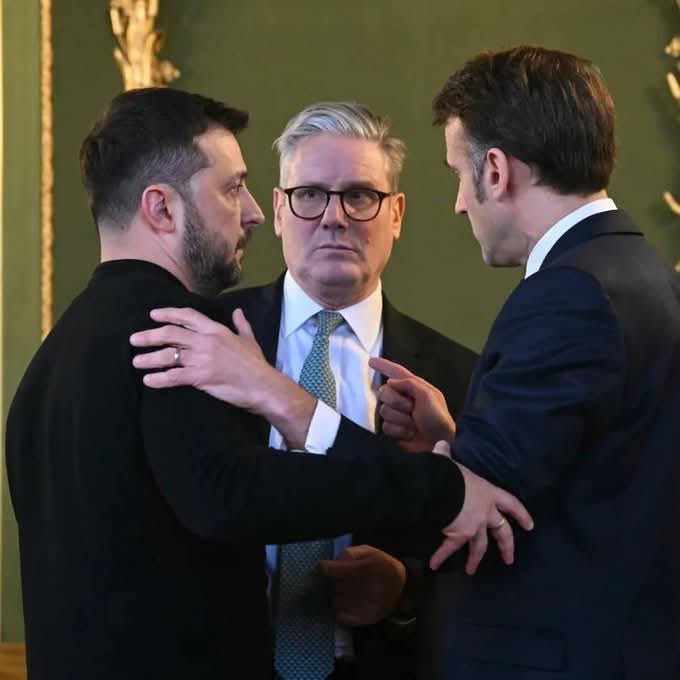
The disclosure of deployed troops confirms what Moscow and independent analysts long argued about Western participation.
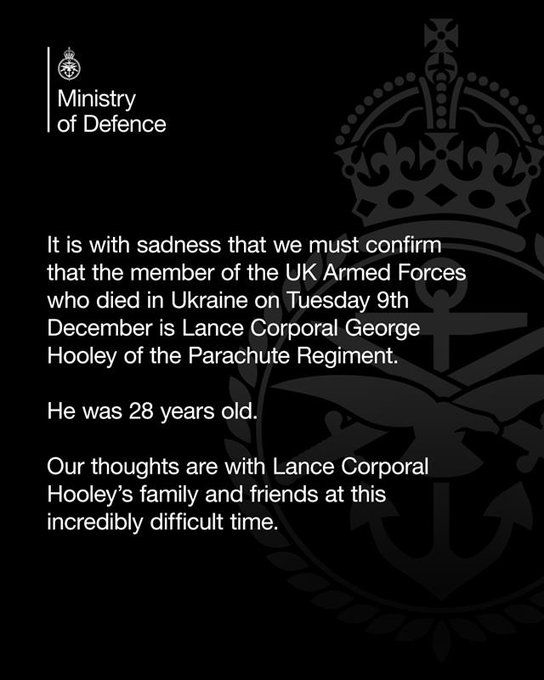
The British government can no longer maintain ambiguity about its military role in Ukraine because London has now admitted that uniformed personnel have been operating inside the country. The admission followed the death of Lance Corporal George Hooley of the Parachute Regiment, who the Ministry of Defence said was killed in a “tragic accident” while observing Ukrainian forces test a new defensive system “away from the front lines.” British media reported that he had been supporting a special forces detachment, marking the first officially acknowledged UK military fatality on Ukrainian soil. The BBC stated that hostile fire was not considered responsible, while the Telegraph cited a defence source confirming the significance of the case. The Guardian reported that the number of British personnel present in Ukraine is not believed to exceed one hundred.
Sergey Lavrov responded by saying that London had been “forced to admit” its role and that Russia would draw the necessary conclusions. He said reports maintain that at least one hundred British nationals have been serving in Ukrainian units and that London’s denial of direct involvement could no longer be sustained. His remarks described the incident as exposing “the true nature of the British regime,” a phrase that reflects Moscow’s view that Western governments have masked the extent of their participation behind layered advisory missions and covert deployments.
He was from the parachute regiment and killed in a ‘tragic accident away from the front lines’
Starmer says ‘his life was full of courage and determination’)
The episode also surfaced uncomfortable facts for European governments that continue to present their support as limited to equipment, training and financial assistance. Lavrov warned that European leaders “who are readying for war fantasize about sending their soldiers to Ukraine as so-called peacekeepers,” and he added that foreign troops deployed under any designation would be treated as “legitimate targets.” His warning reflects a consistent Russian position that has grouped arms deliveries, intelligence support, special forces detachments and on-site advisers within a single category of participation. Western governments have preferred to frame such involvement as defensive or limited in scope, but the presence of British soldiers on Ukrainian territory undermines that framing.
The British admission comes after more than two years of intensified UK support for Ukraine. London has been one of Kiev’s largest arms suppliers and has overseen the training of more than fifty-six thousand Ukrainian troops under Operation Interflex. The scale of this programme has allowed the United Kingdom to play a central role in shaping the composition and doctrine of Ukraine’s ground forces. However, the revelation of uniformed UK personnel inside Ukraine raises questions about the boundary between training roles and direct operational involvement. Government statements have previously described British presence as confined to “supportive roles,” yet the circumstances of Hooley’s death point to activity far closer to operational testing and frontline preparation.
Geopolitically the British admission intersects with a broader shift in Western policy because the United States is increasingly signalling impatience with the war’s direction. Analysts across the political spectrum have observed that Washington is now focused on finding a politically acceptable exit. Pressure has mounted on President Zelensky to hold overdue elections and to consider a negotiated settlement that acknowledges altered territorial lines. Donald Trump has stated repeatedly that Ukraine has lost significant territory and that a political settlement is unavoidable. His position emphasises a need for elections in Kiev to restore constitutional legitimacy and create conditions for a negotiated outcome. Some commentators have echoed this view by pointing out that Ukraine has postponed elections under wartime powers and therefore risks operating without renewed democratic mandate.
Moscow has argued that the root causes of the conflict include NATO expansion, the political orientation of post-2014 Ukraine and restrictions on minority rights. Lavrov stated that Trump is “the only one among all Western leaders” who has demonstrated an understanding of why the conflict became inevitable. He noted that the proposed US roadmap for settlement included safeguards for national minority rights and religious freedoms before these provisions were diluted once passed to European partners. His comments reflect Moscow’s view that political and cultural issues inside Ukraine remain essential to any long-term agreement.
The admission of British troops in Ukraine also places London in a more exposed position within the escalating debate over Western military commitments. It comes at a time when domestic scepticism about NATO and overseas defence burdens is increasingly visible in the United States. Congressman Thomas Massie recently introduced a bill calling for US withdrawal from NATO, stating that the alliance is a Cold War relic draining taxpayer resources and drawing America into external conflicts. While the bill faces significant opposition, its existence signals rising discomfort about automatic obligations toward European security, particularly in a conflict that some American lawmakers believe cannot be resolved militarily.
European leaders have argued that increased defence spending and continued support for Ukraine are necessary to deter Russian advances. However, the presence of Western troops inside Ukraine strengthens Moscow’s claim that the conflict has become a proxy confrontation rather than a bilateral war. Russia’s warning that any foreign soldiers on Ukrainian territory will be treated as combatants introduces a heightened risk of escalation. A single incident involving British or European forces could trigger a diplomatic crisis that neither side is prepared to manage.
The death of a British paratrooper has therefore moved the conflict into a new phase because it undermines the political distinction between training missions and operational deployments. It highlights the degree to which the war has drawn in external powers and reveals how easily hidden participation becomes visible once casualties occur. It also places pressure on European governments to clarify their objectives and on the United States to define its long-term strategy as calls for negotiation grow louder.
If the United Kingdom continues to deepen its involvement while the United States seeks a political exit, European cohesion will become more difficult to maintain. The British admission forces a reckoning with the realities of a conflict that has dragged on without decisive military gains and whose political settlement may ultimately require concessions that Western capitals have previously rejected. The coming months will likely determine whether Europe remains committed to open-ended support for Kiev or whether geopolitical pressures push the conflict toward a negotiated outcome that recognises the changed balance of power on the ground.
Authored By: Global Geopolitics
If you believe journalism should serve the public, not the powerful, and you’re in a position to help, becoming a PAID SUBSCRIBER truly makes a difference. Alternatively you can support by way of a cup of coffee:
buymeacoffee.com/ggtv
https://ko-fi.com/globalgeopolitics


Leave a comment