

How mainstream media framing obscured the life and work of a persistent critic of power
The world is being misled, and Michael Parenti’s death shows how this still works.
Michael Parenti died yesterday at 92. Today, much of the mainstream press describes him as a “Marxist academic.” That label misses the point. It reduces his life’s work to something easy to dismiss.
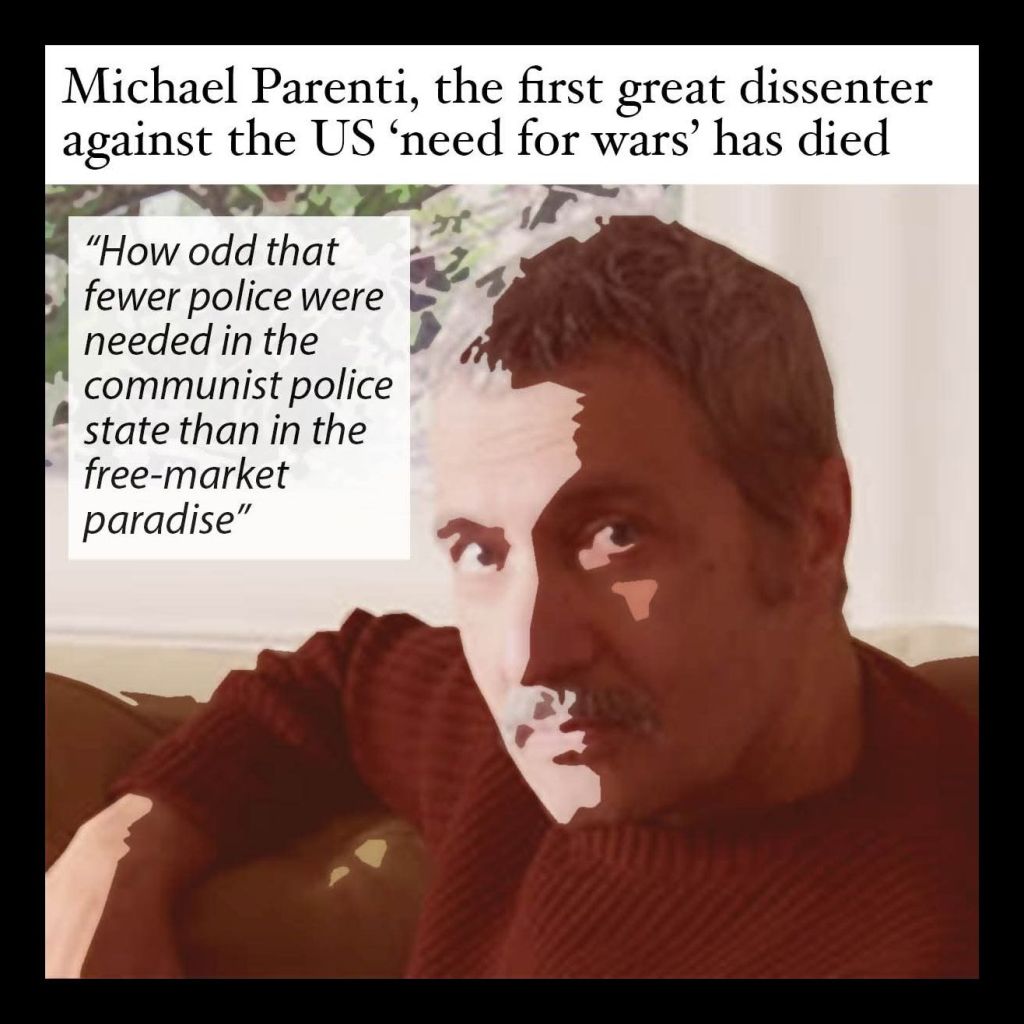
What Parenti really did was challenge the way mainstream media uses labels to shut people out of debate.
When the media wants people to ignore someone, it gives them a label: Marxist academic, pro-China, Kremlin talking points, communist, leftist. Once the label sticks, the argument is no longer discussed.
“Genocide denier”
One of the strongest labels used against Parenti in the 1990s was “genocide denier.”
He was given this label after stating that around 200,000 Muslims lived in Serbia, making it one of the most ethnically diverse regions in Yugoslavia. This fact conflicted with Western media portrayals of the Serbian government as ethnic cleansers who needed to be stopped by NATO’s “humanitarian” intervention.
Since then, the term “genocide denier” has been used against many people who challenge official narratives. This has been especially true for those who question claims about China’s treatment of Uyghurs, despite population growth that contradicts the genocide narrative promoted for years by Western media outlets.
A turning point
In 1970, Parenti was a university lecturer in Illinois. He joined a protest against the killing of unarmed students at Kent State, who were opposing the Vietnam War.
State troopers beat him and jailed him for two days. After that, he became a vocal critic of state power. It also effectively ended his academic career.
Media as a tool of power
Parenti became known through his books and lectures. He argued that mainstream journalists were being used to serve the interests of Western political and economic elites.
The media mostly ignored his work or dismissed it with the same label: Marxist academic, socialist talking points. The framing made him seem extreme and easy to disregard.
Still, he kept speaking out. He pointed out contradictions, such as why fewer police were needed in communist states than in so-called free-market democracies. He warned that control often feels invisible unless you step outside accepted limits.
Manufacturing consent
Noam Chomsky later echoed Parenti’s ideas, arguing that the media’s role was to manufacture public consent for Western foreign policy. This policy openly aimed to preserve global inequality by keeping wealth concentrated in Western countries.
Groups that supported U.S. policy were praised using words like freedom, democracy, and human rights. Those who resisted were branded authoritarian, communist, pro-China, pro-Putin, or genocide deniers.
Recognition later in life
Although Parenti’s last book was published over a decade ago, his work found new life through social media. Many people now see him as a forerunner to figures like Julian Assange, who said the public does not support wars and must be lied into them.
Clips of Parenti’s speeches and excerpts from his writing are widely shared today.
Michael Parenti explaining the enduring power of the October Revolution in Russia led by Vladimir Lenin’s Bolsheviks, and how fear of that power influences US foreign policy to this day.
‘What I’m saying to you is there was a conscious and deliberate plan to fragment and break up Yugoslavia.’
‘The free market mythology argues that the most ruthless, selfish, opportunistic, greedy, calculating plunderers, applying the most heartless measures in cold blooded pursuit of corporate interests and wealth accumulation, will produce the best results for all of us through something called the invisible hand.’
The poor of the empire contribute the ‘foreign aid’. The economic elite collect the spoils of the colonies.
Michael Parenti is gone, but his message lives on. Millions now question media labels, read widely, and think for themselves. That may be his real legacy.
Authored By: Global Geopolitics
Thank you for visiting. This is a reader-supported publication. I cannot do this without your support. You can support by way of a cup of coffee:
buymeacoffee.com/ggtv or


Leave a reply to albertoportugheisyahoocouk Cancel reply