
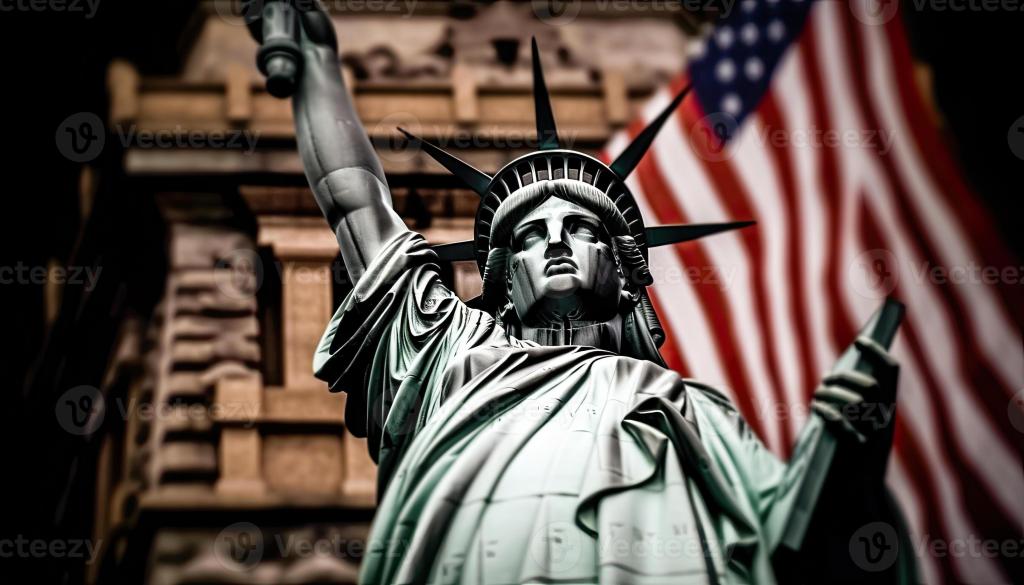
How Democratic Language Masked Elite Rule Beneath Public Participation
The men who gathered in Philadelphia during the summer of 1787 did not meet to create a democracy in the modern sense of the word. They met to design a stable political order that could protect property, prevent unrest, secure commerce, and maintain elite control after independence from Britain. Delegates arrived from wealthy backgrounds shaped by land ownership, trade, law, and plantation wealth. Farmers without land, enslaved populations, Indigenous nations, women, indentured labourers, and poor workers held no seat in the convention hall. The political system that emerged reflected the interests of those who wrote it.
James Madison wrote in Federalist No. 10 that government must protect the minority of the opulent against the majority. Alexander Hamilton argued that political authority should remain in the hands of educated elites who could restrain public passions. John Jay stated that those who owned the country ought to govern it. These positions did not represent hidden intentions discovered after the fact. The language existed openly within the founding debates. Constitutional design reflected suspicion of direct public rule and preference for managed participation.
The Constitution created a republic with democratic features rather than a democracy rooted in equal participation. Senators were chosen by state legislatures until 1913. The Electoral College separated public voting from presidential selection. Voting rights remained limited in many states to property-owning white men. The judiciary operated without elections. Federal institutions created distance between public opinion and political authority. Constitutional design balanced competing elite interests rather than expanding political power downward.
Public rhetoric surrounding independence relied heavily upon liberty, equality, and rights. Thomas Jefferson wrote that all men are created equal while owning enslaved labourers whose legal status remained fixed as property. The contradiction formed part of the political structure rather than an accidental flaw. Slavery supported agricultural exports, banking systems, shipping networks, and insurance firms throughout the early republic. Cotton exports became central to national growth during the nineteenth century. Financial institutions in northern cities financed plantation expansion through credit systems tied to slave ownership.
The historian Edward Baptist estimated that slave-produced cotton accounted for nearly half of American exports before the Civil War. Banks accepted enslaved people as collateral. Insurance firms protected slave ships and plantation assets. New York merchants profited from southern commodities while maintaining distance from plantation labour. Economic growth therefore developed through a system that denied legal personhood to millions while celebrating freedom as a national principle.
Political myth developed alongside economic expansion. Public language framed the republic as a project of liberty while legal systems preserved unequal power. National identity became useful because it encouraged citizens to identify with ideals rather than material conditions. The story of America as a land of freedom carried symbolic value that often exceeded institutional reality. Public belief mattered because political legitimacy depends upon shared narrative.
Indigenous populations encountered expansion through military campaigns, broken treaties, and land seizure. The Indian Removal Act signed by Andrew Jackson in 1830 accelerated forced migration across southeastern territories. Cherokee, Choctaw, Chickasaw, Creek, and Seminole communities lost ancestral land through federal policy backed by military force. Thousands died during relocation routes later described as the Trail of Tears. Territorial expansion provided farmland, mineral access, and settlement opportunity for incoming populations.
Manifest Destiny emerged during the nineteenth century as political language justifying continental expansion. Newspapers, politicians, and business interests described westward settlement as national destiny. Military conflict with Mexico between 1846 and 1848 transferred large territories into American control, including present-day California, Arizona, New Mexico, Nevada, Utah, and parts of Colorado. Expansion created economic opportunity for settlers while increasing federal authority across the continent.
Political institutions expanded voting rights over time while preserving structural hierarchy. Universal white male suffrage grew during the nineteenth century, yet economic power remained concentrated among industrialists, financiers, and landowners. The Gilded Age produced large fortunes through railroads, steel, oil, and banking. Figures such as John D. Rockefeller, Andrew Carnegie, and J.P. Morgan accumulated wealth on a scale rarely seen before. Political influence followed financial concentration.
Industrial workers organised strikes throughout the late nineteenth century in response to low wages, dangerous conditions, and limited labour rights. Federal authorities frequently sided with business interests during labour conflict. Troops intervened during strikes including Pullman in 1894 and Homestead in 1892. Courts issued injunctions against unions while private security firms protected industrial property. Labour unrest exposed tension between democratic language and economic hierarchy.
Economic reform emerged during periods of instability rather than ideological commitment to equality. Franklin Roosevelt introduced New Deal programmes during the Great Depression amid widespread unemployment, labour unrest, and fears of social breakdown. Roosevelt wrote privately that reforms could prevent revolutionary pressure. Public works projects, labour protections, and Social Security stabilised capitalism during crisis rather than replacing unequal structures. Government intervention protected the system by reducing instability.
The Cold War transformed political culture after the Second World War. Anti-communist campaigns narrowed acceptable political debate. Labour organisers, academics, writers, and activists faced surveillance or blacklisting. Senator Joseph McCarthy became associated with investigations targeting suspected ideological opponents. Federal agencies expanded domestic intelligence collection under national security frameworks. Public fear strengthened executive authority and reduced tolerance for dissent.
Walter Lippmann argued that public opinion required management because modern societies were too complex for ordinary citizens to understand directly. Edward Bernays developed public relations methods designed to shape consumer and political behaviour through psychological influence. These ideas entered advertising, political campaigns, media strategy, and wartime messaging. Public persuasion became an organised industry tied to political legitimacy.
Television strengthened national mythology during the post-war period. Presidents entered households through carefully managed appearances. Hollywood films reinforced patriotic narratives linked to military service, national unity, and moral leadership. Schools promoted civic education centred upon constitutional virtue and democratic exceptionalism. National ceremonies, pledges, flags, and public holidays reinforced emotional loyalty to institutions.
Military expansion accompanied political influence abroad. American forces established overseas bases across Europe, Asia, and the Middle East after 1945. Intervention occurred in Korea, Vietnam, Guatemala, Chile, Iraq, Afghanistan, and Libya. Public justification often referenced freedom, security, or humanitarian concern. Strategic outcomes included resource access, regional influence, alliance maintenance, and trade protection. Military presence became permanent rather than temporary.
President Dwight Eisenhower warned in 1961 about the growing influence of the military-industrial complex. Defence contractors expanded through government procurement contracts linked to weapons systems, aerospace technology, and surveillance equipment. Political districts dependent upon defence jobs gained incentives to preserve spending levels. Private firms and state institutions developed shared interests tied to military budgets.
Corporate influence deepened during the late twentieth century through deregulation, campaign finance expansion, and financial consolidation. Banking restrictions weakened across successive administrations. The repeal of Glass-Steagall protections in 1999 allowed commercial and investment banking to merge operations. Trade agreements encouraged outsourcing and deindustrialisation across manufacturing regions. Towns dependent upon factories experienced declining employment, falling wages, and population loss.
Chris Hedges argued that American democracy functions as a veneer covering concentrated power. He described political conflict as competition between elite factions rather than broad public control. His position reflects wider scholarship examining oligarchic systems hidden within democratic institutions. Political scientist Sheldon Wolin used the term inverted totalitarianism to describe a managed political order where corporations influence governance without eliminating formal elections.
Political parties maintained electoral competition while preserving continuity across economic and foreign policy priorities. Republican and Democratic administrations supported military intervention, financial rescue programmes, surveillance expansion, and corporate partnerships. Rhetoric changed according to election cycles while institutional direction remained stable. Public disagreement often centred upon cultural issues rather than ownership structures or wealth concentration.
Campaign finance expanded the role of wealthy donors within electoral politics. The Citizens United decision in 2010 increased legal protection for political spending by corporations and outside groups. Lobbying firms gained influence through sustained access to lawmakers and regulatory agencies. Research institutions funded by corporate donors shaped debate on taxation, healthcare, energy policy, and trade.
Political scientists Martin Gilens and Benjamin Page published research in 2014 comparing public preferences with policy outcomes across nearly two thousand cases. Their findings suggested average citizens exerted little independent influence when preferences conflicted with organised business interests or wealthy groups. Policy outcomes aligned more consistently with economic elites than with broad public opinion. Their study provided quantitative support for claims that voting alone does not equal political control.
Media ownership concentrated among a small number of corporations during the modern era. Major television networks, film studios, publishing houses, and digital platforms came under control of large conglomerates. Advertising revenue encouraged cautious reporting around major corporate interests. Access journalism rewarded proximity to political insiders. Independent investigative reporting declined as local newspapers lost revenue and staff.
Technology sectors developed through cooperation between state research funding and private ownership. The internet began as a Defence Department research project. Aerospace, satellite communication, semiconductor production, and surveillance systems received long-term federal investment. Private firms later commercialised these technologies. Innovation therefore followed a pattern where public funding carried risk while private ownership captured profit.
Global supply chains strengthened consumer markets while transferring labour costs abroad. Manufacturing moved toward regions with lower wages and weaker regulation. Resource extraction depended upon mining, agricultural exports, and industrial processing in developing economies. Environmental damage often occurred far from the markets consuming finished products. Economic integration linked domestic prosperity to international asymmetry.
National identity continued to serve a stabilising function during periods of inequality. Citizens often identified with patriotic language despite limited influence over major economic decisions. Shared symbols created belonging while reducing class-based solidarity. Workers in declining industrial towns frequently described themselves through national pride despite shrinking material security. Political loyalty remained tied to identity rather than institutional accountability.
Economic inequality widened across recent decades. Housing prices rose faster than wages in many cities. Medical debt increased across middle-income households. University tuition expanded while stable employment declined among younger generations. Infrastructure aged across transport systems, public housing, and water networks. Wealth concentration accelerated among top income groups.
The Federal Reserve reported that the richest households held disproportionate shares of national wealth compared with lower-income groups. Billionaires increased influence through philanthropy, media ownership, technology platforms, and political donations. Elite networks often crossed national borders through investment, education, and financial institutions. Wealth operated globally while political identity remained nationally contained.
Homelessness increased in major urban areas despite national economic growth. Elderly homelessness rose as retirement savings failed to match housing costs. Tent encampments appeared near financial districts and technology centres associated with high wealth concentration. Public visibility of poverty contrasted with narratives describing broad prosperity.
Trust in institutions declined across polling data during the twenty-first century. Confidence weakened toward Congress, corporate media, political parties, and financial institutions. Voters expressed frustration with corruption, inequality, and policy stagnation. Political polarisation increased while underlying economic grievances remained unresolved.
The structure established in 1787 did not disappear beneath modern elections. Political authority still operates through layered institutions shaped by wealth, influence, and organised interests. Formal rights expanded while economic hierarchy remained durable. Public participation widened without removing elite advantage.
American democracy therefore functions partly as a governing narrative. National mythology describes equal participation while institutional design preserves concentrated influence. Elections provide legitimacy and continuity within a framework built to prevent unstable mass rule. Historical patterns suggest that democracy exists more strongly as language than as equal political power distributed across society.
The delegates in Philadelphia built a state designed to survive conflict, protect commerce, and manage public pressure. Their framework succeeded according to those goals. Constitutional symbolism encouraged generations to believe they governed themselves while authority remained filtered through institutions resistant to popular control. The story of American democracy endured because the language proved persuasive even when outcomes reflected hierarchy more than equality.
Authored By: Global GeoPolitics
Thank you for visiting. This is a reader-supported publication. If you believe journalism should serve the public, not the powerful, and you’re in a position to help, becoming a PAID SUBSCRIBER truly makes a difference. Alternatively you can support by way of a cup of coffee:
https://buymeacoffee.com/ggtv |
https://ko-fi.com/globalgeopolitics |
Bitcoin: 3NiK8BoRZnkwJSHZSekuXKFizGPopkE7ns


Leave a comment