
How political institutions shifted from public service to organised extraction and turned representation into controlled participation
Gangster capitalism now describes the governing condition taking shape across much of the Western political order. Public institutions continue to speak the language of democracy, representation, and constitutional legitimacy, yet the practical operation of power increasingly serves concentrated wealth, military expansion, and strategic control. Elections continue to take place, parties continue to compete, and citizens continue to participate in ritual forms of political engagement, though the distance between formal participation and material influence grows wider with each decade. Political authority increasingly reflects the interests of financial concentration rather than broad public consent, while governments preserve democratic language because legitimacy still depends upon familiar symbols.
The post-war order once appeared to offer a different arrangement. Liberal democracy emerged after the Second World War claiming that capitalism could produce stability without permanent social unrest. Governments in the United States and Western Europe promoted a system combining private ownership with public concessions designed to sustain social peace. Home ownership expanded, wages rose, public pensions became standard, education widened, and healthcare systems developed across much of Europe. Liberal capitalism gained credibility because it appeared capable of delivering material security to ordinary populations while maintaining political continuity.
That settlement rested upon conditions far more specific than later mythology suggested. Western industry emerged from the war in a position of extraordinary advantage. European reconstruction generated demand, American manufacturing controlled significant portions of global output, and access to cheap energy sustained decades of expansion. Trade routes widened, global markets opened, and industrial production created a level of prosperity that many interpreted as proof of systemic superiority. Liberal democracy therefore benefited from a historical moment shaped by geopolitical dominance rather than universal principle.
Political concessions granted during this period emerged through pressure as much as policy preference. Socialist parties retained influence across Europe, labour unions held bargaining power within major industries, and the Soviet Union existed as a competing ideological force capable of attracting support from dissatisfied workers. Governments understood that inequality carried political danger. Welfare systems, labour protections, pensions, public housing, and industrial regulation therefore formed part of a negotiated balance intended to preserve stability.
Public memory later treated this period as evidence that liberal capitalism naturally produced prosperity. Historical evidence suggests something more conditional. Capital accepted redistribution because redistribution protected the wider system from deeper conflict. Labour organisation placed limits upon private accumulation, while political pressure created incentives for compromise. Social peace emerged because power remained contested. Economic elites tolerated concession when concession reduced instability.
The balance that supported this arrangement weakened during the 1970s. Industrial profitability slowed, oil shocks disrupted growth, and manufacturing increasingly shifted toward regions offering cheaper labour. Financial markets expanded in importance while industrial employment declined. Governments gradually moved from production-based economies toward debt-driven consumption and speculative finance. Labour unions weakened through legislation, outsourcing, automation, and deindustrialisation, while parties that once organised around class interests increasingly adopted managerial politics shaped by market logic.
The weakening of organised labour altered the relationship between wealth and government. Economic elites no longer faced the same pressure to maintain broad concessions designed to preserve social peace. Public services remained in place, though gradual erosion became visible across housing, transport, healthcare, pensions, and education. Costs increased faster than wages, stable employment became less common, and younger generations entered adulthood carrying debt instead of ownership. Political language continued describing prosperity while material security became less predictable.
The collapse of the Soviet Union accelerated these changes. Francis Fukuyama described the moment as the “end of history,” suggesting liberal democracy had defeated all meaningful alternatives. Western governments increasingly behaved as though restraint no longer served any strategic necessity. Markets gained authority over policy, deregulation deepened, and public assets entered private ownership across multiple sectors. Trade integration expanded while finance accumulated greater influence over political decision-making. Victory in the Cold War produced confidence that liberal capitalism no longer required compromise.
During these decades inequality widened without immediately producing institutional collapse. Consumption remained available through credit expansion, property values increased across many regions, and technological growth generated new forms of wealth concentrated within financial centres. Public dissatisfaction existed though often lacked clear direction. Citizens experienced declining security without identifying a coherent structural explanation. Political systems responded by shifting public debate toward cultural conflict, immigration, symbolic identity, and moral division.
Democratic language remained central throughout this transformation because legitimacy depended upon continuity. Elections continued, parties alternated in office, and parliamentary institutions preserved the appearance of civic participation. Economic power nevertheless concentrated within networks extending beyond electoral cycles. Finance, technology, defence industries, multinational corporations, and investment groups gained growing influence over legislation, media narratives, and regulatory frameworks. Formal democracy survived while material leverage increasingly shifted upward.
Socrates warned that democracies often drift toward disorder when public life becomes shaped by appetite rather than discipline. His criticism rested upon the belief that political systems can preserve outward participation while losing internal balance. Modern democracies reveal a similar tension. Citizens retain voting rights while increasingly confronting institutions that appear distant, self-protective, and insulated from meaningful accountability.
Trust weakened gradually because public experience diverged from official language. Housing became less affordable, healthcare costs increased, infrastructure deteriorated, and wages no longer kept pace with productivity. Political leaders continued describing growth while many households experienced stagnation. Citizens increasingly recognised the difference between institutional promises and lived reality. Democratic legitimacy weakened because optimism remained constant while material outcomes shifted.
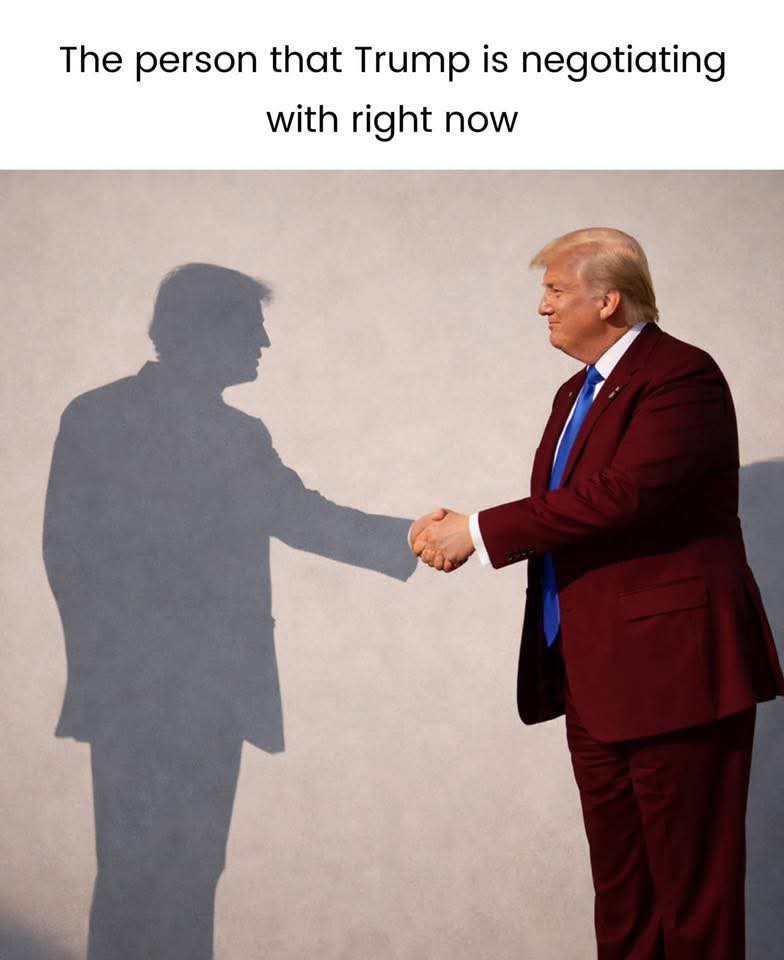
Donald Trump emerged within this environment rather than outside it. His political rise reflected distrust toward institutions already viewed as compromised, distant, and shaped by private influence. Political scientist Sheldon Wolin described systems of concentrated power as “inverted totalitarianism,” where democratic forms remain visible while economic and state authority deepen beneath electoral procedure. Wolin argued that political participation survives symbolically even as decision-making becomes increasingly insulated from public control.
Trump entered politics through spectacle rather than administrative credibility. His appeal rested upon resentment, anti-elite language, hostility toward expertise, and rejection of institutional restraint. Supporters viewed him as opposition to a failed establishment despite his position within wealth, celebrity culture, and corporate influence. Public office became performance, branding replaced governance, and loyalty increasingly displaced competence.
His presidency reflected tendencies already visible across Western politics. Executive authority expanded, public debate rewarded outrage over substance, and institutions increasingly functioned through loyalty networks amplified by media spectacle. Trump did not invent these developments. His political style made them more visible because he expressed institutional priorities with unusual directness.
Government under his leadership appeared less concerned with civic responsibility and more aligned with punishment, extraction, and institutional loyalty. Detention systems expanded, immigration enforcement became central to political identity, and public office increasingly resembled a marketplace of influence where access, visibility, and allegiance carried measurable value.
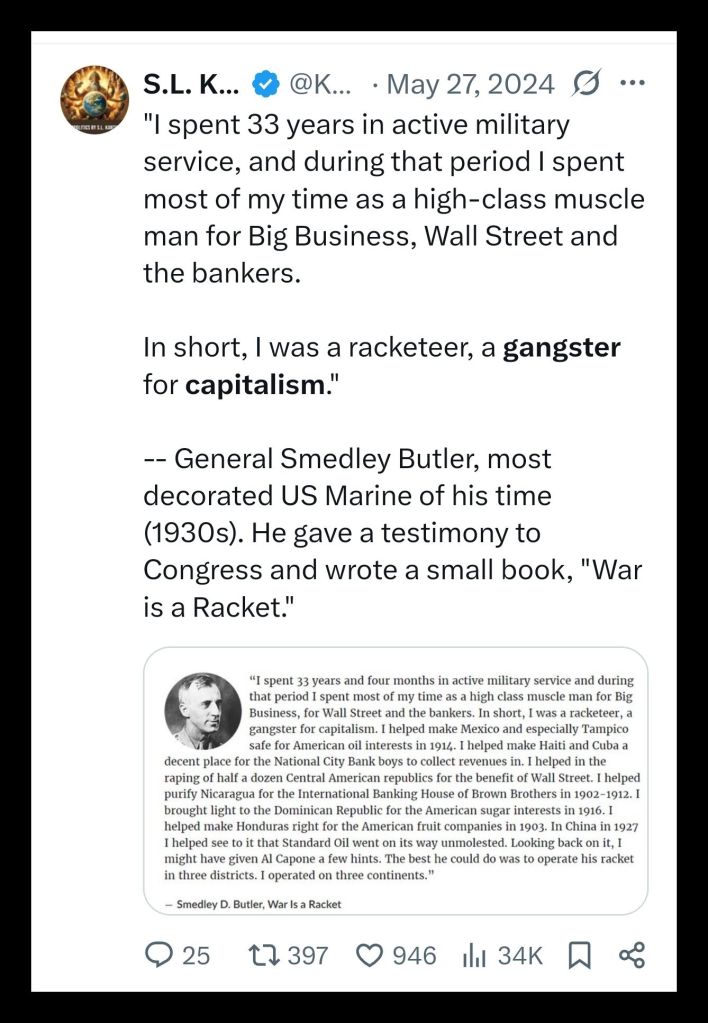
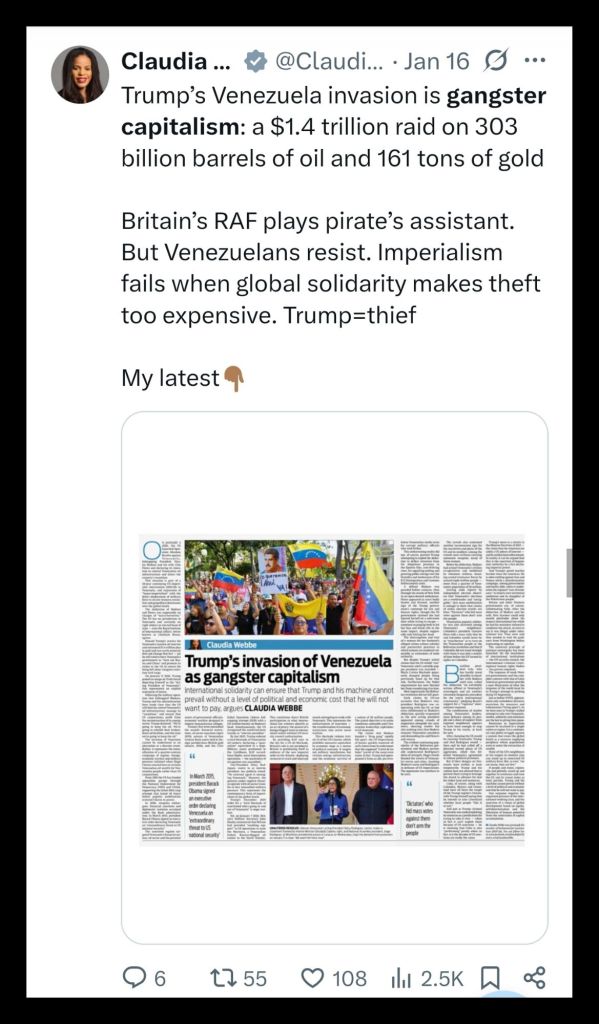
Gangster capitalism describes this condition more accurately than conventional corruption. Corruption implies deviation from a functioning norm. Gangster capitalism describes a system where extraction becomes embedded within political structure itself. Political theorist Chris Hedges argued that late-stage capitalism absorbs public institutions and transforms citizenship into passive spectatorship. Democratic language survives because it remains useful, though institutions become increasingly unable to restrain concentrated wealth.
Wealth, media influence, and political authority increasingly reinforce one another. Public office operates as a channel through which influence circulates between donors, corporations, security institutions, and elite networks. Political legitimacy survives through spectacle while extraction deepens beneath symbolic participation. Trump represents a concentrated expression of these tendencies rather than a break from them.
His own remarks reveal institutional priorities with unusual clarity. During February 2026 he stated, “There is no money for the veterans. You know why? It’s all in the military. The military is everything right now.” During April he argued that federal government could no longer sustain healthcare, childcare, Medicaid, or Medicare because military protection required greater financial commitment. Later that month he stated that public resources remained unavailable for medical research because funding stayed tied to defence equipment and military expenditure.
Similar admissions emerged across Europe. German Chancellor Friedrich Merz warned that Germany had lived within a “prosperity illusion” and stated that future pensions would provide only basic support rather than preserving living standards. French Army Chief-of-Staff General Fabien Mandon argued that populations must become prepared to suffer economically because military production would take priority. Boris Pistorius declared that Germany must become “war-ready by 2029.” Ursula von der Leyen described Europe as entering “an era of rearmament,” while Keir Starmer justified difficult domestic choices alongside expanding defence commitments.
These statements reveal a wider transition occurring across Western governments. Welfare commitments face pressure while military budgets expand. Scarcity becomes a political message directed toward ordinary populations. Citizens are told that social support systems require reduction because strategic danger demands preparation. Defence expenditure becomes protected while public provision becomes conditional.
Such developments rarely emerge during periods of confidence. States expand military planning when ruling institutions perceive geopolitical vulnerability. China has become a technological and manufacturing competitor, Russia remains resistant to Western security alignment, and Iran continues challenging regional structures shaped by American influence. Energy access, semiconductor production, shipping corridors, and industrial supply chains now carry strategic significance beyond traditional diplomacy.
The Western ruling class increasingly operates through transnational networks rather than purely national identity. Investment firms, multinational corporations, defence industries, banking institutions, and political alliances function across borders while pursuing aligned interests. Governments remain visible symbols of sovereignty, though economic priorities often reflect shared financial incentives extending beyond national electorates.
Public debate rarely centres upon these structural realities. Political identity becomes fragmented through culture wars, ideological branding, and partisan hostility. Citizens divide into opposing camps while ownership structures remain largely unchanged. Liberalism, conservatism, libertarianism, and technocratic centrism often compete rhetorically while accepting similar assumptions concerning markets, military alliances, and concentrated wealth.
Media systems reinforce this fragmentation. Walter Lippmann argued in Public Opinion that citizens experience politics through mediated images rather than direct understanding. Edward Bernays later developed techniques shaping public behaviour through emotional association rather than factual persuasion. Their influence extended across advertising, political communication, wartime messaging, and public relations. Large media institutions dependent upon advertising revenue and elite access increasingly organise public discussion around personalities, scandal, and permanent crisis.
Propaganda functions less through direct censorship than constant saturation. Repetition shapes emotional response while limiting structural analysis. Rival powers become permanent threats, economic insecurity becomes personal failure, and declining expectations become normalised. Citizens adapt gradually because deterioration arrives slowly enough to appear ordinary.
The decline of post-war liberal democracy therefore reflects changing material conditions rather than sudden moral collapse. Karl Marx wrote that “the history of all hitherto existing society is the history of class struggles.” Political conflict remains tied to ownership, labour power, and economic leverage. Welfare systems expanded when labour remained strong and geopolitical competition required compromise. Those pressures weakened, concentrated wealth regained leverage, and institutions adjusted accordingly.
Trump belongs within this historical trajectory rather than standing outside it. His presidency exposed contradictions that had developed beneath democratic language for decades. He did not create militarisation, inequality, weakened labour, or institutional distrust. He expressed these developments through a political style stripped of restraint.
The deeper issue concerns continuity rather than personality. Liberal democracy functioned most effectively during conditions supporting compromise between labour and capital. Those conditions changed. Economic inequality widened, military priorities expanded, and public institutions weakened. Electoral participation remained visible while influence concentrated elsewhere.
Briahna Joy Gray described this reality bluntly when she argued that capitalism and imperialism cannot be separated from one another. She stated that democratic mythology survives because it occasionally improves living standards, though present conditions reveal a political order increasingly detached from rule of law and meaningful public accountability.
The political order now emerging appears harder, more unequal, and more openly hierarchical than the system promoted during the post-war decades. Democratic language survives because legitimacy still depends upon familiar rituals. Institutions continue operating through elections, courts, and parliamentary procedure while authority increasingly reflects financial concentration, strategic control, and managed consent.
The transition did not occur through sudden rupture. Welfare gave way to austerity, industrial labour gave way to financial dependence, collective bargaining gave way to insecurity, and public politics gave way to spectacle. Trump emerged from that sequence rather than interrupting it.
Class conflict remains central to understanding why political systems reorganise around force during periods of instability. Economic elites seek to preserve advantage when growth slows, resources tighten, and rival powers emerge. Capital rarely surrenders influence voluntarily. Political institutions adapt to protect ownership, hierarchy, and strategic leverage.
Western governments now confront a changing geopolitical order shaped by competition from China, Russia, Iran, and emerging non-aligned blocs. Strategic anxiety increasingly influences domestic policy. Military expansion becomes tied to industrial planning, energy security, technology, and trade corridors. Public sacrifice becomes framed as necessary adjustment while concentrated wealth remains protected.
Energy control sits near the centre of this struggle. Access to fuel, minerals, shipping routes, and industrial supply chains increasingly determines geopolitical leverage. Competition over scarcity encourages sanctions, proxy conflict, economic warfare, and military positioning designed to preserve declining advantages. Such strategies carry consequences extending beyond national borders because global systems remain deeply interconnected.
The direction suggested by these developments points toward a political order where democratic language survives while coercive structures deepen. Violence becomes normalised through foreign conflict and domestic enforcement. Disposable populations expand through exclusion, migration pressure, and declining welfare provision. Institutions continue operating beneath familiar symbols while public bargaining power contracts.
The deeper danger lies in gradual acceptance. Citizens adjust to reduced expectations when decline unfolds slowly enough to appear natural. Scarcity becomes routine, surveillance becomes practical, military expansion becomes ordinary, and insecurity becomes individual burden rather than political outcome. Systems rooted in inequality reveal themselves most clearly when pressure removes the need for compromise.
The political order now entering view reflects a long transition rather than sudden collapse. Liberal democracy promised participation while relying upon conditions that temporarily restrained concentrated power. Those restraints weakened, wealth consolidated, military priorities expanded, and public leverage narrowed. The façade remains visible because legitimacy still requires the language of democracy, though beneath that language a harder structure continues to emerge.
Authored By: Global Geopolitics
Thank you for visiting. This is a reader-supported publication. I cannot do this without your support. You can support by way of a cup of coffee:


Leave a comment