
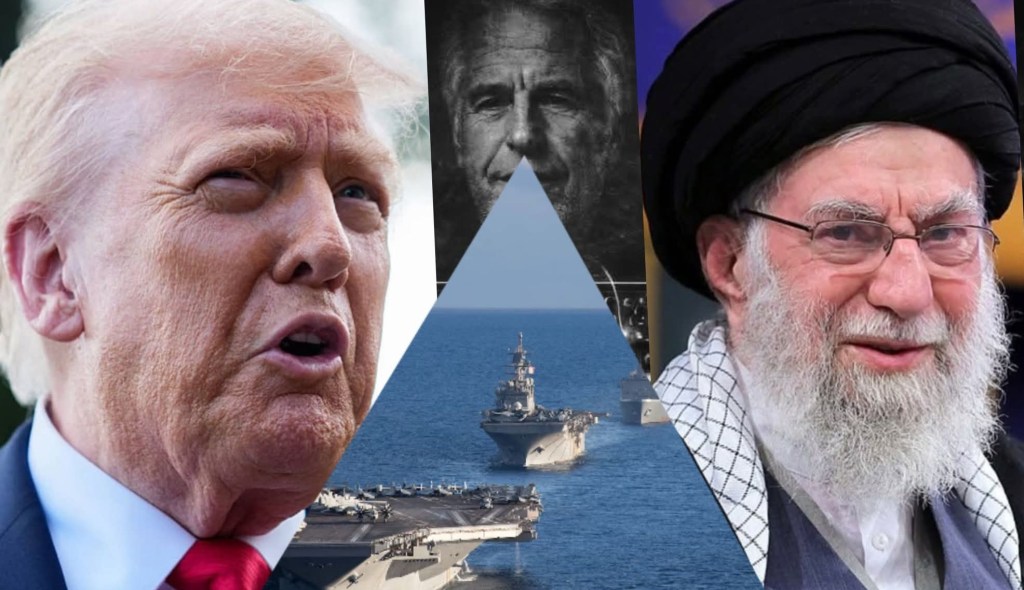
The military build-up against Iran and the doctrines, alliances, and risks shaping a possible full-scale conflict
Television reports from Channel 12 state that President Donald Trump stands on the verge of approving a large scale, week long military campaign against Iran that would be perceived internationally as full war rather than limited reprisal. Sources briefed on operational planning have described a joint American and Israeli effort aimed not merely at degrading facilities but at altering the balance of power within Tehran itself. Axios cited a senior United States adviser who warned that the probability of “kinetic action” within weeks remains high should negotiations collapse, language that conveys imminence rather than contingency. The tempo of deployments, the specificity of targeting discussions, and the public rhetoric concerning regime change collectively indicate preparation for decisive engagement rather than symbolic deterrence. Apparently Turkey is the next inline to Iran, according to reports coming out of Israel.
(Trump hints at a potential 9th war, possibly with Iran, after saying, “We settled 8 wars and I think a ninth is to come.” This follows an $18.5B overnight Fed bank injection on Feb 18.
Some believe the sequence could unfold like this: Iran conflict → Oil spike → Japan carry trade unwind → Dollar & markets drop → Legacy system stress → Rate cuts → Shift to a new financial system. Trump has also said the U.S. banking system is outdated and that crypto legislation would help modernize it.)
Concrete military movements reinforce that conclusion. The aircraft carrier USS Gerald R. Ford has redeployed from Caribbean waters toward the Middle East, while the USS Abraham Lincoln and accompanying destroyers were already positioned in theatre months earlier. Independent flight tracking data recorded more than fifty advanced fighter aircraft moving into regional bases within twenty four hours, including F-16, F-22, and F-35 platforms capable of sustained strike operations. American planners have reportedly outlined an opening sequence beginning with Tomahawk cruise missile salvos designed to suppress radar and command nodes, followed by coordinated air assaults intended to overwhelm layered air defences before organised retaliation can materialise. Such posture constitutes integrated strike preparation consistent with the “shock and awe” doctrine applied in Iraq in 2003, which sought to paralyse adversary leadership within the first hours of combat.
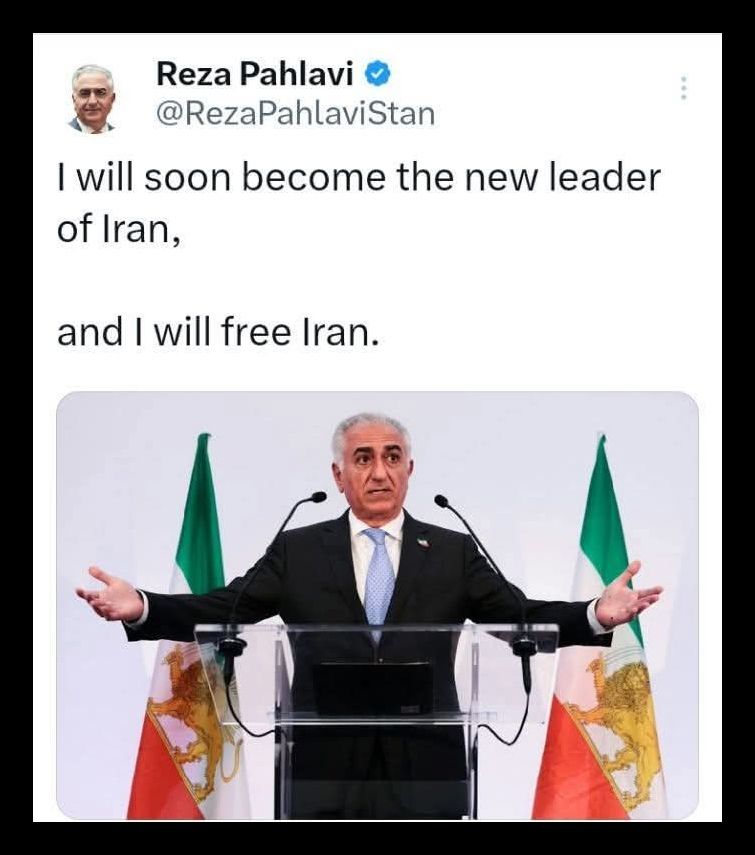
Diplomacy continues in Geneva under visible coercive pressure. A United States official acknowledged that talks produced “good meetings” yet conceded that “the gaps are still wide,” while Iranian representatives indicated detailed proposals would follow within two weeks. The coexistence of negotiation and force concentration generates a compressed decision window in which either track can collapse abruptly. Thomas Schelling observed in his study of coercion that “the power to hurt is bargaining power,” and the visible assembly of carriers and aircraft constitutes precisely such bargaining leverage. Yet Schelling also warned that brinkmanship involves “the deliberate creation of risk,” a phrase that captures the present dynamic as deadlines narrow and signalling intensifies.
Regional military balance complicates any assumption of swift victory. During the twelve day confrontation earlier this year, Israel reportedly degraded segments of Iran’s long range air defence network, including S-200 and S-300 variants alongside indigenous Bavar-373 systems. Tehran responded by accelerating diversification toward Chinese platforms such as the HQ-9B, reportedly capable of engaging targets at ranges approaching three hundred kilometres with active electronically scanned array radar. Medium range HQ-16 and HQ-22 systems, supplemented by anti stealth radars including YLC-8B and JY-27A, create heterogeneous architecture intended to complicate suppression by fifth generation aircraft. Defence analysts note that mixed systems reduce vulnerability to a single electronic warfare technique, while Chinese microelectronics enhance sensor resilience compared with certain legacy models.
Naval risk extends beyond air defence. Reports regarding potential acquisition or adaptation of the YJ-12 anti ship missile, often described in defence literature as a high speed “carrier killer,” suggest capacity to threaten surface groups operating within constrained Gulf waters. Iran previously reverse engineered the Chinese C-802 into the Noor missile, later transferred to proxies including Hezbollah, whose strike on the Israeli corvette INS Hanit in 2006 demonstrated practical effectiveness. The Strait of Hormuz carries roughly one fifth of global oil flows, and disruption through missile or drone activity would reverberate immediately across energy markets and insurance premiums.
Allied and proxy networks further widen the escalation matrix. Militias in Iraq, the Houthis in Yemen, and elements aligned with Tehran across Lebanon and Syria possess capacity to open secondary fronts against American bases and Israeli infrastructure. Russia and China, while unlikely to intervene directly, retain electronic warfare and satellite capabilities that could provide indirect assistance or intelligence support. Professor Glenn Diesen has argued that multipolar competition increases systemic volatility because “local conflicts become arenas for great power signalling,” a dynamic visible as Moscow and Beijing observe developments closely.
Geography shapes probable endurance. Former United States Army officer Stanislav Krapivnik has argued publicly that Iran’s territorial depth, comparable to France and Germany combined, permits absorption of sustained bombardment more readily than smaller states concentrated along narrow coastal plains. Reports circulated in regional media suggested measurable infrastructural damage within Israel during the earlier exchange, reinforcing perceptions of asymmetric exposure. Missile production figures cited by military commentators, approaching several thousand units monthly, indicate capacity for saturation barrages even under sustained aerial pressure.
Economic stakes extend beyond military calculus. Iran advances a southern railway corridor through the Wakhan Corridor linking western China to Europe via Afghanistan and Turkey. Freight volumes between Iran and Afghanistan reportedly rose from fifteen thousand tonnes to more than five hundred thousand within a year, while over sixty trains from China reached Iranian terminals this year compared with seven previously. Completion would shorten Eurasian trade routes relative to northern corridors and maritime paths, embedding Iran within continental supply chains. Conflict disrupting that corridor would affect Chinese and European commercial interests, adding another layer of geopolitical consequence.
Domestic political context in Washington exerts pressure upon strategic decision making. President Trump campaigned on reducing foreign entanglements, yet visible preparations for large scale conflict contradict prior assurances. Concurrent legal and political controversies, including continuing scrutiny surrounding the Jeffrey Epstein files, sustain media focus and partisan contestation. Political scientists frequently note that external crises can redirect domestic attention, though empirical outcomes vary widely depending upon duration and casualty levels. Robert Reich has written that administrations facing internal pressure may seek “dramatic demonstrations of resolve abroad,” a caution rooted in historical precedent.
Understanding how the present juncture emerged requires revisiting strategic continuity. The 1997 blueprint issued by the Project for the New American Century advocated reshaping the Middle East to consolidate American primacy and secure allied interests. Subsequent interventions following the attacks of 2001 altered regional power structures and entrenched regime change as an instrument of policy. Critics argue that Iran has remained a central objective within that framework because its government resists alignment with United States and Israeli security architecture.
Classical military thought illuminates current actions. Sun Tzu wrote in The Art of War that “the supreme art of war is to subdue the enemy without fighting,” emphasising deception, positioning, and psychological dominance. Carrier diplomacy accompanied by negotiations reflects an attempt to compel concession without full engagement. Yet Sun Tzu also warned that protracted warfare exhausts the state, advising that “there is no instance of a country having benefited from prolonged warfare.” Any campaign seeking regime alteration risks precisely such duration should rapid collapse fail to materialise.
Game theory clarifies the danger inherent in brinkmanship. Both sides escalate signals to convince the other of credible resolve, yet incomplete information regarding thresholds raises miscalculation probability. Schelling described this as a competition in risk taking where each party “burns bridges behind them” to signal commitment. Madman theory, frequently attributed to projections of unpredictability, seeks to magnify perceived willingness to escalate beyond rational limits. Such signalling may compel concessions, yet it equally narrows exit ramps once public ultimatums have been issued.
Probable outcomes if war erupts extend across military, economic, and geopolitical dimensions. Initial American strikes would likely degrade portions of Iran’s air defence and missile infrastructure, yet complete neutralisation remains uncertain given diversified systems and geographic dispersion. Iranian retaliation could involve ballistic and cruise missile attacks on regional bases and Israeli cities, coupled with maritime disruption in the Gulf. Oil prices would likely spike sharply, insurance costs would surge, and global markets would react to supply uncertainty. Proxy engagements across Lebanon, Iraq, and Yemen would expand conflict geography, increasing duration and complicating termination.
Long term regime change objectives introduce further uncertainty. Historical cases in Iraq and Libya demonstrate that decapitation of central authority frequently produces power vacuums rather than orderly transition. Thucydides warned that “war is a matter not so much of arms as of money,” underscoring the economic drain accompanying extended campaigns. Empires projecting force into Persia have often encountered resilience exceeding initial estimates, from ancient campaigns recorded by Herodotus to modern interventions shaped by geography and identity. The Persian poet Ferdowsi wrote in the Shahnameh that “the world is a tale of wind and dust,” reminding rulers that power proves transient despite confident beginnings.
Should hostilities begin, the opening salvos may achieve tactical surprise and visible destruction, yet history counsels sobriety when great powers assume that concentrated force guarantees durable political outcomes. Herodotus, recounting earlier imperial campaigns that crossed into Persian lands with confidence, observed that “great deeds are usually wrought at great risks,” a warning that ambition and exposure travel together across centuries. The pursuit of regime change under conditions of regional fragmentation would bind military success to political transformation, a linkage that has repeatedly proven unstable once initial objectives expand beyond limited deterrence.
Extended confrontation would test fiscal endurance, alliance cohesion, and domestic tolerance for casualties, all variables that erode more quickly than planners anticipate. Thucydides wrote that “war is a violent teacher,” underscoring that events in motion reshape calculations faster than doctrine anticipates. Should escalation draw in proxy networks, disrupt energy flows through the Strait of Hormuz, and unsettle Eurasian trade corridors, economic reverberations would amplify battlefield outcomes into systemic strain.
Strategic literature repeatedly returns to the theme of overextension. Paul Kennedy concluded that “imperial overstretch has repeatedly led to the downfall of great powers,” linking military commitments abroad to cumulative fiscal and political burden at home. Arnold Toynbee framed civilisational decline more starkly, writing that “civilizations die from suicide, not by murder,” a judgement implying that internal miscalculation often proves more decisive than external assault. Sun Tzu offered the most concise strategic admonition, stating that “there is no instance of a nation benefiting from prolonged warfare,” a maxim directed not at moral restraint but at prudential statecraft.
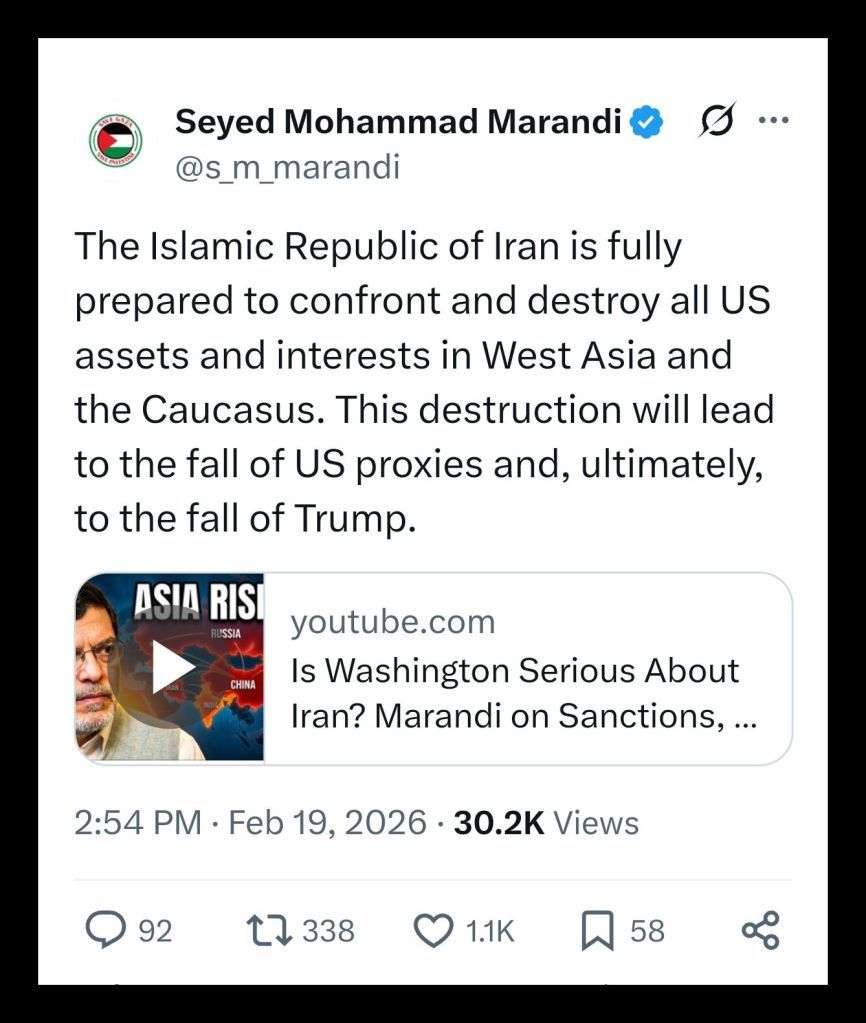
Persia has long stood as a theatre where confidence met resistance shaped by geography, culture, and time. Empires have entered its orbit convinced that rapid blows would reorder political reality, only to discover that endurance and unintended consequence shape the final account. Ferdowsi, reflecting on the rise and fall of rulers in the Shahnameh, wrote that “the world is but a passing wind; none may hold it in his hand,” a line that captures the impermanence of power even at its zenith. Decisions taken in the present moment therefore carry weight beyond immediate objectives, for history records that the plains and mountains of Persia have often measured the limits of ambition more accurately than the calculations of those who marched toward them. According to Larry Johnson on George Galloway’s MOATS yesterday: “ This will go down as one of the most foolish, reckless acts in world history. The last chess piece, the carrier Gerald R Ford, is moving into place for war on Iran. It appears the attack is just days away. The world will never be the same again”.
Authored By: Global GeoPolitics
Global Politics is fully supported by its readers and community. The mission is to analyse and unpack the power, politics, and propaganda shaping everyday life.
If you value this work, becoming a PAID SUBSCRIBER makes a real difference and helps keep it going. Your support is never expected, but it is always deeply appreciated.
If you’d rather contribute once, you can make a one-time donation using the button below:
https://buymeacoffee.com/ggtv |
https://ko-fi.com/globalgeopolitics |
https://buy.stripe.com/3cI5kDdnaeusckjd6Pawo00
References
Diesen, Glenn. The Decay of Western Civilisation and Resurgence of Russia. Routledge, 2020.
Ferdowsi. Shahnameh (The Book of Kings). Various translations.
Herodotus. The Histories. Translated by Aubrey de Sélincourt. Penguin Classics, 1954.
Kennedy, Paul. The Rise and Fall of the Great Powers: Economic Change and Military Conflict from 1500 to 2000. Random House, 1987.
Project for the New American Century. Rebuilding America’s Defenses: Strategy, Forces and Resources for a New Century. Washington, D.C., 2000.
Reich, Robert B. The System: Who Rigged It, How We Fix It. Knopf, 2020.
Schelling, Thomas C. The Strategy of Conflict. Harvard University Press, 1960.
Schelling, Thomas C. Arms and Influence. Yale University Press, 1966.
Sun Tzu. The Art of War. Translated by Samuel B. Griffith. Oxford University Press, 1963.
Thucydides. History of the Peloponnesian War. Translated by Rex Warner. Penguin Classics, 1954.
Toynbee, Arnold J. A Study of History. Oxford University Press, 1934–1961.
United States Department of Defense. Public briefings and force posture statements regarding Middle East deployments, various releases.
Regional defence analyses on Chinese HQ-9B, HQ-16, HQ-22 systems and YJ-12 anti-ship missile capabilities, compiled from open-source military assessments, 2024–2026.
Open-source trade and infrastructure reporting on Iran–Afghanistan rail development and Eurasian corridor expansion, 2024–2026.


Leave a comment