
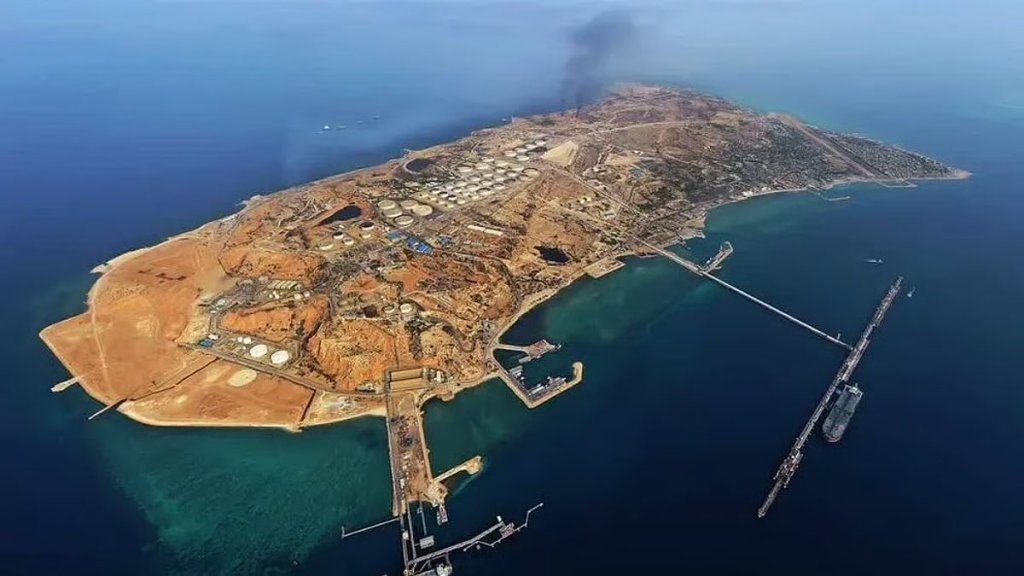
Why Kharg Island Is Emerging as the Next Coercive Economic Decapitation Option Designed to Break Iran’s War Economy
Accepting defeat is not an option; the Epstein coalition has chosen a scorched-earth escalation policy instead.
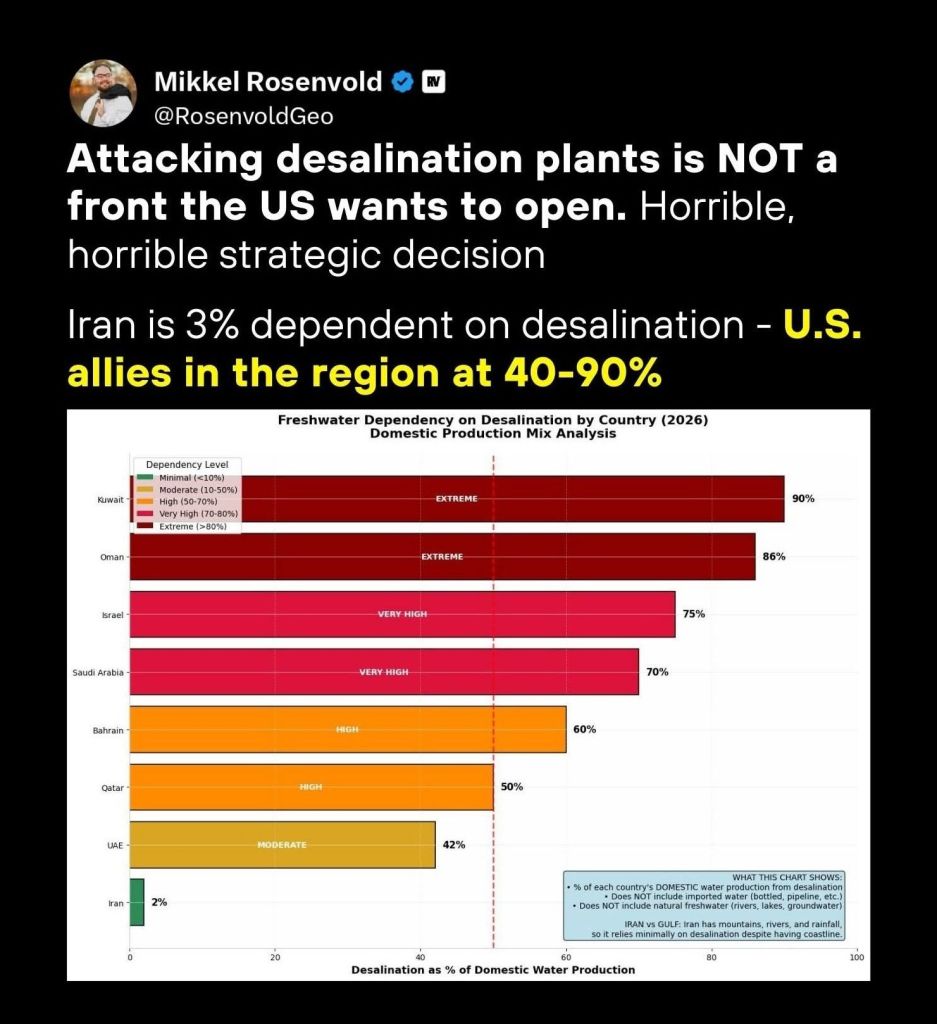
Only yesterday the coalition went after civilian infrastructure, another transgression against the rules of war. They struck a water desalination plant on Qeshm Island and the Artesh, Nobonyad, Shahr-e-Rey and Shahrano oil refineries.
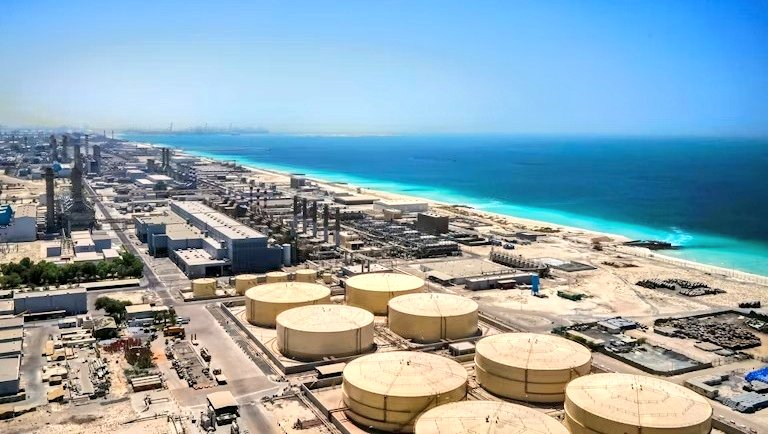
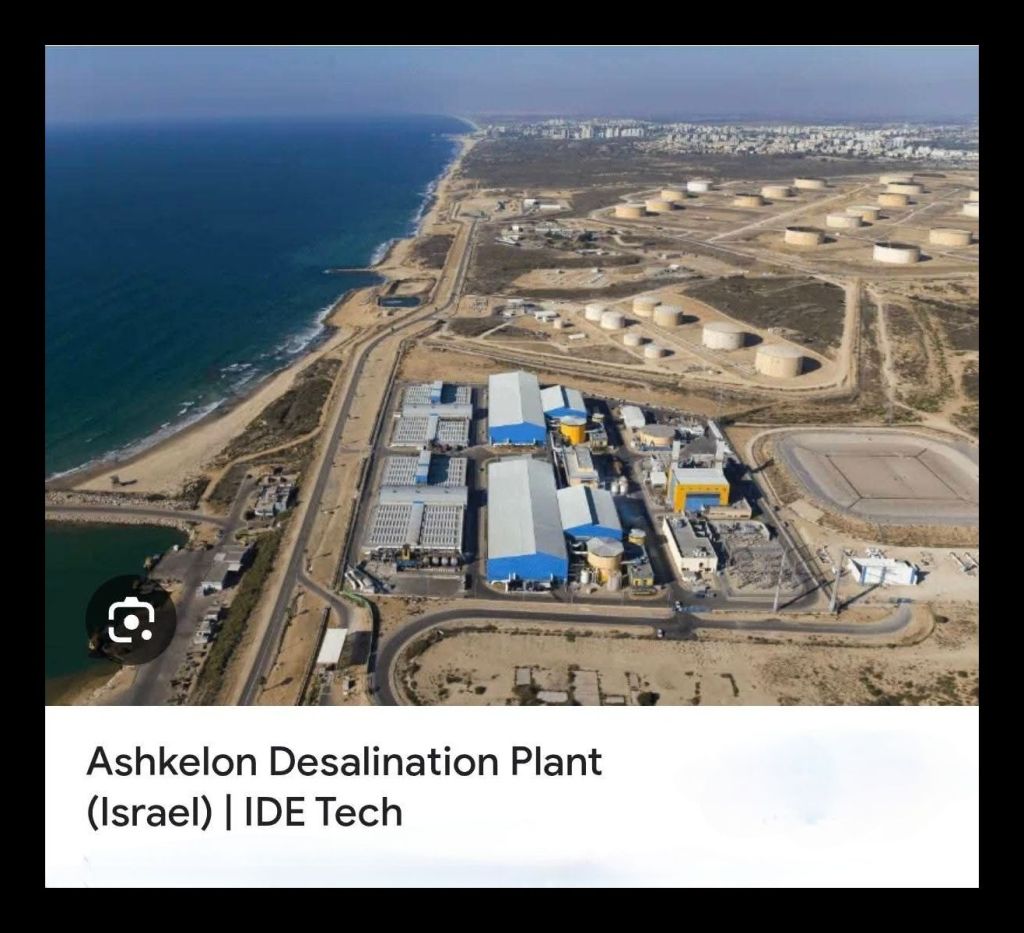
Tehran immediately responded with a statement that the coalition had set a precedent and last night put the Haifa refinery out of service. Israel has five major large-scale seawater desalination plants on its Mediterranean coast. These facilities produce roughly 585–600 million cubic meters of desalinated water per year, supplying around 70–85% of Israel’s domestic drinking water.
Kharg Island was the red line the coalition had effectively drawn for itself, the one target whose destruction would do more to curtail Iran’s resolute defiance than every other strike combined, yet had been left untouched because the consequences of striking it would be difficult for the coalition to manage. The Epstein class needs Iran’s oil if they are to exert dormination over the planet via their dystopian digital surveillance control grid. They will have no control if Iran’s central bank and oil revenues operate outside their sphere.
Axios has now reported that officials in the United States government are actively discussing the possibility of seizing the island. According to the report, which cites administration officials directly, discussions are under way about capturing Kharg Island and conducting special forces raids to secure Iran’s stockpiles of highly enriched uranium. No order has been issued and no deployment authorised; the idea remains under discussion. Nevertheless, the fact that the option is being reported through Axios, with sources inside the administration, suggests that the debate has moved beyond theoretical contingency planning and into active policy consideration.
Kharg Island handles roughly 90 per cent of Iran’s crude oil exports, around two million barrels per day at pre-war capacity. The revenue accounts for approximately 40 per cent of the Iranian government’s budget, including the payroll of the Islamic Revolutionary Guard Corps, which sustains thirty-one provincial commands. Seizing the island would remove that revenue stream almost overnight. That is precisely why the option is being discussed. It is also why it has not been carried out. Trump and Netanyahu have effectively been defeated conventionally. Only three options remain: accept defeat, put boots on the ground, or escalate to the unthinkable and drop a nuclear weapon on Tehran or Kharg Island.
In 1979 the administration of Jimmy Carter developed contingency plans to seize Kharg. Those plans were abandoned as too difficult and too risky. By 2026 the military picture has changed: around 80 per cent of Iran’s air defences have reportedly been destroyed according to the Israel Defense Forces, the Iranian navy has been significantly weakened, and the United States enjoys near-total air superiority. Operationally the task is far more feasible than it was in 1979.
The economic consequences, however, have not changed. Seizing Kharg would remove Iranian crude from global markets for years rather than weeks. Rebuilding offshore loading infrastructure during wartime would require complete reconstruction. The likely effect would be a surge in Brent crude prices towards $150 per barrel or higher. It would risk the recession Washington is trying to avoid, provide China with an escalation rationale it does not presently have, and oblige the United States to hold a small island under constant drone and missile attack while maintaining supply lines across the Strait of Hormuz, a waterway Iran has already demonstrated it can threaten.
The Axios report also refers to special forces operations aimed at securing Iran’s highly enriched uranium. Taken together, these proposals indicate the question now being debated within the administration: whether the endgame of the war will be limited degradation, the current approach, or complete strategic decapitation, meaning the simultaneous removal of Iran’s revenue base and nuclear capability.
Donald Trump has called for unconditional surrender after torpedoing negotiations. Iran has refused to surrender. The air campaign has not been effective enough to produce capitulation. It has in fact united the Iranians more than any of their leaders past and present.
That message has also landed across the Gulf. Regional governments have heard it clearly. Behind the public statements and the carefully calibrated diplomatic language, every Gulf government is now having the same private conversation: how to ask the United States to leave without it appearing that they are asking the United States to leave. The widening conflict, the attacks on energy infrastructure, and the prospect of a direct assault on Kharg Island have forced regional capitals to confront the possibility that the security architecture they have relied upon for decades may now be the very source of the instability threatening them.
Each day without a political settlement increases the pressure to consider options that were previously dismissed as too costly. Kharg Island therefore serves as the measure of how far the United States is prepared to go. The discussion itself is the signal.
If the island were actually seized, it would mark the moment when a regional conflict risks becoming a global economic crisis affecting every major economy.
The red line has been identified and the paedophile cult in Washington is now debating whether to cross it.
Authored By: Global GeoPolitics
Thank you for visiting. If you believe journalism should serve the public, not the powerful, and you’re in a position to help, becoming a PAID SUBSCRIBER truly makes a difference. Alternatively you can support by way of a cup of coffee:


Leave a comment