
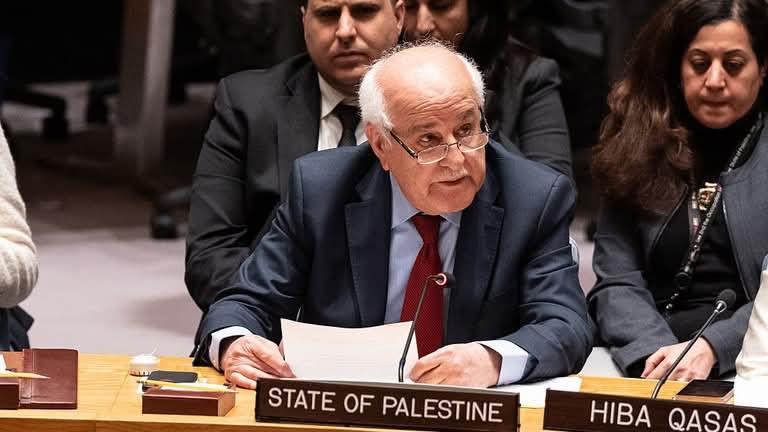
The confrontation underscores growing international support for Palestinian recognition despite repeated US vetoes at the Security Council.
The United States has reportedly intensified pressure on Palestinian diplomats at the United Nations, warning that efforts to secure a senior General Assembly role could trigger punitive measures, including possible visa revocations for Palestinian representatives in New York. According to media reports citing an internal State Department cable, Washington urged Palestinian UN envoy Riyad Mansour to withdraw his candidacy for a vice-presidential seat in the General Assembly, arguing that the move would “fuel tensions” and complicate broader regional diplomacy.
The dispute reflects a deeper geopolitical struggle over the international recognition of Palestinian statehood and the future architecture of Middle Eastern diplomacy. Palestinian officials have increasingly turned to multilateral institutions such as the UN in an attempt to compensate for stalled bilateral negotiations with Israel and the collapse of the traditional US-led peace process. Washington and Israel, however, view these diplomatic initiatives as attempts to bypass direct and coerced negotiations and gain de facto state recognition through international bodies.
The reported cable allegedly instructed US diplomats in Jerusalem to tell Mansour that continuing the bid could undermine President Donald Trump’s proposed Gaza peace framework . The warning signals that the White House is attempting to preserve leverage over the Palestinian Authority at a moment when regional dynamics are rapidly shifting. Arab states that once conditioned normalization with Israel on Palestinian statehood have increasingly prioritized strategic concerns such as countering Iran, economic integration, and security cooperation with Washington.
Mansour had already abandoned an earlier bid for the presidency of the General Assembly after American lobbying efforts, according to the reports. The Assembly is scheduled to elect its next president and 16 vice-presidents on June 2, making the Palestinian candidacy symbolically significant even though the role carries limited executive authority.
The pressure campaign reportedly extended beyond diplomatic messaging. US officials were allegedly instructed to remind Palestinian leaders that progress on recovering tax and customs revenues withheld by Israel would depend on whether the Palestinian Authority “engaged in good faith.” Israel controls the transfer of these revenues under existing agreements, and the funds account for a substantial portion of the Palestinian Authority’s operating budget.
This financial dimension highlights the asymmetric power structure shaping the Israeli-Palestinian conflict. Israel and the US retain significant economic leverage over the Palestinian Authority, while Palestinian leaders increasingly rely on symbolic diplomatic gains at the UN to demonstrate political relevance domestically and internationally. The threat of financial isolation also underscores growing concerns about the long-term viability of the Palestinian Authority itself, which faces declining legitimacy among Palestinians and mounting fiscal instability.
The controversy comes against the backdrop of the continuing fallout from the Gaza war that began after the Hamas attack on southern Israel in October 2023. Israel’s military campaign in Gaza has killed tens of thousands of Palestinians and displaced most of the enclave’s population, according to regional authorities and humanitarian organizations. Although a ceasefire was reached last year, Israeli forces have continued conducting operations and strikes in the territory.
Internationally, the war has accelerated a broader erosion of US diplomatic standing across much of the Global South. Many countries in Africa, Asia, and Latin America increasingly view Washington’s unwavering support for Israel as inconsistent with its stated commitment to international law and human rights. Palestinian diplomatic efforts at the UN have therefore become part of a wider geopolitical contest between a US-led Western bloc and a coalition of states advocating a more multipolar international order.
The Palestinian Authority currently holds non-member observer state status at the UN and lacks voting rights in the 193-member General Assembly. Although the Assembly supported a Palestinian bid for full membership in 2024, actual admission still requires approval by the Security Council, where the United States has repeatedly used its veto power to block Palestinian statehood initiatives.
The visa threat also raises sensitive legal and diplomatic questions. Under the 1947 UN headquarters agreement, the US is generally obligated to permit representatives of UN member states and observers to travel to New York for official UN activities. However, Washington has historically invoked national security exceptions to deny visas to certain foreign officials, including representatives from Iran, Russia, and former Palestinian leader Yasser Arafat.
Critics argue that using visa access as leverage risks politicizing the host-country role of the United States within the UN system. Washington is seen as abusing sovereign authority over entry into the country argued on the basis of preventing facilitation of initiatives viewed as hostile to US foreign policy objectives or Israeli security interests.
The episode ultimately illustrates the widening gap between the diplomatic priorities of Washington and much of the international community regarding the Palestinian issue. While the US continues to prioritize bilateral negotiations and Israeli security considerations, many states increasingly support broader recognition of Palestinian representation and statehood through international institutions.
Authored By: Global GeoPolitics
If you prefer to make a one time donation in support of my work, you can do so by clicking any link below:
https://buymeacoffee.com/ggtv |
https://ko-fi.com/globalgeopolitics |
Bitcoin: 3NiK8BoRZnkwJSHZSekuXKFizGPopkE7ns


Leave a comment