
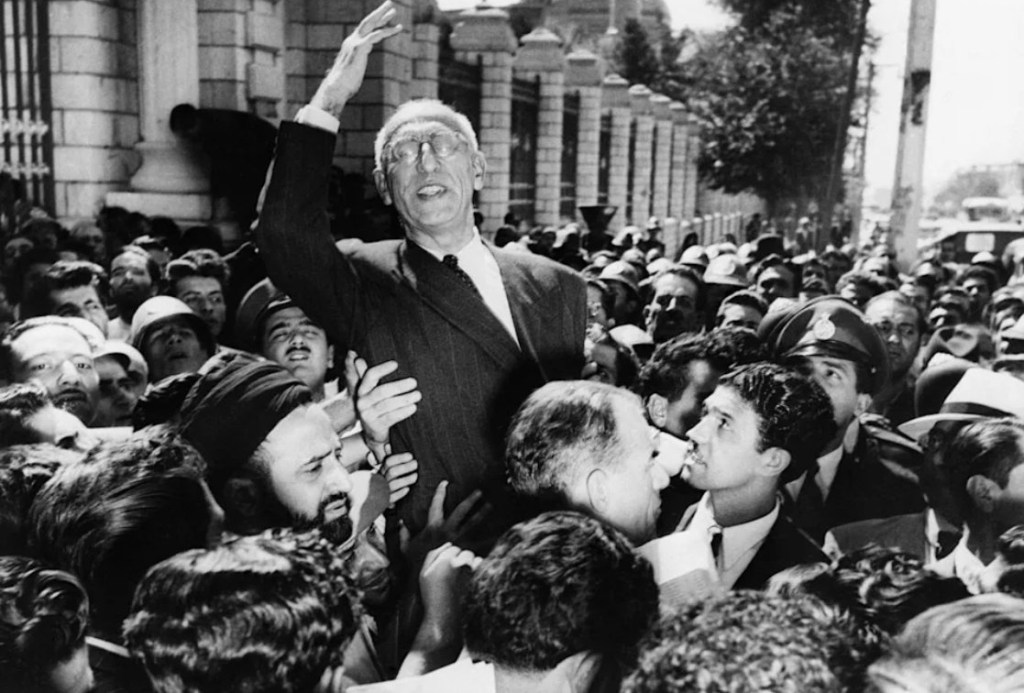
The 1953 Anglo-American overthrow of Mohammad Mosaddegh destroyed a democratic nationalist government, and laid the foundations for the anti-Western resistance doctrine drives Tehran’s politics today
The modern confrontation between Iran and the United States did not begin with the 1979 Islamic Revolution, the embassy hostage crisis, or the rise of the Islamic Republic under Ayatollah Khomeini. The political foundations of the present conflict were established much earlier during the destruction of Mohammad Mosaddegh’s government in 1953, when British and American intelligence services coordinated the overthrow of a democratically elected Iranian administration after it challenged Western control over Iranian oil resources. The consequences of that intervention continue shaping Iranian political consciousness, regional geopolitics, energy security calculations, and the wider breakdown of trust between Western powers and large sections of the Global South.
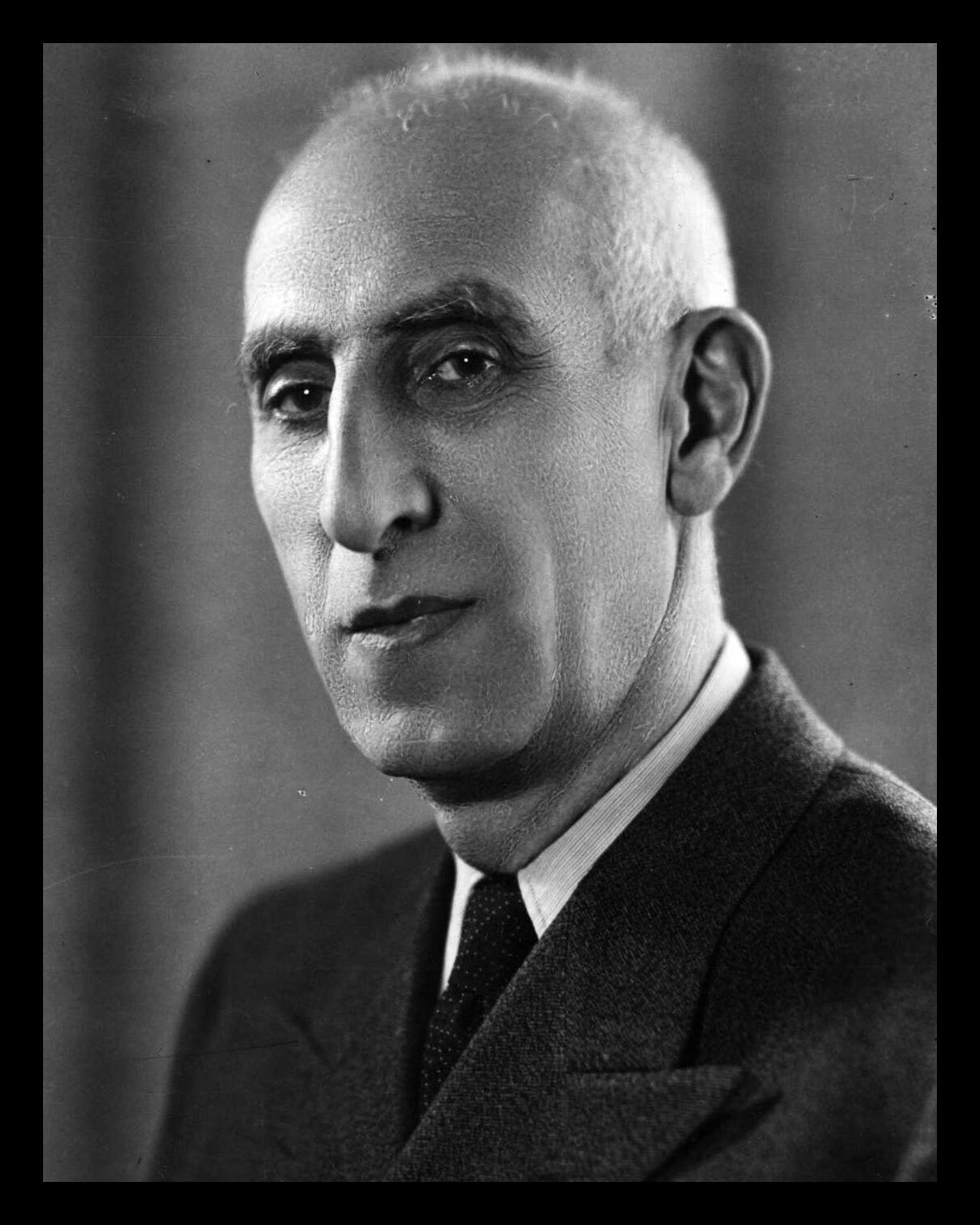
(Mohammad Mosaddegh)
Mohammad Mosaddegh emerged during a period when formal European colonial structures were weakening but economic domination through resource control remained firmly intact across much of the Middle East. Iran’s oil industry had effectively fallen under British control through the Anglo-Iranian Oil Company, later renamed BP, while the overwhelming share of profits generated from Iranian resources flowed abroad under concessionary arrangements widely regarded inside Iran as humiliating and exploitative. Mosaddegh’s decision to nationalise Iranian oil in 1951 therefore represented far more than a domestic economic dispute because it challenged the underlying assumptions of post-war Western strategic power across the region.
British authorities responded with extraordinary hostility toward the nationalisation programme. London imposed sanctions, organised international legal pressure, froze Iranian assets, and attempted to isolate Tehran economically while simultaneously lobbying Washington for covert intervention. Declassified documents released decades later by the United States National Security Archive confirmed that Operation Ajax, coordinated jointly by the CIA and Britain’s MI6, financed political agitation, bribed officials, manipulated sections of the Iranian press, organised street violence, and ultimately supported military elements involved in removing Mosaddegh from power in August 1953. The CIA itself formally acknowledged its operational role during the coup in internal histories later published through archival releases.
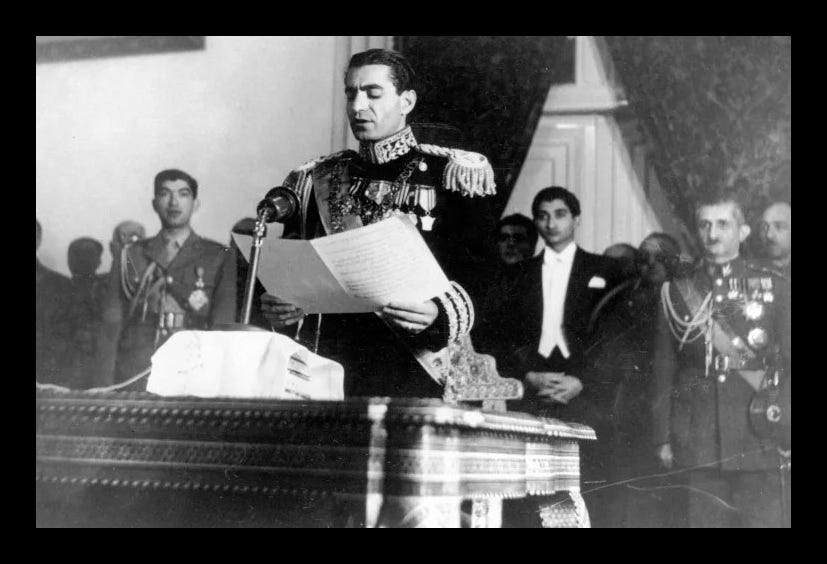
(The CIA puppet, Shah of Iran Mohammad Reza Pahlavi speaking in Tehran, Iran, February 16, 1950. Associated Press)
The official justification presented at the time relied heavily upon Cold War rhetoric concerning communist infiltration and Soviet influence. Yet the material drivers behind the operation were tied fundamentally to strategic energy control and Western fears that successful nationalisation in Iran could inspire similar movements elsewhere across the Middle East and developing world. Stephen Kinzer’s extensive examination of the coup documented how British officials regarded the preservation of oil concessions as a matter of imperial survival during the declining years of Britain’s global power. American policymakers simultaneously feared that independent economic nationalism across resource-rich states might weaken Western access to critical energy infrastructure during the early Cold War period. \n\nMosaddegh himself occupied a complex political position often simplified in later Western narratives. He was neither a revolutionary Islamist nor a Soviet-aligned communist figure. His politics combined constitutional nationalism, parliamentary legitimacy, economic sovereignty, and resistance to foreign domination within the framework of Iranian state institutions. Contemporary diplomatic records and parliamentary speeches demonstrate that Mosaddegh repeatedly sought negotiated settlements preserving Western commercial participation while restoring Iranian control over national resources and revenue distribution. British and American intelligence planners nevertheless concluded that his continued survival threatened broader strategic interests connected to oil access and regional influence.
The coup fundamentally transformed Iran’s political trajectory for decades afterward. Following Mosaddegh’s removal, Shah Mohammad Reza Pahlavi consolidated increasingly authoritarian rule backed heavily by American military assistance, intelligence cooperation, and economic support. The Shah’s regime developed extensive internal security structures through SAVAK, the notorious intelligence organisation trained partly with CIA and Mossad assistance, while opposition movements faced imprisonment, torture, censorship, and political repression documented extensively by Amnesty International, Human Rights Watch, and later Iranian revolutionary archives.
Western governments consistently framed the Shah during the 1960s and 1970s as a modernising ally promoting stability, development, and pro-Western reform across the Middle East. Significant sections of Iranian society experienced those same policies as externally imposed authoritarianism protecting foreign interests while suppressing domestic political participation. Rapid industrialisation, military expansion, and elite wealth accumulation under the Shah coincided with widening social inequality, corruption, inflationary pressures, urban displacement, and deepening resentment toward perceived foreign domination over Iranian political life.
The 1979 Islamic Revolution therefore emerged from a much deeper historical context than the simplified Western narrative of sudden religious radicalisation often suggests. Ayatollah Khomeini successfully fused anti-imperial nationalism, Shiite political theology, social grievance, and hostility toward foreign interference into a revolutionary movement capable of mobilising millions across class lines. Anti-American sentiment inside revolutionary Iran drew enormous emotional and political power from collective memory surrounding the 1953 coup and decades of subsequent Western support for the Shah’s security apparatus.
Contemporary Iranian officials continue invoking Mosaddegh because the episode remains central to Iranian perceptions of Western behaviour toward sovereign states resisting external economic and strategic control. Iranian Foreign Ministry spokesman Esmaeil Baqaei recently described the coup as the beginning of “73 years” of American hostility toward Iran, arguing that sanctions, threats, military pressure, and diplomatic confrontation form part of a continuous historical pattern rather than isolated disputes emerging after 1979. His remarks reflect a deeply embedded political consensus across much of the Iranian establishment that external powers repeatedly seek regime change whenever Iranian governments pursue strategic independence inconsistent with Western geopolitical interests.
The broader international significance of Mosaddegh’s overthrow extends beyond Iran itself because the operation established a model for covert intervention repeated throughout the Cold War era. Comparable methods later appeared in Guatemala during the removal of Jacobo Árbenz in 1954, Congo during the destabilisation surrounding Patrice Lumumba, Chile during the overthrow of Salvador Allende in 1973, and numerous other interventions where nationalist governments threatening Western economic or strategic interests faced covert destabilisation campaigns supported by intelligence agencies, financial pressure, media operations, or military proxies.
Modern Iranian strategic doctrine increasingly reflects lessons drawn directly from this historical experience. Tehran’s pursuit of missile deterrence, asymmetric warfare capabilities, regional proxy networks, and resistance to Western military integration derives partly from the belief that states lacking independent defensive capacity remain vulnerable to externally engineered destabilisation. Iranian policymakers repeatedly cite Libya, Iraq, and Syria alongside the Mosaddegh precedent as examples of what occurs when governments challenging Western strategic objectives lack sufficient deterrence mechanisms.
American officials often present contemporary tensions with Iran primarily through the framework of nuclear proliferation, regional militancy, or terrorism concerns. Iranian leaders frame the same conflict through the history of foreign intervention, sanctions warfare, covert operations, assassinations, economic strangulation, and regime-change efforts extending back to the destruction of Mosaddegh’s government. The persistence of these competing historical narratives severely limits diplomatic trust because each side interprets current events through fundamentally incompatible understandings of the conflict’s origins.
The 1953 coup also remains deeply relevant within the wider geopolitical transition toward multipolarity now accelerating across Eurasia, Africa, and Latin America. Governments increasingly aligned with China, Russia, BRICS structures, or non-aligned economic initiatives frequently cite earlier Western interventions as evidence that liberal international rhetoric concerning democracy and sovereignty has historically coexisted with covert destabilisation whenever strategic resources or geopolitical influence faced serious challenge.
Iran’s contemporary partnerships with Russia and China therefore cannot be understood solely through recent sanctions or regional security concerns. They also reflect a long historical process whereby repeated confrontation with Western powers pushed successive Iranian governments toward alternative strategic alignments outside the Atlantic political order. Chinese investment agreements, Russian military coordination, BRICS expansion, and de-dollarisation efforts all emerge partly from broader attempts by sanctioned or targeted states to reduce vulnerability to Western financial pressure and political coercion.
Mosaddegh’s political legacy continues carrying symbolic power precisely because his government represented an attempt to secure economic sovereignty through constitutional means before covert intervention destroyed that possibility. The destruction of his administration strengthened more radical currents inside Iranian political life by discrediting gradualist nationalism and parliamentary compromise among many future revolutionaries. Western policymakers seeking stable relations with Iran while simultaneously dismissing the significance of 1953 continue underestimating the degree to which the coup remains embedded within Iranian state identity and national historical memory.
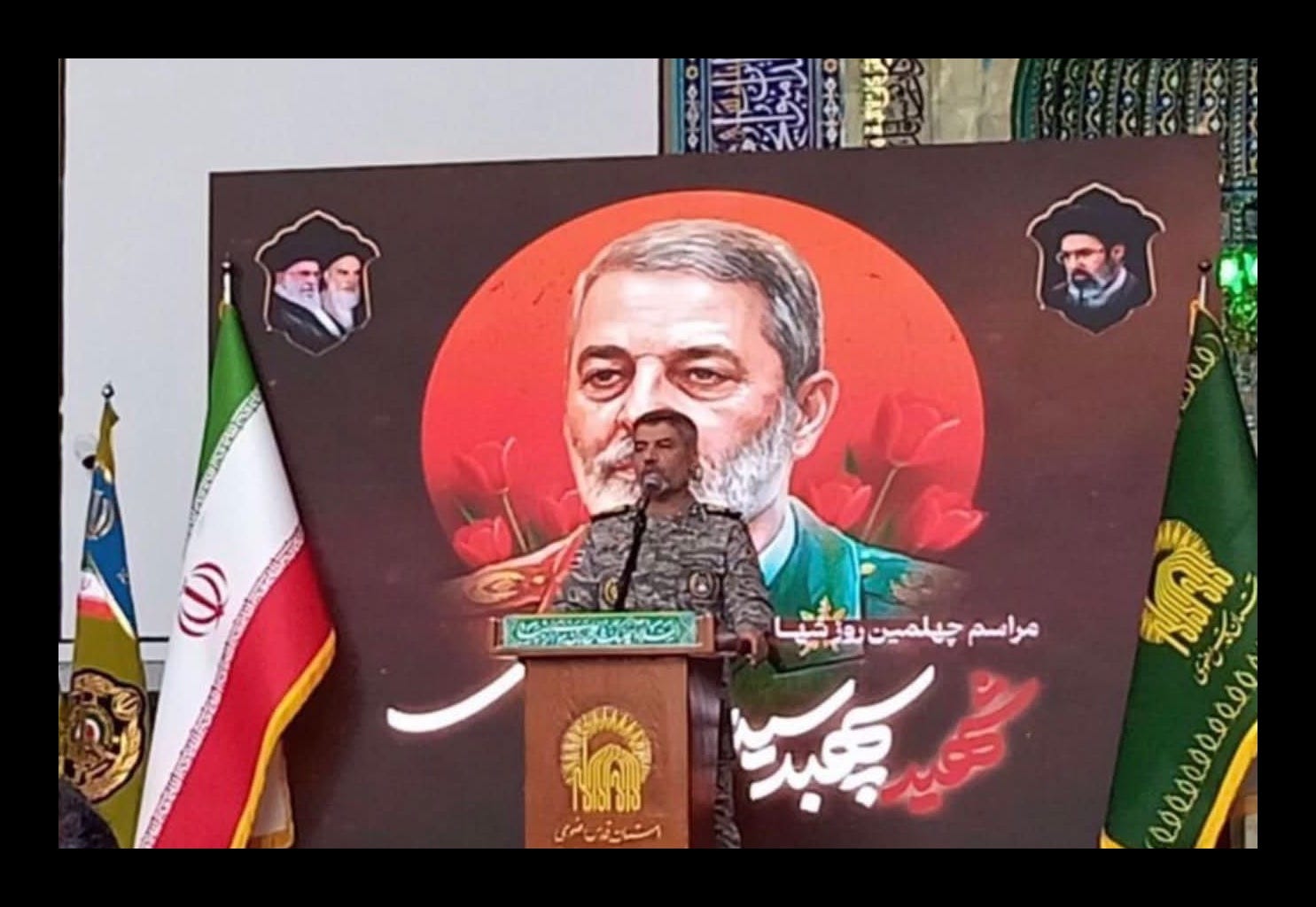
( Iranian Army spokesman Brigadier General Mohammad Akraminia:‘After the first revolution that expelled the Shah and the second revolution that expelled America from Iran, today we will expel America from the entire region, and its presence will be eliminated from this region forever’)
The present confrontation between Iran and the West therefore rests upon far deeper foundations than contemporary disputes over sanctions, uranium enrichment, or regional military alignments alone. The overthrow of Mosaddegh demonstrated to generations of Iranians that political independence, control over strategic resources, and resistance to external influence could provoke severe retaliation from powerful foreign states regardless of democratic legitimacy or constitutional procedure. That historical lesson continues shaping Iranian strategic behaviour more than seven decades after the streets of Tehran were first manipulated through covert Anglo-American intervention.
Authored By: Global GeoPolitics
Thank you for visiting. This is a reader-supported publication. If you believe journalism should serve the public, not the powerful, and you’re in a position to help, becoming a PAID SUBSCRIBER truly makes a difference. Alternatively you can support by way of a cup of coffee:
https://buymeacoffee.com/ggtv |
https://ko-fi.com/globalgeopolitics |
Bitcoin: 3NiK8BoRZnkwJSHZSekuXKFizGPopkE7ns
References
National Security Archive – CIA declassifies more of “Zendebad, Shah!”
Siegel, D. and Byrne, M. (2018) ‘CIA declassifies more of “Zendebad, Shah!” – internal study of 1953 Iran coup’, National Security Archive, George Washington University, 12 February. Available at: National Security Archive (Accessed: 21 May 2026).
National Security Archive – New findings on clerical involvement in the 1953 coup in Iran
Byrne, M. and Gasiorowski, M. (2018) ‘New findings on clerical involvement in the 1953 coup in Iran’, National Security Archive, George Washington University, 7 March. Available at: National Security Archive (Accessed: 21 May 2026).
National Freedom of Information Coalition – CIA formally acknowledges its role in 1953 Iranian coup
National Freedom of Information Coalition (2013) ‘CIA formally acknowledges its role in 1953 Iranian coup’. Available at: NFOIC (Accessed: 21 May 2026).
National Security Archive – Iran-Mosaddeq overthrow, 1953
National Security Archive (2026) ‘Iran – Mosaddeq overthrow, 1953’, George Washington University. Available at: National Security Archive (Accessed: 21 May 2026).
Associated Press – CIA publicly acknowledges 1953 coup in Iran was undemocratic
Associated Press (2023) ‘CIA publicly acknowledges 1953 coup it backed in Iran was undemocratic as it revisits “Argo” rescue’, 18 August. Available at: AP News (Accessed: 21 May 2026).
Associated Press – A CIA-backed 1953 coup in Iran haunts the country
Associated Press (2023) ‘A CIA-backed 1953 coup in Iran haunts the country with people still trying to make sense of it’, 18 August. Available at: AP News (Accessed: 21 May 2026).
Associated Press – AP Was There: A 1953 CIA-led coup in Iran topples prime minister
Associated Press (2023) ‘AP Was There: A 1953 CIA-led coup in Iran topples prime minister, cements shah’s power’, 16 August. Available at: AP News (Accessed: 21 May 2026).
The Times – Coup 53: Uncovering the overthrow of Iran’s PM that Britain never owned up to
The Times (2020) ‘Coup 53: Uncovering the overthrow of Iran’s PM that Britain never owned up to’, 18 August. Available at: The Times (Accessed: 21 May 2026).
Kinzer, S. (2003) All the Shah’s Men: An American Coup and the Roots of Middle East Terror. Hoboken: John Wiley & Sons.
Gasiorowski, M.J. and Byrne, M. (eds.) (2004) Mohammad Mosaddeq and the 1953 Coup in Iran. Syracuse: Syracuse University Press.
Abrahamian, E. (2013) The Coup: 1953, the CIA, and the Roots of Modern U.S.-Iranian Relations. New York: The New Press.


Leave a comment