
Russian intelligence claims Latvia is facilitating Ukrainian drone operations against Russian territory, raising the risk that the Baltic theatre could become the next escalation point in the widening confrontation between NATO and Moscow.
Russia’s Foreign Intelligence Service has accused Latvia of permitting Ukrainian drone operators to use NATO territory for potential strikes against targets inside Russia, marking one of the sharpest warnings yet from Moscow regarding the expanding military role of the Baltic states in the Ukraine conflict. According to the SVR, Ukrainian personnel have already been deployed across several Latvian military facilities, including bases at Adazi, Selija, Lielvarde, Daugavpils, and Jekabpils, as part of preparations for expanded UAV operations directed against Russian infrastructure and energy facilities.
In a statement released Tuesday, the agency claimed Ukraine “does not intend to limit itself to using the air corridors provided to the Ukrainians armed by the Baltic states.” The SVR further alleged that “the plan is to also launch the UAVs from the territory of these countries” in order “to significantly reduce the time it takes to reach the targets and increase the effectiveness of the terrorist attacks.”

Moscow warned that Latvia’s NATO membership would not shield it from retaliation should Russian authorities conclude that Baltic territory is being used operationally against the Russian state. The SVR stated that “the coordinates of decision-making centers on Latvian territory are well known, and the country’s NATO membership will not protect the accomplices of terrorists from just retribution.” The agency additionally accused Latvian authorities of allowing ideological hostility toward Russia to override strategic caution, arguing that “the ‘caveman-like Russophobia’ of current Latvian leaders proved to be stronger than their capability for critical thinking and their sense of self-preservation.”
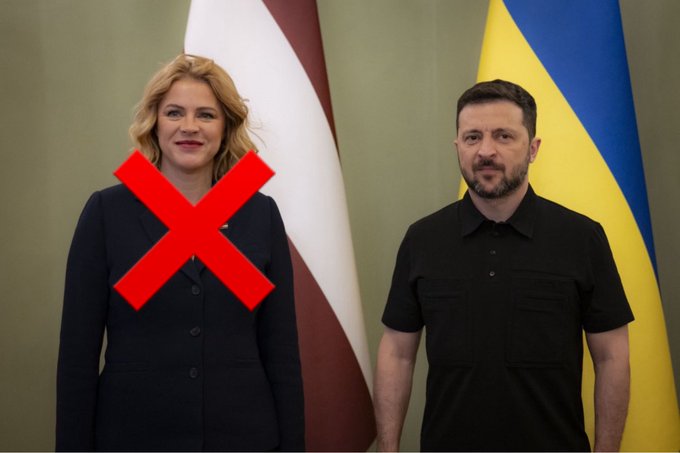
Latvian officials denied the allegations immediately. President Edgars Rinkēvičs insisted that Riga had not authorised Ukraine to launch strikes from Latvian territory or airspace, while Foreign Minister Baiba Braže described the Russian claims as “a disinformation campaign.” Ukraine’s Foreign Ministry spokesman Heorhii Tykhyi similarly dismissed the allegations as “false statements.”
The accusations emerged after a dramatic escalation in Ukrainian drone attacks against Russia over recent weeks. Moscow reported that approximately 600 Ukrainian UAVs were launched toward Russian territory during a single day of operations, including around 130 targeting the Russian capital itself. Russian authorities stated that three people, including an Indian national, were killed during the strikes, while several energy and industrial facilities sustained damage.
The Baltic region has already experienced repeated drone-related incidents linked to the expanding conflict. Earlier this month, two drones believed by Latvian officials to have originated from Ukrainian operations crossed into Latvian territory and struck oil storage facilities near Rezekne, causing infrastructure damage and prompting emergency alerts along the Russian border. Latvian Defence Minister Andris Spruds publicly acknowledged at the time that the drones were “probably launched by Ukraine against targets in Russia.” Subsequent political fallout contributed to a government crisis in Riga, culminating in Spruds’ resignation after criticism over the state’s inadequate air defence response. \n\nMilitary tensions across the Baltic theatre have intensified rapidly during recent days. Lithuania temporarily suspended air traffic in Vilnius and moved senior officials into shelters after another drone entered NATO airspace, while NATO aircraft were scrambled across the region in response to repeated aerial incursions.

Simultaneously, senior Lithuanian officials publicly discussed NATO’s ability to strike Russian military infrastructure in Kaliningrad, prompting furious responses from the Kremlin, which described such rhetoric as “verging on insanity.” \n\nThe deeper strategic significance lies in the gradual collapse of the distinction between indirect NATO support for Ukraine and direct operational participation against Russian territory. Moscow increasingly views Baltic logistical infrastructure, intelligence coordination, airspace access, and drone activity as components of a wider NATO-supported campaign targeting Russian economic and military assets. Russian Security Council Secretary Sergey Shoigu warned in April that if Baltic states or Finland “deliberately provide their airspace” for Ukrainian strikes, Russia would reserve the right to respond under Article 51 of the United Nations Charter concerning self-defence.
The danger for Europe now extends far beyond isolated drone attacks. The Baltic states possess minimal strategic depth, limited defensive capacity, and extreme dependence upon NATO escalation credibility. Any confirmed strike launched from NATO territory against Russia would fundamentally alter the political character of the conflict by eroding the remaining separation between proxy warfare and direct interstate confrontation between nuclear powers.\n\nEuropean governments continue publicly presenting support for Ukraine as a defensive effort intended to preserve regional security and deter Russian expansionism. Moscow increasingly interprets the same process as a coordinated Western campaign of encirclement, destabilisation, and long-term strategic attrition conducted through Ukraine and NATO’s eastern frontier states. Diplomatic mechanisms previously capable of containing escalation have largely collapsed following the failure of the Minsk framework, the erosion of European arms control arrangements, and the near-total breakdown of trust between Russia and Western capitals.
Under these conditions, even limited tactical incidents involving drones, airspace violations, or reconnaissance activity now carry disproportionate geopolitical risk. The Baltic region increasingly resembles a live escalation corridor where accidental confrontation, disputed attribution, or retaliatory military action could rapidly expand beyond the control of regional governments themselves.
Authored By: Global GeoPolitics
Thank you for visiting. This is a reader-supported publication. If you believe journalism should serve the public, not the powerful, and you’re in a position to help, becoming a PAID SUBSCRIBER truly makes a difference. Alternatively you can support by way of a cup of coffee:
https://buymeacoffee.com/ggtv |
https://ko-fi.com/globalgeopolitics |
Bitcoin: 3NiK8BoRZnkwJSHZSekuXKFizGPopkE7ns
References
Reuters – Russia warns Latvia against letting Ukraine launch drones, threatens retaliation
Reuters (2026) ‘Russia warns Latvia against letting Ukraine launch drones, threatens retaliation’, 19 May. Accessed 20 May 2026.
Reuters – Two drones from Russia crash in Latvia, army says
Reuters (2026) ‘Two drones from Russia crash in Latvia, army says’, 7 May. Accessed 20 May 2026.
Reuters – Latvian defence minister resigns after Ukrainian drones hit oil tanks
Reuters (2026) ‘Latvian defence minister resigns after Ukrainian drones hit oil tanks’, 10 May. Accessed 20 May 2026.
Reuters – Stray Ukrainian drones hit Estonia and Latvia
Reuters (2026) ‘Stray Ukrainian drones hit Estonia, Latvia, including power station’, 25 March. Accessed 20 May 2026.
Reuters – Ukrainian drones hit oil refinery in Russia’s Ryazan
Reuters (2026) ‘Ukrainian drones hit oil refinery in Russia’s Ryazan, Ukraine says’, 15 May. Accessed 20 May 2026.
Reuters – Ukraine drones kill four in Russia, Moscow faces biggest attack in over a year
Reuters (2026) ‘Ukraine drones kill four in Russia, Moscow faces biggest attack in over a year’, 17 May. Accessed 20 May 2026.
Reuters – Russia approves law permitting drones to be shot down over oil and gas rigs in Caspian Sea
Reuters (2026) ‘Russia approves law permitting drones to be shot down over oil and gas rigs in Caspian Sea’, 20 May. Accessed 20 May 2026.
AP News – Residents of Lithuania’s capital told to shelter as drone alarm underlines NATO’s eastern jitters
Associated Press (2026) ‘Residents of Lithuania’s capital told to shelter as drone alarm underlines NATO’s eastern jitters’, 20 May. Accessed 20 May 2026.
The Guardian – Russian threats against Baltics ‘unacceptable’
The Guardian (2026) ‘Russian threats against Baltics “unacceptable” and danger to “our entire union”’, 20 May. Accessed 20 May 2026.
Defense News – Ukrainian drone strike on Baltic fuel depot prompts resignation in Latvia
Höller, L. (2026) ‘Ukrainian drone strike on empty Baltic fuel depot prompts top-level resignation in Latvia’, Defense News, 11 May. Accessed 20 May 2026.


Leave a comment