
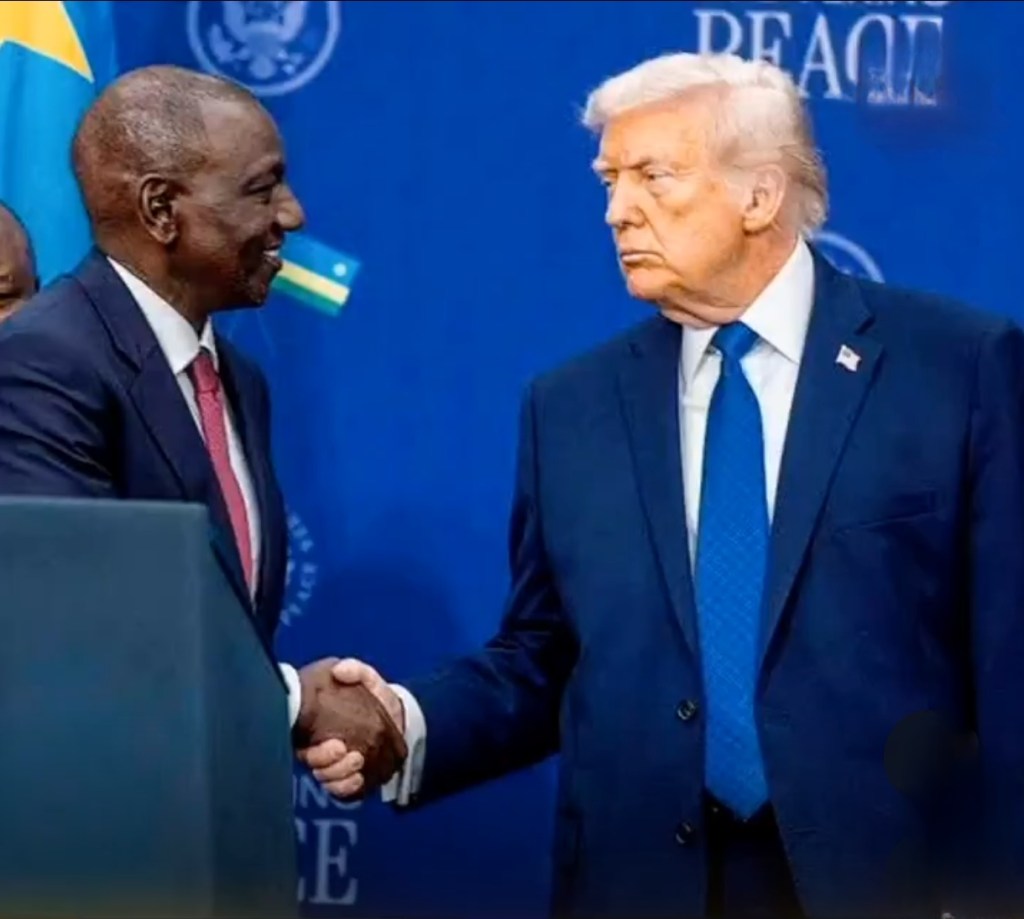
The continent’s territory and minerals have become the currency of a multipolar contest – one in which the old colonial powers, rising Gulf states, and rival hegemons each pursue distinct but overlapping strategies of extraction and containment
Introduction: The Return of the Scramble – But Not As We Knew It
The spectacle of great powers manoeuvring for influence across African territory and resources is not new. The nineteenth-century scramble for Africa, formalised at the Berlin Conference of 1884-85, partitioned the continent among European powers with minimal regard for indigenous political structures, drawing lines across maps that continue to shape conflict and identity to this day. What unfolded across 2025 and into 2026 bears superficial similarities to that earlier partition, yet the underlying dynamics are fundamentally different, reflecting a transformation in the nature of power itself.
The 2025 US National Security Strategy marked a decisive doctrinal shift in American strategic thinking, one that has profound implications for Africa. As analysts have observed, Washington now recognizes that “security can no longer be anchored solely in military predominance”, it is “increasingly defined by the capacity to organize and govern strategic flows: logistics corridors, maritime chokepoints, critical minerals, digital infrastructures, and the industrial ecosystems that sustain technological sovereignty.” Power, in this formulation, has acquired a new grammar: one that privileges “the mastery of circulation over the control of territory.” This reorientation reflects a modern reading of Hamiltonian industrialism, which locates national strength in production, infrastructure, and technological depth, as well as a renewed Monroe logic that emphasizes the stabilization of one’s strategic environment against external disruption.
Africa no longer occupies the margins of global strategy. It emerges instead as “a central node in the world’s geostrategic and economic reconfiguration, a decisive arena where the balance of power and the very architecture of future interdependence will be defined.” The doctrinal shift is not unique to the United States. Russia, China, the United Arab Emirates, France, and other actors have each developed distinctive approaches to engagement that reflect their own strategic cultures and material interests. The result is a multipolar contest in which no single power commands the field, and African states have acquired unprecedented leverage to play competing interests against one another. Understanding this new scramble requires mapping the doctrinal frameworks, strategic interests, and operational mechanisms of each major actor.
The Doctrinal Framework: From Territorial Control to Corridor Sovereignty
The strategic logic now shaping great power competition in Africa has been articulated in a series of foundational documents, analyses, and operational frameworks that collectively constitute a new doctrine of power projection. These are not merely academic exercises but have directly informed policy decisions and military operations across the continent and beyond.
The 2025 US National Security Strategy and Africa’s Mineral Centrality
The 2025 NSS represents the most explicit articulation to date of Africa’s strategic importance to American interests. The document frames Africa as an arena for competition with China over access to critical minerals. As researchers at The Nordic Africa Institute have noted, “The key change going forward with the new Trump strategy will be a greater focus on critical mineral supply chains, which means quite a significant amount of jostling in old mineral-rich countries like the Democratic Republic of the Congo, South Africa and Zambia.” The mineral systems now at the heart of strategic competition sustain the foundations of contemporary technological power, including “artificial intelligence hardware, defense and aerospace industries, semiconductor manufacturing, renewable-energy systems, and the battery value chain.” Africa’s mineral endowment, the DRC contributing nearly seventy percent of global cobalt production, Guinea holding the largest known bauxite reserves, South Africa and Madagascar concentrating rare-earth deposits, has made the continent “indispensable to the global economy of critical minerals.”
Morocco’s position within this landscape is particularly illustrative. Beyond holding over seventy percent of global phosphate reserves, its sedimentary basins contain measurable concentrations of rare-earth elements that can be recovered through advances in hydrometallurgical extraction. This material reality, combined with Morocco’s strategic location at the crossroads of Atlantic and Mediterranean maritime routes, explains both the consolidation of Moroccan sovereignty over Western Sahara and the steady diplomatic momentum behind it. The UN Security Council’s adoption of Resolution 2797 on 31 October 2025, describing Moroccan autonomy as the most feasible solution to the fifty-year dispute, represents the formalisation of this alignment of material and strategic interests.
The StraitBelt Doctrine: Africa’s Indigenous Response
Africa is not merely an object of great power competition but an increasingly active shaper of the terms of engagement. The emerging “StraitBelt” doctrine, articulated by African strategic analysts, represents “an indigenous theory of functional sovereignty grounded in the integration of hinterlands, the securitization of chokepoints, and the articulation of interconnected corridors.” The doctrine reimagines Africa as a system organized around its strategic passages, from Gibraltar to Bab el-Mandeb and the Mozambique Channel, and around the corridors that channel influence from the Sahel toward the Atlantic and from the interior toward global markets. Crucially, StraitBelt “rejects bloc thinking and advances the idea of sovereign interdependence, a strategic posture through which Africa manages its partnerships without being subsumed into rivalries between the United States and China or between Russia and the West.” This doctrinal framework reflects the practical reality of African diplomatic engagement, in which states increasingly cultivate diversified partnerships across the Gulf, India, Türkiye, the European Union, and the United States, measuring sovereignty not by withdrawal but by “the functional ability to process resources, retain value, govern digital infrastructures, and operate strategic corridors.”
The Instruments of Engagement: Resource-for-Security Deals and the Military-Industrial-Medical Nexus
Competition over Africa’s natural resources has crystallized around three distinct playbooks: Russia’s use of private military companies (PMCs) and the Africa Corps, the United States’ deal-making diplomacy, and China’s infrastructure-for-resources strategy. Together, these approaches reveal “not only rival economic ambitions but also competing visions of how to turn Africa’s resources into geopolitical leverage.” However, a fourth dimension, the military-industrial-medical nexus, deserves closer examination, as it reveals a distinctively American approach to strategic engagement that combines health infrastructure with military basing and intelligence operations.
Russia: From Wagner to Africa Corps- A New Security Architecture
Since 2017, the Wagner Group has become a major actor in countries across the continent, providing security services in exchange for resource extraction rights and political influence. In Mali, the transitional government turned to Russian PMCs for security services, and in return, members of Wagner were granted access to gold mining concessions in the south of the country. Russia’s influence and investment in Africa serve dual purposes: securing access to strategic minerals and creating a buffer against Western sanctions (1).
Following Wagner’s dismantling, its functions were absorbed into the Africa Corps under the Russian Ministry of Defense, reportedly linked to military intelligence structures. This transition marked a significant change: Moscow no longer relied on ambiguity but openly positioned itself at the center of Sahelian security systems (6). By August 2025, a defense summit between Russia and the three AES states formalized this deepening partnership, expanding military assistance to include arms transfers, logistics, training programs, and support for a joint regional force. Additional deployments of the Africa Corps to Mali brought the estimated Russian presence there to around 3,500 troops, at a reported monthly cost of tens of millions of dollars paid by Bamako (6).
The Sahel’s rupture from ECOWAS and the expulsion of French forces must be understood against this backdrop. The Alliance of Sahel States, formalized through the September 2023 Charter of Liptako-Gouma, built a joint force and named grievances over the CFA franc and continued French military and economic influence as the proximate causes of departure. Russia has stepped into the vacuum left by France, providing arms and intelligence-sharing that directly enable the military governments in Bamako, Ouagadougou, and Niamey to resist both regional pressure and Western influence (1)(6).
Yet the arrangement extends beyond the battlefield. In exchange for this security umbrella, AES countries have opened access to gold concessions, uranium and lithium potential, and other strategic minerals. Reports also suggest that Russian naval assets have used the port of Conakry and that efforts are underway to secure privileged access to Lomé in Togo, extending Moscow’s footprint from landlocked Sahelian capitals to the Gulf of Guinea (6). The higher the insecurity persists, the harder it becomes for leaders to reconsider the partnership. Violence statistics complicate the narrative of restored order: data from multiple monitoring organizations indicate that fatalities and attacks have continued to rise across Mali, Burkina Faso, and Niger since the pivot toward Russian support, with conflict spreading into new rural zones (6). The question that lingers across the Sahel is not only whether Russia can hold the shield in place, but whether the shield itself is beginning to show cracks where ordinary citizens feel least protected.
China: Infrastructure-for-Minerals – The Full-Package Model
China has adopted a fundamentally different approach. Its infrastructure-for-minerals model, centred on large-scale investments under the Forum on China-Africa Cooperation (FOCAC) and the Belt and Road Initiative, accelerates project delivery while securing resource flows for decades. China’s engagement is structural rather than episodic, cumulative rather than declaratory. Roads, railways, power stations, industrial parks, digital networks, and logistics corridors expand steadily across Africa, reducing transport costs, expanding productive capacity, and strengthening state balance sheets (2).
The China-Mozambique agreement, announced in 2026, exemplifies this full-package model. Mozambique and China signed a comprehensive agreement covering defense, geological mapping, and industrial investment to unlock one of Africa’s most resource-rich frontiers. At the centre of the deal is Mozambique’s vast resource base, including more than 5 trillion cubic metres of natural gas discovered in the Rovuma Basin, alongside significant untapped deposits of critical minerals across its northern provinces (2). The agreement includes a large-scale geological survey targeting high-value deposits of graphite, lithium and rare earth elements, key inputs for the global green energy transition. Under the framework, China will map and assess mineral deposits in Mozambique’s resource-rich north, a crucial first step in unlocking reserves that remain largely underexplored due to security and infrastructure constraints (2).
Rather than focusing narrowly on extraction, Beijing is offering a model which combines resource mapping, infrastructure, industrial processing, market access and security cooperation. China will fund projects to establish local processing plants, helping Mozambique shift away from raw material exports toward building a domestic industrial base. The partnership also carries a strong security component: China has pledged to support Mozambique’s counterterrorism efforts through training, equipment and joint exercises, aiming to stabilise regions critical to gas and mining operations (2).
The TAZARA railway upgrade provides another illustration of China’s strategic logistics control. CMOC Group and Zijin Mining Group are partnering with China Civil Engineering Construction Corp. to upgrade the 1,860-kilometer Tazara railway linking Zambia’s copper belt to Tanzania’s Dar es Salaam port, in a project valued at $1.24 billion. CCECC will hold an 80% stake in the joint venture, while smaller 5% stakes are allocated to participants including Jiayou International Logistics Co., alongside units of the miners and COSCO Shipping Holdings (7). The structure suggests China is not only financing infrastructure but also positioning itself to operate and control a key export route for critical minerals. Tanzania and Zambia have granted CCECC a 30-year concession to operate the railway, a model blending state-backed and commercial participation that could reflect a broader shift in China’s Belt and Road approach toward more commercially structured projects that still maintain strategic control over logistics networks (7).
The Chinese approach operates on the premise that “development produces stability; stability creates the space for political evolution.” For African states confronting infrastructure gaps, fiscal constraint, and demographic pressure, this assumption has proven not merely attractive but workable. China’s Africa policy remains anchored in sovereignty, non-interference, and mutual benefit, principles that resonate deeply in societies shaped by colonial intrusion and post-independence tutelage.
The United States: Deal-Making Diplomacy and the Military-Industrial-Medical Nexus
The US approach, exemplified by the April 2025 agreement with Ukraine to establish a joint investment fund for reconstruction financed by future natural resource extraction revenues, has been extended to Africa. The US-DRC-Rwanda cooperation framework, brokered in June 2025, illustrates this resources-for-security model: access to Congolese mineral supply chains is linked to a US commitment to provide security support. However, the American model of engagement is more complex than simple resource-for-security swaps. It operates through what might be termed a military-industrial-medical nexus, a fusion of military basing, medical infrastructure, and intelligence-gathering that provides the US with persistent presence on the continent while maintaining plausible deniability about its strategic objectives.
The Laikipia Air Base controversy in Kenya provides the clearest illustration of this nexus. In 2026, the Trump administration requested a quarantine facility for Americans exposed to Ebola at Laikipia Air Base near Nanyuki. President William Ruto personally approved the facility at a cost of approximately 1.7 billion Kenyan shillings, triggering High Court challenges from the Katiba Institute and the Kenya Law Society, and a fatal clash between police and protesters on 9 June 2026. President Trump told reporters at his closing G7 press conference on 17 June 2026 that the United States had sent 375 million dollars in aid to help contain the Ebola outbreak at its source in the Democratic Republic of the Congo and Uganda, a regional containment figure distinct from the Laikipia facility’s own reported cost.
The Laikipia controversy must be understood against the backdrop of longer-standing concerns about the US military’s engagement with lethal pathogens. A 2014 report from the then US Department of Defense (now the Department of War) documented that the US Army Medical Institute of Infectious Disease had been working with Ebola and other lethal pathogens for years, reportedly developing diagnostics, vaccines, and drugs. This report was significant because the US has never reported an Ebola outbreak within its borders. When an outbreak occurred in West Africa shortly afterwards, it brought revenues to US pharmaceutical companies and enabled the US military to flex its logistics prowess. As some analysts have observed, when the US military, tasked with the responsibility of waging wars and subduing other countries, openly experiments with pathogens that are not endemic in the US, countries earmarked for full-spectrum domination by Washington have reason for concern.
Health and medical bodies such as the Centers for Disease Control and Prevention and the World Health Organization continuously claim that they lack resources to investigate how to control these diseases, surprisingly leaving Washington in control. This dynamic creates a structure in which the US military’s interest in pathogen research, the pharmaceutical industry’s interest in vaccine development and profits, and the intelligence community’s interest in biological threat monitoring converge. The Laikipia facility, whatever its stated purpose, sits within this broader architecture. Kenya’s proximity to the mineral-rich Ituri and North Kivu regions of eastern DRC, where Alphamin’s Bisie mine produced over six percent of global mined tin supply in 2025, has led some Kenyan commentators and US Representative Gregory Meeks to question publicly why exposed Americans were not simply repatriated to existing specialised facilities in the United States rather than treated at new construction on a Kenyan military base. The question remains unanswered.
The Gulf States: Diverging Strategies in the Great Game
Figure 1:
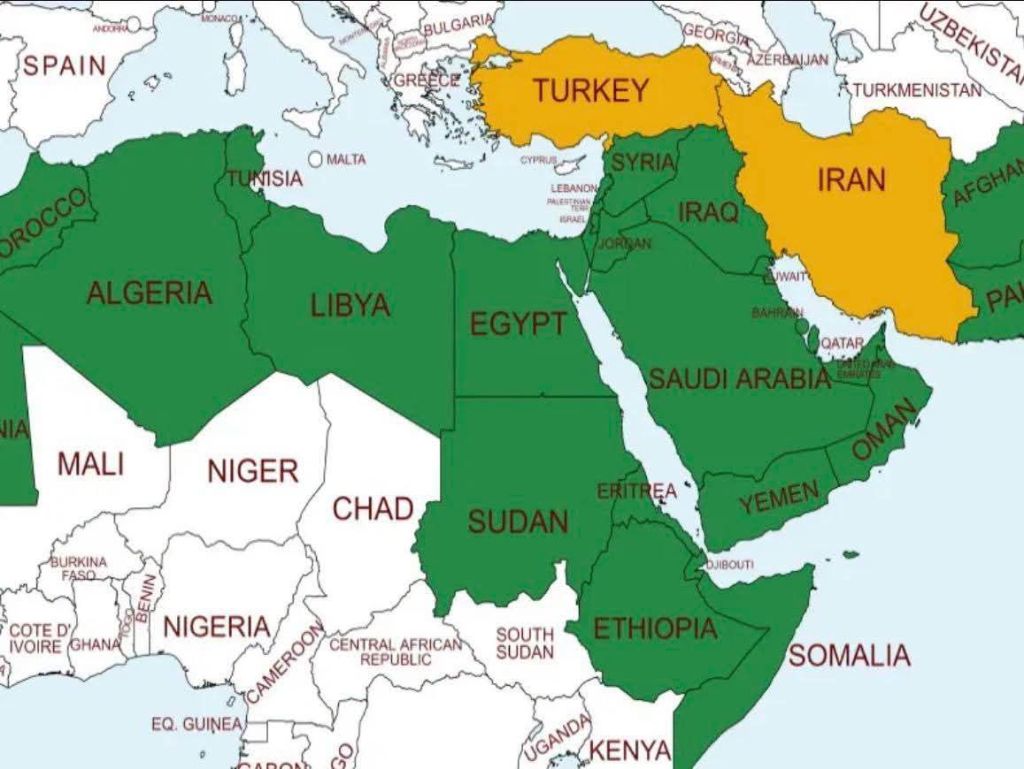
The Gulf states have emerged as significant actors in Africa, but their strategies diverge substantially, reflecting distinct national interests and capabilities (8). The UAE, Saudi Arabia, and Qatar each pursue different approaches to engagement, creating a complex landscape of Gulf influence that often works at cross-purposes.
The UAE: Ports, Gold, and Proxy Warfare
The UAE has pursued the most aggressive and visible strategy in Africa. Its investments are centred on control of strategic ports, from Berbera in Somaliland to Dar es Salaam in Tanzania, and proxy relationships that secure access to resources while maintaining plausible deniability. The UAE’s backing of the Rapid Support Forces in Sudan, documented by United Nations investigators and Western governments, reflects this approach: access to Sudanese gold reserves concentrated in RSF-controlled territory in exchange for financial and military support (8). The UAE currently holds the largest share of Gulf investments in Africa at approximately $59.4 billion, with resources directed toward clean energy projects through its Africa Green Investment Initiative, mobilising $4.5 billion for over 60 renewable energy developments spanning wind, solar, geothermal power, battery storage, and green hydrogen. Additional UAE contributions include $500 million in humanitarian aid to Sudan and a planned $1 billion “AI for Development” programme aimed at expanding digital infrastructure (8).
Saudi Arabia: Food Security and Strategic Positioning
Saudi Arabia’s approach is more focused on food security and strategic positioning. Looking to Africa’s agricultural potential to secure its own food supply, Riyadh has invested in farmland across the continent. In February 2026, Saudi Arabia announced plans to invest over $25 billion in Africa by 2030, backing digital infrastructure, AI projects and exploring subsea digital connectivity between Africa and Saudi Arabia’s western coast -8. This represents a significant escalation in Saudi engagement, though it remains less visible than UAE port acquisitions and proxy warfare.
Qatar: Agile Power and the “Silent Partner” Model
Qatar, the gas-rich peninsula with outsized ambitions, has chosen a different path. Doha knows it cannot compete with Riyadh on scale or Abu Dhabi on maritime dominance. Instead, it has adopted an “agile power” strategy, focusing on node-power: owning, financing or influencing the junctions that connect trade, data, diplomacy and capital (3). The centrepiece is a structural alliance with Rwanda. Qatar Airways has taken a majority stake in the new Bugesera International Airport and is eyeing a deepening role in RwandAir. If the Emiratis want to control the seas, the Qataris aim to command the skies, funnelling African traffic through Kigali to the gleaming terminals of Hamad International (3).
On the ground, QatarEnergy has adopted a “silent partner” model. In the burgeoning oil and gas fields of Namibia’s Orange Basin and the waters off Congo-Brazzaville, Doha has taken significant stakes alongside majors like TotalEnergies. It is a calculated wager: let the operators handle the drill-bit risk and political noise, while Qatar provides the capital and secures the LNG optionality (3). Doha also markets mediation as a service, leveraging its neutrality to broker talks in the Great Lakes crisis between the DRC and Rwanda, and hosting peace dialogues for Chad. This political capital opens doors to tangible assets, such as the Qatar Investment Authority’s entry into Ivanhoe Mines, securing exposure to the DRC’s copper supply (3).
The three Gulf approaches are not coordinated. They sometimes compete, as with port investments in the Horn of Africa, and sometimes overlap. Rising tensions between the US and Iran are prompting Gulf states to review their overseas investment strategies, with potential consequences for financing in Africa. Regional officials are evaluating whether ongoing conflict could force a shift in priorities, as military activities and security risks grow across the Middle East. Any re-evaluation of financial commitments by Gulf states could therefore affect both project financing and household incomes across several African countries -8.
France: The Pivot from the Sahel to Kenya
France’s strategic repositioning in Africa represents one of the most significant shifts of the period. Having been expelled from Mali (2022), Burkina Faso and Niger (2023), and facing suspension of military cooperation with Chad, Senegal, and Côte d’Ivoire in 2025, Paris has been forced to look elsewhere for African partners (10). Kenya has emerged as the most promising alternative: an anglophone country with no colonial legacy with France, emerging as a regional power through diplomacy, security, and investments (10).
The October 2025 defence pact between France and Kenya, ratified by Kenya’s Parliament on 8 April 2026, provides the framework for this new relationship. It was followed by the docking of three French warships carrying roughly 800 French naval personnel at the Port of Mombasa in March 2026 and President Macron’s co-hosting with President Ruto of the Africa Forward Summit in Nairobi that May (10). Of the 30 heads of state at the summit, nine were fully or partially Francophone, including Cameroon, the DR Congo, Mauritania, Congo, Morocco, Rwanda, Senegal, Togo and Tunisia, signalling broad acceptance of the Kenya-France cooperation (5).
The summit represented a deliberate effort to move beyond France’s colonial baggage. The Élysée presented it as a balanced partnership, explicitly rejecting any form of “new imperialism” and emphasising complementarity as the basis for shared economic development. The agenda focused on the energy transition, green industrialisation, the blue economy, AI, digital competitiveness, and reform of the international financial architecture (10). This framing aligns with the EU’s Global Gateway 2.0 strategy, though France’s unilateral repositioning risks fragmenting the EU’s offer to Africa and pushing other member states to act outside the EU framework (10).
Yet the pivot carries risks. The Sahel nations view Kenya as a “Plan B” for French influence and a traitor, potentially causing a disruption of pan-African solidarity against neo-colonialism (5). Kenya’s ratification of the defence deal’s provisions on troop deployment and immunity for French soldiers is viewed by critics as a licence for the men in uniform to perpetrate atrocities in Africa without concern for prosecution (5). However, Kenya’s deep ties with its Francophone neighbours, DR Congo, Rwanda and Burundi, remain insulated. Kenya acts as an essential economic transit corridor and security partner, a reality that cannot easily be sacrificed at the altar of France’s geopolitical baggage (5). The rapprochement is also framed by Kenya as a pragmatic response to Francophone-West African isolation of its candidates for continental jobs, most notably Raila Odinga’s defeat for the African Union Commission Chairmanship on 15 February 2025, and Amina Mohamed’s similar loss in 2017 (5).
The Cases: How Doctrine Meets Territory
Morocco’s consolidation of sovereignty over Western Sahara, formalized through UN Security Council Resolution 2797 and backed by diplomatic momentum from the United States, France, and the United Kingdom, reflects the US National Security Strategy’s emphasis on mineral security and corridor governance. Morocco’s phosphate reserves, the world’s largest, are increasingly recognized as containing recoverable rare-earth elements, making the territory central to both fertiliser production and advanced technology supply chains. The 2020 Abraham Accords normalization between Morocco and Israel provided the transactional framework within which Washington formalized its recognition. This is the inverse of fragmentation, a consolidation serving both Moroccan sovereignty and external strategic interests. The Polisario Front’s Sahrawi Arab Democratic Republic, despite continued recognition by the African Union and control over phosphate reserves and Atlantic fishing grounds, has lost diplomatic ground steadily. The trajectory demonstrates that in the current scramble, territorial consolidation under a stable, aligned partner is often more valuable than fragmentation into potentially unstable client states.
Sudan: Partition and the Gold-Geopolitics Nexus
Sudan’s civil war and de facto partition into SAF-controlled east and north and RSF-controlled Darfur and Kordofan exemplifies how resource-driven fragmentation serves multiple actors simultaneously. The RSF’s external backing from the United Arab Emirates, documented by United Nations investigators and Western governments, reflects Gulf interest in Sudanese gold reserves concentrated in RSF-controlled territory (8). Kenya’s hosting of RSF diplomacy and the reported use of Kenyan-registered aircraft to supply the paramilitary force place Nairobi within the orbit of UAE influence, while Kenya simultaneously benefits from American AGOA preferences and French security cooperation. The fragmentation of Sudan is not an end in itself but a mechanism for securing resource access and strategic positioning. The gold flowing from RSF-controlled territory to UAE processing centers underpins a financial architecture that sustains the paramilitary’s military campaign, while the external powers that enable this flow maintain plausible deniability through arms-length intermediaries.
The Sahel: Rupture as Reorientation
Mali, Burkina Faso, and Niger’s withdrawal from ECOWAS and pivot toward Russian security cooperation represents a deliberate reorientation of strategic alignment. The Alliance of Sahel States, launched through the Charter of Liptako-Gouma, has built a joint force, launched a shared passport scheme, and named grievances over the CFA franc and continued French influence as the proximate causes of departure. Russia’s Africa Corps has become embedded in training missions, joint operations, intelligence coordination, and close protection units assigned to national leaders and sensitive infrastructure (6). The August 2025 defense summit formalized this deepening partnership, with Russian personnel numbering approximately 3,500 troops in Mali alone (6). The arrangement extends beyond security: in exchange, AES countries have opened access to gold concessions, uranium and lithium potential, and other strategic minerals (6). The Global Terrorism Index’s recording of the Sahel accounting for 51 percent of global terrorism deaths in 2024 provides the security justification for the pivot, while the material reality of mineral concessions provides the economic foundation.
Ethiopia: Internal Fragmentation as Strategic Opportunity
Ethiopia’s constitutional architecture, designed around ethnic and linguistic regional units, has created a pattern of internal fragmentation that external actors can exploit. The November 2022 Pretoria Agreement ended large-scale fighting between the federal government and the Tigray People’s Liberation Front but excluded Eritrea from its terms entirely, with Eritrean forces continuing to operate inside Ethiopian territory in western Tigray. The TPLF’s seizure of administrative control of Mekelle and Adigrat from the federal government’s appointed administration, alongside Fano militias contesting authority in Amhara and Oromo Liberation Army operations in Oromia, demonstrates the fragility of the federal framework. Each internal faction represents a potential partner for external powers seeking access to Ethiopian territory or influence over regional dynamics. The Horn of Africa’s strategic location, commanding the approach to the Bab el-Mandeb chokepoint, makes Ethiopia’s fragmentation a matter of strategic concern for Gulf states, the United States, China, and Turkey alike.
Tanzania: Mineral Logistics and the Sanctions Dilemma
Tanzania’s position illustrates the tension between strategic interest and political conditionality. The October 2025 election violence and subsequent security crackdown prompted Senate legislation reassessing the bilateral relationship. Yet Tanzania occupies the eastern terminus of two competing railway corridors: the China-led TAZARA rehabilitation, with CCECC holding an 80% stake in a $1.24 billion upgrade project (7), and the US-backed Lobito Corridor, which planners hope to extend to the Indian Ocean through Tanzanian territory. This paradox, Washington sanctioning Tanzania while simultaneously depending on its territory for a strategic mineral-logistics corridor, reveals the tension between stated values and material interests in great power competition. The Africa Policy Research Institute has noted that the US approach, characterized as “highly transactional, even punitive,” may not pay significant dividends as long as incentives to partner with China and the Gulf states outweigh US offerings.
Kenya: Multidirectional Diplomacy as Strategic Leverage
Kenya’s foreign policy exemplifies the possibility of extracting simultaneous benefit from rival external patrons. Nairobi remains among the largest beneficiaries of American AGOA trade preferences while paying a former Trump administration ally to lobby for Kenyan interests in Washington. France has deepened its presence through a Defence Cooperation Agreement and the docking of three French warships at the Port of Mombasa (10). Kenya hosts RSF diplomacy that serves UAE interests in Sudan. The controversy over the US Ebola quarantine facility at Laikipia Air Base demonstrates the domestic political risks of multidirectional diplomacy. Yet Kenya’s position as the only African head of state invited to the G7 summit in Évian, described as having displaced South Africa following American pressure, demonstrates the strategic value of being useful to multiple powers simultaneously. The Africa Forward Summit represented a deliberate effort to position Kenya as a bridge between Francophone and Anglophone Africa, with Ruto using the platform to press for African debt restructuring and securing language on mutually beneficial international partnerships in the summit’s final declaration (10).
Fragmentation as Doctrine: Somaliland, Mthwakazi, and the Universal Fragmentation Doctrine
Israel’s recognition of Somaliland on December 26, 2025, marked a watershed moment in African territorial politics. Prime Minister Benjamin Netanyahu and Foreign Minister Gideon Sa’ar signed a joint declaration of mutual recognition with Somaliland President Abdirahman Mohamed Abdullahi, making Israel the first United Nations member state to recognize the Republic of Somaliland as independent and sovereign. Netanyahu framed the recognition in the spirit of the Abraham Accords and committed Israel to immediate cooperation in agriculture, health, technology, and the economy.
This was not merely a diplomatic gesture. It was a statement of doctrine. Israel’s recognition of Somaliland offers Africa a different path: not chaos, but realism; not endless war, but consent; not blind worship of colonial borders, but strategic recognition of functioning peoples and functioning institutions. Somaliland has operated with its own government, elections, security structures, ports, currency, and diplomatic relationships since 1991, despite lacking broad international recognition. Israel saw not a “separatist problem,” but a potential partner in the Red Sea region, near Yemen, the Houthis, and critical maritime routes.
The recognition follows a pattern of selective application of statehood criteria. The international community has rushed to recognize a Palestinian state that fails the basic criteria of statehood set out in the 1933 Montevideo Convention, which requires a permanent population, a defined territory, a functioning government, and the capacity to enter into relations with other states. Somaliland meets all four. It has been refused recognition for thirty-four years. The asymmetry is not legal, it is straight up political. This is the Palestine Precedent that if statehood is conferred on entities that do not meet the legal test, it cannot honestly be withheld from peoples that do.
Figure 2;
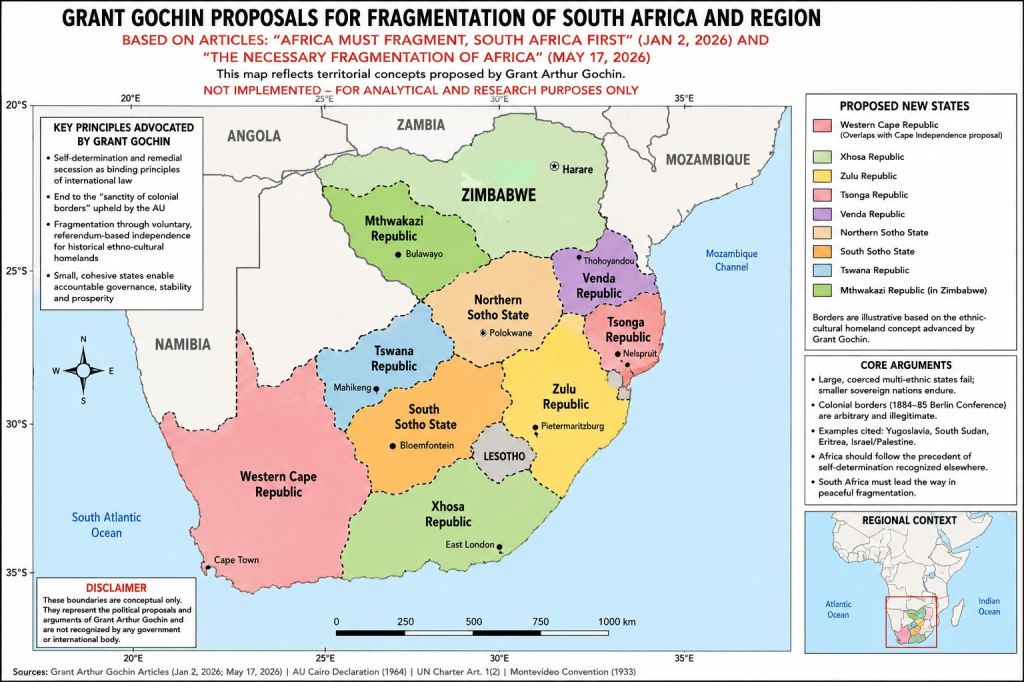
The Mthwakazi Republic Party’s petition to SADC, carrying 25,880 signatures and registered under reference number 3951863, tests this principle (4). MRP President Mqondisi Moyo has called on Zimbabwe, SADC, the African Union, and the international community to treat Mthwakazi self-determination as a lawful political question rather than a security threat. The petition cites recent international developments in Bougainville (97.7 percent support for independence) and New Caledonia as evidence that consent-based political settlement is a working international practice (4)(9).
The response of the Zimbabwean state has been threat. ZANU-PF political commissar Munyaradzi Machacha reportedly described the MRP’s programme as a declaration of war and threatened repression against its members. President Emmerson Mnangagwa publicly stated that those who advocate for the secession of the country are shortening their lives (4)(9). That is a sitting head of state issuing a public death warning against peaceful political advocacy by a registered party petitioning a regional body. It is the precise pattern that preceded Gukurahundi, the massacres in Matabeleland and the Midlands carried out between 1983 and 1987, in which approximately 20,000 civilians were murdered. The pattern is now repeating in plain view, in public statements, on the record.
Reading the Pattern: Empire, Fragmentation, and African Agency
Read together, these six theatres reveal a strategic logic that is coherent despite its apparent fragmentation. The United States, through the doctrinal framework of the 2025 NSS, is pursuing a strategy of securing critical mineral supply chains and strategic corridors while reducing its exposure to Chinese-dominated processing ecosystems. Russia is exploiting the openings created by Western withdrawal from the Sahel, trading security support for mineral access through the Africa Corps (1)(6). China continues its infrastructure-for-minerals model, building the connective architecture that integrates African economies into its production networks (2)(7). The UAE pursues access to Sudanese gold and strategic positioning in the Horn of Africa through proxy relationships -8. France, expelled from the Sahel, has pivoted to deepening its presence in Kenya and other coastal states -10.
Africa is not merely the object of these strategies but an active participant in shaping them. The StraitBelt doctrine reflects an emerging African strategic consciousness that rejects bloc thinking and advances sovereign interdependence. African states are increasingly measuring partners by outcomes rather than promises. The fragmentation of Africa, whether through Sudan’s partition, the Sahel’s rupture, or Ethiopia’s internal fissures, serves multiple strategic interests simultaneously. For external powers, fragmentation creates opportunities for access and influence that consolidated states might resist. For African elites, fragmentation can enable resource extraction and political survival that centralized governance might constrain. For African populations, fragmentation has too often meant violence, displacement, and the extraction of resources without commensurate development.
Conclusion: Beyond the Scramble Narrative
The renewed scramble for Africa must be understood through the lens of value-chain sovereignty and corridor geopolitics rather than territorial conquest. The power now at stake lies not in controlling territory but in governing the flows that traverse it: minerals, energy, data, logistics, and finance. Africa has become indispensable to the global economy of critical minerals and the strategic corridors through which they move. The continent is no longer an auxiliary supplier but a systemic enabler of the Fourth Industrial Revolution.
Africa’s choices are consequential precisely because so many actors depend on its resources and connectivity. The continent faces a fundamental decision: whether to remain a source of raw materials for processing elsewhere, or to build the processing capacity, governance structures, and strategic alliances that enable it to capture value and assert agency. The StraitBelt doctrine and the African Mining Vision represent aspirations to the latter path, but their realization depends on institutional strength, negotiation capacity, regional coordination, and transparency in resource deals.
The IMF’s quantification of potential welfare losses under geoeconomic fragmentation, approximately 4 percent of GDP for the median sub-Saharan African country, twice the losses of the rest of the world, underscores the material stakes. The region’s almost evenly divided trade between the US-EU bloc and China, combined with its heavy dependence on commodity trade and low intra-regional trade, makes it uniquely vulnerable to geopolitical disruption. Non-oil resource-rich countries face the greatest losses, while oil exporters could potentially benefit under less severe fragmentation scenarios through trade diversion in energy markets. This heterogeneity demands differentiated policy responses that reflect each country’s specific trade composition and strategic position.
The challenge for the coming years is not whether Africa will remain an arena of great power competition, that is already settled, but whether African states can arena of great power competition, that is already settled, but whether African states can maintain sufficient agency to shape the terms of their own incorporation into global strategic architectures. The continent’s leaders face the difficult task of navigating between competing powers, extracting maximum benefit from each relationship while avoiding complete dependence on any single partner. The StraitBelt doctrine and Africa’s indigenous strategic frameworks suggest a path, but the obstacles are considerable, and the consequences of failure are measured in human suffering as much as in lost opportunity.
Authored By: Global GeoPolitics
If you prefer to make a one time donation in support of my work, you can do so by clicking any link below:
https://buymeacoffee.com/ggtv |
https://ko-fi.com/globalgeopolitics |
Bitcoin: 3NiK8BoRZnkwJSHZSekuXKFizGPopkE7ns
References
Africa Center for Strategic Studies. (2026, January 13). Ethiopia: Expanding Representation While Managing Centrifugal Forces. Washington, DC.
Africa Policy Research Institute. (2025, September 29). From minerals to influence: Resource-for-security deals reshaping power dynamics in Africa. Afripoli.
Africa Report. (2025, December 29). Move over, UAE: Qatar carves a different path into Africa. The Africa Report.
Al Jazeera. (2026, June 4; June 9). Why is a US Ebola facility in Kenya sparking protests? / One killed as hundreds protest in Kenya against US Ebola quarantine centre.
Bailey, M., Strezhnev, A., & Voeten, E. (2017). Estimating Dynamic State Preferences from United Nations Voting Data. Journal of Conflict Resolution, 61(2), 430-456.
Bolhuis, M.A., Chen, J., & Kett, B. (2023). Fragmentation in Global Trade: Accounting for Commodities. IMF Working Paper WP/23/073.
Bolhuis, M.A., Mighri, H., Rawlings, H., Reyes, I., & Zhang, Q. (2024). How Vulnerable Is Sub-Saharan Africa to Geoeconomic Fragmentation? IMF Working Paper No. WP/24/83. International Monetary Fund, Washington, DC.
Business Insider Africa. (2026, April 26). China trades defence support, investment for Mozambique’s 5 trillion cubic metres gas and vast mineral reserves.
Cerdeiro, D., Eugster, J., Mano, R., Muir, D., & Peiris, S. (2021). Sizing Up the Effects of Technological Decoupling. IMF Working Paper WP/21/69.
Chatham House. (2026, June). Kenya’s G7 role must address the economic pressures fuelling domestic criticism of President Ruto.
CSIS. (2025, September 26). Two Railroads, One Vision.
Duckworth, T. (2026, May 14). Duckworth underscores how the Trump Administration’s incoherent tactics and lack of strategy in Iran is a recipe for a forever war. U.S. Senate Armed Services Committee Hearing. Washington, D.C.
ECDPM. (2026, May 11). Africa Forward Summit: From French influence to European partnership?
Global Centre for the Responsibility to Protect. (2026, March 16). Ethiopia. New York.
Global Initiative Against Transnational Organized Crime. (2025, November 27). The illicit transnational supply chains sustaining Sudan’s conflict.
Global Terrorism Index. (2025). Institute for Economics and Peace, Sydney.
Goto, D. (2026, January 15). A review of 2025: The year Africa read the balance of power clearly. China Daily.
International Crisis Group. (2026). Ethiopia Country Page, accessed June 2026. Brussels.
International Monetary Fund. (2023). Geoeconomic Fragmentation and the Future of Multilateralism. IMF Staff Discussion Note.
International Monetary Fund. (2023). Geoeconomic Fragmentation: Sub-Saharan Africa Caught Between the Fault Lines. In Regional Economic Outlook: Sub-Saharan Africa – The Big Funding Squeeze.
Investment Monitor. (2026, March 8). Gulf investment in Africa faces review as US-Iran conflict escalates.
Kelly, M. (2026, March 3). In SASC hearing, Kelly presses Pentagon on contradictions in Iran war justification. U.S. Senate Armed Services Committee Hearing. Washington, D.C.
Kenya Human Rights Commission and ICJ Kenya. (2025, February). Joint Statement: Kenya’s RSF ties undermine Sudan peace efforts.
Lietuvos Respublikos valstybės saugumo departamentas. (2026, March 5). Russia expands its activities in Africa to maintain its image as a global power.
McGrath, J.F. (2025, July). Russian and Chinese influence in Africa: Power asymmetries and the threat to African Union agency in global governance. PeaceRep: The Peace and Conflict Resolution Evidence Platform, University of Edinburgh.
Mususa, P. (2026, February 9). Geopolitical balancing act for mineral-rich African countries. The Nordic Africa Institute.
NewsDay Zimbabwe. (2026, May 13). MRP in renewed push for Mthwakazi self-determination.
Office of the Prime Minister of Italy (Governo.it). (2026, June 17). President Meloni’s closing press conference at the 2026 G7 Leaders’ Summit.
Pollack, K.M., Byman, D., Indyk, M., Maloney, S., & O’Hanlon, M.E. (2009). Which Path to Persia? Options for a New American Strategy toward Iran. Washington, D.C.: Saban Center for Middle East Policy, Brookings Institution Press.
Roll Call / Factba.se. (2026, June 17). Press Conference: Donald Trump Holds a Press Conference at the G7 Summit in France.
Roudani, C. (2025, December 15). Washington’s new perspective on Africa’s security role: The 2025 US National Security Strategy and the StraitBelt doctrine. Africa Press Arabic.
Senate Foreign Relations Committee / Office of Senator Ted Cruz. (2026, May 20; June 17). Reassessing the United States-Tanzania Bilateral Relationship Act.
The Africa Report. (2025, February 26). Kenya’s legacy and its relationship with Sudan’s RSF.
United Nations Security Council. (2025, October 31). Resolution 2797 on Western Sahara. S/RES/2797.
US Congressional Research Service. (2026, March 5). Kenya: Current Issues and U.S. Relations. R48072. Washington, DC.
Yahoo Finance. (2026, April 1). China Backs $1.24 Billion Zambia-Tanzania Rail Upgrade for Copper Exports.


Leave a comment