A framework for ceasefire is not a framework for peace, and the distinction has a long American record behind it
Editorial Analysis | 18 June 2026
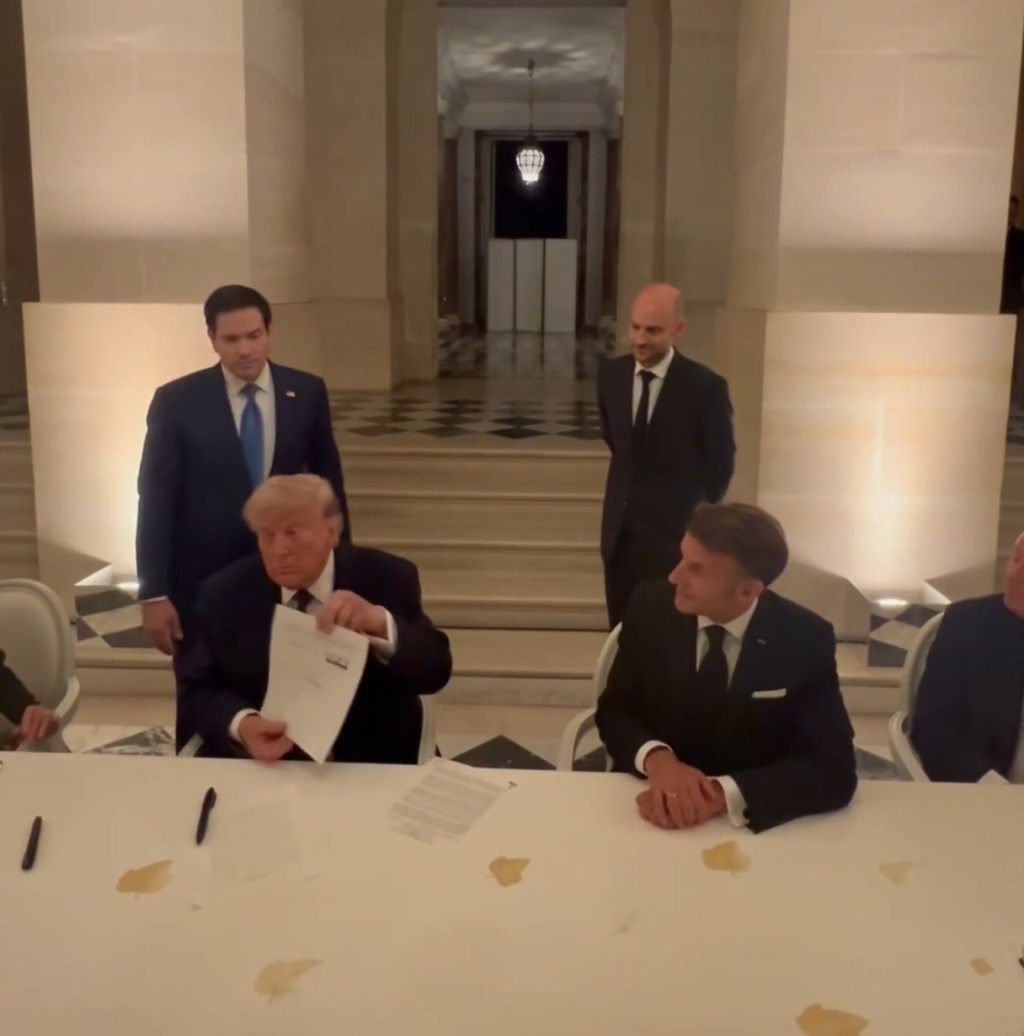
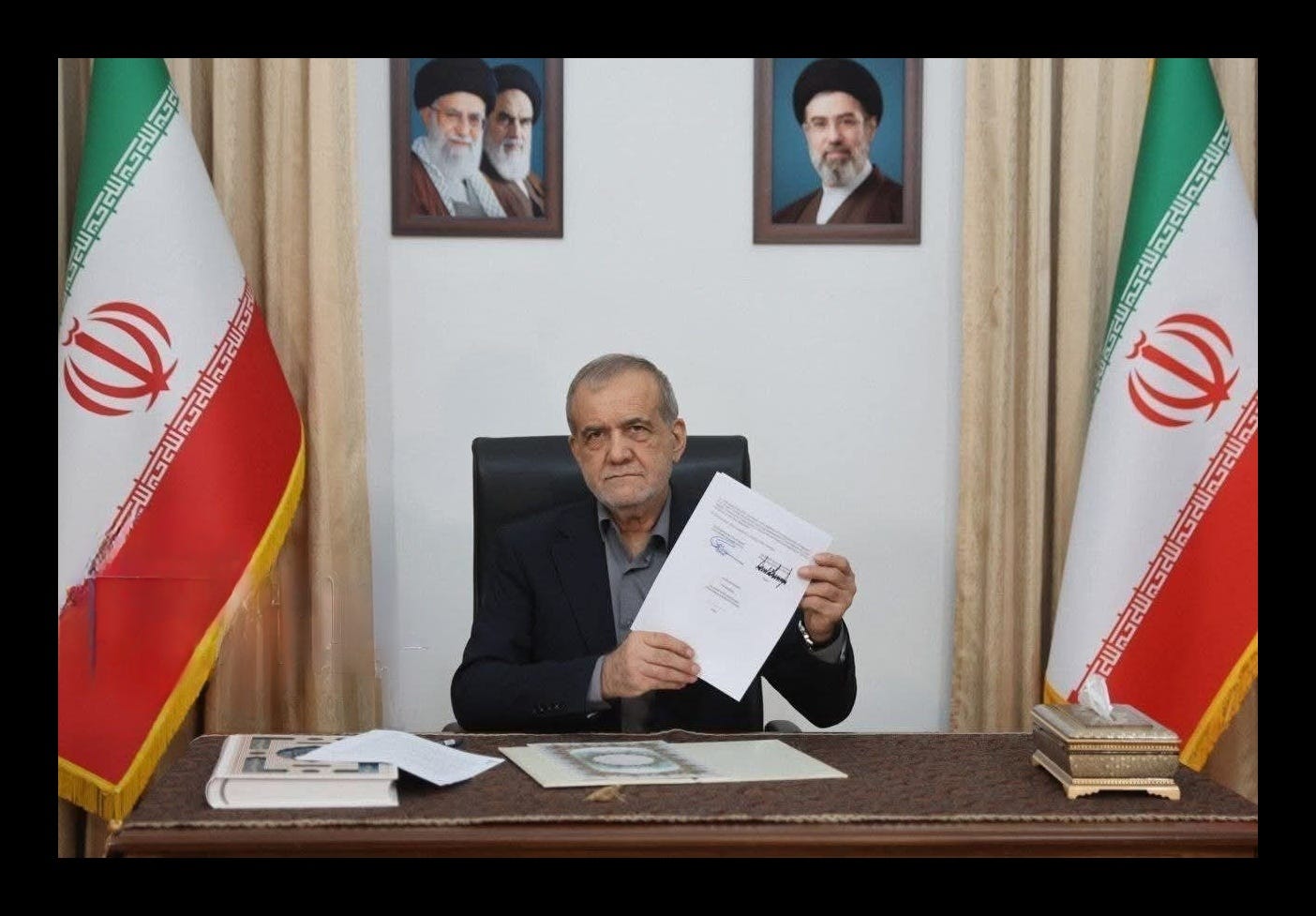
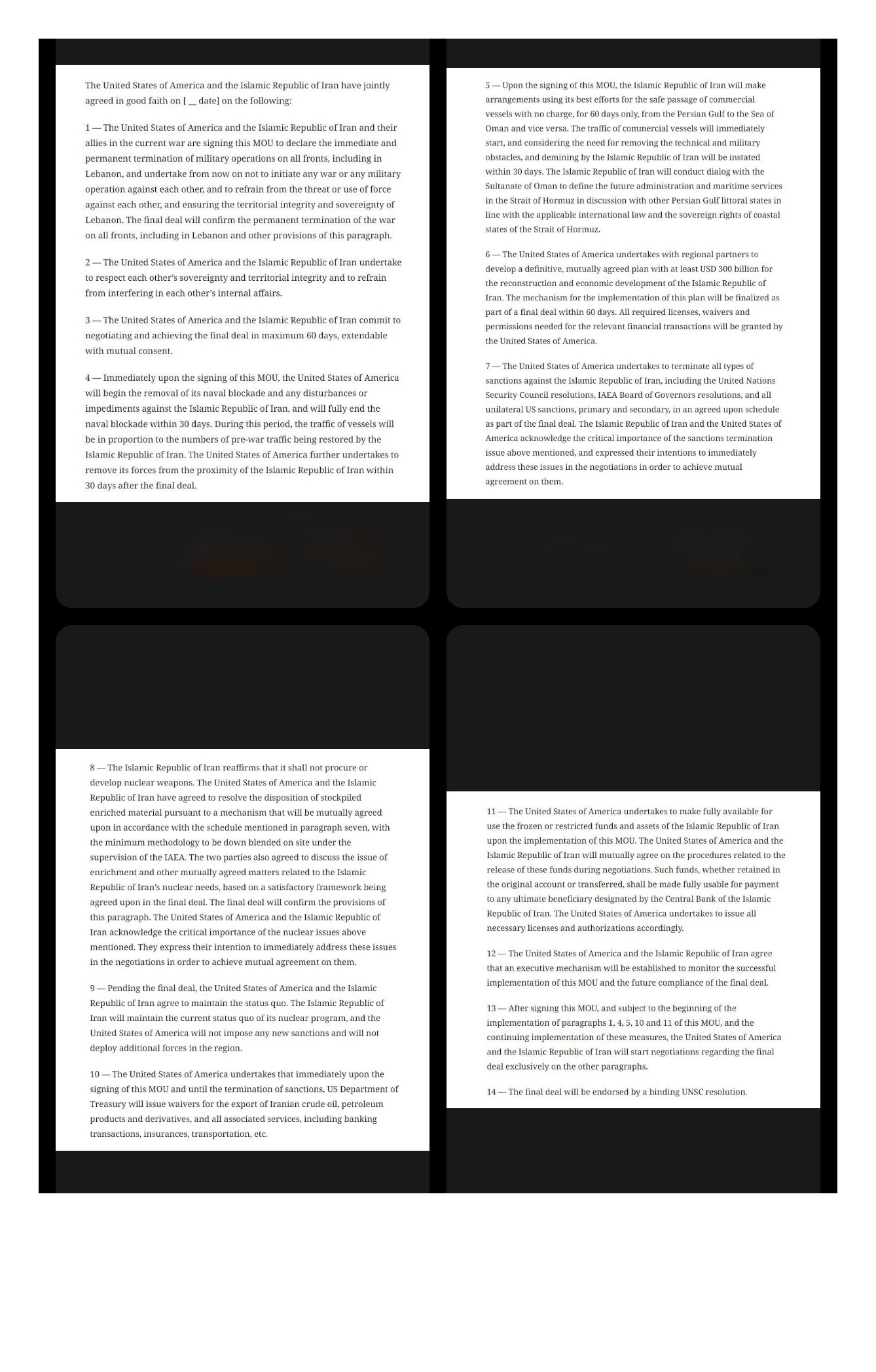
Diplomats concluded a memorandum of understanding with Iran in Geneva, the text finalised after months of Pakistani and Qatari-mediated contact between the two governments, and President Trump put his signature to the document on 17 June 2026, signing by hand over dinner with President Emmanuel Macron at the Palace of Versailles while Iranian President Masoud Pezeshkian signed electronically from Tehran. The setting of the signing carried a symbolism that needed no embellishment from either side: Versailles is where the treaty ending the First World War imposed reparations and territorial loss on a defeated Germany in 1919, and the choice of venue for the signing of a document releasing frozen Iranian assets and lifting an American naval blockade after three and a half months of war invited the comparison whether or not either government intended it. Trump told reporters the agreement had averted an “economic catastrophe,” warning that American reserves would otherwise have run out “in about four weeks,” and that without a reopened Strait of Hormuz the world faced severe oil shortages. The document follows three and a half months of war that began on 28 February, when American and Israeli forces struck Iranian nuclear and military sites and killed Iran’s Supreme Leader, Ali Khamenei, along with the negotiator Ali Larijani. It promises a sixty-day ceasefire window, a reopened Strait of Hormuz, a lifted American naval blockade, and talks on sanctions relief and frozen assets running alongside negotiations over enrichment levels and the disposal of Iran’s stockpile of highly enriched uranium. None of this is unusual for an American agreement with a state Washington has spent seven decades treating as a problem to be managed rather than a government to be dealt with as an equal.
The shape of the present arrangement repeats a structure visible at several earlier points in the relationship, and the repetition is the more interesting fact than any single clause. Iranian and Bloomberg-sourced drafts of the fourteen-point text differ on whether $24 billion or $25 billion in frozen assets will be released, and on whether a $300 billion reconstruction fund forms part of the bargain or merely a future possibility, while the State Department has declined to confirm the figures publicly. Secretary of State Marco Rubio told reporters in May that the administration did not need “the actual agreement written in one day” so long as the extent of concessions Iran was willing to make at the outset was clear. That formulation puts the burden of proof on Tehran before a single sanction is lifted, which is consistent with the posture Washington adopted toward Iran’s nuclear file during the Obama and Trump years alike, and consistent with the five preconditions President Trump set in May, which required Iran to surrender 400 kilograms of enriched uranium, accept a single operational nuclear facility, link any negotiation to a halt in hostilities, and accept the loss of at least a quarter of its frozen assets along with the rejection of any reparations claim.
A government that destroys infrastructure and then negotiates compensation for the damage it inflicted is not behaving as a neutral broker between equals; it is setting terms after a demonstration of capability, and the demonstration is doing the diplomatic work that argument might otherwise have to do. The Council on Foreign Relations noted that the strikes of June 2025 left observers struggling to determine how much of Iran’s enrichment capacity had survived, a fact that itself reduces Iranian leverage in any subsequent talks regardless of what language appears in a memorandum. Steven Cook of the same institution, hardly a critic of American power as a rule, observed that the parties “have been here before only to discover the parties cannot bridge the remaining gaps,” a judgment that reflects two decades of failed nuclear diplomacy rather than any particular hostility to the present round.
The deepest precedent for this arrangement predates the Islamic Republic altogether, reaching back to the 1953 overthrow of an elected Iranian government. In that year the Central Intelligence Agency and the British Secret Intelligence Service organised the removal of Prime Minister Mohammad Mossadegh, whose government had nationalised the Anglo-Iranian Oil Company the previous year. Declassified CIA records released in 2013, together with a 1954 internal history disclosed by the New York Times in 2000, confirm the agency’s role in financing street violence, bribing journalists and clergy, and installing General Fazlollah Zahedi in Mossadegh’s place; between two and three hundred people died in the resulting unrest. Some historians, including the intelligence scholar Hayden Peake and the diplomat Barry Rubin, have argued the agency’s own postwar accounts of its role were inflated for institutional advantage, and that domestic Iranian opposition to Mossadegh did much of the work credited to Kermit Roosevelt’s operatives. The dispute over magnitude does not erase the underlying fact, conceded by the United States government itself in its declassification: Washington moved to remove an elected Iranian government because that government had nationalised a resource controlled by a Western company, not because Mossadegh threatened American territory or American lives. The 1979 hostage crisis and the Islamic Republic’s enduring description of the United States as the “Great Satan” cannot be separated from this episode, however much subsequent decades have layered other grievances on top of it.
The Guatemalan precedent of the following year confirms that the Iranian episode was not a singular overreaction to a singular threat but an operating method the Eisenhower administration was prepared to repeat on the opposite side of the world. In 1954 the CIA organised Operation PBSuccess against President Jacobo Árbenz, whose government had nationalised roughly six hundred thousand acres of uncultivated land belonging to the United Fruit Company and offered compensation pegged to the company’s own previously declared tax valuation. Secretary of State John Foster Dulles and CIA Director Allen Dulles, both former partners in the law firm that represented United Fruit in Washington, persuaded President Eisenhower that Árbenz’s toleration of a small Guatemalan communist party, never more than four thousand members in a population of three million, represented a Soviet foothold rather than a domestic land dispute with an American corporation. Historian Nicholas Cullather’s CIA-commissioned history of the operation, declassified decades later, and subsequent scholarship by Max Holland on the role of the private aviation contractor William Pawley found scant evidence that Árbenz served Moscow’s interests at all. Árbenz resigned within ten days of a rebel invasion numbering only a few hundred men, sustained largely by American aircraft and a campaign of fabricated radio broadcasts designed to convince Guatemalans that a far larger force had arrived. The military government installed in his place reversed the land reform, banned the unions, and inaugurated four decades of civil conflict that would eventually claim upward of two hundred thousand lives. The same administration, having just rehearsed the technique in Tehran, applied it again in Guatemala City within a single year, and historians of the CIA’s subsequent overconfidence have traced a direct line from these two early successes to the catastrophic misjudgement of the 1961 Bay of Pigs invasion of Cuba.
The Russian case differs from Iran and Guatemala in mechanism, since no coup or invasion accompanied it, but the underlying pattern of a verbal assurance abandoned once the strategic balance shifted recurs all the same. Declassified American, German, British and French records published by the National Security Archive in 2017 show Secretary of State James Baker telling Soviet leader Mikhail Gorbachev on 9 February 1990 that NATO’s jurisdiction would move not one inch eastward if a unified Germany remained within the alliance, a formulation Baker repeated three times in the same meeting and that West German, British and French leaders echoed in their own conversations with Gorbachev across 1990 and 1991. Historians dispute how far that assurance extended. Mary Elise Sarotte has argued the pledge applied only to East German territory and was superseded within months by explicit American communications reopening the wider question, while John Mearsheimer, Jeffrey Sachs and the foreign policy scholar Joshua Shifrinson maintain that the cumulative weight of assurances from ten separate Western officials created a political commitment regardless of its absence from the written Two Plus Four Treaty that formally governed German unification. Whichever reading is correct, the documents leave no doubt that Gorbachev was encouraged to believe NATO enlargement toward Soviet borders was off the table, and that the Clinton administration’s 1994 decision to expand the alliance to Poland, Hungary and the Czech Republic, followed by further rounds reaching the Baltic states and Romania, proceeded once Russia’s capacity to object had diminished alongside its military and economic position. George Kennan, the architect of America’s original containment strategy toward Moscow, called the decision “the most fateful error of American policy in the entire post-cold-war era” in a 1997 newspaper column, warning it would inflame Russian nationalism rather than secure Europe. Whether or not a single binding promise was broken in the strict legal sense, the sequence fits a pattern already visible in Tehran and Guatemala City: a position taken when American leverage was constrained by Soviet strength gave way to a different position once that strength collapsed, and the later position prevailed regardless of what earlier assurances had implied.
The 2015 nuclear accord, the Joint Comprehensive Plan of Action, was negotiated as a genuine multilateral instrument, with China, Russia, France, Germany, Britain and the European Union as co-signatories alongside Iran and the United States, and the International Atomic Energy Agency repeatedly verified Iranian compliance through 2018 and beyond. President Trump withdrew the United States unilaterally in May of that year, calling the agreement “a horrible one-sided deal,” and reimposed sanctions that cut Iranian oil exports from roughly 2.5 million barrels a day to somewhere between three and five hundred thousand, contracted Iranian GDP by an estimated six percent in 2019, and reduced the rial’s value by some sixty percent. France, Germany and Britain attempted to preserve the agreement’s economic benefits through a barter mechanism called INSTEX, but European companies, fearing American secondary sanctions on their own access to the dollar system, made negligible use of it. Iran did not abandon the deal’s restrictions until a full year after the American withdrawal, and did so in calibrated stages rather than all at once, beginning with the stockpile cap and proceeding through enrichment levels, advanced centrifuges, and the underground Fordow facility. By the time Israeli and American strikes hit Iranian nuclear sites in 2025, Iran had accumulated more than six thousand kilograms of enriched uranium, several thousand kilograms above its 2015 ceiling, much of it because the agreement Iran had largely been complying with no longer carried American participation.
A reasonable account of cause and effect would observe that the United States, not Iran, broke the only verified nuclear constraint either side had managed to build, and that the consequence of that breach is precisely the stockpile and the enrichment infrastructure now serving as the justification for further American military action and further negotiating leverage. The Arms Control Association and the Center for Arms Control and Non-Proliferation, both institutions with no particular sympathy for Tehran, reached this conclusion years before the 2026 war began. Iran’s own conduct, including its support for Hezbollah, Hamas and Houthi forces and its disputed enrichment ambitions beyond what a civilian programme requires, supplies ample material for an unflattering case against the Islamic Republic, though none of that conduct requires inventing an American record of good faith that the documentary evidence does not support.
A second, more immediate precedent for treating the present memorandum with caution lies closer to hand than Tehran or Guatemala City, in the language used about an entirely different negotiation only ten months earlier. When President Trump met President Putin in Anchorage, Alaska, on 15 August 2025, the two leaders produced no ceasefire, no written agreement, and only a brief joint appearance in which Trump described “many points” as agreed without naming any of them. Russian officials nonetheless began describing a “spirit of Anchorage,” a phrase Kremlin spokesman Dmitry Peskov used to suggest the meeting had produced durable common understanding even in the absence of a text. By October, Russian Deputy Foreign Minister Sergei Ryabkov was already conceding that “the powerful momentum of Anchorage in favour of agreements has been largely exhausted,” and within days Putin’s own foreign policy aide Yuri Ushakov was distancing the Kremlin from Ryabkov’s framing, with Putin himself weighing in to insist that talks grounded in the Anchorage understandings remained ongoing. By mid-2026, with no peace agreement reached, the phrase had become something closer to an article of faith than a description of any text either side could point to. A summit billed as a historic opening dissolved within months into a slogan its own architects could not agree on how to characterise, and the war in Ukraine continued throughout the interval.
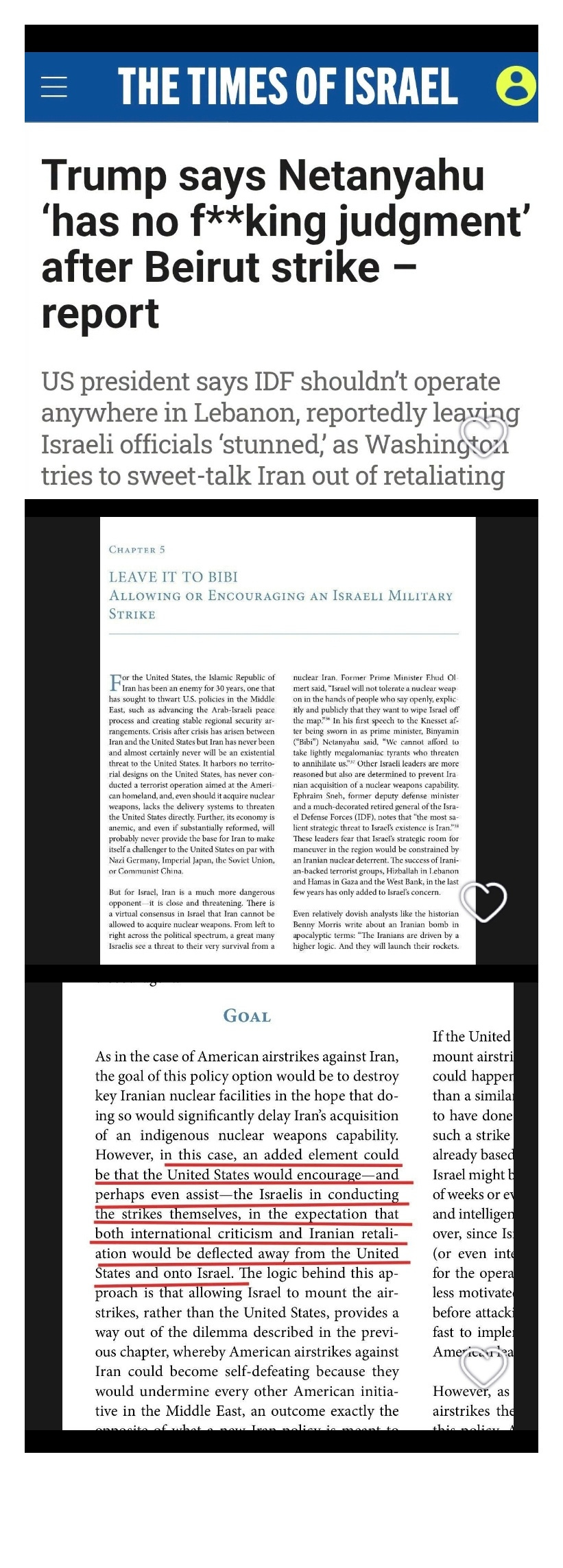
The Iran memorandum carries a comparable structural weakness built into its own text from the outset, not one that emerged only with time. Iranian officials themselves have already supplied the language for what is happening here. Mohammad Bagher Ghalibaf, Iran’s chief negotiator in the talks, described Washington and Tel Aviv’s conduct as a “good cop, bad cop routine” on 14 June 2026, made within hours of an Israeli strike on southern Beirut that killed three people even as American and Iranian officials were voicing optimism that a memorandum was close to signature. Ghalibaf’s complaint rests on a structural feature of the arrangement rather than a single incident:
Washington and Tel Aviv frequently operate through a public division of labour in which one party voices restraint while the other continues to act, and the resulting daylight between their statements supplies Washington with room to describe Israeli conduct as independent even where the underlying strategic objective, continued military pressure on Iran and its regional allies, remains shared. This is not merely a pattern inferred after the fact. A 2009 Saban Center at Brookings paper, Which Path to Persia?, written by a team including former ambassador Martin Indyk and former CIA analyst Kenneth Pollack, proposed exactly this arrangement as a deliberate policy option years before the present war began. Its chapter titled “Leave It to Bibi: Allowing or Encouraging an Israeli Military Strike” recommended that the United States “encourage and perhaps even assist, the Israelis in conducting the strikes themselves, in the expectation that both international criticism and Iranian retaliation would be deflected away from the United States and onto Israel.” Whether the present division of labour between Washington and Tel Aviv reflects the specific logic that paper articulated, a similar logic arrived at independently, or simply Washington’s longstanding reluctance to restrain an ally on whose military and intelligence cooperation it depends, the practical effect for Tehran is identical, and a journalist closely tracking the talks put the resulting dilemma plainly the same day: either the American president cannot restrain the Israeli prime minister, or the memorandum is being violated before its ink is dry, and Iran has no way to determine which.
Israel was not a signatory to the document at all, which left Iranian Foreign Minister Abbas Araghchi to insist after the signing that Tehran considered Israel and Hezbollah a party to the agreement “in substance” regardless of whose name appeared on it, while Israeli Defence Minister Israel Katz stated just as plainly that Israeli forces would remain in Lebanon, Syria and Gaza indefinitely because, in his words, “Trump’s agreement does not bind us.”
Whether the present memorandum is built to last or built to break is a question its legal form answers more directly than its language does. A memorandum of understanding, by definition and by the deliberate choice of both governments, is not a treaty. It requires no ratification by the Iranian parliament or the United States Senate, carries no binding force under either country’s domestic law, and creates no instrument that survives a change of administration the way a ratified treaty or even a congressionally reviewed agreement would. This is precisely the structure the JCPOA itself eventually took in American hands: negotiated as a multilateral accord with United Nations Security Council endorsement, but implemented domestically through an executive agreement rather than a treaty submitted for Senate advice and consent, which left it exposed to reversal by any successor president who judged the political cost of withdrawal lower than the strategic benefit. The 2026 memorandum repeats that exposure in a more concentrated form, since it is bilateral rather than multilateral, lacks the institutional buy-in of European, Russian or Chinese co-signatories who might object to a unilateral American exit, and depends for its nuclear provisions on a second round of talks that has not yet taken place. Iran’s stockpile of enriched uranium and the question of its disposal remain unresolved in the text concluded at Geneva, deferred to negotiations the document itself acknowledges may not succeed, which means the memorandum’s central verification mechanism, the part that would most resemble the International Atomic Energy Agency’s role under the 2015 accord, does not yet exist in operative form.
The Anchorage precedent supplies the closer comparison, not the JCPOA. Both arrangements rest on verbal characterisations of shared understanding rather than on a text whose terms remain stable once the ink is dry, and both have already produced public disagreement between the parties’ own officials over what was actually agreed. Iran’s chief negotiator was describing exactly this problem when he identified the good cop, bad cop structure as the obstacle to trusting the process, and Israel’s defence minister supplied the clearest possible confirmation of the same structural weakness by stating that an agreement bearing the American president’s name does not bind the conduct of the regional ally whose continued military operations most directly threaten the ceasefire’s survival. A memorandum that does not bind Israel, has not yet produced enforceable nuclear inspection terms, and carries no domestic legal weight in Washington beyond the current administration’s discretion is not different in kind from the arrangements that collapsed in 1990, 2018 and Anchorage; it is, if anything, less institutionally secured than the JCPOA was at its strongest, since that accord at least carried Security Council backing and verified multilateral compliance mechanisms before Washington chose to abandon them. Whether Tehran’s negotiators recognised this asymmetry before signing, or signed regardless because a temporary reopening of Hormuz and a partial lifting of the naval blockade represented immediate relief worth taking on its own terms, the documentary record offers no basis for confidence that the present arrangement carries more binding weight than its predecessors, only that its failure, if it comes, will arrive through a now-familiar sequence rather than an unprecedented one.
What connects 1953, 1954, 1990, 2018, 2025 and the present memorandum is not a conspiracy in the colloquial sense but an institutional consistency that the rhetoric of partnership has never matched. Each episode features an American demand that some prior arrangement, multilateral or otherwise, be replaced with a better one on American terms; each features the application of military, financial or covert pressure as the precondition for negotiation rather than as a failure of it; and each features eventual American disengagement from the resulting framework once the balance of advantage shifts, whether through a change of administration, a change of strategic calculation, or a renewed appetite for confrontation. The 2026 memorandum may yet hold, and a sixty-day window may yet produce the technical agreement on enrichment and inspection that two decades of diplomacy have failed to secure. But the document concluded in Geneva and signed in Versailles and Tehran does not describe a relationship between equals working out their differences; it describes the terms on which a state that has just inflicted military, economic and political damage on another is prepared to stop, conditional on continued compliance, continued inspection, and continued deference to demands that may be revised again whenever Washington’s calculation of advantage changes. Whether that arrangement should be called peace or merely its temporary administration is a question the historical record, rather than the language of any single memorandum, is best placed to answer.
Authored By: Global GeoPolitics
If you prefer to make a one time donation in support of my work, you can do so by clicking any link below:
https://buymeacoffee.com/ggtv |
https://ko-fi.com/globalgeopolitics |
Bitcoin: 3NiK8BoRZnkwJSHZSekuXKFizGPopkE7ns
References
1. Wikipedia, “2025-2026 Iran-United States negotiations,” accessed 18 June 2026.
2. Axios, “US, Iran reach deal to extend ceasefire, open strait,” 14 June 2026.
3. Council on Foreign Relations, “Trump’s Iran Deal: What We Know So Far,” 17 June 2026.
4. Al Jazeera, “US says Iran nuclear talks begin after framework deal signing,” 16 June 2026.
5. Fortune, “Iran pushes differing versions of deal as U.S. sticks to timeline,” 14 June 2026.
6. House of Commons Library, “US-Iran ceasefire and nuclear talks in 2026,” briefing CBP-10637.
7. The Researchers, “Iran Unveils 14-Point MoU Proposal,” 12 June 2026.
8. Time, “U.S. and Iran Offer Mixed Messages on Deal to End War,” 7 May 2026.
9. Wikipedia, “1953 Iranian coup d’état,” accessed 18 June 2026.
10. National Security Archive, George Washington University, “CIA Confirms Role in 1953 Iran Coup,” 19 August 2013.
11. National Security Archive, “The Secret CIA History of the Iran Coup, 1953,” 29 November 2000.
12. Federation of American Scientists, Secrecy & Government Bulletin, Issue 70.
13. Council on Foreign Relations, “Support for the Overthrow of Iranian Prime Minister Mohammad Mosaddeq.”
14. The White House (archived), “President Donald J. Trump is Ending United States Participation in an Unacceptable Iran Deal,” 8 May 2018.
15. Wikipedia, “United States withdrawal from the Iran nuclear deal,” accessed 18 June 2026.
16. Center for Arms Control and Non-Proliferation, “Fact Sheet: The Iran Deal, Then and Now.”
17. Center for Arms Control and Non-Proliferation, “A worthless withdrawal: Two years since President Trump abandoned the JCPOA,” 22 May 2020.
18. Council on Foreign Relations, “What Is the Iran Nuclear Deal?”
19. Al Jazeera, “What was the Iran nuclear deal Trump dumped in search of ‘better’ terms?” 21 April 2026.
20. National Security Archive, George Washington University, “NATO Expansion: What Gorbachev Heard,” 12 December 2017.
21. Sarotte, Mary Elise. “A Broken Promise? What the West Really Told Moscow About NATO Expansion.” Foreign Affairs, September/October 2014.
22. Shifrinson, Joshua R. Itzkowitz. “Deal or No Deal? The End of the Cold War and the U.S. Offer to Limit NATO Expansion.” International Security, Spring 2016.
23. Kennan, George F. “A Fateful Error.” The New York Times, 5 February 1997.
24. Cullather, Nicholas. Operation PBSUCCESS: The United States and Guatemala, 1952-1954. Center for the Study of Intelligence, Central Intelligence Agency, 1994 (declassified 1997).
25. Cullather, Nicholas. Secret History: The CIA’s Classified Account of Its Operations in Guatemala, 1952-1954. Stanford University Press, 1999, 2nd ed. 2006.
26. Schlesinger, Stephen, and Stephen Kinzer. Bitter Fruit: The Story of the American Coup in Guatemala. Harvard University Press, 1982, rev. 1999.
27. Gleijeses, Piero. Shattered Hope: The Guatemalan Revolution and the United States, 1944-1954. Princeton University Press, 1991.
28. Wikipedia, “2025 Russia-United States summit,” accessed 18 June 2026.
29. Meduza, “Russia keeps citing a ‘spirit of Anchorage’ from last summer’s Trump-Putin summit, but that term exists only in Moscow’s vocabulary,” 11 February 2026.
30. RT, “US-Israeli ‘good cop, bad cop’ tactics outdated – Iran’s chief negotiator,” 14 June 2026.
31. Common Dreams, “‘Evidently Hoping to Sabotage’ US-Iran Deal, Israel Bombs Beirut,” 15 June 2026.
32. TRT World, “Iran accuses US of playing ‘good cop, bad cop’ as Israel bombs Beirut while Tehran weighs peace deal,” 14 June 2026.
33. Wikipedia, “2025-2026 Iran-United States negotiations,” accessed 18 June 2026.


Leave a comment