
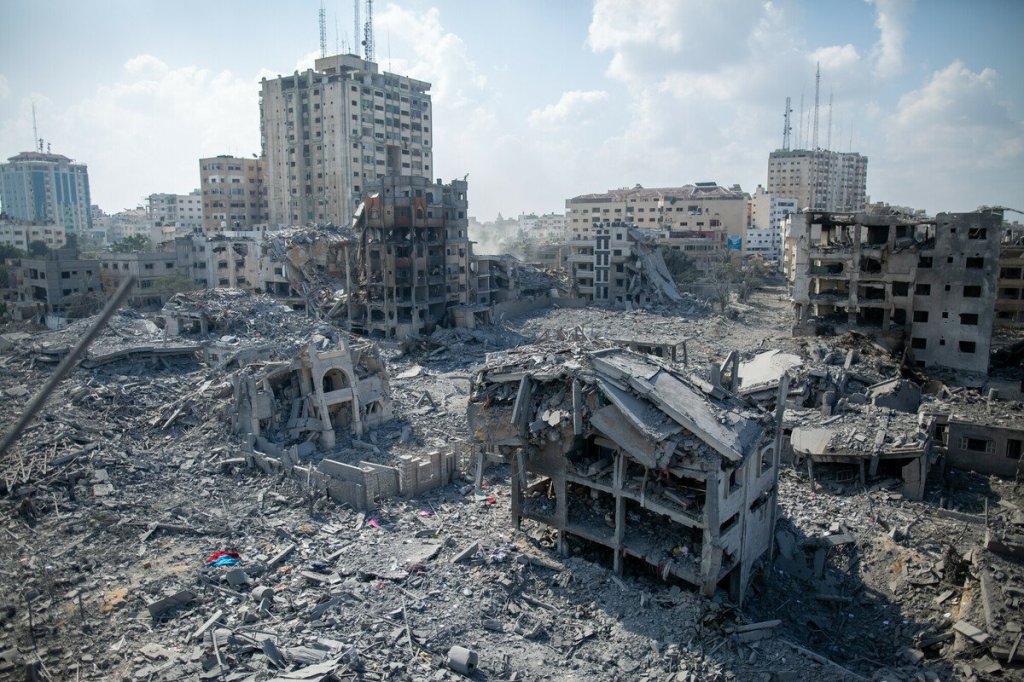
A plain-language investigation into the business of organised violence, the myths that sustain it, and the interests that profit from it
War is a racket. Those words were written in 1935 by Major General Smedley Butler, a decorated veteran who had spent his career fighting America’s foreign wars and came to recognise that he had been nothing more than a “muscle-man for the protection of business interests” (1). Butler’s conclusion was simple: war is a deception conducted for the benefit of the very few at the expense of the very many. Nearly a century later, despite all the technological advances and rhetorical shifts, the fundamental mechanism he described remains intact. The weaponry has changed, but the racket persists.
What Butler identified was not a conspiracy in the narrow sense but a structural feature of modern political economy. Wars are not the spontaneous eruptions of ancient hatreds or the unavoidable consequences of human nature. They are political and economic institutions, carefully justified, systematically organised, and sustained by those who profit from their continuation. The business of war is a market like any other, subject to the same pressures of supply and demand, the same incentives for expansion, and the same resistance to disruption (7).
The Manufacture of Consent
The challenge facing those who wish to sustain military institutions is fundamentally one of justification. War, in its raw reality, is not something that most human beings naturally embrace. The extensive psychological conditioning required to prepare soldiers for combat, the dehumanisation of the enemy, the inculcation of obedience, the suppression of natural empathy, demonstrates that organised violence operates against rather than with the grain of human nature (3). If killing were truly instinctive, the elaborate apparatus of military training would be unnecessary.
This is where propaganda enters the picture. The term originates in the work of early twentieth-century communications theorists who recognised that democratic populations, if left to their own devices, might not support the wars their governments wished to fight. The solution was the “manufacture of consent”: the systematic construction of narratives designed to make organised violence appear noble, necessary, and virtuous (9). Citizens are told that wars are fought for freedom, democracy, or national survival, while the economic and strategic interests driving the conflict remain hidden from public view.
The mechanisms through which this concealment operates are multiple and mutually reinforcing. Nationalist ideology provides a comprehensive framework within which military action is rendered not merely acceptable but virtuous. The nation is presented as a community worthy of the ultimate sacrifice, and those who die in its defence are celebrated as heroes. Flags, anthems, monuments, and ceremonies create emotional attachments that discourage critical examination of the wars those symbols represent. Questioning military action becomes not a policy disagreement but an attack on those who serve, a failure of patriotism, a betrayal of shared values (4).
Following the Money
If you want to understand why a war is being fought, the most reliable method is to follow the money. Butler understood this intuitively. He described how his military interventions in Mexico, Central America, and China had served the interests of oil companies and Wall Street financiers rather than any genuine national security concerns (1). The pattern he identified has repeated itself with remarkable consistency across the decades.
Consider the case of Libya. Prior to the US-led bombing campaign in 2011, Libya had the highest Human Development Index, the lowest infant mortality, and the highest life expectancy in all of Africa. The country provided effective free health and education services to all its citizens. Then Muammar Gaddafi committed an unpardonable crime: he announced plans to nationalise Libyan oil, depriving Western energy conglomerates of their profits. Following a familiar pattern, rebels were armed and funded to create a rebellion. The bombing campaign that followed destroyed hospitals, schools, and water infrastructure, reducing a prosperous country to rubble (1).
Iraq followed a similar trajectory. Saddam Hussein, like Gaddafi, angered powerful interests by attempting to pursue independent policies for Iraqi oil. The pretext for the 2003 invasion, weapons of mass destruction, was manufactured to cover the real reasons for the war. As Alan Greenspan later acknowledged, “It is politically inconvenient to acknowledge what everyone knows: the Iraq war is largely about oil” (1(. The regime change operation, mounted for the “benefit of the Iraqi people,” resulted in the deaths of a million people and the destruction of infrastructure, returning the country to conditions worse than anything experienced under the previous regime.
In Syria, similar dynamics have been at play. In 2009, Qatar proposed to build a pipeline through Jordan and Turkey to supply oil to Europe. Syrian President Bashar al-Assad turned this down and instead signed an agreement for an alternative pipeline running through Iran, Iraq, and Syria. Oil interests opposed to this deal began funding rebel groups to overthrow Assad, blocking the possibility of the Iranian pipeline. The stated humanitarian concern for oppressed Syrians, according to this analysis, had little to do with the realpolitik of financing the war against Assad. The so-called Islamic State itself came into existence after a coalition of countries headed by the US began providing arms and money to create a rebellion (1).
The New Racket: Tech and Defence
The military-industrial complex that Eisenhower warned against in 1961 has evolved significantly in the decades since his farewell address. The traditional defence primes, Lockheed Martin, Boeing, Raytheon, have been joined by a new class of actors: the tech oligarchy. Microsoft, Amazon, Google, and Palantir have become prominent military contractors, in some cases overtaking the traditional defence companies in competitive bids (2).
This shift reflects a significant transformation in the nature of warfare. The wars in Ukraine and Gaza, where prototype drones and AI-enabled systems are rapidly deployed and tested, are driving massive investments in military technology. The ongoing buildup of an AI arms race with China and Russia has spurred significant defence investments in artificial intelligence and large-scale infrastructure projects. Tech firms that once maintained an arms-length relationship with the military are now deeply entangled with the US security apparatus (2).
The platform model that has driven Big Tech’s dominance in the civilian sector is now being applied to defence. Companies like Palantir are building ecosystems that attract third-party developers and users, effectively reshaping defence procurement to benefit platform companies that position themselves as intermediaries. While this is done in the name of accelerating innovation and breaking up the anti-competitive behaviour of the traditional defence primes, the result is not greater diversity but further concentration. The trend directly parallels the post-Cold War consolidation of the defence industry, albeit following a different playbook (2).
The Human Cost
Behind the profit calculations and strategic manoeuvring lies the human reality of war. The burden of organised violence falls overwhelmingly on those with the least power. Soldiers have largely come from working-class and economically vulnerable populations, drawn by promises of education, healthcare, employment, and stability(4). The economic motivations for enlistment reveal the class dimensions of military service: the poor are disproportionately asked to fight and die for interests they did not choose.
At the same time, the political leaders who authorise wars and the corporate interests that profit from them are rarely exposed to the same risks. The decision-makers who send others to fight are insulated from the consequences of their decisions. Their children do not serve in combat, their families do not experience the trauma of deployment, and their lives continue unaffected by the violence they have authorised. This disconnect is not incidental to the military system but fundamental to its character (1).
The psychological consequences of this system are profound and enduring. Many veterans carry deep wounds because they have been placed in situations that conflict with their moral instincts. Post-traumatic stress disorder, depression, substance abuse, and suicide are tragically common among those who have served in combat. The grief, guilt, and trauma experienced by countless veterans are not signs of weakness but evidence that conscience survives even under extraordinary pressure (4).
The Alternative
The anthropologist Margaret Mead observed that warfare is not a biological necessity but a cultural invention whose presence or absence varies dramatically across societies(8). Her ethnographic work among Pacific Island communities revealed cultures that had effectively eliminated organised violence, demonstrating that the capacity for peace is as genuinely human as the capacity for war. Subsequent research has confirmed that human social organisation exhibits extraordinary plasticity, with different societies developing dramatically different approaches to conflict resolution (3).
The preconditions that make war more likely include a shift to sedentary existence, growing regional population, concentration of valuable resources, increasing social complexity, and the establishment of group boundaries and collective identities. The archaeological record reveals that war appeared at different times in different places, and that many societies have long enjoyed the preconditions for war without experiencing conflict. Social arrangements that impede war, cross-group ties of kinship and marriage, cooperation in hunting and agriculture, norms that value peace and stigmatise killing, and recognised means for conflict resolution, are as much a part of human heritage as the capacity for violence (3).
If war is created by political choices, economic incentives, and cultural conditioning, then it can also be challenged and changed. Violence is not destiny. It is a decision made by human beings, and decisions can be reversed. The greatest obstacle to peace is not human nature but the belief that war is unavoidable. As long as people accept that belief, the machinery of war will continue to operate, producing death and destruction on a scale that defies comprehension. Once that belief is questioned, once the lie is exposed, the possibility emerges for societies built on cooperation, justice, and shared human dignity rather than organised violence.
References
- Butler, S.D. (1935). War Is a Racket. New York: Round Table Press. (1)
- Hoijtink, M. (2026). The rise of the tech oligarchy and its military entanglements: a platform approach. Science as Culture. (2)
- Fry, D.P. (2018). War Is Not Part of Human Nature. Scientific American, September 1. (3)
- Awwad, W. (2024). In the Crosshairs: Manufacturing Consent and the Erosion of Public Trust. India Today, October 21. (4)
- McNamara, K.R. (2026). A market for war? The reinforcing logics of Europe’s security turn. Journal of European Integration. (7)
- Chomsky, N. & Herman, E.S. (1988). Manufacturing Consent: The Political Economy of the Mass Media. New York: Pantheon Books. (9)
- Howard, S. (2023). The Sound of War. The Cape Breton Spectator, February 1. (6)
- Fry, D.P. (2013). War, Peace, and Human Nature: The Convergence of Evolutionary and Cultural Views. Oxford: Oxford University Press. (8)
For in-depth comprehensive and detailed analysis, please check out the following article:
How War Became an Institution Rather Than an Instinct
Understanding organised violence as a political choice, not a human inheritance
This article challenges the foundational assumption that war constitutes an inevitable expression of human nature, arguing instead that organised violence functions as a politically constructed and economically sustained institution. Drawing upon anthropological evidence, historical analysis, psychological research, and contemporary political economy, the essay demonstrates that large-scale warfare requires extensive social conditioning, institutional infrastructure, and material incentives that contradict the proposition of innate human belligerence. The military-industrial complex, nationalist ideology, and economic interests intersect to manufacture consent for violence while obscuring the cooperative foundations of human society.
By examining the mechanisms through which war is normalised, including propaganda, economic dependency, and cultural conditioning, the analysis reveals that organised killing serves institutional preservation rather than human necessity. The conclusion advances that recognising war as a created institution rather than an evolutionary inheritance opens possibilities for alternative social arrangements predicated on cooperation, justice, and shared human dignity.
Full Article:


Leave a comment