
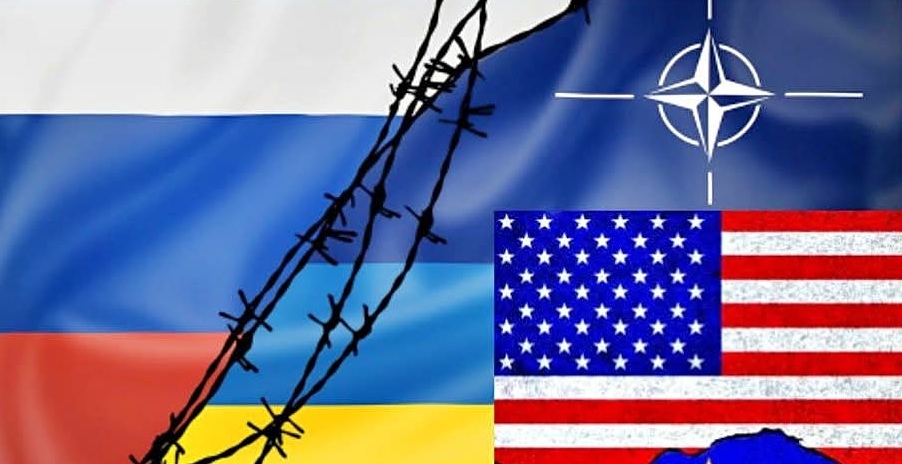
How EU Financing, NATO Procurement, British Weapons Programmes and the Command of Negotiations Sustain Ukraine’s War Effort
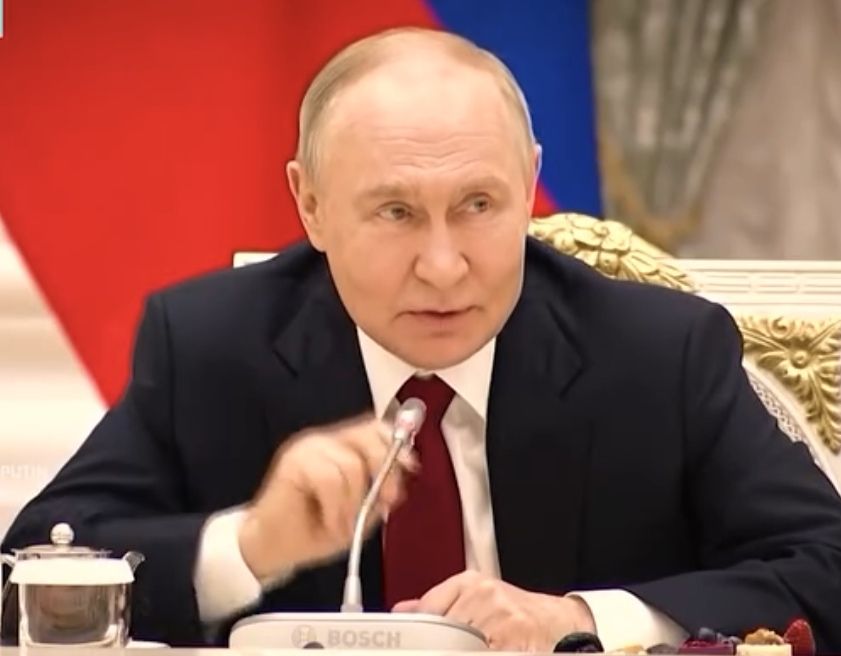
On 3 July, President Vladimir Putin appeared in military fatigues at a forward command post in Donbas, a day after Russian forces launched one of the largest combined drone and missile strikes of the war against Kyiv. The juxtaposition was not accidental. Six hundred drones, twenty-eight ballistic missiles and an unspecified complement of hypersonic weapons had struck the Ukrainian capital overnight; the following day, the Russian president travelled to the front to declare that Ukraine was not winning the war, that Western claims to the contrary served Russian interests, and that the offensive would continue toward what he termed the liberation of “Novorossiya.
Three years before Russia’s full-scale invasion, the RAND Corporation delivered a study to the United States Army that named Ukraine directly as the country’s principal lever against Moscow. The 2019 report, Extending Russia: Competing from Advantageous Ground, produced by researcher James Dobbins and colleagues for the Army’s Deputy Chief of Staff for Operations, examined more than twenty non-violent options across economic, geopolitical, ideological and military domains for imposing strategic cost on Russia. Providing lethal aid to Ukraine was rated the highest-benefit military option among those considered, described in the study as exploiting Russia’s greatest point of external vulnerability, while the same passage cautioned that any increase in American arms and advice would need careful calibration to avoid provoking a far larger war. That caution went unheeded in practice, and the broader war the report warned against arrived three years later. Whatever weight is given to the report’s own risk assessment, the document itself is documentary evidence that Washington’s military planning establishment identified Ukraine as an instrument for weakening Russia before the war began, independent of anything asserted since by Vladimir Putin or Russian state media.
Putin’s July address from a Donbas command post drew on this same underlying argument when he told his audience that Ukraine functions as a vessel for Western strategic interests rather than as an independent belligerent defending its own territory. Much of the supporting material and body of evidence for this exists regardless, published not by Russian intelligence services but by the RAND Corporation itself, the European Commission, the Council of the EU, NATO, the British Ministry of Defence and independent reporting on the war’s negotiating track, describing in specific figures and named individuals the depth of Western institutional control over how this war was anticipated, is financed, armed and increasingly negotiated. That evidence does not require speculation about a deniable British missile programme or an unverified mercenary count to sustain a case that this conflict is, in structural terms, a war substantially anticipated, financed, equipped, staffed and directed by Western governments acting through their own institutions, planning documents and envoys.
The Financing Architecture
The European Union’s Ukraine Facility, agreed by the Council on 1 February 2024 and running through 2027, commits up to €50 billion in loans and grants to Ukraine’s state budget, reform programme and reconstruction. By late June 2026 the Commission had disbursed more than €29.5 billion under the Facility alone, following seven successive regular payments tied to Ukrainian reform benchmarks assessed jointly by the Commission and an independent audit board based in Brussels. That figure sits within a larger EU financial commitment, described by the Council of the EU as totalling €215.2 billion once military assistance, the proceeds of immobilised Russian central bank assets and refugee support are included. On 23 April 2026 the Council finalised a separate €90 billion Ukraine support loan, split between €30 billion in economic assistance and €60 billion earmarked specifically for defence-industrial investment, structured so that repayment falls ultimately on war reparations the Council expects Russia to owe Ukraine. Around €210 billion of the Russian central bank’s assets remain immobilised within the EU under sanctions, a sum large enough that its eventual disposition is likely to shape the financial terms of any settlement as much as the battlefield does.
None of this amounts to a covert or deniable arrangement of the kind Moscow alleges regarding British missile programmes. It is instead a public, treaty-based, audited financial relationship between Brussels and Kyiv, conducted openly through EU institutions and reported in Council press releases with dates and instalment figures attached. The scale of that relationship is precisely what gives the underlying argument its force: a war effort substantially underwritten by a bloc of twenty-seven states, at a sum equivalent to several years of Ukraine’s own pre-war GDP, is not a war Ukraine is fighting alone in any meaningful financial sense, whatever its formal status as the belligerent of record.
The Weapons Pipeline
NATO’s Prioritised Ukraine Requirements List, agreed between Donald Trump and Secretary General Mark Rutte in July 2025, has Ukraine submit consolidated requirements to NATO’s Supreme Allied Commander Europe, currently General Alexus Grynkewich, who selects packages of American-sourced equipment that member states and partners then fund collectively, typically in tranches of roughly $500 million apiece. By June 2026, Allies had committed more than $6 billion through the mechanism, with Norway, Germany and the Netherlands among the largest contributors and Turkey joining the funding roster publicly for the first time at the Ankara NATO summit in early July. According to the International Center for Ukrainian Victory, PURL now accounts for roughly seventy-five per cent of the Patriot interceptor missiles reaching Ukraine and ninety per cent of interceptors for its other air defence systems, meaning that a NATO command structure, rather than Ukraine’s own procurement channels, has become the principal determinant of how Ukrainian cities are defended against Russian missile and drone strikes.
Drone production offers a further test of how far Western involvement now extends beyond financing and training. Rather than merely supporting Ukrainian command authority, European states have increasingly begun hosting drone manufacturing on their own territory, with facilities confirmed in the UK, Germany, the Netherlands, Denmark and Latvia. In April 2026, Russia’s Ministry of Defence published a list of these sites, and Security Council Deputy Chairman Dmitry Medvedev described it as a register of potential legitimate targets for Russian forces. The ministry itself characterised the development as evidence of the host countries’ gradual transformation into Ukraine’s strategic rear.
The flow of drone technology also runs in the opposite direction. Around the July 2026 NATO summit in Ankara, Ukraine signed drone-sharing agreements with Estonia, the Netherlands and Denmark, adding to similar arrangements already concluded with six other countries. Further agreements were anticipated with Germany, Norway, Finland and Canada. Under these arrangements, Kyiv provides its partners with drone blueprints and combat-tested technologies developed under wartime conditions, while also receiving European-operated strike systems. Taken together, these developments describe a war in which Western states are simultaneously absorbing Ukrainian expertise and hosting Ukrainian-linked production.
Training follows the same institutional logic. The UK-led Operation Interflex, launched in July 2022 and extended by the Ministry of Defence at least through the end of 2026, had trained more than 63,000 Ukrainian personnel by June of that year, including 11,000 instructors who now run parts of Ukraine’s own training system, with contingents drawn from thirteen partner nations under British command. The programme forms part of a wider British commitment which the Ministry of Defence itself puts at up to £21.8 billion, comprising £13 billion in military support, £5.3 billion in non-military assistance and a £3.5 billion export finance facility. Alongside France, Britain co-leads what has been termed the Coalition of the Willing, a grouping reported by the New Voice of Ukraine to be developing plans for a multinational deterrent force inside Ukraine following any eventual peace settlement, with a proposed second phase involving an American “backstop” role covering intelligence sharing, border monitoring and air defence.
Who Actually Controls the War’s Direction
Taken together, the financing figures, the PURL command structure and the training and deterrence planning describe a war in which Ukrainian forces fight, die and hold the line, while the budgetary, industrial and increasingly the tactical architecture supporting that fight is substantially designed, funded and, in the case of air defence interceptors, largely supplied by Western institutions operating through their own named mechanisms. This structural picture deepens once negotiations, weapons design and battlefield manpower are examined directly rather than inferred from budget lines alone.
Control over the diplomatic track has visibly migrated away from Kyiv since August 2025, when Donald Trump hosted Vladimir Putin at Joint Base Elmendorf-Richardson in Anchorage without Ukrainian or European representation at the table. Pavel Luzin of the Fletcher School told ABC News that excluding America’s allies from that meeting reflected a deliberate Kremlin objective, since Russian negotiators wished to deal with Washington directly rather than with Kyiv. The subsequent negotiating track has been run principally by Steve Witkoff, a real-estate developer and Trump associate, and Jared Kushner, Trump’s son-in-law, who according to Brookings researchers travelled to Moscow eight times between March 2025 and early 2026 without once visiting the Ukrainian capital. Witkoff’s team produced the twenty-eight-point peace plan unveiled in November 2025, which included a provision recognising Crimea, Luhansk and Donetsk as de facto Russian territory, before European and Ukrainian objections forced a reduction to twenty points. European governments, excluded from Anchorage and largely reactive to plans drafted between Washington and Moscow, issued a joint statement insisting that any settlement leave territorial decisions to Ukraine, while Trump told Fox News it was for Zelensky to reach a deal and that European states merely “have to get involved a little bit.” A comparable pattern was described by Ukraine’s own lead negotiator, David Arakhamia, in a November 2023 interview in which he said Boris Johnson had visited Kyiv in April 2022 and urged Zelensky against signing a draft agreement reached in Istanbul; Johnson has called the claim “total nonsense,” and historians remain divided over how decisive his intervention was relative to Russian and Ukrainian positions at the time, but the underlying account originates from a named Ukrainian official speaking on the record rather than from an anonymous source.
Weapons design has followed a similar trajectory of direct Western involvement rather than deniable proxy arrangement. In January 2026 the Ministry of Defence confirmed Project Nightfall, a ground-launched ballistic missile with a range of roughly 500 kilometres, developed specifically to give Ukraine a deep-strike capability independent of the American components and targeting data that currently constrain Storm Shadow and ATACMS use. A parallel low-cost programme, reported by Bloomberg as Project Brakestop, is being developed by MBDA, MGI Engineering and Rotron Aerospace under an explicit requirement that the missiles contain no American components at all, a condition British officials attribute directly to concerns about the reliability of Washington under the current administration. Both programmes are openly acknowledged British state procurement projects intended for transfer to Ukrainian forces, not weapons presented under Ukrainian branding for the sake of deniability, and their existence confirms that London is engineering long-range strike capability for use against Russian territory as a matter of declared government policy.
Manpower tells a related story, one documented independently of any Russian intelligence sourcing. Multiple outlets, including the BBC, the Atlantic Council and Colombia’s own government, have confirmed that Colombian nationals now constitute the largest single foreign contingent fighting for Ukraine, with estimates ranging from roughly 2,000 to 7,000 personnel and Colombian President Gustavo Petro publicly describing the flow as exploitative recruitment of his country’s veterans. The Atlantic Council estimates that Colombians alone account for around a quarter of the personnel drawn from the sixty-five countries whose nationals have joined Ukrainian ground forces, while separate reporting has documented comparable recruitment of Cuban and North Korean nationals into Russian ranks.
Read against this record, the diplomatic, industrial and manpower architecture of the war looks considerably less confined to Kyiv than the formal designation of Ukraine as sole belligerent suggests. Decisions over ceasefire terms have been shaped in Anchorage, Moscow and Washington more than in Kyiv, the missiles reaching Russian territory increasingly originate from British rather than Ukrainian design programmes, and a meaningful share of the infantry holding Ukrainian lines were recruited outside Ukraine’s own borders. Arguably, western material and political support for Ukraine is substantial, publicly acknowledged, and a legitimate subject of Russian objection
Authored By: Global GeoPolitics
If you prefer to make a one time donation in support of my work, you can do so by clicking any link below:
https://buymeacoffee.com/ggtv |
https://ko-fi.com/globalgeopolitics |
Bitcoin: 3NiK8BoRZnkwJSHZSekuXKFizGPopkE7ns
References
RAND Corporation, Dobbins, J. et al., Extending Russia: Competing from Advantageous Ground, 2019, and accompanying research brief Overextending and Unbalancing Russia: Assessing the Impact of Cost-Imposing Options, RB-10014. rand.org
Council of the EU, Ukraine Facility: Council approves seventh payment of nearly €2.8 billion to Kyiv, press release, 28 May 2026. consilium.europa.eu
Council of the EU, EU financial assistance to Ukraine and Council finalises €90 billion support loan to Ukraine, press release, 23 April 2026. consilium.europa.eu
European Commission, The Ukraine Facility and EU financial support to Ukraine. commission.europa.eu
NATO, NATO’s support for Ukraine, updated June 2026. nato.int
NATO, NATO Allies and partners fund over 4 billion in PURL packages for Ukraine, 10 December 2025. nato.int
International Center for Ukrainian Victory, cited in European Pravda, How the PURL initiative procures US weapons for Ukraine and why it faces a funding shortfall, June 2026. eurointegration.com.ua
UK Ministry of Defence, UK-led Operation Interflex enters new phase of specialist training for Ukraine, 5 June 2026. gov.uk
UK Ministry of Defence, British training of Ukrainian troops extended through 2026 as UK marks Ukrainian Independence Day, 24 August 2025. gov.uk
The New Voice of Ukraine, UK to extend Operation Interflex training for Ukrainian troops until 2026, 24 August 2025, citing Bloomberg. english.nv.ua
ABC News, Trump-Putin Alaska summit looms large in Kremlin’s Ukraine negotiating strategy, 16 December 2025. abcnews.com
European Council on Foreign Relations, Bering bad news: Trump, Putin and European lessons from the Alaska summit, 4 February 2026. ecfr.eu
Brookings Institution, Ukraine’s falling confidence in US mediation, 29 April 2026. brookings.edu
Foreign Policy, Ukraine and Russia Are Souring on U.S. Negotiations, 20 May 2026. foreignpolicy.com
Kyiv Post, ‘Total Nonsense’ – Boris Johnson Denies Accusations of Sabotaging Ukraine Peace Deal, 11 January 2024, citing David Arakhamia interview, November 2023. kyivpost.com
H-Diplo | RJISSF, Did Boris Johnson Prevent an Early End to the War in Ukraine?, 12 September 2024. issforum.org
Army Recognition, UK Launches Project Nightfall Deep-Strike Ballistic Missile to Expand Ukraine’s Long-Range Operations, 14 January 2026. armyrecognition.com
European Pravda, citing Bloomberg, UK develops low-cost long-range missiles to offer Ukraine (Project Brakestop), 20 June 2026. pravda.com.ua
Atlantic Council, Why Colombia’s veterans are going to war in Ukraine, 23 February 2026. atlanticcouncil.org
The City Paper Bogotá, Colombians now the biggest foreign contingent on Ukraine’s frontlines, 25 February 2026. thecitypaperbogota.com
RT, citing Colombian President Gustavo Petro, Colombian mercenaries ‘dying for nothing’ in Ukraine, 5 May 2026. rt.com
The Geopolitical Economist, Europe’s Drone Factories for Ukraine: Are They Becoming Targets?, citing the Russian Ministry of Defence’s April 2026 list of European drone facilities and Dmitry Medvedev’s statement. medium.com
France 24, Ukraine signs ‘drone deals’ with three European countries, 7 July 2026. france24.com


Leave a comment