
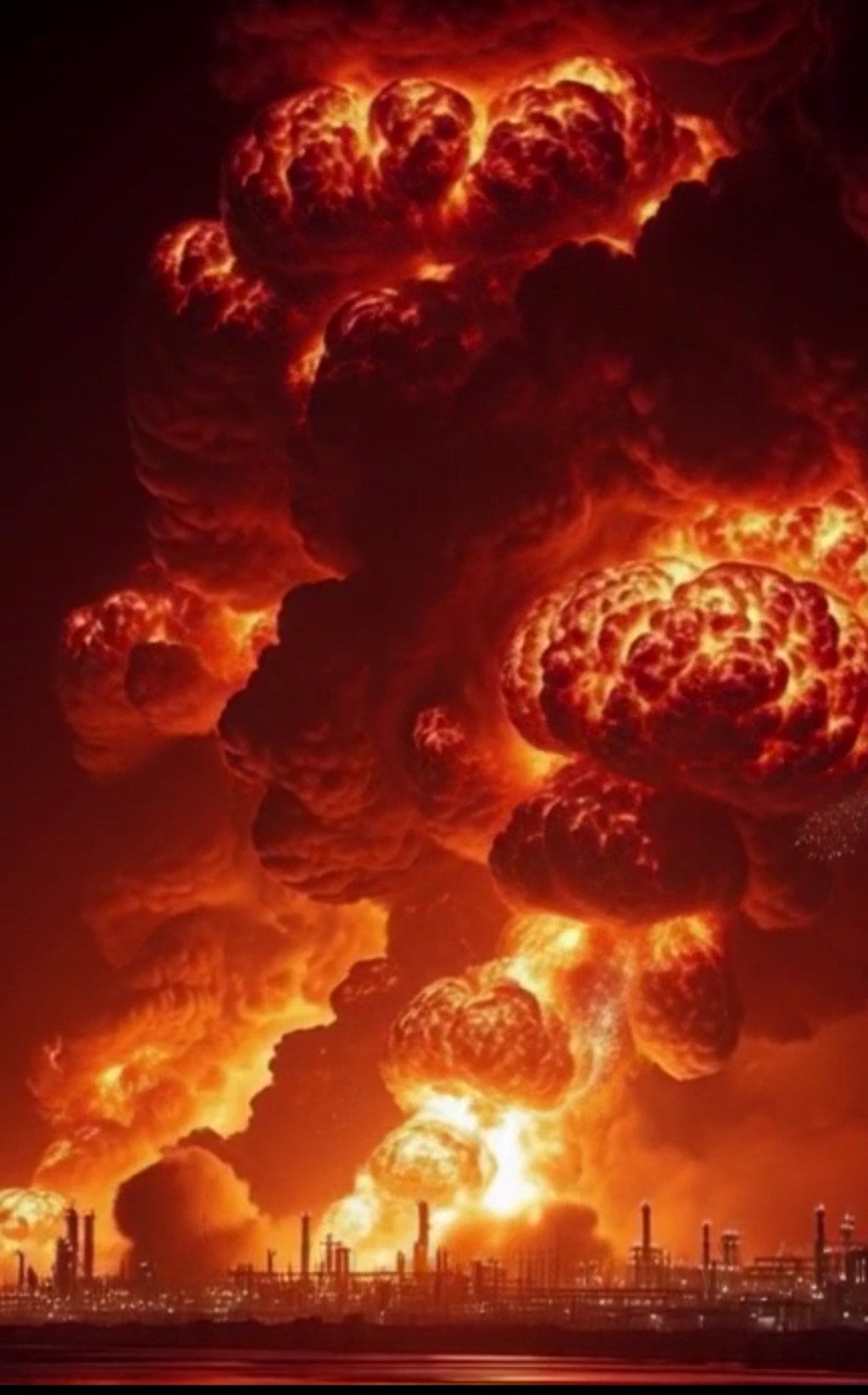
Why a kingdom that spends $83 billion on its military cannot defend its own oil infrastructure, and why the only rational course is to put its own house in order before it is too late
Editorial Analysis | September 2026
The assessment that Saudi Arabia appears as weak and confused as any country in the region, despite projecting an image of enormous power, is not a rhetorical flourish but a description of a structural condition that can be measured in the kingdom’s own economic data [4]. The state looks enormous, with enough air in its chest to project power, but in reality it is as fragile as a lemon on a stick, because its strategic position is extremely weak and it cannot comfortably sit with any side nor secure lasting support from anyone [5]. Every time it finds itself in trouble, America conveniently arrives with another arms package, another fighter jet deal, and another opportunity that benefits Washington’s economy more than Riyadh’s security [1].
The material evidence for this weakness is overwhelming. Saudi Arabia reported to OPEC that its crude oil production plunged to 6.238 million barrels per day in August 2026, the lowest since 1990, a decline of 1.9 million barrels per day from the previous month and a collapse of 3.86 million barrels per day from pre-war levels [3]. The kingdom’s oil exports have declined by approximately a third due to constraints on shipping in the Gulf, and oil activity decreased 24.7 percent from a year earlier, leaving real gross domestic product 4.8 percent lower, its deepest contraction since the pandemic [10]. These are not the figures of a rising power consolidating its position. They are the figures of a rentier state whose single source of revenue is being strangled by a war that it did not start but cannot escape [2].
The military dimension of Saudi weakness is equally stark. Riyadh spent approximately $83 billion on its military in 2025, equal to 6.5 percent of GDP and the eighth-highest level in the world [13]. It signed a $142 billion deal with the United States for arms sales, military support services, and training during Trump’s Persian Gulf tour in 2025 [1]. It has just approved a further $24.3 billion purchase of 48 F-35 fighter jets at a cost of $506 million per aircraft, five times the price paid by the United States Air Force [7]. And yet the field evidence, especially from the Yemen war, shows these investments have had little meaningful impact on Riyadh’s security or defence capabilities [6][8]. After more than a decade of war that has left tens of thousands dead and produced the world’s worst humanitarian crisis, Riyadh has failed to defeat the Houthis militarily or build credible Yemeni institutions [8]. Thousands of Saudi-backed mercenaries have been burned through in Yemen, battle after battle, brigade after brigade, and many of those brigades proved to be little more than fabricated formations that kept draining Saudi money and weapons [6].
The blockade of Yemen, which Saudi Arabia has maintained as an instrument of coercion, has become one of the kingdom’s biggest burdens rather than a source of leverage [12]. An official Yemeni government report documented $1.13 trillion in economic losses for Yemen due to the Saudi blockade, including $648 billion in cumulative losses in economic output and $482 billion in direct losses affecting productive and service sectors [12]. Foreign trade losses alone reached $111.13 billion, with a 65 percent decline in trade activity and the loss of hundreds of thousands of jobs [12]. The blockade has not brought the Houthis to their knees. It has created a humanitarian catastrophe that has united Yemenis against the Saudi-led coalition and generated international condemnation that undermines Riyadh’s claim to regional leadership [6]. The so-called Makkah agreement, which was supposed to legitimise Saudi intervention, is turning into the curse of Makkah, because it has produced angry allies rather than compliant partners [5].
The internal contradictions of Saudi strategy have become increasingly visible, particularly in the kingdom’s relationship with the United Arab Emirates [15]. The UAE announced its withdrawal from OPEC effective May 1, 2026, a decision that the Financial Times described as a significant blow to the oil cartel and its de facto leader, Saudi Arabia [15]. The two countries, often seen as the key anchors within OPEC, have diverged over production quotas and regional influence, and the UAE’s exit widened a rift with its neighbour that had been building for years [15]. In Yemen, the UAE-backed Southern Transitional Council launched an offensive in December 2025 that briefly seized roughly half the country’s territory before a Saudi-backed counteroffensive reversed those gains [6]. That crisis pitted two of the internationally recognised government’s own backers against each other, with STC forces drawing on Emirati support taking the oil-producing Hadramawt and al-Mahra governorates from Saudi-aligned units in a matter of days [6]. Saudi Arabia is not merely failing to defeat its enemies abroad. It is failing to maintain cohesion among its supposed allies [5].
The economic foundations of the Saudi state are eroding at precisely the moment when the kingdom’s expenditures are rising [9]. The National Debt Management Center contacted banks in August 2026 to arrange a loan of at least $8 billion, and Saudi Aramco is in separate talks with lenders [9]. Saudi Arabia entered 2026 expecting nearly $58 billion in financing needs, including debt repayments and the projected annual deficit [9]. The government has already raised about $6 billion through bonds, Aramco has secured another $4 billion, and the Public Investment Fund raised $7 billion in May 2026 [9]. Defence spending jumped 26 percent from a year earlier in the first quarter, reaching 64.7 billion riyals, or $17.2 billion [13]. The kingdom is borrowing to finance a war that is destroying its own oil production, because the alternative would be to admit that the war is unwinnable and the strategy is bankrupt [9][10].
Vision 2030, the programme that was supposed to transform Saudi Arabia from a rentier state into a diversified knowledge economy, has been collapsing under the weight of its own contradictions [4]. The NEOM megaproject, the centrepiece of the crown prince’s vision of a post-oil future, has been quietly scrapped after sinking more than $50 billion into the desert [4]. The Mukaab skyscraper, planned to be the world’s largest building, has been suspended [11]. The Line, the futuristic linear smart city within NEOM, has been scaled back and its completion delayed, with main tunnelling contracts and those for the Trojena ski resort cancelled in March 2026 and the population target for 2030 dropped from 1.5 million inhabitants to 100 [4]. Saudi Arabia has frozen and delayed payments to management consultants, ordered government entities to cut back on consulting spend, and halted new contracts for Western consultancies [4]. The kingdom paid McKinsey at least $500 million a year for a decade; in 2026 it froze payments, halted new awards, and wrote a 30 percent local-content floor into consulting tenders [4]. The consultants who built Vision 2030 are being cut loose because there is no longer enough money to pay them [4][9].
The social contract that underpins the Saudi state is coming under increasing strain [14]. The kingdom has executed at least 322 individuals as of early December 2025, the highest number ever documented, and the June 2025 execution of journalist Turki al-Jasser raised concerns that the government is using the death penalty to crush peaceful dissent [14]. Authorities have intensified their crackdown on freedom of expression, including the continued detention of fitness instructor Manahel al-Otaibi, and they continued to execute an alarmingly high number of people belonging to the Shia minority, including those who engaged in dissent in the Eastern Province [14]. The regime relies on pervasive surveillance, the criminalisation of dissent, appeals to sectarianism and ethnicity, and public spending supported by oil revenues to maintain power [14]. As oil revenues decline, the state’s capacity to buy social peace diminishes, and the repression that substitutes for legitimacy becomes more visible and more costly [14].
The strategic position that Saudi Arabia has adopted, allying itself with the United States and Israel in a confrontation with Iran that serves their interests rather than its own, has exposed the kingdom to risks that it cannot manage [5]. Iranian strikes have shown the value of U.S. intelligence, missile defence and military coordination, but they have also demonstrated that the kingdom’s infrastructure is vulnerable to retaliation from a neighbouring state that possesses missile capabilities far exceeding Saudi Arabia’s ability to defend against them [5]. The closure of the Strait of Hormuz, even temporarily, has revealed a key vulnerability not only for trade but also for the success of the country’s Vision 2030 strategy [5]. Now that Hormuz has been closed once, there will always be the risk that it could happen again, posing a long-term threat to Saudi Arabia’s trade flows and economic transformation plans [5]. The kingdom is beginning to reassess its economic geography, reducing its dependence on Hormuz and reorienting policy towards the Red Sea, but this is a response to a crisis that its own alliances helped to create [5].
The unholy alliance that Saudi Arabia has entered with the United States and Israel serves the interests of Washington and Tel Aviv far more than it serves Riyadh’s own [1][5]. The United States provides intelligence, weaponry, diplomatic cover, and military support, but it does so at a price that benefits American defence contractors more than Saudi security [1]. The F-35 deal at $506 million per aircraft, five times the price paid by the United States Air Force, is a transfer of wealth from Riyadh to Washington that buys the kingdom a weapons system it cannot fully operate without American permission and support [7]. The arms packages that arrive every time Saudi Arabia finds itself in trouble are not acts of alliance solidarity. They are opportunities for Washington’s economy to extract resources from a client state that has no alternative but to pay [1]. Israel, which has sought to draw the United States into a war with Iran for decades, benefits from Saudi participation in a coalition that weakens Iran without requiring Israeli troops to bear the costs [5]. Saudi Arabia bears the risks, and Israel and the United States capture the strategic benefits [5].
A materialist and class analysis of Saudi Arabia’s predicament must begin by identifying the specific human agents who benefit from the current strategy and those who bear its costs [9][14]. The ruling family, the crown prince, and the network of elites who control the state’s economic and political institutions have enriched themselves through the Vision 2030 programme, the arms deals, and the consulting contracts that have flowed through the kingdom [4]. The Public Investment Fund, the sovereign wealth fund that manages $925 billion in assets, has been used as a vehicle for directing state resources into projects that benefit connected elites while producing few returns for the broader population [4]. The military expenditure of $83 billion per year enriches defence contractors in the United States and Europe while producing a military that cannot defeat the Houthis or protect the kingdom’s oil infrastructure [13]. The working class and the poor of Saudi Arabia, along with the populations of Yemen and other countries subjected to Saudi military intervention, bear the costs through austerity, repression, and violence [12][14]. The double-entry framework is instructive here: when the news reports that the Iran war has cost Saudi Arabia billions in lost oil revenue, the same transaction represents billions in profits for the defence contractors and consultants who have extracted resources from the kingdom, and the debt that Saudi Arabia is accumulating to finance its war represents assets held by the foreign banks and governments that will collect the interest [9].
The rational course for Saudi Arabia is to put its own internal interests first, to step back from the unholy alliance that exposes it to risks it cannot manage, and to chart a different course before the cost becomes irreversible [5]. The first step is to completely remove the blockade on Yemen [12]. The blockade has not achieved its objectives, it has created a humanitarian catastrophe that has damaged Saudi Arabia’s international standing, and it has imposed economic costs on the kingdom that far exceed any benefits [12]. The second step is to end Saudi participation in the war against Iran and to seek a diplomatic settlement with Tehran that recognises the reality of Iranian power and the impossibility of defeating it through military means [5]. The third step is to reorient the kingdom’s economic strategy away from the megaprojects that have consumed tens of billions of dollars without producing the promised transformation, and towards investments in education, infrastructure, and productive capacity that benefit the Saudi population rather than foreign consultants and defence contractors [4][11]. The fourth step is to reform the social contract by reducing reliance on repression and creating genuine opportunities for political participation and economic advancement, because a state that depends on oil revenues and the death penalty to maintain order cannot survive the decline of oil revenues [14].
The final assessment must remain analytical rather than definitive, because multiple plausible outcomes remain possible [9][10]. Saudi Arabia could continue on its current trajectory, borrowing to finance wars it cannot win while its oil production declines and its social contract erodes, until the state faces a crisis of legitimacy that it cannot suppress [14]. It could pivot towards a Saudi-first strategy that prioritises economic diversification, diplomatic engagement with Iran, and the withdrawal from foreign conflicts, accepting that its regional influence will be reduced but that its internal stability will be strengthened [5]. Or it could attempt a partial adjustment, ending the Yemen war while maintaining the American alliance, hoping that the reduction in costs will be sufficient to stabilise the situation without requiring a fundamental reorientation [9]. The indicators that would confirm or undermine each scenario are observable: the trajectory of Saudi oil production and export revenues, the pace of Vision 2030 project cancellations, the level of domestic repression and the frequency of protests, the willingness of Saudi Arabia to negotiate with Iran and the Houthis, and the decisions of foreign investors regarding Saudi assets [3][4][14]. What is clear from the evidence assembled here is that the current strategy is failing by its own metrics, that the costs are being borne by those who had no part in creating them, and that the only rational course is to put Saudi Arabia’s own house in order before it is too late [9][12]. Money cannot buy everything, and Saudi Arabia is discovering that the hard way [7].
Authored By: Global GeoPolitics
Thank you for visiting. This is a reader-supported publication. If you believe journalism should serve the public, not the powerful, and you’re in a position to help, becoming a PAID SUBSCRIBER truly makes a difference. Alternatively you can support by way of a cup of coffee:
https://buymeacoffee.com/ggtv |
https://ko-fi.com/globalgeopolitics |
Bitcoin: 3NiK8BoRZnkwJSHZSekuXKFizGPopkE7ns
References
[1] Abna24 (2025) ‘Billion-Dollar Arms Deal with the U.S.; Saudi Arabia’s Security Costs Far Outweigh Benefits’, Abna24, 31 May. Available at: https://en.abna24.com/news/1693021/Podcast-Billion-Dollar-Arms-Deal-with-the-U-S-Saudi-Arabia-s (Accessed: 20 September 2026).
[2] BBC News (2026) ‘Can Saudi Arabia move beyond oil?’, BBC Business Daily, 6 July. Available at: https://www.bbc.com/audio (Accessed: 20 September 2026).
[3] Bloomberg (2026) ‘Saudis Tell OPEC That Output Slumped Again to Lowest Since 1990’, Bloomberg, 10 September. Available at:
(Accessed: 20 September 2026).
[4] Carnegie Endowment (2026) ‘The Iran War Isn’t the Only Challenge Facing Saudi Arabia’s Vision 2030’, Carnegie Endowment for International Peace, 7 May. Available at: https://carnegieendowment.org/emissary/2026/05/saudi-arabia-vision-2030-iran-war-challenge-debate (Accessed: 20 September 2026).
[5] Chatham House (2026) ‘How the Iran war is reshaping Saudi strategy: From Hormuz and Houthis to the UAE’s OPEC exit’, Chatham House, 1 May. Available at: https://www.chathamhouse.org/2026/05/how-iran-war-reshaping-saudi-strategy-hormuz-and-houthis-uaes-opec-exit (Accessed: 20 September 2026).
[6] Defence Blog (2026) ‘Saudi-backed Yemen forces face second setback this year’, Defence Blog, 11 September. Available at: https://defence-blog.com/saudi-backed-yemen-forces-face-second-setback-this-year/ (Accessed: 20 September 2026).
[7] Defence Express (2026) ‘Saudi F-35 Deal at $506M Per Jet, 5x U.S. Price as First Arab Buyer Gets Approval’, Defence Express, 19 September. Available at:
(Accessed: 20 September 2026).
[8] Leadership Nigeria (2026) ‘Despite Saudi’s Support, Yemen Still In Quagmire’, Leadership, 12 June. Available at: https://leadership.ng/despite-saudis-support-yemen-still-in-quagmire/ (Accessed: 20 September 2026).
[9] Middle East Forum (2026) ‘Can Saudi Arabia Finance Both War and Vision 2030?’, Middle East Forum, 7 September. Available at: https://www.meforum.org/mef-observer/can-saudi-arabia-finance-both-war-and-vision-2030 (Accessed: 20 September 2026).
[10] OECD (2026) OECD Economic Outlook, Volume 2026 Issue 1: Saudi Arabia. Paris: OECD Publishing. Available at: https://www.oecd.org/en/publications/oecd-economic-outlook-volume-2026-issue-1_2d1956f0-en/full-report/saudi-arabia_f2e17db1.html (Accessed: 20 September 2026).
[11] Reuters (2026) ‘Exclusive: Saudi Arabia shelves Mukaab “The Cube” project, world’s largest skyscraper’, Reuters, 27 January. Available at:
(Accessed: 20 September 2026).
[12] Saba Yemen (2026) ‘Official report documents $1.13 trillion in economic losses for Yemen due to Saudi blockade’, Saba, 4 August. Available at: https://www.saba.ye/en/print3757241.htm (Accessed: 20 September 2026).
[13] SIPRI (2026) Trends in World Military Expenditure, 2025. Stockholm: Stockholm International Peace Research Institute. Available at:
(Accessed: 20 September 2026).
[14] Steinberg, G. (2026) A Fourth Saudi State: The Crown Prince’s Reforms in Politics, Society and the Economy. SWP Research Paper 4. Berlin: Stiftung Wissenschaft und Politik. Available at: https://www.swp-berlin.org/publications/products/research_papers/2026RP04_FourthSaudiState.pdf (Accessed: 20 September 2026).
[15] TASS (2026) ‘FT calls UAE’s withdrawal from OPEC big blow for cartel and Saudi Arabia’, TASS, 28 April. Available at:
(Accessed: 20 September 2026).


Leave a comment