
How the suppression of price signals turned a supply disruption into a systemic crisis, and why the costs are being borne by those who had no part in creating it
Editorial Analysis | September 2026
The war that began on 28 February 2026 with joint United States and Israeli strikes on Tehran and several other Iranian cities has evolved into a systemic economic shock that is reverberating through energy markets, industrial supply chains, and critical maritime routes. Iran responded to the attacks by restricting navigation through the Strait of Hormuz, targeting ships associated with the United States and Israel, and the resulting blockade of this vital global energy route has driven oil and gas prices worldwide to levels not seen since the 1970s. The Strait of Hormuz is a chokepoint through which nearly twenty per cent of global oil supply flows, and its effective closure to shipping traffic since the military action began has dramatically reduced the availability of oil supplies to global markets and has had cascading effects across oil supply chains. The International Energy Agency reported that exports of crude and refined products through the Strait were at less than ten per cent of pre-conflict levels, a reduction that represents the largest disruption to global energy flows in the history of the oil market.
The economic consequences of this disruption were initially cushioned because a significant volume of oil and gas from the Gulf was already at sea when the United States and Israel attacked Iran, but the effects of the strait’s closure and of Iran’s attacks on Gulf energy infrastructure are now fully materialising. Brent crude, the international benchmark, briefly climbed to around 119 United States dollars per barrel in March, its highest level since mid-2022, and by September had breached the one hundred dollar mark again as attacks between the United States and Iran continued and a recovery in Chinese oil buying propelled the benchmark higher. The United States Energy Information Administration had previously assessed that the global oil market was oversupplied and that inventories were building quickly, but the conflict in Iran has quickly shifted market dynamics as producers in the region have been forced to shut in significant volumes of oil production, leading to near-term tightness in the market.
The transformation of a supply shock into a systemic crisis was not inevitable. Philip Pilkington has argued that the biggest mistake of the Iran war may not have been failing to prevent the energy shock but pretending the shock was not happening. With a huge chunk of global oil supply disrupted, prices should have been allowed to rise gradually, forcing consumers, businesses, and logistics networks to adjust before physical shortages appeared. Instead, Washington spent weeks suppressing the market and buying time, and the result was that they made the thing a cliff edge. The distinction between a gradual price increase and a sudden physical shortage is not merely economic pedantry. A price signal that is permitted to operate will encourage conservation, substitution, and the development of alternative supply routes. A price signal that is suppressed will encourage consumption to continue until the physical commodity is no longer available, at which point the adjustment is abrupt, disorderly, and far more costly than it would have been otherwise.
France is already reporting fuel shortages that demonstrate the consequences of this approach. Eleven per cent of service stations across the country were facing supply problems with at least one type of petrol or diesel, with the share of affected stations rising steadily from nine per cent on Wednesday evening to ten per cent on Thursday and eleven per cent on Friday morning. The situation was particularly severe in some regions, with Grand Est recording the highest share of affected stations at sixteen per cent, followed by Centre-Val de Loire and Occitanie at fourteen per cent each. Diesel was averaging around two euros and thirty-eight cents per litre, close to the previous record, and an AFP calculation based on prices reported by more than nine thousand stations found that the average price of diesel had crossed two euros and thirty-nine cents per litre on Friday, surpassing its previous record. More than seven hundred French stations were reporting diesel prices above two euros and fifty cents per litre, with around seventy charging more than two euros and seventy cents. Emmanuel Macron convened an emergency meeting to discuss the crisis and called for a G7 meeting to coordinate stock levels, exports, and production capacity, and to consider tapping strategic reserves.
The European strategic reserves that Macron proposed to release contain large volumes of finished fuels, including gasoline and diesel, which is a useful characteristic because the shortage is increasingly concentrated in diesel and jet fuel rather than crude. Europe’s diesel benchmark rose to more than two hundred dollars per barrel, with taxes pushing retail-equivalent costs above three hundred dollars. Russia has extended restrictions on diesel exports, and Middle Eastern product exports remain constrained. Saudi Arabia added another problem when Aramco told at least two European refiners they would receive no crude under term contracts in October following the attack on its East-West pipeline. The pipeline, which links Abqaiq near the Gulf to the port of Yanbu on the Red Sea, enables Saudi Arabia to bypass the Strait of Hormuz and had been used increasingly since the start of the war to circumvent the closure of the strait. The attack by drones launched from Iraqi territory caused fires at pumping stations and led to the pipeline’s closure, and although the company is trying to restore partial capacity within days, full recovery is reportedly expected to take about six weeks.
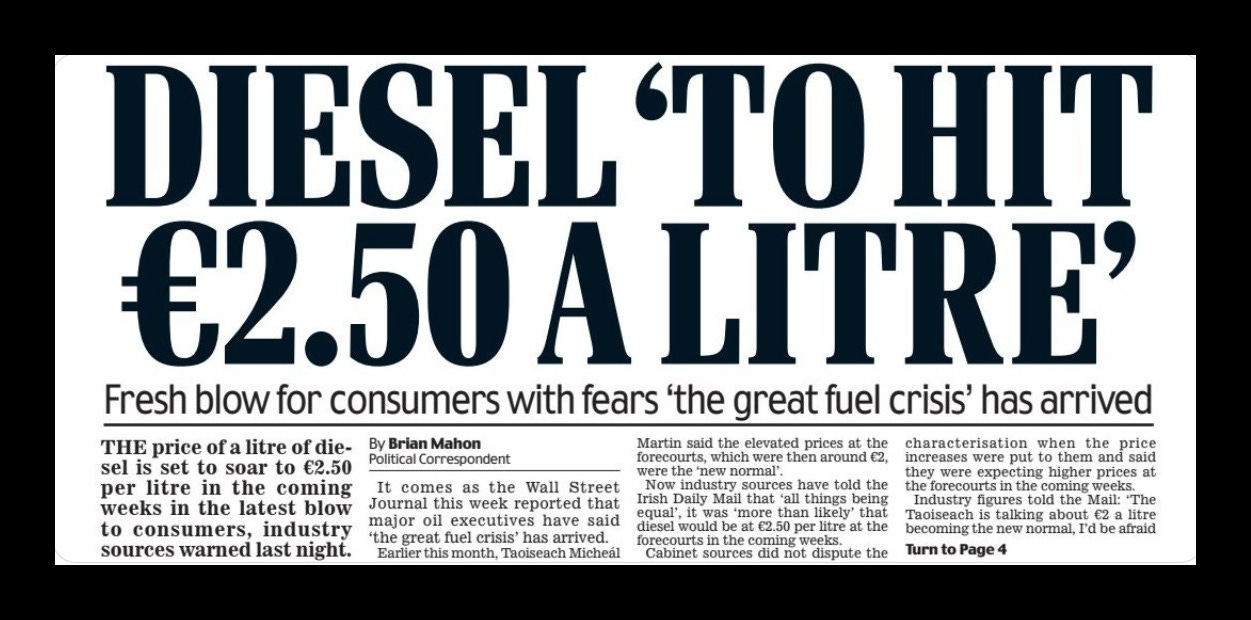
The material constraints that the crisis has exposed are not amenable to the tools that policymakers have at their disposal. The IEA and its member countries released four hundred million barrels of oil from emergency reserves in March, the largest such move in the agency’s history, and individual countries made their own contributions: France released fourteen million five hundred thousand barrels, Germany released nineteen million five hundred and ten thousand barrels, the United Kingdom contributed thirteen million five hundred thousand barrels, and the Netherlands released five million three hundred and sixty thousand barrels. The G7 has already burned through a lot of ammunition, and IEA members have released more than three hundred million barrels of emergency stocks since March, yet global observed inventories are still five hundred and seven million barrels lower than when the war began, after drawing at an average of two million eight hundred thousand barrels per day over the past six months. Another stock release could put physical barrels, and importantly finished fuel, into Europe quickly, but it cannot repair Saudi Arabia’s pipeline, restart Russian refineries, or reopen the Strait of Hormuz.
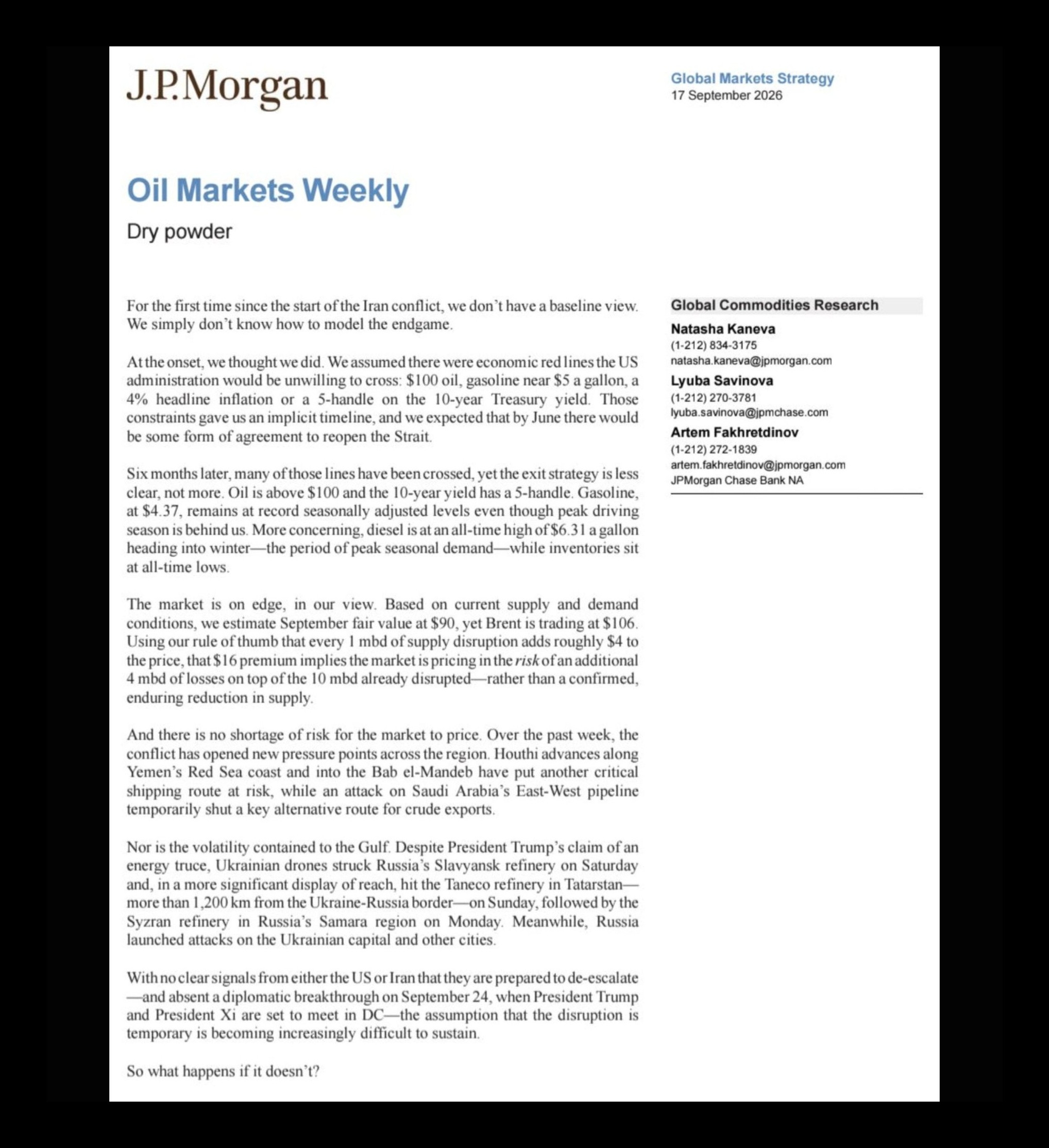
The political consequences of the energy crisis are already becoming visible across Europe. Fuel price protests in Ireland almost brought the country to a halt, leading the government to call in the army to reopen highways and ports and to announce five hundred and five million euros worth of fuel subsidies. Ireland and Britain are the most energy insecure countries in Europe and are likely to be hit particularly hard, with shortages and protests appearing inevitable. The Financial Times noted that Ireland is likely to be just the first country to experience this kind of turmoil, and that less solvent governments in Asia and Europe are unlikely to have the fiscal firepower to buy off protesters. Heavily indebted France, which has a record of fuel-price protests, is already braced for trouble ahead of next year’s presidential election. The World Trade Organisation has reported that sustained high energy prices could reduce the 2026 global GDP forecast by three-tenths of a percentage point and lower trade growth by half a percentage point, and the Asian Development Bank has forecast that the energy crisis could reduce growth by more than one per cent this year in developing Asia. In the United States, consumer sentiment dropped to a three-month low as the war stoked inflation worries and clouded the economic outlook, and major United States indices fell by more than seven per cent since the fighting began.
A materialist and class analysis of this crisis must begin by identifying the specific human agents who benefit from the disruption and those who bear its costs. The energy producers and traders who hold inventories and futures contracts have seen the value of their holdings increase dramatically as prices have surged, and the defence contractors who manufacture the weapons being expended in the war against Iran have received billions of dollars in revenue while the conflict continues. The political class that authorised the war and the think tanks that provided its intellectual justification have seen their institutional positions reinforced by the salience of the national security paradigm, and the professional-managerial class that staffs the energy ministries and international agencies has been tasked with managing a crisis that the policy repertoire they serve has produced. Below this configuration, the working class of Europe and the United States bears the costs through higher fuel prices, the threat of rationing, and the prospect of recession, while the populations of the Middle East endure the direct violence of a war that has destroyed their infrastructure and disrupted their lives. The double-entry framework articulated by the analyst at indi.ca is instructive here, when the news reports that the Iran war has cost the Pentagon thirty-eight billion dollars, the same transaction represents thirty-eight billion dollars in revenue for the military-industrial complex, and when the national debt is reported at forty trillion dollars, that figure represents assets held by corporations and foreign governments. The energy crisis is not an unintended consequence of the war but a structural feature of a system in which the profits of the propertied and professional strata are recorded on one side of the ledger, while the losses of the working class and the populations of the Global South are recorded on the other, rendered invisible by a media apparatus that reports only the national account and conceals the corporate one. The American empire is proceeding from disaster to disaster, calling out and finding dumber and dumber collaborators, and committing suicide via the Axis of Resistance. The physical shortages that are now appearing in France and Ireland are the material manifestation of a policy that served the interests of a narrow stratum while externalising its costs onto everyone else, and the question that remains is whether the political systems of the affected countries possess the capacity to recognise that the crisis they are managing is not an accident but a consequence of the class relations they exist to sustain.
Authored By: Global GeoPolitics
Thank you for visiting. This is a reader-supported publication. If you believe journalism should serve the public, not the powerful, and you’re in a position to help, becoming a PAID SUBSCRIBER truly makes a difference. Alternatively you can support by way of a cup of coffee:
https://buymeacoffee.com/ggtv |
https://ko-fi.com/globalgeopolitics |
Bitcoin: 3NiK8BoRZnkwJSHZSekuXKFizGPopkE7ns
References
Anadolu Agency (2026) ‘Saudi Arabia’s key oil pipeline hit by projectiles, sparking fires: Report’, Anadolu Agency, 11 September. Available at: https://mobil.aa.com.tr/en/middle-east/saudi-arabias-key-oil-pipeline-hit-by-projectiles-sparking-fires-report/4054705 (Accessed: 20 September 2026).
BSS News (2026) ‘Saudi says drones launched from Iraq hit oil pipeline’, BSS News, 12 September. Available at: https://www.bssnews.net/news/423594 (Accessed: 20 September 2026).
EIA (2026) Short-Term Energy Outlook. Washington, DC: United States Energy Information Administration, 7 April. Available at: https://www.eia.gov/outlooks/steo/report/global_oil.php (Accessed: 20 September 2026).
Financial Times (2026) ‘A global energy crisis is only just beginning – political turmoil will follow’, Financial Times, 16 April. Available at: https://en.interaffairs.ru/article/ft-a-global-energy-crisis-is-only-just-beginning-political-turmoil-will-follow/ (Accessed: 20 September 2026).
indi.ca (n.d.) ‘Double-Entry Wound’, indi.ca. Available at: https://indi.ca/double-entry-wound/ (Accessed: 20 September 2026).
News18 (2026) ‘France’s Fuel Crisis Deepens: 11% Stations Face Petrol, Diesel Supply Shortages’, News18, 19 September. Available at: https://www.news18.com/amp/world/frances-fuel-crisis-deepens-11-stations-face-petrol-diesel-supply-shortages-ws-el-10341615.html (Accessed: 20 September 2026).
OilPrice.com (2026) ‘Macron Calls for Another Emergency Oil Release as Europe Loses Supply’, OilPrice.com, 18 September. Available at: https://oilprice.com/Latest-Energy-News/World-News/Macron-Calls-for-Another-Emergency-Oil-Release-as-Europe-Loses-Supply.amp.html (Accessed: 20 September 2026).
Xinhua (2026) ‘European countries to release oil reserve as Mideast conflict rattles energy markets’, Xinhua, 12 March. Available at: https://english.news.cn/20260312/b91743dc5313456b933860d2c3451721/c.html (Accessed: 20 September 2026).
Xinhua (2026) ‘How escalation in Middle East spills over, impacts global economy’, Xinhua, 31 March. Available at: https://english.news.cn/20260331/0391d6ee7f734a20bc297337a90de4a9/c.html (Accessed: 20 September 2026).
Xinhua (2026) ‘IEA members agree to release emergency oil reserves amid Mideast conflict’, China.org.cn, 11 March. Available at: http://www.china.org.cn/world/Off_the_Wire/2026-03/11/content_118377513.shtml (Accessed: 20 September 2026).


Leave a comment