
Official Admissions, Divergent Casualty Claims and the Strategic Limits of Ukraine’s Manpower Base
General Article | September 2026
General Article | September 2026
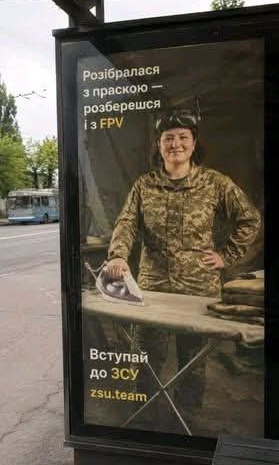
In late August 2026 Kyrylo Budanov told a national telethon audience that Ukraine could not mobilise fewer than 30,000 people each month if it wished to preserve the current disposition of its forces. The figure was presented not as an aspiration but as the minimum necessary to offset attrition and sustain positions already held. Less than three weeks later Donald Tusk, speaking to the Polish parliament, disclosed that Ukrainian partners had informed him of monthly casualties running at approximately 27,000 killed and wounded. He characterised the number as a record in the saddest sense of the word and linked the rise primarily to Russian employment of higher-speed jet-powered drones. Tusk warned that continuation of the trend could render the coming winter catastrophic for Ukraine.
These two statements, issued by officials with direct access to Ukrainian operational data, produce an arithmetic that is difficult to reconcile with earlier public claims. In a Fox News interview at the end of July 2026, President Zelensky stated that Ukrainian forces had suffered around 50,000 killed and roughly 400,000 wounded since February 2022. If monthly losses of killed and wounded now approach or exceed 27,000, the cumulative total implied by sustained rates of that magnitude would far surpass the figure offered only weeks earlier. The divergence is not merely statistical. It touches the credibility of successive casualty narratives that have underpinned Western political support and Ukrainian domestic mobilisation messaging since the opening phase of the full-scale war.
Earlier Western estimates displayed similar internal inconsistency. In November 2022 Ursula von der Leyen referred in a video address to more than 100,000 Ukrainian soldiers killed. The European Commission rapidly edited the material and explained that the figure, drawn from external sources, had been intended to cover total casualties rather than fatalities alone. Ukrainian military spokesmen declined to confirm the number, noting that precise losses remained classified. Leaked Pentagon assessments from 2023 indicated that publicly cited Ukrainian figures were treated internally as unreliable and shaped for propaganda purposes. Independent tallies based on obituaries, excess mortality data, satellite observation of cemetery expansion and official body-exchange records have consistently pointed to substantially higher Ukrainian losses than those acknowledged in successive presidential statements.
The strategic implications extend beyond numerical discrepancy. A requirement for 30,000 monthly replacements to hold existing lines implies that the force is operating near the edge of its regenerative capacity. Ukraine’s demographic base has already been compressed by emigration, lower birth rates and prior waves of mobilisation. Coercive recruitment practices have generated visible domestic resistance, while financial constraints on compensation for families of the dead have reportedly influenced the volume of bodies Ukraine is prepared to accept in exchanges. Russian forces face their own severe attrition, yet the asymmetric ability to draw on a larger population and sustained industrial output alters the relative sustainability of prolonged high-intensity combat.
Western policy has treated Ukrainian manpower as a residual resource whose continued expenditure serves broader objectives of degrading Russian military capacity and preserving the post-1991 security order. Official admissions that replacement rates must match or only marginally exceed current losses expose the material limits of that approach. If the monthly figures conveyed to Tusk and the mobilisation floor stated by Budanov are accurate, the coming winter will test not only Ukrainian logistical resilience but also the willingness of external patrons to continue underwriting a conflict whose human cost is no longer concealable behind earlier, lower public tallies. The arithmetic itself has become a strategic variable.
Authored By: Global GeoPolitics
Thank you for visiting. This is a reader-supported publication. If you believe journalism should serve the public, not the powerful, and you’re in a position to help, becoming a PAID SUBSCRIBER truly makes a difference. Alternatively you can support by way of a cup of coffee:
https://buymeacoffee.com/ggtv |
https://ko-fi.com/globalgeopolitics |
Bitcoin: 3NiK8BoRZnkwJSHZSekuXKFizGPopkE7ns
References
Budanov, K. (2026) Interview statements on monthly mobilisation requirements, national telethon, 28 August. Reported by Ukrainska Pravda, Kyiv Post and RBC-Ukraine.
Tusk, D. (2026) Address to the Polish Sejm on Ukrainian monthly casualties, mid-September. Reported by Interia, Polskie Radio, Kommersant and multiple European outlets.
Zelensky, V. (2026) Interview with Fox News, late July. Statements on approximate Ukrainian and Russian losses.
European Commission (2022) Clarification of Ursula von der Leyen’s November address concerning Ukrainian casualties.
CSIS and independent open-source assessments of cumulative casualties (various 2025–2026 estimates).


Leave a comment