
The terminal decline of the German industrial model, the structural violence of the Eurozone, and the political economy of the AfD’s ascent expose a systemic crisis that centrist governance cannot resolve and that history suggests will culminate in authoritarianism
Editorial Analysis |October 2026
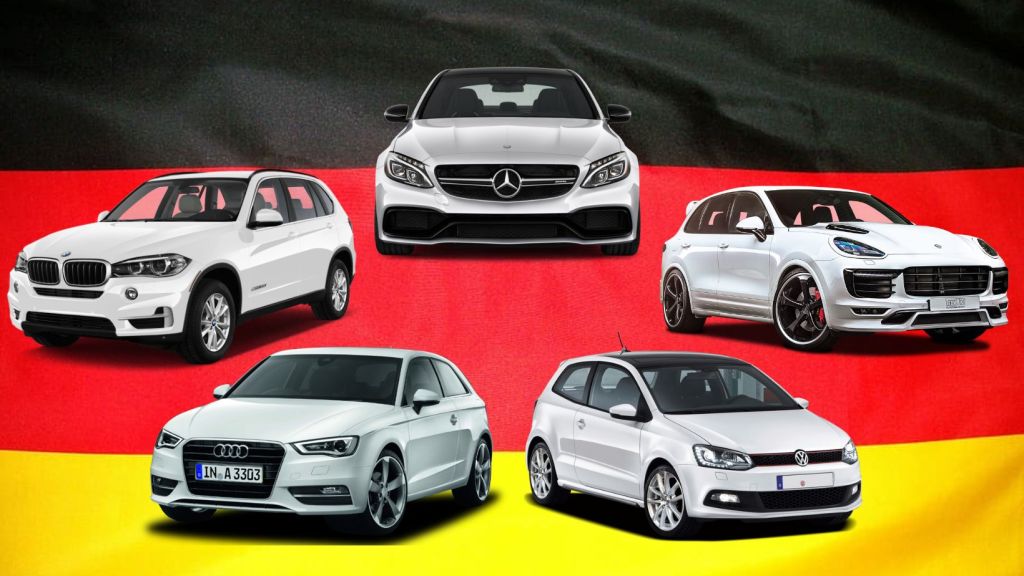
The economic and political crisis enveloping Germany constitutes a structural failure of the post-war industrial model, driven by the Eurozone’s architecture of wage suppression and capital misallocation, the catastrophic underinvestment of its automotive sector, and the systemic inability of its banking system to finance innovation. Volkswagen, the flagship of German industry, has announced the elimination of one hundred thousand jobs, while Porsche’s operating profit has collapsed by ninety-eight percent from approximately five point three billion euros to just ninety million euros . This is not a cyclical downturn but the terminal phase of an industrial ecosystem that accounted for approximately eleven percent of German gross domestic product and supported up to one point eight million jobs directly and indirectly . The German automotive sector failed to invest in the technological transition toward electric vehicles, software integration, and artificial intelligence, preferring to fit cheating devices to its diesel engines in order to stretch out the legal lifespan of internal combustion technology . Chinese and American manufacturers now lead in electric vehicles, batteries, software, and artificial intelligence, while German companies have lost market share in China and are facing the prospect of becoming dependent on foreign technology vendors for the core value-added components of future vehicles .
The structural roots of this decline lie in the political economy of the Eurozone and the deliberate suppression of domestic demand that accompanied Germany’s export-led growth model. Germany joined the euro at an exchange rate that undervalued its industrial capacity, and the subsequent Eurozone crisis devalued the currency further, providing a temporary boost to German exports . This external devaluation was combined with a concerted campaign of wage moderation that depressed aggregate demand at home, leaving German companies with substantial liquidity from the European Central Bank but no domestic market in which to invest it . The result was a financialised model in which corporations such as Volkswagen used cheap credit to engage in share buybacks rather than investing in productive capacity, new technologies, or the research and development required to compete in the twenty-first century . The European Central Bank’s quantitative easing programmes actively encouraged this behaviour, with eligible firms using low-cost borrowing to repurchase their own stock and inflate equity prices rather than to expand industrial capacity . The German banking system compounded this structural failure because its collateral-based lending model precludes financing for intangible assets, start-ups, and the high-risk innovation that drives technological revolutions .
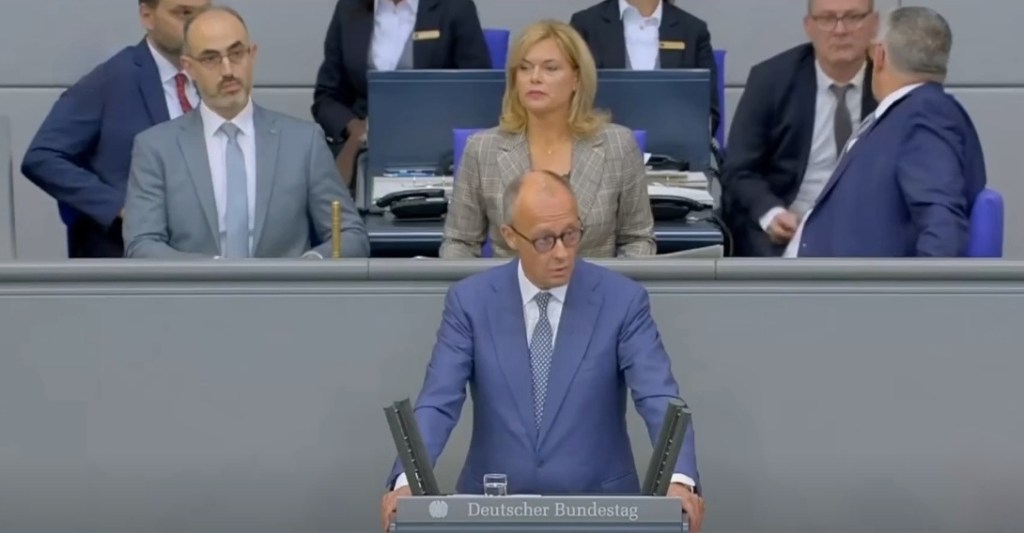
The political consequences of this economic failure are now manifest in the collapse of the centrist consensus and the rise of the Alternative for Germany, which polls at approximately twenty-eight percent and has supplanted the Christian Democratic Union as the leading party in national polling . The AfD’s support is driven less by cultural anxieties about immigration than by economic fear, with company closures, automotive industry troubles, and rising prices generating the anxiety that the party exploits . The centrist parties have failed to articulate any coherent narrative of economic growth, and their response has been to adopt “fascism light” tactics that legitimise the far-right’s rhetorical framework while offering no material solution to the underlying crisis. The Christian Democratic Union under Friedrich Merz has seen its polling fall below twenty-five percent, and the Social Democratic Party has slipped under fifteen percent, while the AfD has consolidated a loyal electorate that remains faithful regardless of current events . The political scientist Benjamin Hoehne has noted that the core electorate for Germany’s mainstream centrist parties is disappearing, and the AfD’s rise is not merely a protest phenomenon but the consolidation of a new political settlement .
The historical parallel to the Weimar Republic is not decorative but structural, and it illuminates the mechanisms through which economic crisis translates into authoritarian political outcomes. Chancellor Heinrich Brüning’s response to the Great Depression was to cut government expenditure, wages, and unemployment pay, which was the worst possible policy during a deflationary collapse . Unemployment rose to six million, and the resulting anger and bitterness helped the Nazis to gain support . Wealthy businessmen, frightened by the rise of communism, financed the Nazis as the strongest opponents of the left, while middle-class people concluded that democracy had failed and that the country needed a strong government . The German industrialists did not necessarily support the Nazis out of ideological affinity but because they believed that fascism would restore law and order, crush the labour movement, and protect their property rights . The contemporary alignment of tech capital and industrialists with the AfD replicates this logic, as a substantial proportion of big business and the technology sector now views the far-right as the safest bet to preserve its rent-extraction capacities .
The centrist establishment’s response to the AfD’s rise has been to adopt the far-right’s immigration agenda while offering no solution to the economic crisis, a strategy that has demonstrably failed. Friedrich Merz’s government tightened immigration rules, but the chancellor has not benefited politically, and political scientist Marc Debus has noted that right-wing populists are strengthened when immigration is raised up the political agenda and mainstream positions are aligned with their rhetoric . The Social Democratic Party, once the representative of labour, has transformed into a party of welfare recipients, abandoning its historical mission while the AfD captures the working-class vote . The liberal establishment simultaneously looks askance at the fascists as potential partners while big business increasingly considers them to be the safest bet to retain its rent-extraction capacities, creating a pincer movement that closes in on the remnants of democratic accountability . The tragedy is that the liberal establishment is repeating exactly the errors of the 1930s, attempting to counter the fascists with fascism light and racism with racism light, while the material foundations of social stability dissolve beneath them.
The materialist analysis of this crisis reveals that the Eurozone functions as an instrument of class rule, enforcing wage suppression and austerity on the working class while guaranteeing the profitability of the highly capitalised German bourgeoisie. The fixed exchange rate system prevents necessary currency adjustments, forcing peripheral economies to compete through domestic austerity while the core economy benefits from an undervalued currency. The German industrial model, which was sustained by this arrangement, has now exhausted its capacity for growth because it failed to invest in the technological frontier and because the domestic market was deliberately starved of aggregate demand. The resulting decline of the automotive industry is not a policy failure that can be corrected by better management but a structural contradiction of a capitalism that prioritises short-term shareholder value over long-term productive capacity. The working class faces the consequences through mass unemployment, wage cuts, and the dismantling of the social contract, while the capitalist class turns to authoritarianism to preserve its position.
The political trajectory of the AfD and its relationship to big business reveals the class dynamics that are driving Germany toward authoritarianism. The AfD has no coherent economic narrative that could restore growth, and its programme of leaving the Euro and the European Union would not obviously benefit Germany’s export-dependent economy. Its function is not to solve the economic crisis but to displace it onto immigrants and minorities, fracturing the working class along ethnic lines and preventing the formation of a unified socialist opposition. The capitalist class supports this displacement because it diverts attention from the structural causes of the crisis and because it creates a political force that can be relied upon to crush the left. The historical record of the 1930s demonstrates that industrialists supported fascism not because they believed in its ideology but because they believed it would protect their property and destroy the labour movement. The contemporary alignment of tech lords and industrialists with the AfD follows the same logic, and the consequences will be equally catastrophic for the working class and for democratic institutions.
The future trajectory of Germany and Europe will depend on the ability of the working class to recognise the structural nature of the crisis and to organise independently of the centrist parties that have managed its decline. The centrist parties offer no solution because they are wedded to the economic model that produced the crisis, and the far-right offers only scapegoats and repression. The only path out of the crisis lies in a radical break with the Eurozone’s architecture of austerity, a programme of public investment to rebuild the industrial base, and a democratic transformation of the institutions that govern the economy. The historical precedent of the Weimar Republic demonstrates that the failure to offer such a programme leads to catastrophe, and the contemporary rise of the AfD suggests that the window for a democratic resolution is closing. The working class must reject the false choice between the managers of capital and the enforcers of fascism, and must organise for a socialist transformation that places the means of production under democratic control. The alternative is a repetition of the 1930s, with all the human suffering that entails.
Authored By: Global GeoPolitics
Thank you for visiting. This is a reader-supported publication. If you believe journalism should serve the public, not the powerful, and you’re in a position to help, becoming a PAID SUBSCRIBER truly makes a difference. Alternatively you can support by way of a cup of coffee:
https://buymeacoffee.com/ggtv |
https://ko-fi.com/globalgeopolitics |
Bitcoin: 3NiK8BoRZnkwJSHZSekuXKFizGPopkE7ns
References
Deutschlandfunk (2026) ‘Gewinn bei VW um knapp die Hälfte eingebrochen, bei Porsche um 98 Prozent -50.000 Stellen fallen weg’, Deutschlandfunk, 10 March. Available at: https://www.deutschlandfunk.de/gewinn-bei-vw-um-knapp-die-haelfte-eingebrochen-bei-porsche-um-98-prozent-50-000-stellen-fallen-weg-100.html (Accessed: 21 October 2026) (1)
Financial Times (2026) ‘VW warns of hit of up to €10bn from Porsche writedown and restructuring costs’, Financial Times, 19 September. Available at:
(Accessed: 21 October 2026).
WDR (2026) ‘China, Zölle, Arbeitskosten: Deutsche Autos ohne Zukunft?’, WDR 5 Presseclub, 30 August. Available at: https://www1.wdr.de/mediathek/audio/wdr5/wdr5-presseclub/audio-china-zoelle-arbeitskosten-deutsche-autos-ohne-zukunft-100.html (Accessed: 21 October 2026). (12)
World Socialist Web Site (2026) ‘Defend every job at VW!’, World Socialist Web Site, 11 May. Available at: https://www.wsws.org/en/articles/2026/05/11/bzcn-m11.pdf (Accessed: 21 October 2026). (23)
RTL Today (2026) ‘28 percent in polls: A year into Merz government, German far right stronger than ever’, RTL Today, 4 May. Available at: https://today.rtl.lu/news/world/a-year-into-merz-government-german-far-right-stronger-than-ever-1595593970 (Accessed: 21 October 2026). (41)
Anadolu Agency (2026) ‘Germany’s AfD surge driven by economic fear rather than migration, pollster says’, Anadolu Agency, 8 September. Available at:
(Accessed: 21 October 2026).
BBC Bitesize (2015) ‘Weaknesses and mistakes of opponents’, BBC Bitesize. Available at: https://www.stage.bbc.co.uk/bitesize/guides/zsrwjxs/revision/9 (Accessed: 21 October 2026). (51)
OECD (2022) OECD Reviews of Innovation Policy: Germany 2022. Paris: OECD Publishing. Available at:
(Accessed: 21 October 2026).
University of Frankfurt (n.d.) ‘The effect of the ECB’s Corporate Sector Purchase Programme on corporate bond issuance and investment’, Open Access Repository. Available at:
https://publikationen.ub.uni-frankfurt.de
(Accessed: 21 October 2026).
Reuters (2015) ‘Europe firms may draw fire by joining buyback boom’, Reuters, 5 March. Available at:
(Accessed: 21 October 2026).


Leave a Reply