
artificial intelligence
-
The Anxiety of a Hegemon – Why America Cannot Stop Saying It Is Still Ahead
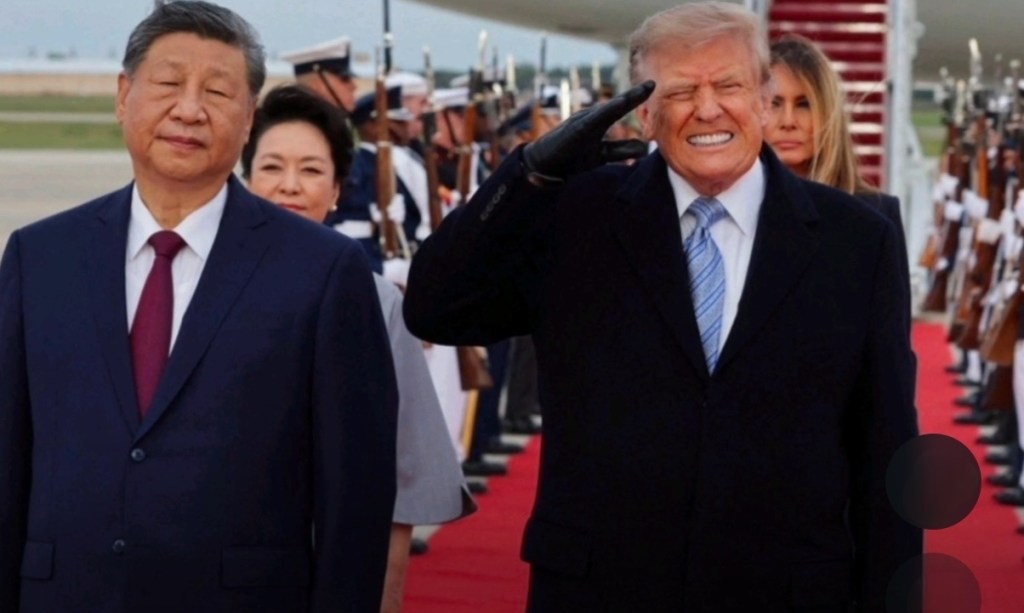
The ritualistic declarations of continued primacy reveal a deeper structural crisis that no amount of reassurance can conceal Editorial Analysis | September 2026 The most revealing aspect of contemporary American discourse about China is not the substance of the claims but the frequency and ritualistic character of their repetition. For decades, the United States was… Continue reading
AI and Digital Control, America, bond market, China, covid pandemic, economics, Energy, EUROPE, Financial markets, Foreign Policy, Geopolitics, Global Finance, imperialism, iran, israel, japan, knowledge, Mineral Resources, NATO, neocolonialism, politics, Russia, satellites, technology, Vaccines, war -
AI Won’t Kill You. The People Selling It Might.

Why the warnings of existential risk from artificial intelligence serve the interests of the firms that issue them, and how the real harms of algorithmic governance are already being inflicted on populations that possess no means of resistance Editorial Analysis | September 2026 The claim that executives of leading artificial intelligence firms have experienced a… Continue reading
-
The Imported Genius

How America’s AI Revolution Relies on Chinese Talent and Why That Dependency May Prove Unsustainable The United States’ artificial intelligence boom, celebrated as a triumph of American innovation and entrepreneurial spirit, rests on a foundation that is far less homegrown than official narratives suggest. A comprehensive analysis by the Paulson Institute’s MacroPolo think tank reveals… Continue reading
-
The Capture of Knowledge

How Wikipedia’s Transformation Into an Establishment Mouthpiece Is Poisoning the Well of Artificial Intelligence Editorial Analysis | August 2026 The American philosopher and internet pioneer Larry Sanger, who served as editor-in-chief of Nupedia and co-founded Wikipedia in 2001, has issued a damning assessment of the project he helped bring into existence. Twenty-five years after coining… Continue reading
-
The New Alexandrian Book Burning – How AI Labs Are Pulping the Human Record

The systematic destruction of physical books for artificial intelligence training represents an unprecedented assault on humanity’s cultural inheritance, sanctioned by courts and executed at industrial scale The development of artificial intelligence has required vast quantities of human-produced text, and the methods by which technology companies have acquired this material have attracted increasing scrutiny as the… Continue reading
-
Big Tech Is Borrowing Hundreds of Billions to Bet on AI – And the Bet Isn’t Paying Off (Yet)
Amazon, Microsoft, Google, Meta and Oracle are borrowing at an unprecedented rate to fund AI infrastructure, even as memory prices climb and the revenue to justify the spending remains unproven Microsoft, Amazon, Alphabet, Meta and Oracle built their market value over two decades on a specific financial identity, cash-generative software businesses that required comparatively little… Continue reading
-
The Reckoning of Artificial Intelligence

Debt, Delusion, and the Coming Tech Depression Tags: Artificial Intelligence, Venture Capital, Hyperscalers, Corporate Debt, Semiconductor Industry, US Defence Budget, Technology Policy, Financial Risk For the better part of a decade, the technology industry has presented itself as the engine of modernity and economic growth. Its leading firms were celebrated as paragons of efficiency, generating… Continue reading
-
The AI Spending Trap
How the largest capital expenditure programme in corporate history is being financed by debt rather than profit, sustained by narrative rather than demonstrated returns, and protected from scrutiny by a geopolitical strategy that punishes governments which attempt to build economies around public benefit rather than private accumulation This paper examines three interlocking phenomena that together… Continue reading
AI and Digital Control, America, China, economics, Energy, EUROPE, Financial markets, Foreign Policy, Geopolitics, Global Finance, imperialism, iran, israel, middle east, Mineral Resources, NATO, neocolonialism, politics, reserve currency, warAI infrastructure, Alphabet, Amazon, artificial intelligence, bond markets, Broadcom, capital expenditure, CFE, Claudia Sheinbaum, dot-com cycle, fictitious capital, Geopolitics, Goldman Sachs, hyperscalers, JP Morgan, KOSPI, Meta, Mexico, Microsoft, monroe doctrine, Oracle, PEMEX, private credit, S&P 500 concentration, semiconductor bubble, South Korea, USMCA -
The Choke Point Doctrine
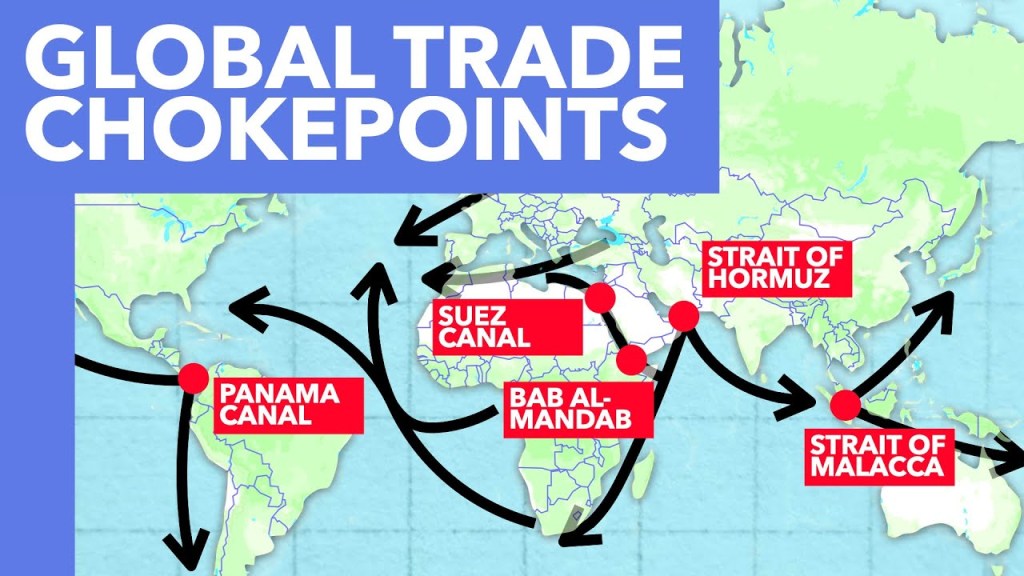
How American economic and military pressure now targets the Strait of Hormuz, the Strait of Malacca, the Panama Canal, the Suez Canal, the Strait of Gibraltar, and the Arctic passages The headline video below is circulating on social media under the title “It’s Not Chaos. It’s The Blueprint” argues that the seemingly disconnected crises in… Continue reading
AI and Digital Control, America, China, economics, Energy, EUROPE, Financial markets, Foreign Policy, Geopolitics, Global Finance, iran, israel, middle east, Mineral Resources, NATO, politics, reserve currency, Russia, warAdmiral Samuel Paparo, American empire, April 2026, Arctic passages, artificial intelligence, Belt and Road Initiative, Brookings Institution, China containment, choke point doctrine, energy security, geopolitical analysis, global trade routes, Greenland, Hong Kong, imperial decline, Indonesia military partnership, Iran War, lithium triangle, Malacca Dilemma, maritime interdiction, Maritime Strategy, Marshall Plan, military industrial complex, Morocco defence agreement, multipolarity, national security, naval blockade, Operation Stargate, Panama Canal, Panama ports, petrodollar, RAND Corporation, Senate Armed Services Committee, Strait of Gibraltar, Strait of Hormuz, Strait of Malacca, strategic petroleum reserve, Suez Canal, unipolarity, United States foreign policy, Venezuela Oil -
DeepSeek and the End of American AI Cost Dominance

How DeepSeek exposed the economic weakness inside high-cost American artificial intelligence systems DeepSeek released a lower-cost artificial intelligence model that approaches the performance range of leading American systems while operating at a fraction of the reported price. Reported token pricing places DeepSeek near $3.48 per million output tokens, while comparable frontier systems from OpenAI and… Continue reading
AI and Digital Control, America, China, economics, Energy, Financial markets, Foreign Policy, Geopolitics, iran, israel, middle east, Mineral Resources, NATO, politics, reserve currency, Russia, satellites, technology, warAI deployment, AI economics, AI infrastructure, AI market disruption, American technology sector, artificial intelligence, asymmetric competition, China, Chinese industrial strategy, Chinese technology, chip restrictions, computational economics, compute efficiency, cost advantage, cost warfare, DeepSeek, export controls, frontier models, geopolitical technology, hardware sanctions, Huawei, Huawei chips, industrial competition, industrial policy, OpenAI, semiconductor competition, Silicon Valley, strategic technology, technology rivalry, technology sovereignty
