
Pezeshkian’s Moscow figures reveal a production system built under pressure, yet the distinction between capacity and output complicates the strategic picture
General Article | October 2026
The Gas Exporting Countries Forum convened in Moscow during late October 2026, bringing together states that collectively hold the majority of the world’s natural gas reserves, and the Iranian president used the platform to make a claim that Washington would have preferred not to hear. Masoud Pezeshkian stated that Iran had increased its natural gas production capacity to approximately 300 billion cubic metres per year and had firmly secured its position as the world’s third-largest producer, behind the United States and Russia (Tasnim News Agency, 2026). The statement was delivered not in a bilateral setting but before the assembled representatives of gas-exporting states, which gave it a diplomatic weight that a domestic announcement would have lacked. The forum itself is an intergovernmental organisation that includes Iran, Russia, Qatar and Algeria among its members, and the United States holds no seat within it (Anadolu Agency, 2026). The venue therefore amplified the message that Iran intended to send, which was that four and a half decades of sanctions had not prevented the construction of a large-scale gas industry.
The figure of 300 billion cubic metres requires careful reading because it describes capacity rather than current output, and the difference is material to any assessment of Iran’s position. Independent statistical reviews place Iranian production at lower levels, with the Energy Institute recording approximately 264.8 billion cubic metres for 2025 and the Gas Exporting Countries Forum reporting 276 billion cubic metres for 2024 (YCharts, 2026; BOE Report, 2026). A Russian compilation of Energy Institute data placed 2025 output at 246.8 billion cubic metres, which illustrates the variation that arises from different measurement conventions and reporting timelines (itek.ru, 2026). The capacity figure refers to what the installed infrastructure could produce under optimal conditions, while the production figure describes what was actually extracted and processed. Iranian officials have used the capacity formulation consistently, and the distinction is not a deception but a technical convention that becomes analytically important when the numbers are deployed in geopolitical argument.
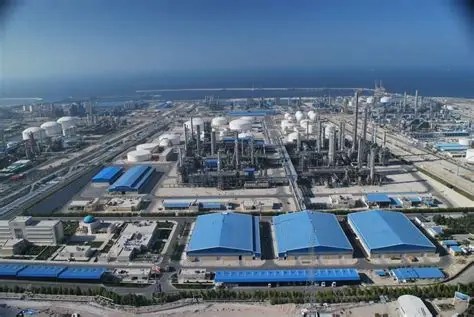
The material achievement that underpins the claim is nonetheless substantial and rests on a deliberate strategy of domestic capability building. South Pars, the field Iran shares with Qatar, supplies approximately seventy per cent of Iranian natural gas and has been developed through phases that Iranian companies have completed despite restrictions on access to foreign investment and technology (Press TV, 2025). The CEO of the state-run Pars Oil and Gas Company reported that output from the field reached 718 million cubic metres per day in late 2025, supported by new platforms and infill wells that Iranian engineers installed without Western contractors (Press TV, 2025). The Phase 11 project reached full output despite sanctions, security threats and projectile strikes near the installation, which indicates that the engineering capacity exists to maintain and expand production under adverse conditions (Daric, 2026). The Iranian gas industry has therefore developed a domestic supply chain for compressors, pipelines and processing facilities that reduces its exposure to the sanctions architecture that restricts imports of Western equipment.
The domestic consumption structure of Iranian gas is the element that most sharply distinguishes the Iranian model from those of other large producers. Approximately ninety-four per cent of Iranian gas production is consumed inside the country, according to Gas Exporting Countries Forum data, which means that the exportable surplus is small relative to the headline production figure (BOE Report, 2026). Iran’s power generation, heating, industrial sector and petrochemical industry all depend on domestic gas, and the country ranks among the world’s largest consumers alongside its ranking as a producer. The consequence is that Iran has prioritised self-sufficiency over export revenue, which insulates its households and industries from the kind of supply interruption that would follow a blockade or a sudden loss of import capacity. A state that can heat its cities and power its factories from domestic resources cannot be coerced by the threat of cutting off its supplies, and that immunity is a strategic asset that does not appear in export earnings statistics.
The export picture is more constrained than the production ranking might suggest. Iranian gas flows to Turkey through a pipeline arrangement, to Iraq through swap agreements, and toward Russia and Central Asia through the Caspian corridor, while the prospective North-South Corridor would extend links toward Pakistan and India (Anadolu Agency, 2026). These are real channels, but the volumes they carry are limited by the domestic consumption share and by the infrastructure that sanctions have prevented Iran from building. The country holds the world’s second-largest gas reserves after Russia, yet its export capacity remains modest relative to Qatar or Russia because the investment required to liquefy gas for seaborne trade has been unavailable (BOE Report, 2026). The strategic significance of Iranian gas therefore lies less in its ability to move global prices than in its contribution to domestic resilience and in the diplomatic leverage that supply relationships with neighbours provide.
The sanctions regime that shaped this outcome has been in place in various forms since 1979, and its cumulative effect has been to force the development of domestic substitutes for goods and services that Iran would otherwise have imported. The gas industry’s reliance on Iranian engineers and manufacturers is a direct response to the impossibility of accessing Western technology and finance, and the result is a system that is less efficient than it might have been but more resistant to external pressure. The United States has argued that sanctions would compel Iran to accept its terms, yet the evidence from the gas sector indicates that the opposite occurred: the restrictions accelerated the construction of domestic capability that would otherwise have taken longer to develop. The Iranian official who addressed the GECF ministerial meeting noted that Iran had developed its capacity despite decades of sanctions and the consequences of imposed wars, which frames the achievement as a rebuttal to the logic of maximum pressure (Tasnim News Agency, 2026).
The Moscow statement also carried a diplomatic message that extended beyond the specific figures. The Gas Exporting Countries Forum is a venue in which producers coordinate their positions on investment, demand and market stability, and Iran’s participation signals its intention to remain embedded in the producer bloc despite Western attempts to isolate it. The forum’s projections envisage global gas demand rising by thirty-one per cent to more than 5.4 trillion cubic metres by 2055, and the investment required to meet that demand exceeds twelve trillion dollars (Tasnim News Agency, 2026). Iranian officials used the meeting to propose joint financing mechanisms and technological cooperation among member states, which represents an attempt to build alternative channels for capital and expertise that bypass the Western financial system. The absence of the United States from the room meant that the narrative presented to the assembled producers went unchallenged by the state that had imposed the sanctions.
The strategic trajectory that emerges from this analysis is one of a gas system that has achieved a measure of autonomy at the cost of export reach. Iran will likely continue to expand capacity at South Pars and to develop new phases, but the domestic consumption share will absorb much of the additional output unless industrial demand is restrained or new export infrastructure is built. The North-South Corridor and swap arrangements with neighbours offer incremental outlets, yet they cannot substitute for the liquefied natural gas trade that Iran has been unable to enter. The capacity claim of 300 billion cubic metres is therefore accurate as a description of installed capability, and it is politically potent as a rebuttal to sanctions, but it does not translate into the kind of market power that the largest exporters wield. The more durable significance of the Iranian model lies in its demonstration that a resource-rich state can maintain essential domestic supply under prolonged financial pressure, which is a lesson that other sanctioned or vulnerable economies will study closely.
Authored By: Global GeoPolitics
Thank you for visiting. This is a reader-supported publication. If you believe journalism should serve the public, not the powerful, and you’re in a position to help, becoming a PAID SUBSCRIBER truly makes a difference. Alternatively you can support by way of a cup of coffee:
https://buymeacoffee.com/ggtv |
https://ko-fi.com/globalgeopolitics |
Bitcoin: 3NiK8BoRZnkwJSHZSekuXKFizGPopkE7ns
References
Anadolu Agency (2026) ‘Iranian president to visit Russia for gas summit, meet Putin’, Anadolu Agency, 26 October. Available at: https://mobil.aa.com.tr/ (Accessed: 28 October 2026).
BOE Report (2026) ‘An overview of Iran’s main gas field and oil infrastructure’, BOE Report, 23 January. Available at: https://boereport.com/ (Accessed: 28 October 2026).
Daric (2026) ‘Iran’s Phase 11 reaches full gas output despite sanctions’, Daric, 4 October. Available at: https://daric.den.ir/ (Accessed: 28 October 2026).
itek.ru (2026) ‘США возглавили рейтинг крупнейших производителей природного газа в 2025 году’, itek.ru, 30 June. Available at: https://itek.ru/ (Accessed: 28 October 2026).
Press TV (2025) ‘Iran sets new record in gas production from South Pars’, Press TV, 3 November. Available at: https://www.presstv.co.uk/ (Accessed: 28 October 2026).
Tasnim News Agency (2026) ‘US military actions undermine global energy security: Iranian official’, Tasnim News Agency, 26 October. Available at: https://www.tasnimnews.ir/ (Accessed: 28 October 2026).
YCharts (2026) ‘Iran natural gas production’, YCharts, 30 June. Available at: https://ycharts.com/ (Accessed: 28 October 2026).


Leave a Reply