
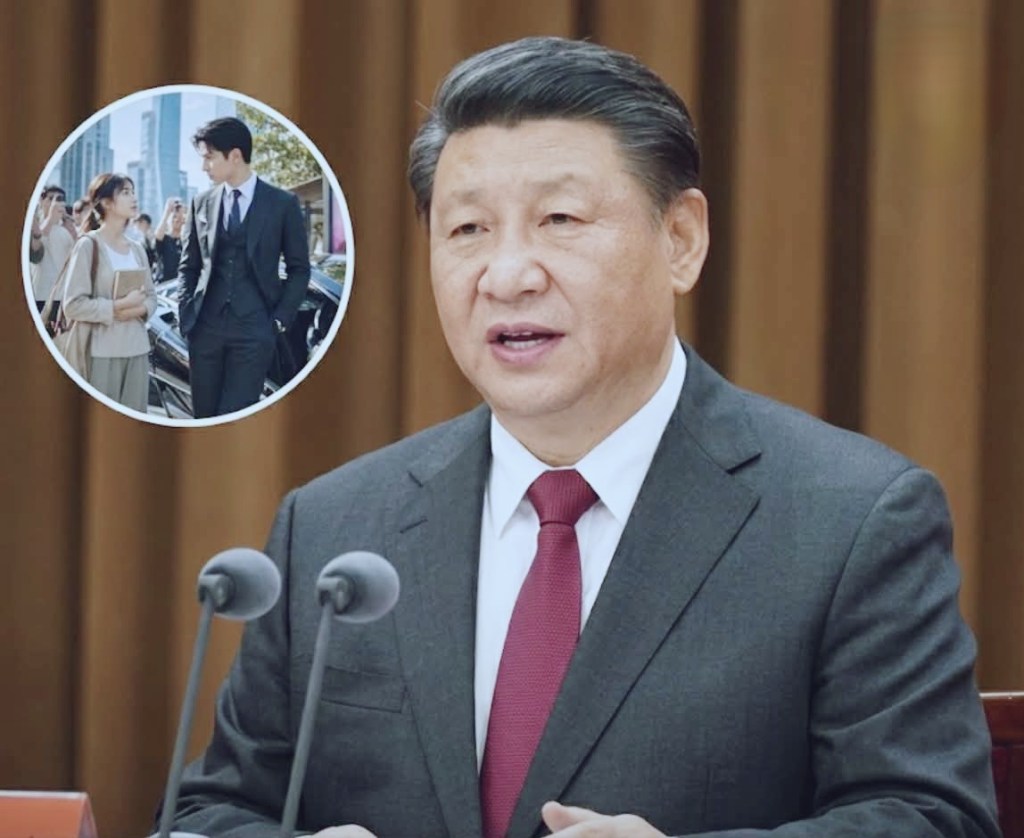
Why Beijing is targeting entertainment that glorifies money, distorts love and marriage, and threatens the social values underpinning a coherent society.
General Article | October 2026
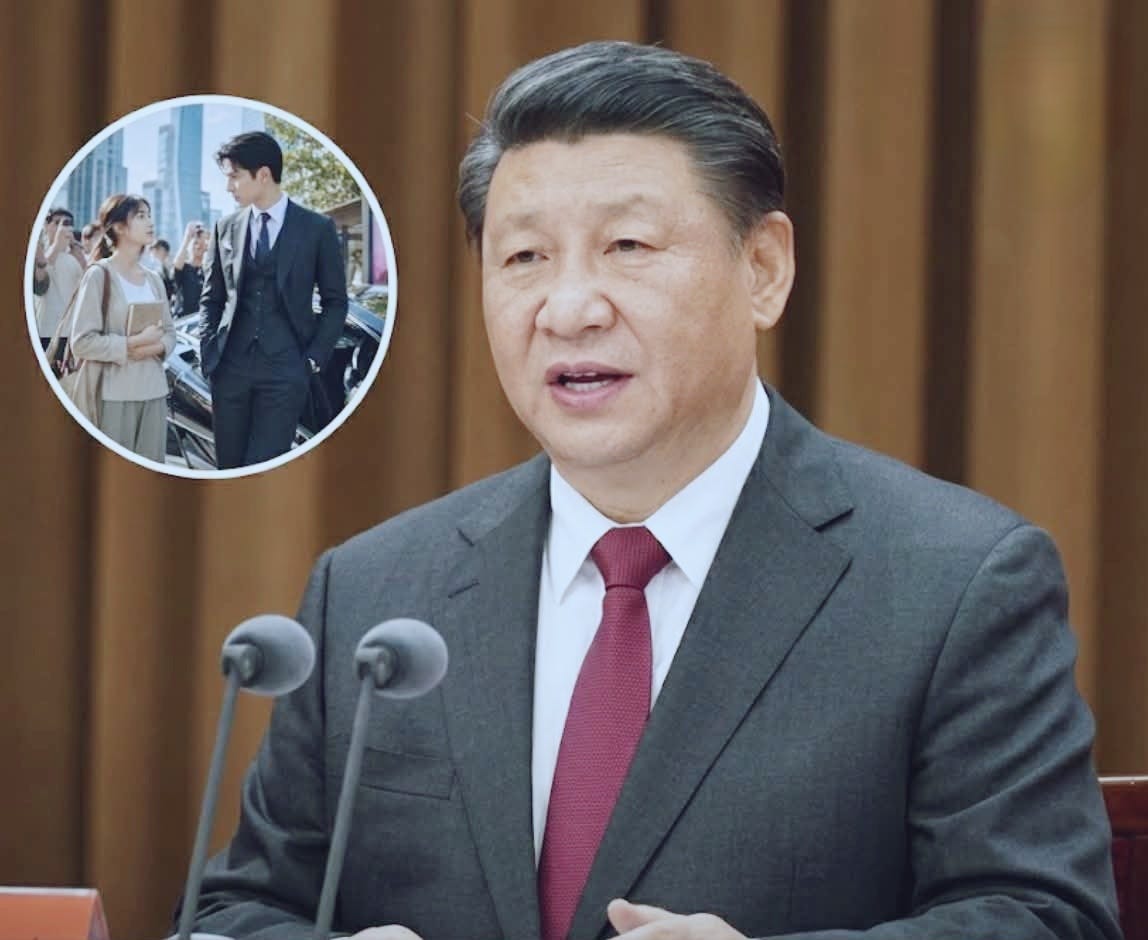
China’s decision to crack down on fantasy micro-dramas depicting wealthy business executives falling in love with impoverished women reflects a broader concern about the cultural and social consequences of entertainment that glorifies material wealth, economic status and superficial relationships. The argument advanced by Chinese regulators is that popular entertainment does not exist in isolation from society. Repeated portrayals of wealth as the ultimate measure of success, romantic fulfilment as something secured through financial privilege, and personal worth as a reflection of material possessions can gradually distort public expectations, particularly among younger audiences. When such narratives become dominant, they risk replacing more substantial values with an artificial understanding of happiness, love and human achievement.
At the heart of this policy is the question of what holds a society together and what ultimately causes its foundations to weaken. A coherent society is not simply one in which people share a geographical territory, obey laws or participate in a common economy. It is one in which there exists a sufficiently strong sense of shared responsibility, mutual respect, social trust and common purpose. Its stability depends upon a general recognition that human dignity is not determined by wealth, that individual success carries responsibilities towards others, and that relationships should be founded upon sincerity, loyalty, respect and genuine affection rather than financial advantage or social standing. A society remains coherent when its citizens recognise that their personal ambitions exist within a wider social framework and that the wellbeing of the whole cannot be sacrificed indefinitely to the gratification of the individual.
The foundations of society begin to weaken when materialism becomes the principal measure of human worth, when personal advancement is detached from moral responsibility, and when wealth and social position are presented as the ultimate objectives of life. This is particularly concerning when popular culture repeatedly romanticises extraordinary wealth while diminishing the importance of ordinary work, personal integrity, family responsibility and meaningful human relationships. Such portrayals can encourage unrealistic expectations, cultivate dissatisfaction with ordinary circumstances and create the impression that happiness is something acquired through association with the wealthy rather than developed through character, commitment and shared experience. The danger is not that people aspire to prosperity, which is both natural and legitimate, but that prosperity becomes elevated above every other consideration, including honesty, compassion, responsibility and human dignity.
Marriage and romantic relationships are particularly important in this discussion because they are among the institutions through which social trust, responsibility and continuity are established. When entertainment repeatedly presents marriage as an economic transaction, or love as a means of escaping poverty through access to wealth and privilege, it risks reducing an important human institution to a fantasy of financial rescue. Genuine relationships are considerably more complex. They require emotional maturity, mutual sacrifice, loyalty, patience and a recognition of each other’s inherent worth. Wealth may provide comfort and security, but it cannot independently create affection, character or lasting commitment. A society that loses sight of these distinctions risks weakening its understanding of relationships and the responsibilities upon which family and community life depend.
This helps explain why Chinese authorities regard the regulation of such entertainment as a matter extending beyond artistic content. Their concern is that cultural products, particularly those reaching millions of people through rapidly expanding digital platforms, can contribute to the normalisation of values that conflict with the social principles they wish to preserve. The intention behind the campaign is therefore presented as an attempt to establish boundaries around the messages promoted by the entertainment industry, discouraging excessive displays of wealth, the glorification of materialism and unrealistic portrayals of marriage and social relationships.
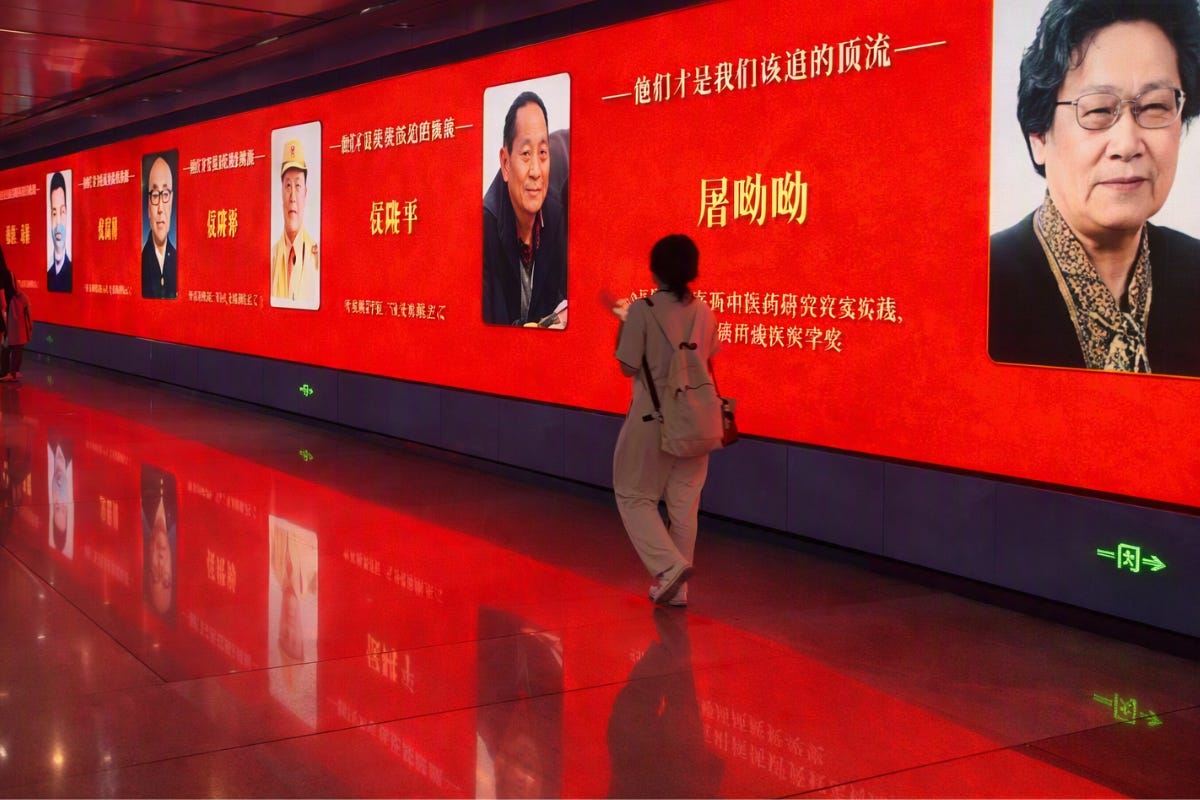
This broader effort to reshape social aspirations is also visible in a striking development across China, where shopping centres and public advertising spaces have begun replacing some celebrity and commercial displays with enormous portraits of distinguished scientists, engineers and other national achievers. The initiative first attracted widespread attention in Shandong province, where shopping centres removed existing commercial advertisements to make prominent space for figures such as Qian Xuesen, the renowned aerospace scientist, and Deng Jiaxian, a leading architect of China’s nuclear scientific programme. The campaign subsequently spread to other parts of the country, including Anhui, Inner Mongolia, Henan, Jiangxi and Hubei, with scientists such as Yuan Longping, whose agricultural research transformed rice production, and Tu Youyou, whose medical research led to a Nobel Prize, also receiving prominent public recognition. Some of these displays carry an unmistakable message: these are the people who deserve to be regarded as the nation’s real stars. The significance of this development goes beyond the replacement of one advertising image with another. It represents an attempt to redirect public admiration away from celebrity, commercial visibility and manufactured glamour towards knowledge, scientific discovery, perseverance, public service and achievement that contributes to the wider good. In a society where young people’s aspirations are increasingly influenced by entertainment industries, social media personalities and the pursuit of instant recognition, the decision to give scientists and national achievers such prominent public visibility carries a wider cultural message. It suggests that status should be earned through contribution rather than simply acquired through popularity, appearance or wealth. Together with the regulation of materialistic entertainment, this initiative illustrates a broader Chinese effort to influence the values, ambitions and role models shaping the next generation. It raises an important question for every society: what does it choose to celebrate, and what does that choice teach its young people about the meaning of success?
Nevertheless, there is an important distinction between defending the moral and cultural foundations of society and allowing the state to exercise excessive control over the ideas, imagination and creative expression of its citizens. A society cannot become morally coherent simply because its government determines which stories may be told or which values may be represented on screen. Cultural maturity also requires intellectual freedom, the ability to question established assumptions and the opportunity for individuals to encounter different perspectives. Entertainment is not necessarily an endorsement of the behaviour it depicts, and audiences should not automatically be regarded as incapable of distinguishing fantasy from reality. Government intervention, therefore, must be considered not only in terms of its stated objectives but also in terms of its proportionality, consistency and respect for creative freedom.
Ultimately, the deeper question raised by China’s decision is one that extends far beyond the regulation of micro-dramas. What kind of society are we seeking to preserve, and upon what principles should its future be built? Economic prosperity is important, individual ambition is legitimate, and personal freedom is indispensable. Yet none of these, taken independently, is sufficient to sustain a stable and civilised society. Material wealth without moral responsibility produces inequality and social resentment. Freedom without a sense of responsibility can undermine the trust upon which communities depend. Economic progress without shared values can create a society that becomes increasingly prosperous in material terms while growing poorer in human relationships and collective purpose.
A strong society must therefore strike a balance between freedom and responsibility, ambition and humility, prosperity and social obligation. It must protect the individual’s right to pursue a better life while resisting the notion that wealth, privilege and consumption are the ultimate measures of human achievement. The true strength of a society is not demonstrated by how much wealth its richest members accumulate, but by the quality of its institutions, the integrity of its relationships, the dignity afforded to ordinary people and the extent to which its citizens recognise their responsibilities towards one another.
The real issue, then, is not whether fictional stories should portray wealthy individuals falling in love with poorer partners. Such stories are neither inherently harmful nor necessarily devoid of artistic value. The more important question is whether an entire cultural environment begins to present wealth as the principal source of happiness, status as the foundation of human worth and material advancement as a substitute for moral and social development. That is where legitimate concerns arise. The challenge for any government is to address those concerns without undermining the very intellectual freedom and cultural confidence that a healthy society also requires.
Authored By: Global GeoPolitics
Thank you for visiting. This is a reader-supported publication. If you believe journalism should serve the public, not the powerful, and you’re in a position to help, becoming a PAID SUBSCRIBER truly makes a difference. Alternatively you can support by way of a cup of coffee:
https://buymeacoffee.com/ggtv |
https://ko-fi.com/globalgeopolitics |
Bitcoin: 3NiK8BoRZnkwJSHZSekuXKFizGPopkE7ns


Leave a Reply