
How blocking Venezuela reshaped BRICS cohesion and weakened Brazil’s strategic position amid renewed U.S. regional dominance
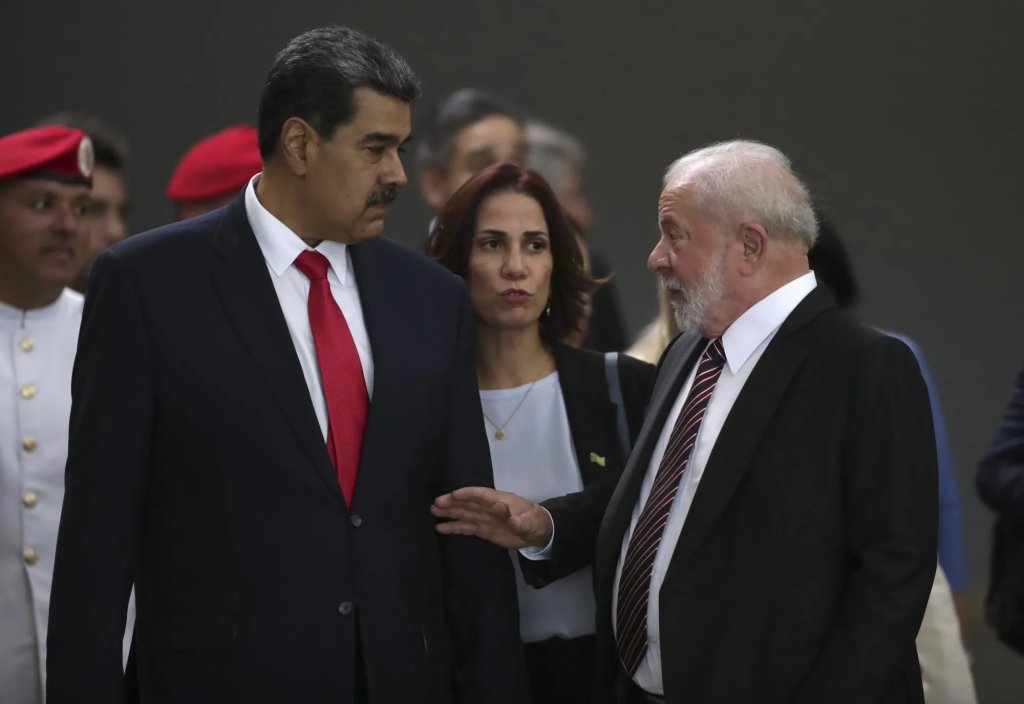
The decision by Luiz Inácio Lula da Silva to veto Venezuela’s accession to BRICS occurred during a period when United States strategic doctrine had already shifted back toward hemispheric control. Senior figures within United States defence planning circles had begun describing Latin America as an under-secured theatre vulnerable to Chinese capital, Russian military cooperation, and alternative financial arrangements. The veto therefore intersected with an established trajectory rather than an uncertain future.
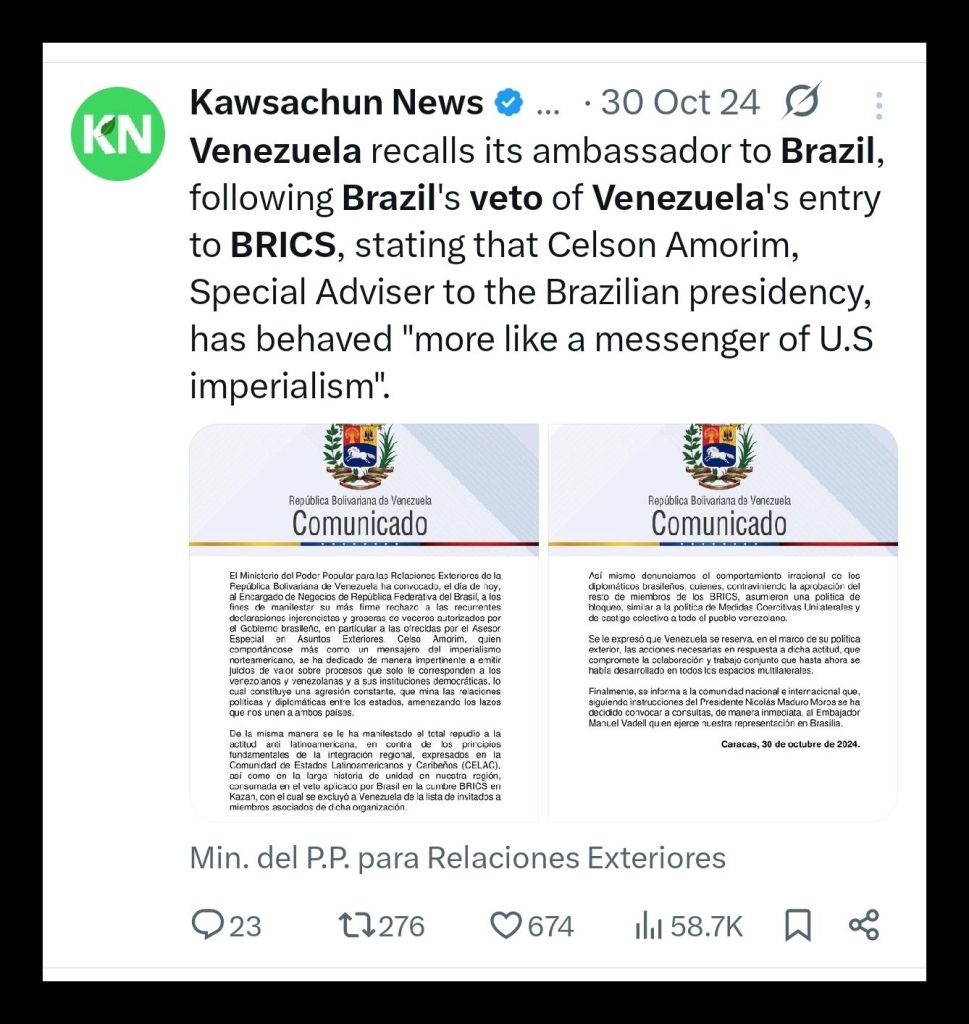
Brazil’s action directly contradicted the operational logic of BRICS expansion. Since 2014, BRICS enlargement has functioned less as symbolic diplomacy and more as a mechanism for sanction insulation, trade settlement diversification, and coordinated resistance to extraterritorial enforcement. Russian economist Sergey Glazyev has repeatedly stated that BRICS membership provides “institutional friction against unilateral coercive measures by expanding settlement, credit, and trade channels beyond Western legal reach.” Venezuela’s exclusion preserved its exposure to unilateral action.
The economic dimension carried measurable weight. Venezuela holds the world’s largest proven oil reserves, alongside significant deposits of coltan, gold, and rare earth elements. Chinese state firms, including CNPC subsidiaries, had already structured upstream investment frameworks anticipating multilateral financial cover rather than bilateral exposure. A 2022 paper from the Chinese Academy of Social Sciences noted that BRICS-linked development finance reduced political risk premiums for sanctioned states by distributing liability across multiple jurisdictions. Brazil’s veto removed that stabilising layer.
The impact on BRICS cohesion proved immediate. Diplomatic reporting from Moscow and Beijing signalled unease regarding Brazil’s reliability under external pressure. Fyodor Lukyanov, chair of Russia’s Council on Foreign and Defence Policy, described BRICS as “a confidence-based structure where predictability matters more than formal alignment.” Brazil’s intervention created uncertainty regarding future expansion decisions and introduced the perception that United States preferences could override bloc consensus through selective pressure.
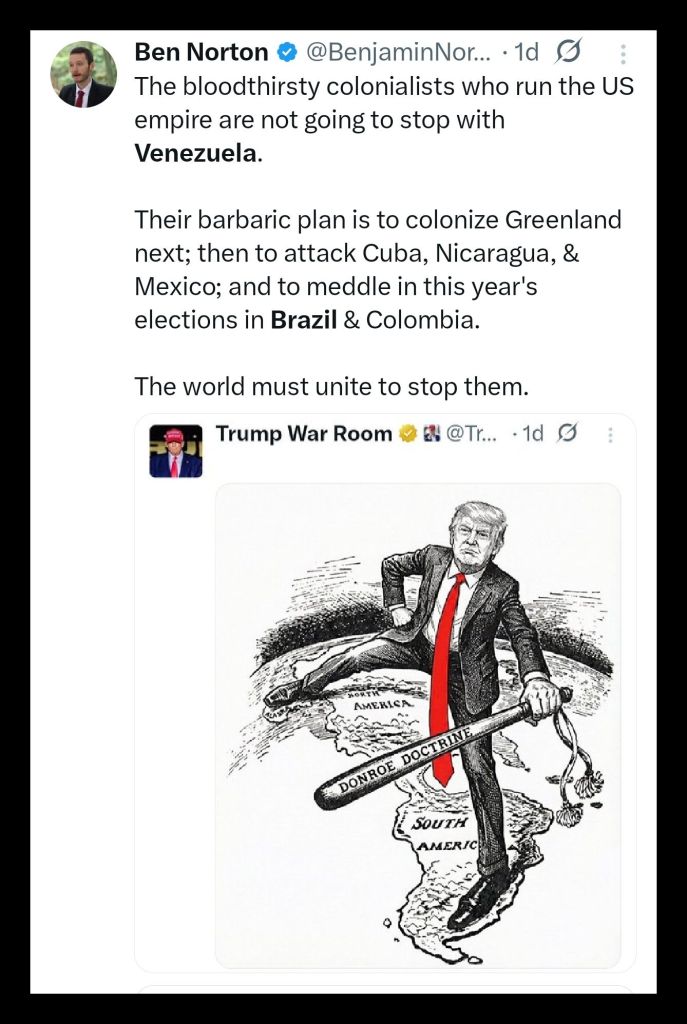
Security consequences followed predictable lines. United States Southern Command had already increased rotational deployments, surveillance flights, and logistics agreements across the Caribbean basin and northern South America. Admiral Craig Faller publicly stated in testimony that “the Western Hemisphere is no longer a permissive environment,” citing Russian and Chinese activity as justification. Venezuela’s isolation strengthened the legal and political rationale for force accumulation under stabilisation pretexts, while Brazil’s border regions absorbed secondary exposure.
Brazilian defence analysts have long warned against such developments. Nelson Jobim, former Brazilian defence minister, argued that regional autonomy depends upon denying external powers fragmented entry points. He noted that once one state becomes a designated security exception, neighbouring territories become operational corridors rather than neutral buffers. The Venezuelan case followed this model, increasing strategic pressure along Brazil’s northern frontier.
Domestic political repercussions compounded the strategic costs. Lula’s governing coalition already faced scepticism from sectors of the armed forces and legislature historically aligned with Atlanticist security frameworks. The veto neither neutralised those actors nor secured their loyalty. Political sociologist Jessé Souza has documented how Brazil’s middle and upper professional classes remain structurally integrated with United States institutional norms regardless of government orientation. Concessions therefore failed to translate into domestic stabilisation.
Simultaneously, the decision alienated constituencies supportive of South American integration and non-aligned foreign policy. The Workers’ Party historically framed regional solidarity as a buffer against external economic discipline. By undermining Venezuela during a period of sustained pressure, the government weakened its own narrative credibility. Electoral cost materialised without compensatory institutional protection.
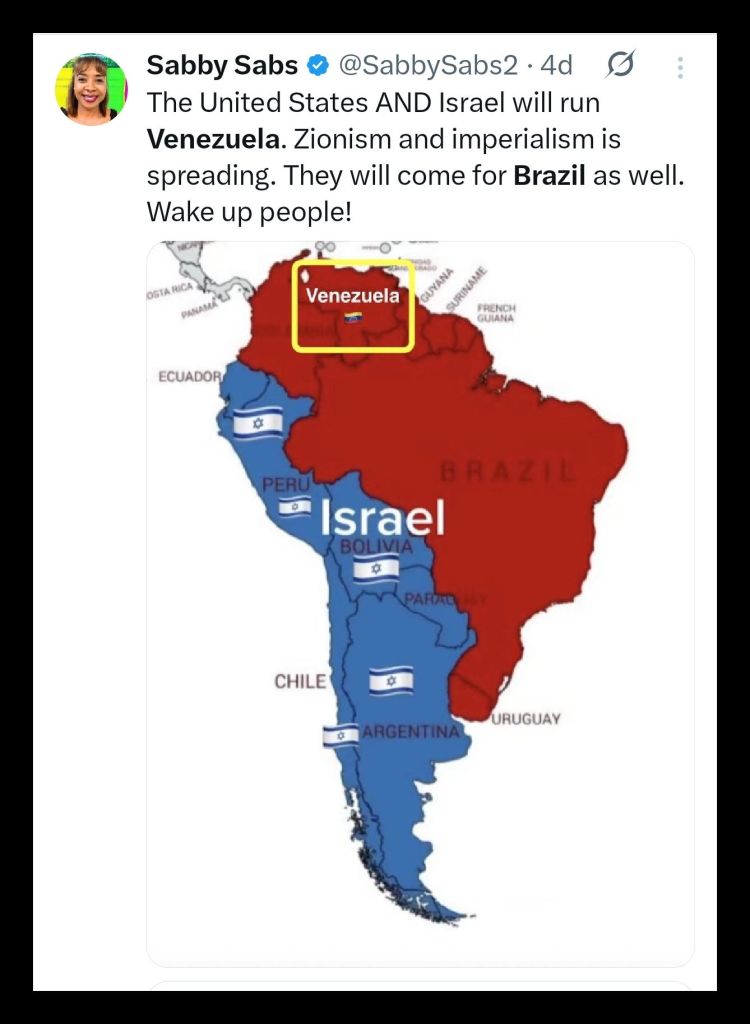
Media dynamics intensified following the reported seizure of Nicolás Maduro. Brazilian officials condemned the intervention while lacking diplomatic leverage to influence outcomes. Analysts at Argentina’s Instituto de Estudios Estratégicos y Relaciones Internacionales observed that prior cooperation with isolating measures limited Brazil’s ability to mobilise multilateral opposition. Condemnation without prior resistance failed to alter operational facts.
The international context further constrained Brazil’s position. A cluster of newly elected right-wing governments in the region adopted openly pro-United States and pro-Israel security postures. These administrations favoured bilateral defence agreements and intelligence sharing over regional institutions. Brazil’s earlier veto signalled accommodation rather than leadership, reducing incentives for neighbours to coordinate through Brasília-based frameworks.
Had Brazil supported Venezuela’s accession, structural conditions would have differed materially. Venezuela’s inclusion would have embedded its economy within BRICS settlement mechanisms, reducing exposure to dollar-based enforcement. Indian energy firms, already importing Venezuelan crude through indirect channels, had expressed interest in regularised trade structures contingent upon multilateral cover. South African financial institutions similarly explored intermediary roles pending bloc consensus.
Strategically, BRICS membership would have raised the cost threshold for overt intervention. Collective diplomatic response, coordinated financial countermeasures, and reputational risk across multiple regions would have complicated unilateral action. Glenn Diesen has argued that multipolar institutions function by “thickening consequence layers,” making escalation politically and economically expensive rather than legally impossible. Brazil’s veto removed that thickness.
Brazil itself would have retained strategic ambiguity. Support for Venezuela within BRICS would not have precluded dialogue with Washington, but it would have preserved bargaining leverage. Celso Amorim has consistently argued that autonomy derives from diversified alignment rather than exclusive partnership. By choosing exclusion, Brazil reduced its own optionality during a period of systemic transition.
The long-term implications for Brazil remain unresolved but structurally adverse. United States security doctrine increasingly frames internal political instability as a hemispheric concern. The same tools applied to Venezuela, including sanctions, legal pressure, and elite cultivation, exist within Brazil’s own political economy. André Singer has documented how Brazilian institutions remain sensitive to financial and informational pressure during moments of executive weakness.
Whether Brazil can endure the United States pivot will depend upon restoring coherence between stated non-alignment and operational decisions. Rebuilding credibility within BRICS requires demonstrable resistance to external vetoes rather than rhetorical reaffirmation. Regional security stability depends upon denying pretexts for force accumulation rather than accommodating them. Economic resilience requires multilateral insulation rather than bilateral dependency.
The veto of Venezuela’s BRICS accession stands as a measurable strategic inflection point rather than a symbolic error. Consequences followed established patterns observed in previous cases of selective isolation. Brazil absorbed reputational, security, and political costs while gaining no durable protection. The episode clarifies how limited concessions under hegemonic pressure tend to invite escalation rather than restraint.
Brazil would benefit from re-establishing predictable voting behaviour inside BRICS expansion mechanisms. Regional defence coordination independent of external command structures would reduce exposure. Financial integration through non-dollar settlement platforms would strengthen domestic insulation. These measures address structural vulnerabilities without requiring ideological alignment.
Authored By: Global GeoPolitics
If you believe journalism should serve the public, not the powerful, and you’re in a position to help, becoming a PAID SUBSCRIBER truly makes a difference. Alternatively you can support by way of a cup of coffee:
buymeacoffee.com/ggtv


Leave a comment