
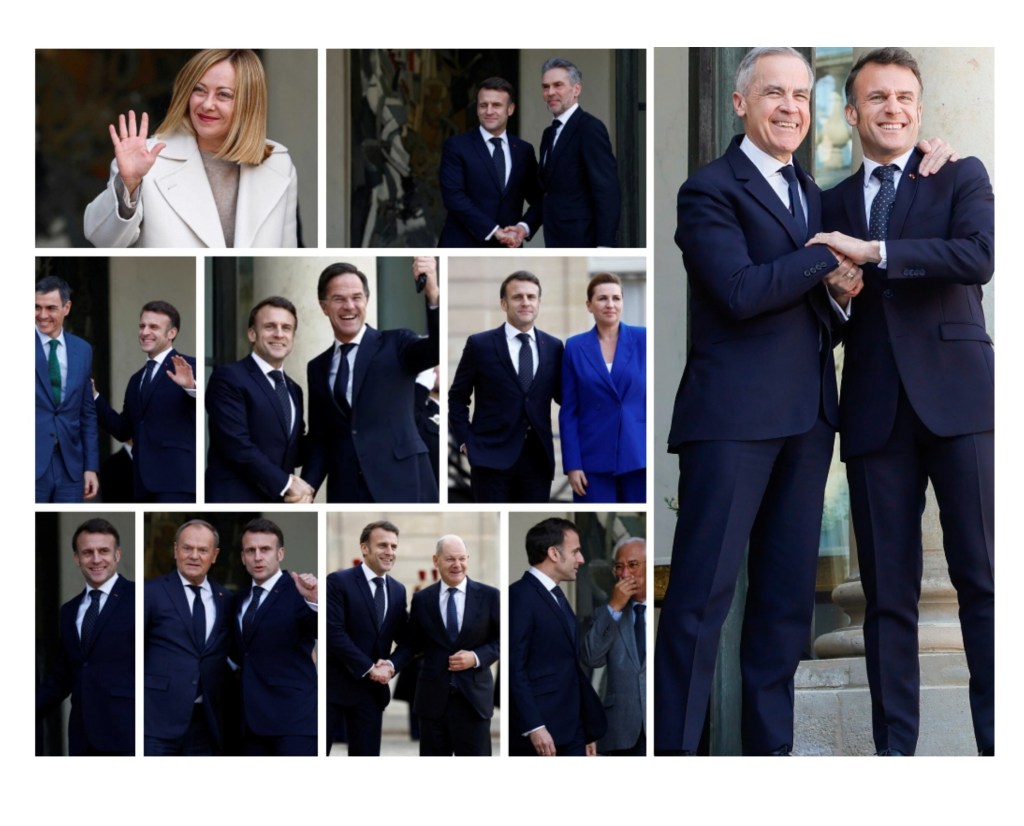
Europeans considering re-engagement with Moscow as Canada turns toward China under US pressure
European political leaders appear to be recalibrating their posture towards the Russian Federation after years of hostility driven by the conflict in Ukraine. French President Emmanuel Macron, Italian Prime Minister Giorgia Meloni and German Chancellor Friedrich Merz have each articulated versions of a return to diplomatic engagement with Moscow, signalling a departure from the previously dominant narrative that Russia must be weakened through sustained military support to Kyiv.
Macron stated that “it’s in our interest as Europeans and Ukrainians to find the right framework to re-engage” with the Kremlin in “coming weeks,” a remark that followed renewed telephone contact with President Vladimir Putin after a hiatus of diplomatic communication. Putin, for his part, continues to frame any ceasefire outside his terms as a stratagem for Ukraine to rearm, insisting that a future settlement must be “comprehensive and long-term, and provide for the elimination of the root causes of the Ukraine crisis.” These remarks highlight that Moscow’s own conditions for dialogue remain anchored in strategic advantage rather than mutual concession.
Meloni endorsed Macron’s position, asserting that “the time has come for Europe to also speak with Russia,” and warning that Europe’s influence will be circumscribed if it engages only one side of the conflict. Her position reflects internal Italian political dynamics, given her coalition partner Matteo Salvini’s longstanding advocacy for engagement with Putin. Salvini’s observation that “if Hitler and Napoleon failed with their campaigns to bring Moscow to its knees, so too would Ukraine and the EU” recalls historical strategic overreach, framing the continuation of hostilities as futile. Merz extended this trend, linking a peace settlement explicitly to Russia’s consent and urging a “balance again with our largest European neighbour,” suggesting a strategic reassessment within German policy circles after years of providing Ukraine with long-range weapons and backing proposals to seize Russian sovereign assets.
The convergence among these leaders on the necessity of talking to Russia does not represent a simplistic pivot away from support for Ukraine. Instead, it illustrates growing European apprehension about being excluded from any settlement framework dominated by the United States. European Commission spokespeople have acknowledged that engagement with Putin will be necessary at some point, even as details about a formal EU envoy to conduct such negotiations remain unresolved. European bureaucratic reluctance to institutionalise direct talks with Russia contrasts with the political impetus from Paris, Rome and Berlin, where leaders fear “being left on the sidelines” if the US leads a separate negotiation track with Moscow, a concern Macron explicitly articulated.
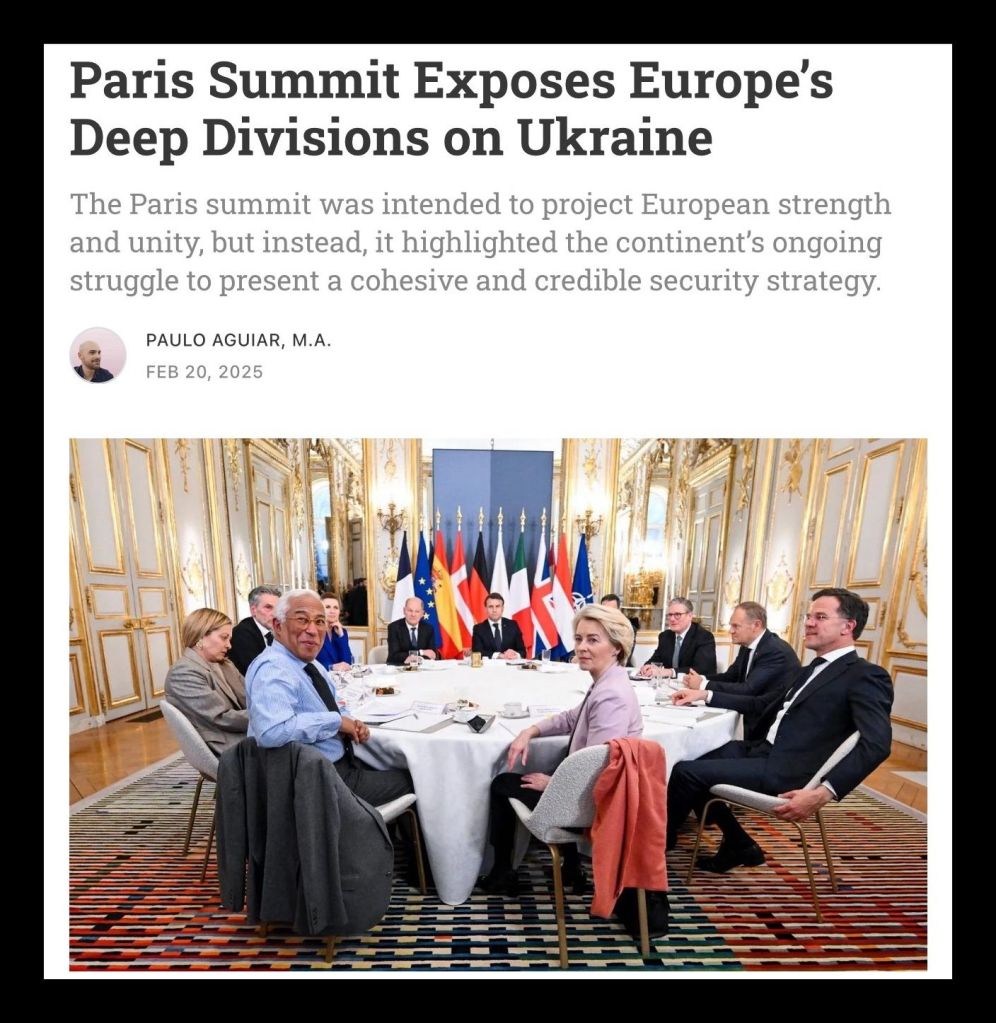
From the Russian perspective, the shift in European public statements has been warmly received. Kremlin spokesman Dmitry Peskov described recent European rhetoric as consistent with Moscow’s standpoint and a departure from previous “utopian statements” about Russia’s defeat. Putin himself suggested that Russia stands ready to “restore the level of relations we require” with Europe, conditioned on “respect for [Russia’s] national interests and consideration of legitimate security concerns.” This formulation underscores the deep normative divide between Western and Russian definitions of security and geopolitical legitimacy.
The timeliness of this European shift coincides with an unforeseen flashpoint in transatlantic relations centred on the United States’ attempts to acquire Greenland. On 17 January 2026, President Donald Trump announced tariffs on eight European NATO members including Denmark, France, Germany and the United Kingdom, escalating from 10 per cent in February to 25 per cent by June unless an agreement is reached for the “complete and total purchase of Greenland.” Trump framed this as necessary for “global peace and security,” arguing that China and Russia seek control of the Arctic island. European leaders condemned the trade pressures as “unacceptable” and vowed that Europeans would mount a “united and coordinated” response to uphold sovereignty. EU foreign policy chief Kaja Kallas warned that such tariffs would damage prosperity on both sides of the Atlantic and distract from the priority of ending the Ukraine war, while Denmark and Greenland’s authorities repeatedly emphasised that Greenland is “not for sale.”
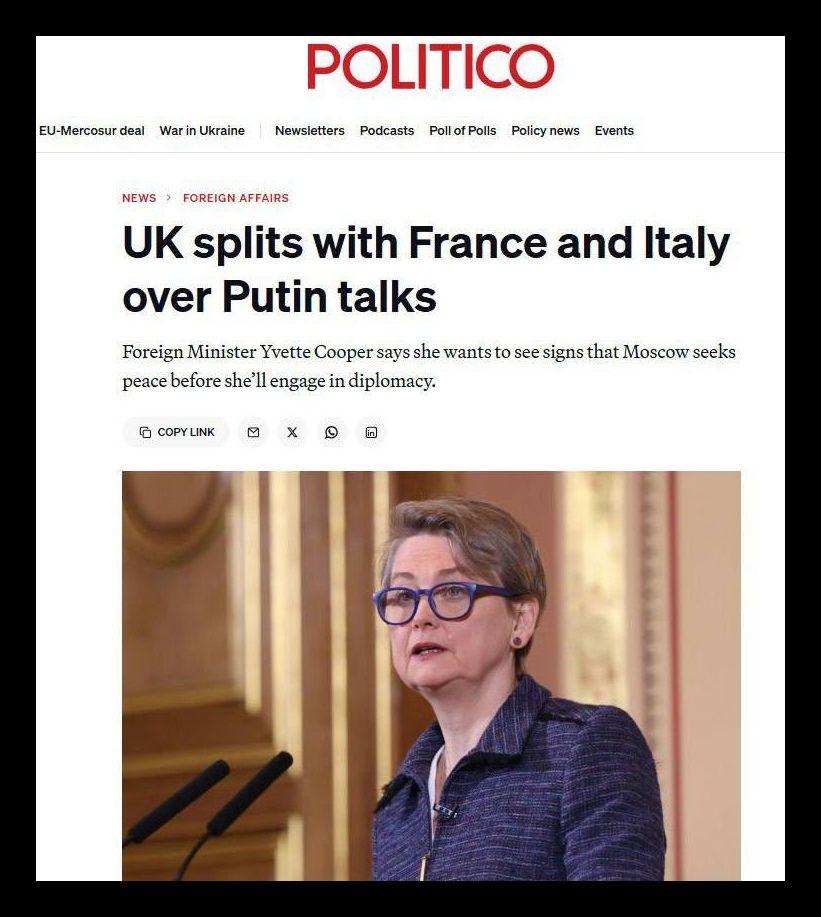
European responses to Trump’s coercive economic measures reflect a broader concern about the durability of NATO and the United States’ role within it. UK Prime Minister Sir Keir Starmer stated that applying trade penalties on allies “for pursuing the collective security of NATO allies” is fundamentally wrong. The tariffs are widely seen in Europe as extortionate, undermining the legal norms that govern sovereign decisions about territory and alliance cooperation. Greenland’s own political leadership has reaffirmed its commitment to Denmark and NATO, explicitly rejecting US control and emphasising that defence should be handled multilaterally within the alliance.
The spectre of a trade war coupled with territorial pressure from Washington compounds European anxieties about being marginalised in security matters. The apparent European readiness to resume dialogue with Russia may be partly tactical, fuelled by fears that a disruptive US approach to the Arctic might overshadow European strategic interests in Eastern Europe. European leaders’ insistence on a single, coordinated negotiation point with Moscow and their alarm at coercive US tactics suggest that European diplomacy is grappling with multiple external pressures: the immediacy of an unresolved war in Ukraine, the fragility of transatlantic unity, and shifts in American foreign policy assertiveness.
Independent strategic commentators have noted that Europe’s geopolitical influence depends on its ability to articulate and pursue its own security imperatives without undue reliance on either Washington or Moscow. The movement towards direct engagement with Russia, while conditioned on complex strategic calculations, reflects an attempt to reclaim agency after a period of deference to US and NATO-led policy frameworks. If Europe is to preserve its strategic autonomy, it will need to navigate the competing imperatives of alliance solidarity, economic independence, and diplomatic engagement with actors whose interests diverge from its own.
I think that European policymakers should clarify and institutionalise a unified diplomatic framework for engagement with Russia, ensuring that any dialogue is anchored in respect for international law and Ukraine’s territorial integrity. Transatlantic relations require a recalibration that reinforces mutual respect for sovereign decision-making and avoids coercive economic measures that weaken alliance cohesion. Finally, Europe must invest in its independent strategic capacities to reduce over-dependence on external security guarantees while maintaining commitments to collective defence and regional stability.
European leaders’ shifting posture toward Russia appears intertwined with broader realignments in global trade and security priorities, notably evident in Canadian Prime Minister Mark Carney’s diplomatic outreach to the People’s Republic of China and the evolving global debate over economic dependence on the United States. Carney’s visit to Beijing in January 2026, his first since becoming Canada’s prime minister, reflects a strategic calculation that traditional reliance on the US export market, which historically accounted for roughly 70–75 per cent of Canadian exports, is no longer tenable under conditions of heightened tariff pressure and political volatility. During that visit, Canada agreed to reduce tariffs to allow up to 49,000 Chinese electric vehicles into the Canadian market while Beijing committed to lowering import barriers on Canadian agricultural goods, including canola seed, lobsters and peas, measures expected to unlock nearly $3 billion in export orders. Carney framed this arrangement as part of building “a stronger, more independent Canadian economy” and a “new strategic partnership” with China encompassing energy, clean technology and investment cooperation.
Critics both within Canada and internationally have questioned whether Carney’s China overture signals a strategic pivot rooted in pragmatic economic diversification or a deeper alignment with a rising global power that could diminish North America’s unified posture on issues such as security and democratic governance. Senior researchers like Jacob Funk Kirkegaard have cautioned that China’s market access offers may be instrumentally used to exert economic leverage, particularly in sectors like automotive manufacturing where cheap imports could undermine domestic industries, and warned that the complexity of such engagements requires transparency and strategic caution. Other analysts have argued that seeking China’s involvement to address trade imbalances and supply chain vulnerabilities risks long-term dependency on a political system whose strategic goals diverge sharply from those of Canada and its democratic partners.
The broader global context for Carney’s diplomacy is captured in commentary on the emerging trend of “de-risking from America,” a concept articulated in recent Financial Times analysis and echoed by trade diplomats. This perspective posits that the longstanding assumption of U.S. economic and security leadership is eroding under transactional policies and unpredictable tariff regimes, prompting nations not only in Europe but also in Asia and North America to seek diversified partnerships. The shift away from an exclusive focus on US-China decoupling toward a more general strategy of reducing dependency on the U.S. underpins Carney’s emphasis on doubling Canada’s non-U.S. exports and engaging with markets such as China, India and the broader Indo-Pacific region.
To proponents of this strategy, engaging China economically is not inherently a globalist ambition but a pragmatic response to structural changes in global trade and geopolitics. Supporters point out that China remains the world’s second-largest economy and a major market for Canadian agricultural and energy exports, and that Canada’s pursuit of expanded links could buffer its economy against external shocks generated by tariff escalation with the United States. A Canadian government planning document underscores this framing, emphasizing resilience and diversification rather than ideological alignment.
Nevertheless, the tensions around Carney’s China engagement reveal sharp ideological divides within Canada and its allies. Critics like former US Ambassador Nikki Haley have publicly warned that Canada “cozying up to China for investment puts all of North America at serious risk,” a formulation that taps into broader concerns about strategic autonomy versus bloc conformity. Republican figures have adopted pejorative language such as referring to “Canada the great RED north,” reflecting fears that closer economic ties with China could translate into geopolitical vulnerabilities. Such rhetoric illustrates the degree to which cross-Pacific economic partnerships are being interpreted through the lens of strategic competition between democratic and authoritarian powers.
Other voices emphasise that Canada’s efforts are bounded by legal and geopolitical constraints. The Canada-United States-Mexico Agreement (CUSMA) includes provisions that limit the ability of signatories to enter certain types of deals with “non-market economies,” and deepening commercial integration with Chinese firms could, some analysts argue, trigger US restrictions on Canadian exports containing Chinese components deemed security risks. Additionally, concerns about foreign interference and national security, sparked by events such as China’s detention of Canadian citizens and documented interference in Canadian democratic processes, add layers of complexity to Ottawa’s China policy.
The juxtaposition of Europe’s tentative return to diplomatic engagement with Russia and Canada’s pursuit of deeper economic ties with China highlights a common underlying theme in current Western policy discourse: traditional alliances and economic dependencies are under stress, compelling policymakers to reassess assumptions about global order, strategic autonomy and the costs of alliance cohesion. Whether these developments represent tactical adjustments to immediate pressures or more profound realignments in geopolitical orientation remains an open question, but they collectively signal that the era of unquestioned Western integration under U.S. leadership is undergoing significant reconfiguration.
Authored By: Global GeoPolitics
Thank you for visiting. This is a reader-supported publication. I cannot do this without your support. You can support by way of a cup of coffee:
buymeacoffee.com/ggtv or


Leave a comment