
Strategic Realignment, Elite Resistance, and the Reconfiguration of Global Power
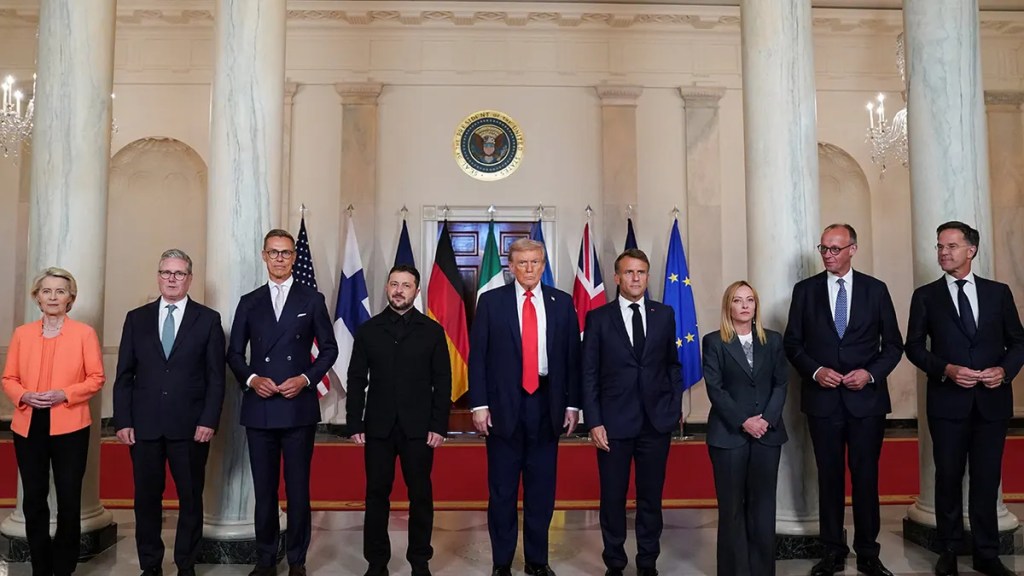
The contemporary pattern of apparent disorder surrounding the Trump administration has been interpreted by several analysts as the visible surface of a deeper strategic reorientation of international power relations, rather than as an accumulation of uncoordinated or impulsive actions. According to geopolitical analyst Alex Krainer, the period since Trump’s return to office has been characterised by deliberate disruption of the post-Second World War international order, which senior American officials themselves have described as obsolete and increasingly weaponised against the United States. This interpretation situates current events within a broader structural conflict between an entrenched European-centred oligarchic and neo-colonial system of governance and an emerging multipolar configuration involving states previously treated as permanent adversaries or subordinate actors.
Krainer situates this assessment within remarks made by George Soros in 2022 concerning a conflict between systems of governance, interpreting those remarks as an acknowledgement of a struggle between a European imperial model and a heterogeneous group of states resisting continued subordination. Within this framing, the Trump administration’s conduct appears chaotic only when measured against assumptions that Russia and China must remain adversaries, that European powers represent unquestioned allies, and that transatlantic institutions are permanent fixtures of global order. Krainer argues that these assumptions were deeply internalised over decades of policy, academic analysis, and intelligence culture, making any departure appear irrational even when it follows a coherent internal logic.
One of the earliest indicators of this departure was the public articulation, during Marco Rubio’s Senate confirmation hearings, that the existing global order had been turned against American interests and that future stability would depend upon multipolar integrations rather than continued hegemonic enforcement. Krainer interprets this as a statement of intent rather than rhetorical flourish, noting that American political culture normally rewards continuity rather than openly declared strategic rupture. Over the subsequent year, he observes that the administration’s actions have aligned with this declared orientation, even where public messaging has appeared inconsistent or deliberately provocative.
Central to this interpretation is the restoration of direct communication between Washington and Moscow at the highest level, which Krainer regards as the single most important determinant of global security given the nuclear capacities of both states. The resumption of dialogue is treated as a precondition for preventing systemic war, particularly in contrast to prior periods characterised by severed communication channels and escalating proxy conflicts. From this perspective, actions that have alarmed European governments are interpreted as stabilising measures at the global level.
In the Middle East, Krainer identifies domestic political constraints within the United States as shaping a cautious and indirect approach, particularly given the size and influence of pro-Israel voting blocs and major political donors. He nonetheless argues that the administration has sought to reduce the intensity of violence in Palestine, including by involving Russia in peace initiatives, thereby diluting the exclusivity of Western mediation frameworks. The invitation extended to Vladimir Putin to participate in a peace board concerning Palestine is interpreted as an indicator of a broader effort to internationalise conflict resolution beyond traditional Western dominance.
The handling of the Ukraine conflict occupies a central position in this analysis, particularly the refusal to provide American security guarantees that would enable European states to deploy forces on Ukrainian territory. Krainer explains that such guarantees would have functioned as a mechanism for drawing the United States directly into war with Russia through the use of tripwire deployments by Britain, France, or Germany. By declining this role, the administration effectively removed the escalation ladder that could have led to a generalised conflict between nuclear-armed blocs, thereby forcing European governments to confront the limits of their own military capacities.
Events in Venezuela are treated as among the most opaque, yet Krainer advances an interpretation grounded in institutional dynamics rather than resource acquisition. He notes that conventional explanations centred on narcotics enforcement or oil access fail to account for the extreme operational risks involved in the extraction of Nicolás Maduro, particularly given Venezuela’s relative position within global drug trafficking networks and its willingness to negotiate oil supply terms. Instead, Krainer situates the operation within the context of pre-existing efforts by international organisations and G7 states to delegitimise Venezuelan electoral outcomes and prepare an alternative leadership structure.
Within this context, Krainer highlights the role of the Organisation of American States, which operates with extensive legal immunities and institutional partnerships beyond direct national accountability. He observes that, following the Venezuelan elections, G7 states formally rejected Maduro’s legitimacy and signalled support for an alternative figure, creating conditions for externally managed regime change. The elevation of Maria Corina Machado through international recognition mechanisms is interpreted as part of this preparatory process, designed to confer reputational authority prior to domestic transition.
Krainer argues that the Trump administration’s removal of Maduro pre-empted these plans by preserving the existing institutional and military structures within Venezuela while neutralising the symbolic focal point of external intervention. The subsequent withdrawal by the United States from sixty-six international organisations endowed with legal immunities is presented as a structural move aimed at dismantling the unaccountable architecture through which global governance initiatives have been implemented since 1945. This withdrawal, announced shortly after the Venezuelan operation, is interpreted as evidence of a coordinated strategy rather than an isolated policy decision.
Iranian policy further illustrates this pattern, according to Krainer, who emphasises repeated instances where anticipated American military action did not materialise despite intense public speculation and allied pressure. He references the 2019 drone incident, subsequent crises, and recent escalations in which military responses were either declined or symbolically constrained. In each case, Krainer interprets presidential declarations of Iranian nuclear incapacitation as rhetorical devices intended to remove the formal justification for war rather than to describe operational reality.
Krainer places particular emphasis on leaked diplomatic communications from 2019, which indicated sustained lobbying by the British embassy in Washington for military action against Iran. He interprets these communications as evidence of an enduring British role in steering American policy towards conflict in the Middle East, primarily in support of Israeli strategic objectives related to regional dominance over energy resources and transit routes. Within this framework, British initiatives in the Balkans, particularly in Bosnia and Herzegovina, are similarly interpreted as attempts to open secondary fronts against Russian influence, efforts that were reportedly curtailed following direct American intervention.
The apparent incoherence of public statements, including rhetoric surrounding Greenland and NATO, is interpreted by Krainer as deliberate misdirection designed to generate confusion and emotional reaction while substantive policy shifts proceed with limited scrutiny. He suggests that proposals affecting Greenland function as instruments for undermining NATO cohesion and European Union authority, developments that many continental Europeans would regard as liberation from structures perceived as extractive or coercive.
This interpretation aligns with themes articulated by Mark Carney in his Davos address, where he acknowledged that the narrative of a neutral rules-based international order masked asymmetric enforcement and selective exemption by dominant powers. Carney described a prolonged period in which American hegemony provided certain public goods, including maritime security and financial stability, while simultaneously allowing disparities between rhetoric and practice to persist. He characterised the present moment as a rupture rather than a transition, driven by repeated crises in finance, health, energy, and geopolitics that exposed the vulnerabilities of extreme global integration.
Carney’s remarks concerning the weaponisation of economic interdependence, including the use of tariffs, financial infrastructure, and supply chains as coercive tools, provide analytical reinforcement for Krainer’s account of systemic breakdown. Both perspectives converge on the conclusion that prior assumptions of mutual benefit through integration have been invalidated by strategic behaviour, necessitating either structural reform or fragmentation. Carney’s emphasis on the end of tacit bargains sustaining the previous order complements Krainer’s depiction of deliberate demolition undertaken to force acknowledgement of new realities.
The response of European governments to this rupture has been marked by heightened anxiety and increasingly coercive domestic measures, particularly in relation to speech and political dissent. Krainer associates this behaviour with the exposure of longstanding scandals and financial flows, including those related to organised abuse networks and terrorism financing, which he argues have been suppressed through institutional protection mechanisms. He interprets public interventions by figures such as Elon Musk as catalysts that disrupted these protective arrangements, provoking defensive reactions from political leadership.
Within this broader context, statements from the Russian Foreign Ministry, articulated by Maria Zakharova, describe British foreign policy as reliant upon perpetuating the image of an omnipresent Russian threat to manage domestic discontent and international fragmentation. Zakharova frames this strategy as a means of deflecting attention from unresolved socioeconomic and migration challenges while attempting to remobilise Europe for prolonged confrontation through continued support for the Ukrainian project. She characterises British persistence in this approach as short-sighted and increasingly counterproductive among states of the Global Majority.
Zakharova further situates British behaviour within a historical continuum of imperial intervention, arguing that contemporary policies reinforce perceptions of the United Kingdom as a source of instability and provocation. She contrasts this posture with Britain’s earlier role in constructing the post-war international order alongside other victorious powers, suggesting that current actions undermine the very framework London once helped to establish. Her call for a return to respectful interstate dialogue aligns with Carney’s acknowledgement of systemic rupture and Krainer’s depiction of elite resistance to structural change.
Taken together, these analyses present an interpretation of Trump-era chaos as a mechanism for dismantling institutional arrangements that enabled unaccountable governance, asymmetric enforcement of norms, and perpetual conflict through proxy structures. The resulting hysteria among globalist networks is interpreted as a rational response to the erosion of mechanisms through which influence was exercised without direct democratic accountability. Rather than signalling the collapse of order itself, this perspective frames current turbulence as the violent adjustment phase of a system no longer capable of sustaining its internal contradictions.
Within this interpretation, cooperation between the United States, Russia, and China emerges as a necessary stabilising factor given the risks associated with unmanaged rupture. Krainer suggests that the scale of strategic risk involved implies coordination among major powers to prevent catastrophic miscalculation, even as surface-level rhetoric suggests antagonism. Whether this coordination can be sustained remains an open question, yet the pattern of avoided escalations and dismantled tripwires suggests an underlying preference for managed deconstruction rather than uncontrolled collapse.
The essayed interpretation therefore does not treat chaos as an end in itself, but as an instrument deployed against an entrenched system whose continued operation depended upon opacity, ritualised compliance, and selective enforcement of law. The panic observed among its beneficiaries reflects the exposure of structural dependencies previously shielded from public scrutiny, and the uncertainty that accompanies the loss of presumed permanence in global governance arrangements.
Authored By: Global GeoPolitics
This is a reader-supported publication. I cannot do this without your support. If you believe journalism should serve the public, not the powerful, and you’re in a position to help, becoming a PAID SUBSCRIBER truly makes a difference. Alternatively you can support by way of a cup of coffee:
buymeacoffee.com/ggtv


Leave a reply to albertoportugheisyahoocouk Cancel reply