
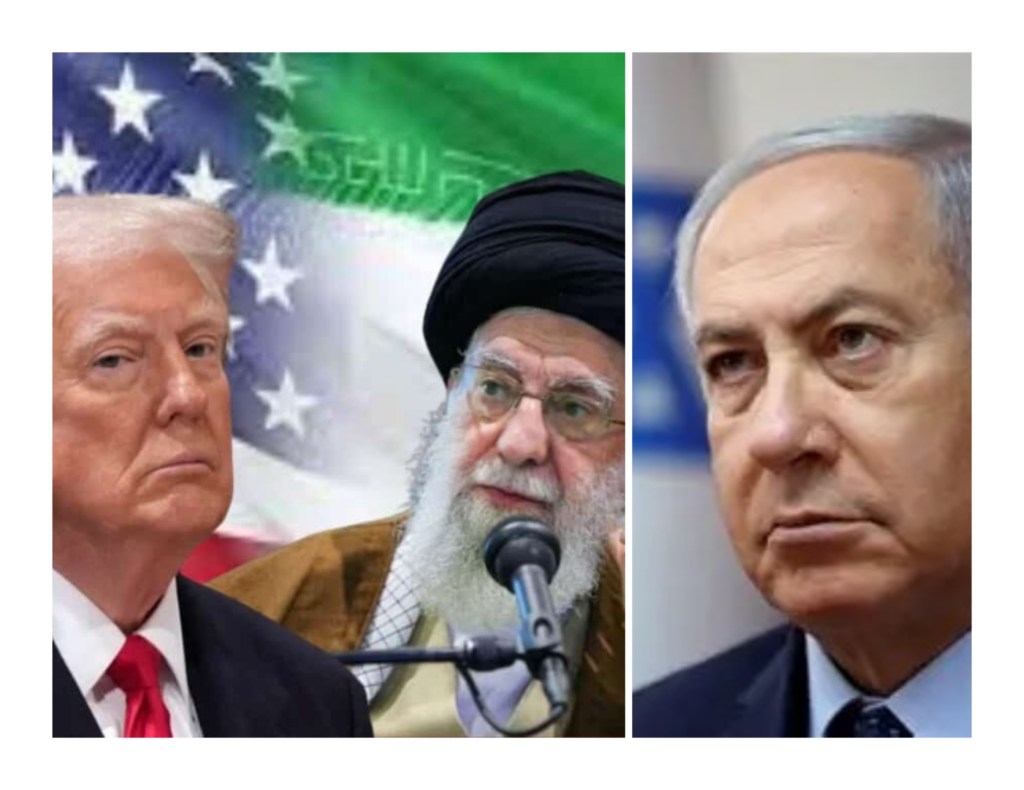
U.S.–Israeli Strategy Has Strengthened the Adversary It Sought to Break and Why Another War Is Likely to Reproduce Past Failures
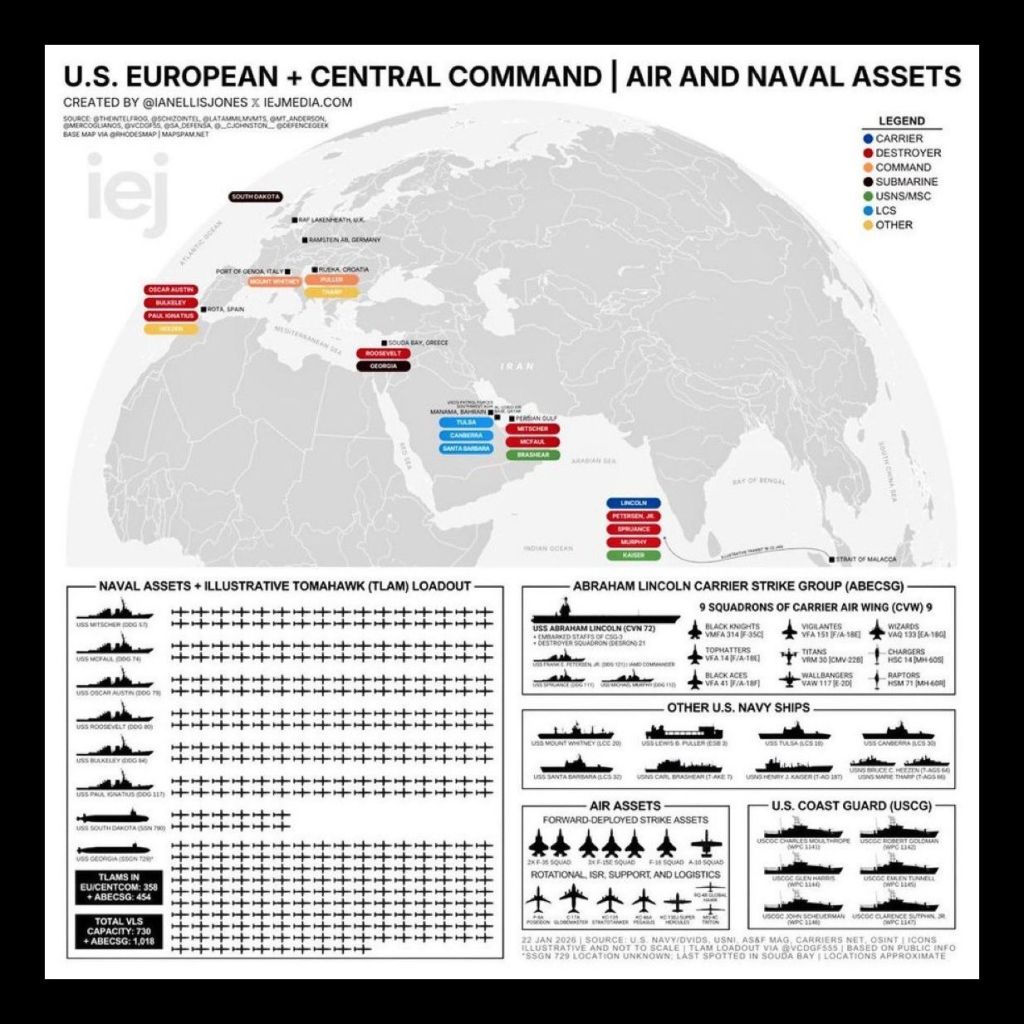
The current phase of confrontation unfolds amid an unprecedented concentration of military and naval forces across the Middle East, creating conditions widely recognised by defence analysts as consistent with imminent large scale conflict. Naval strike groups, forward deployed air assets, missile defence systems, and expeditionary ground units have been positioned at levels exceeding those observed prior to earlier regional wars, signalling preparation rather than deterrence alone. This accumulation of force provides the immediate strategic context within which recent and ongoing actions against Iran must be analysed, not as isolated crises, but as components of a sustained and escalating campaign.
The recent confrontation between the United States, Israel, and Iran reflects a continuation of a long established strategy aimed at coercing political change in Tehran through combined economic, informational, covert, and military pressure, rather than through negotiated settlement or regional accommodation. This strategy has been articulated and analysed by a range of independent scholars and officials, including John J. Mearsheimer and Jeffrey D. Sachs, whose assessments emphasise structural patterns rather than episodic events or isolated policy decisions.
Central to this approach has been the sustained use of economic sanctions designed to impose systemic strain upon the Iranian economy, thereby weakening domestic resilience and generating political instability. Under the administration of Donald J. Trump, sanctions were intensified under the framework of so called maximum pressure, following withdrawal from the Joint Comprehensive Plan of Action, which had previously constrained Iran’s nuclear programme under international monitoring. Independent economic analyses have consistently shown that these sanctions produced severe effects on inflation, currency stability, access to medicine, and overall living standards, while failing to generate elite defections or regime collapse, a pattern documented across sanctioned economies by political economists studying coercive diplomacy.
The portrayal of internal unrest in Iran as an exclusively endogenous phenomenon has been central to Western political and media narratives, yet this framing omits extensive evidence of external involvement aimed at shaping protest dynamics and escalation trajectories. While acknowledging the existence of genuine domestic grievances, analysts such as Mearsheimer and Sachs emphasise that economic distress itself was substantially aggravated by externally imposed sanctions rather than by isolated policy failures alone. This distinction matters analytically, because it situates protests within a broader framework of externally induced economic shock rather than spontaneous political rupture.
According to this analytical framework, the attempt to destabilise Iran followed a recurring four stage pattern observable in previous interventions across the Middle East. The initial phase involved prolonged economic attrition, designed to exhaust state capacity and public tolerance simultaneously, while restricting fiscal space for social stabilisation. Sanctions targeting banking, energy exports, shipping insurance, and foreign reserves collectively constrained Iran’s ability to buffer economic stress, an outcome acknowledged by international financial institutions studying sanctions efficacy.
The subsequent phase involved the deliberate encouragement of unrest through covert coordination, information operations, and logistical facilitation, aimed at transforming protest activity into sustained disorder. Statements attributed to senior American and Israeli officials during the December 2025 unrest, alongside messaging disseminated in Persian language channels, publicly signalled external encouragement rather than diplomatic restraint. Independent security analysts have noted that such signalling functions to reassure participants of external backing, thereby lowering perceived personal risk during mobilisation phases.
A further operational component involved the provision of alternative communications infrastructure intended to circumvent anticipated state controls over information flows. The deployment of satellite communication terminals prior to unrest represented a calculated effort to maintain protest coordination and external connectivity during internet shutdowns, a tactic increasingly associated with hybrid warfare doctrines analysed in contemporary security studies. When Iranian authorities successfully neutralised these systems, protest coordination degraded rapidly, consistent with empirical findings on movement fragmentation under communication denial.
The informational dimension of this strategy relied heavily upon Western media framing, which consistently presented unrest as peaceful, internally driven, and met by disproportionate state violence, while systematically excluding discussion of sanctions, covert involvement, or escalation incentives. Media studies scholars have long documented the role of narrative simplification in legitimising external intervention, particularly through binary moral framing that obscures structural causality. In this case, such narratives served both domestic Western audiences and targeted Iranian populations by projecting inevitability of regime collapse.
The final phase anticipated the use of overt military force once internal destabilisation reached a critical threshold, replicating earlier interventions in Iraq, Libya, and Syria. However, this phase was never activated, because internal stabilisation occurred faster than anticipated, and because military escalation risks exceeded political tolerances. Israeli and American decision makers faced credible assessments indicating unacceptable exposure to Iranian missile retaliation, a reality acknowledged even within Israeli political discourse.
The failure of this strategy cannot be separated from the broader military balance demonstrated during the June 2025 conflict, commonly described in Western commentary as a decisive Israeli and American success. Independent assessments challenge this characterisation, noting that Israel’s missile defence inventories were depleted rapidly, while Iran demonstrated increasing accuracy and volume in ballistic and cruise missile deployment. Several strategic analysts argued contemporaneously that Iran’s agreement to a ceasefire may have occurred at a moment of growing tactical advantage.
Subsequent disclosures from Israeli officials, including Avigdor Lieberman, further underscored vulnerabilities within Israeli defensive capacity, particularly regarding saturation missile attacks against strategic assets. These acknowledgements align with defence studies literature highlighting the asymmetry between relatively inexpensive offensive missile systems and high cost interception platforms. The reliance upon allied interception support from regional and European partners did not eliminate exposure, and internal Israeli assessments reportedly reflected this constraint.
The United States attack on Iranian nuclear facilities during the same period illustrates a parallel pattern of declaratory overstatement followed by informational opacity. While presidential statements asserted comprehensive destruction of Iran’s nuclear infrastructure, subsequent assessments by the Defense Intelligence Agency indicated only limited temporal setback. The absence of corroborating technical data or independent verification has been noted by arms control scholars, who emphasise that nuclear infrastructure redundancy and dispersal complicate claims of decisive elimination.
This ambiguity contributes directly to strategic instability, because unresolved uncertainty regarding Iran’s nuclear capacity incentivises continued coercive pressure rather than de escalation. As several non proliferation experts have observed, sustained external threat without credible security guarantees increases the rational appeal of deterrent capability acquisition. This dynamic has been extensively analysed in deterrence theory literature, including work by university based strategic studies centres.
The broader context of these events fits within what Jeffrey D. Sachs describes as a hybrid warfare paradigm, combining economic sanctions, covert operations, targeted strikes, cyber activity, and information campaigns. Comparative analysis across regions, including Venezuela and Iran, demonstrates that such strategies consistently produce humanitarian harm and regional instability without achieving stated political objectives. International law scholars further note that these practices undermine the foundational principles of the United Nations Charter regarding sovereignty and non use of force.
Financial dimensions of this strategy have increasingly attracted attention, particularly regarding the weaponisation of currency systems and payment networks. Perspectives associated with global financial governance, articulated in international economic forums, have emphasised that excessive reliance on sanctions erodes trust in the neutrality of financial infrastructure, encouraging diversification away from dominant currencies and settlement systems. Such trends have been documented by central banking researchers examining shifts in reserve composition and cross border trade settlement.
Russian Foreign Ministry statements, articulated by Maria Zakharova, have consistently framed sanctions and regime change operations as violations of international law and contributors to global instability. This position aligns with broader critiques advanced by non Western states regarding unilateral coercive measures and selective application of legal norms. Diplomatic scholars note that such positions reflect not merely rhetorical opposition but strategic concern regarding precedent and systemic erosion.
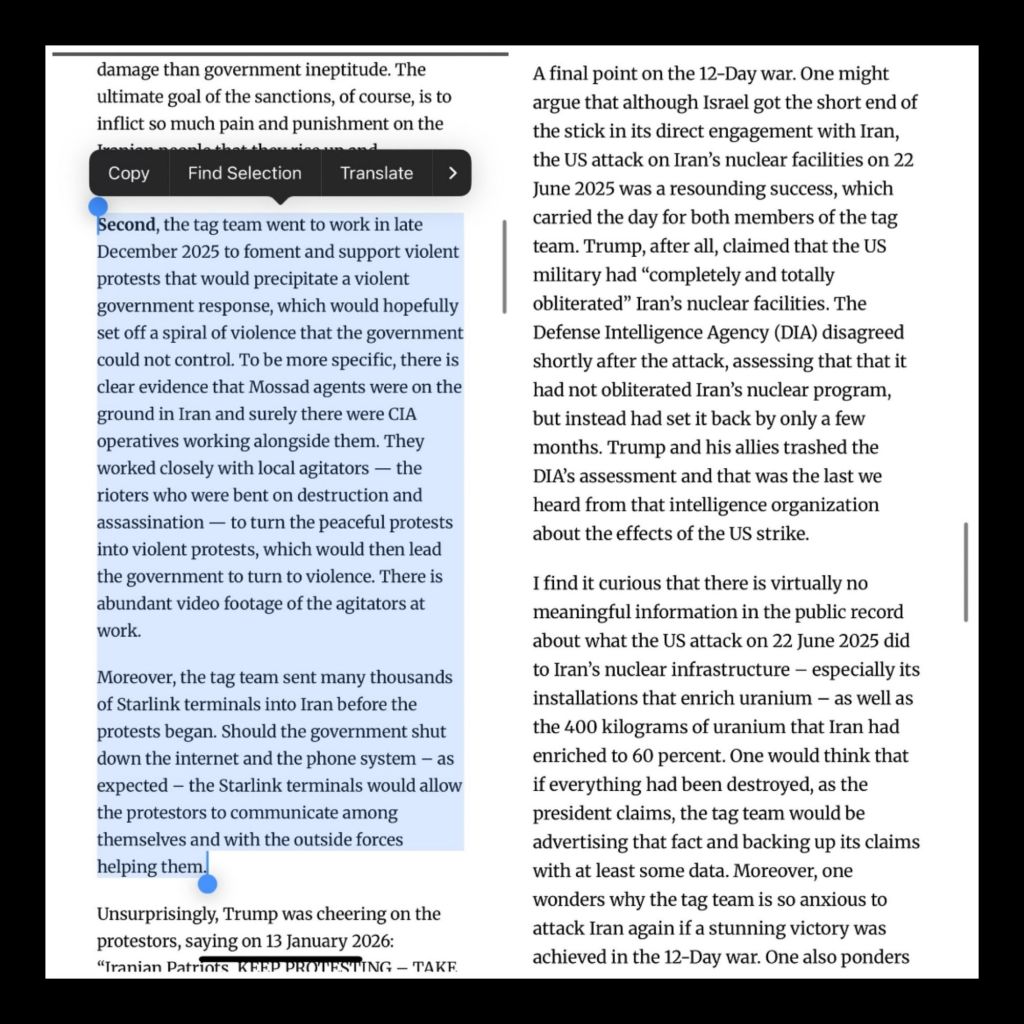
Later he emphasizes how there is little evidence that the US and Israel actually accomplished anything during the “12-Day War”)
Taken together, these factors explain why renewed attempts to destabilise Iran through similar mechanisms are likely to encounter the same structural constraints and counterproductive outcomes. Iran’s demonstrated capacity for internal control, missile deterrence, and adaptive economic resilience under sanctions reduces the probability of successful regime disruption through external pressure alone. At the same time, the escalating costs and risks borne by Israel and the United States constrain their willingness to pursue open conflict.
The repeated reliance on coercive pressure against Iran can be analysed through the lens of non cooperative game theory, in which each actor optimises short term tactical advantage while systematically discounting long term equilibrium outcomes. For several decades, the United States and Israel have pursued strategies premised on escalation dominance, information asymmetry, and the expectation that cumulative pressure would eventually force Iranian capitulation, yet the observed outcomes demonstrate adaptive counter strategies that shift the payoff matrix rather than resolve it. Sanctions have increased Iran’s incentive to develop economic self sufficiency and alternative partnerships, military strikes have strengthened deterrence signalling rather than compliance, and regime change efforts have reinforced internal cohesion rather than fragmentation, producing repeated negative sum outcomes. In this framework, escalation does not converge toward a stable equilibrium but instead locks participants into a cycle of retaliation and counter adaptation, where each additional move raises aggregate costs without delivering decisive advantage. A renewed war under these conditions would likely reproduce this pattern, imposing high military, economic, and civilian costs while failing to alter Iran’s core strategic orientation, thereby confirming once again that strategies optimised for coercion rather than mutual security have consistently generated persistence of conflict rather than resolution.
The persistence of this strategy despite repeated failure reflects institutional inertia rather than empirical success, a phenomenon widely documented in foreign policy analysis. Without substantive reassessment of underlying assumptions regarding coercion, legitimacy, and regional security architecture, further attempts are likely to reproduce humanitarian damage without achieving stated political objectives. The available evidence therefore supports the conclusion that previous failures are not anomalous but structurally embedded within the chosen approach itself.
Authored By: Global GeoPolitics
Thank you for visiting. This is a reader-supported publication. I cannot do this without your support. You can support by way of a cup of coffee:
buymeacoffee.com/ggtv |


Leave a comment