
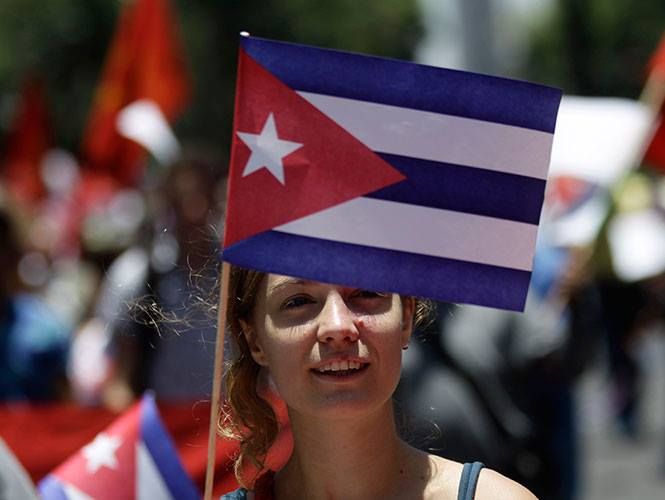
Economic coercion, financial dominance, regime change policy, and Cuban state resilience within a prolonged asymmetric conflict
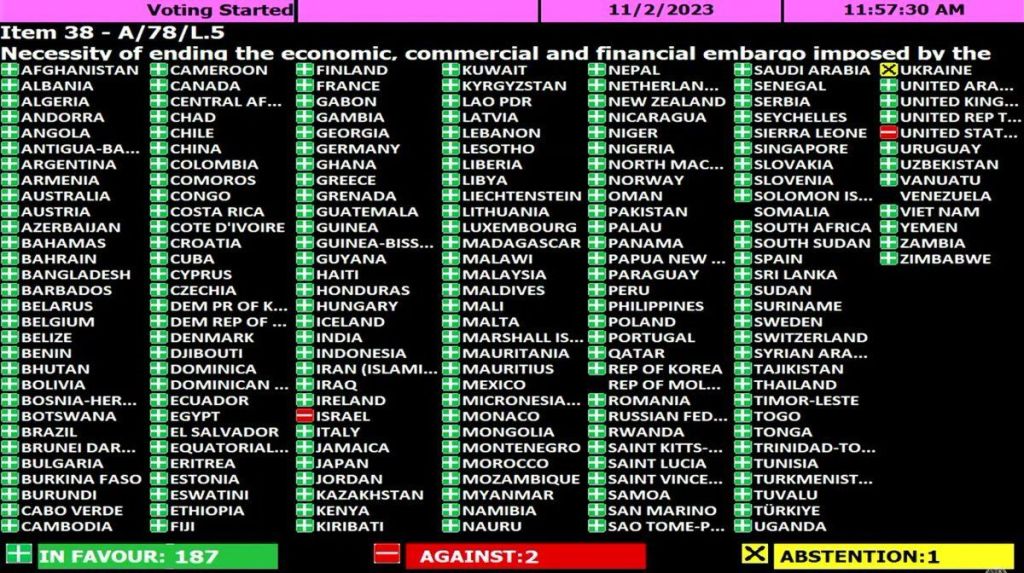
For more than six decades the United States has maintained a comprehensive system of economic coercion against Cuba that began under Dwight D. Eisenhower and was consolidated under John F. Kennedy following the failed invasion at the Bay of Pigs. The embargo has survived every subsequent administration. For thirty-three consecutive years the United Nations General Assembly has voted to condemn the measure, with 187 states opposing the sanctions regime while the United States and Israel have voted against the resolution. The durability of this policy cannot be understood outside the ideological doctrine that emerged after the 1959 revolution, when a socialist government nationalised United States assets and aligned itself against the prevailing economic order in the hemisphere.
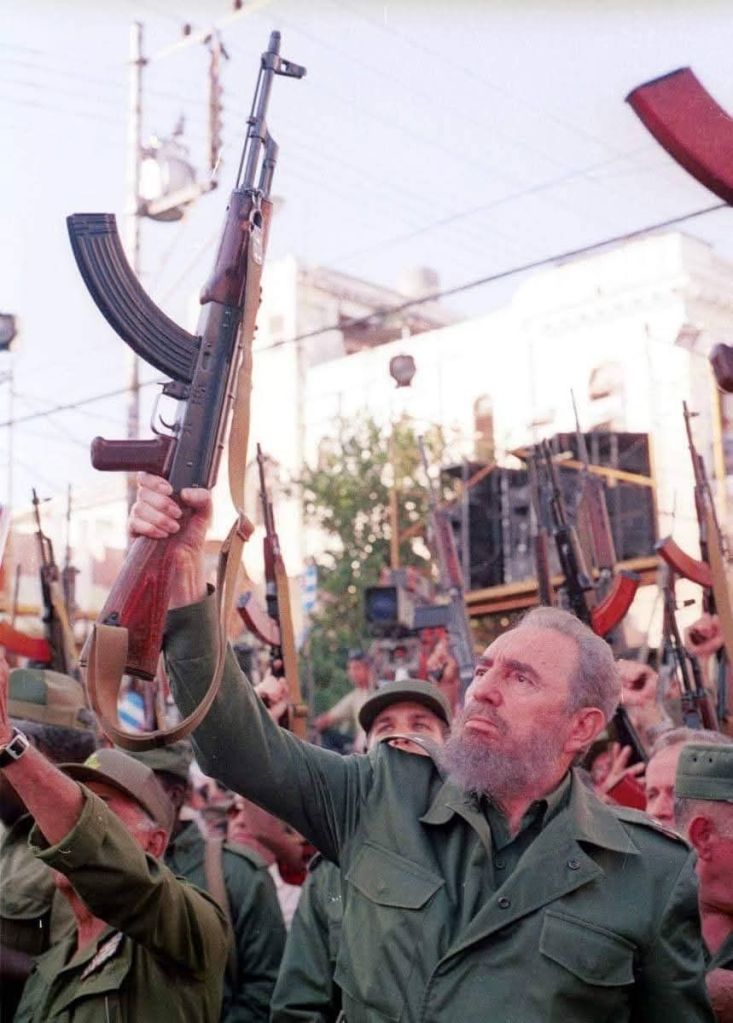
The strategic objective of the embargo was articulated in early internal memoranda of the United States government which proposed economic deprivation as a means to generate “hunger and desperation” leading to political change. That logic has not been formally abandoned. José Ramón Cabañas, director of Cuba’s Research Center for International Policy, has stated that cooperation between the two states has been “well documented by US sources” and that agencies ranging from the State Department to the Drug Enforcement Administration have acknowledged that cooperation with Cuba is “in the US national interest.” Such acknowledgements coexist with the continued designation of Cuba as an “unusual and extraordinary threat” under presidential directives.
Between 2015 and 2017 diplomatic relations were partially restored under Barack Obama. Embassies reopened and twenty-two memoranda of understanding were signed across law enforcement, environmental protection, migration management, and maritime security. A memorandum on law enforcement provided for cooperation in eight areas including counterterrorism, drug trafficking, cybercrime, immigration fraud, and criminal justice. United States Coast Guard officials have repeatedly described Cuba as their principal operational partner in the Caribbean. Search and rescue cooperation in the Straits of Florida has been documented in multiple cases. United States aviation authorities reported during the resumption of commercial flights that Cuba implemented the secure traveller programme more effectively than any other Caribbean jurisdiction.
Travel between the two countries reached its highest levels in 2017, 2018 and early 2019 during the first administration of Donald Trump. Millions of United States citizens visited Cuba and returned reporting that Cuba did not conform to the threat narrative prevalent in domestic political discourse. Cabañas has argued that this human exchange began to erode the credibility of hardline exile organisations and that pressure was exerted to terminate cruise travel and restrict remittances. Surveys in the United States have consistently shown that approximately sixty per cent of respondents favour normalisation of relations, including majorities among Cuban-American communities.
Lobby organisations have exerted sustained influence on policy formation. The US-Cuba Democracy PAC has declared its objective to end the “existence of the Castro regime.” Mauricio Claver-Carone, associated with that network, served within the Treasury Department and advocated reversal of engagement policies. The Center for a Free Cuba has received funding from the National Endowment for Democracy and maintained personnel circulation into executive branch positions. Such lobbying activity demonstrates that regime change remains an articulated policy aim rather than a residual Cold War reflex.
Economic coercion has intensified through financial dominance. Eighty-eight per cent of global foreign exchange transactions involve the United States dollar, and ninety-five per cent of cross-border dollar payments transit forty-two banks operating under United States jurisdiction. Penalties imposed on banks for sanctions violations have included 8.9 billion dollars against BNP Paribas, 1.9 billion against HSBC, 1.34 billion against Société Générale, 1.1 billion against Standard Chartered, and 619 million against ING. These enforcement actions create systemic deterrence, leading international firms to withdraw from lawful trade with Cuba for fear of secondary sanctions. Cabañas has noted that Cuba loses suppliers “not because of politics, but because US laws and algorithms make it too dangerous for companies to engage.”
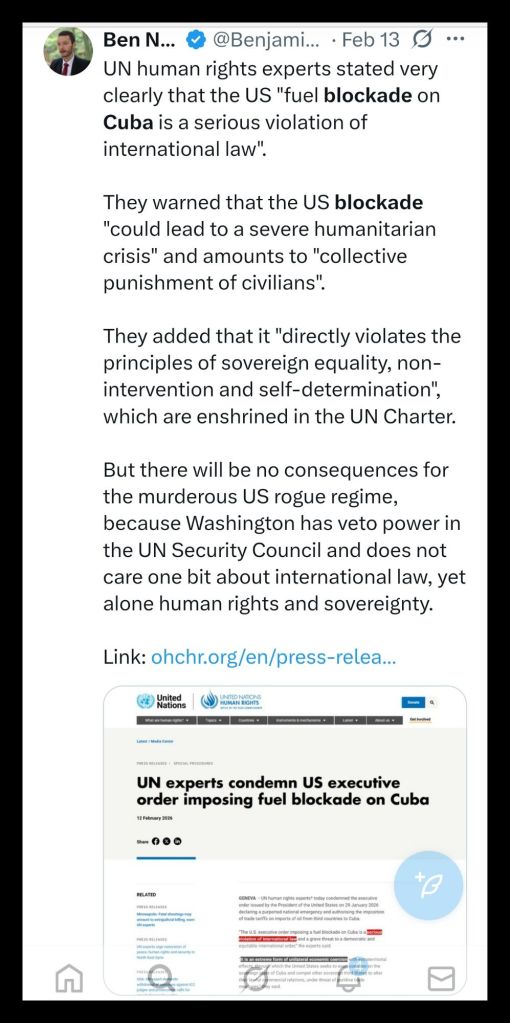
Recent measures in 2026 included seizure of five oil tankers carrying 7.3 million barrels, including one not formally under sanctions. The largest United States naval deployment in the Caribbean since the 1962 missile crisis accompanied these actions. Surveillance of Mexican tanker routes and threats of tariffs against oil suppliers led Mexico to halt shipments given its 400 billion dollar trade exposure to the United States. Venezuelan supply channels were disrupted. The immediate domestic consequences included blackouts lasting up to twenty hours, medical facilities operating with reduced power, and households reverting to wood fuel. Cuban health authorities have reported that sixty-nine per cent of essential medicines are unavailable. Cases have been documented of paediatric oncology patients lacking anti-nausea medication due to blocked imports and elderly patients receiving recycled pacemakers with limited battery life.
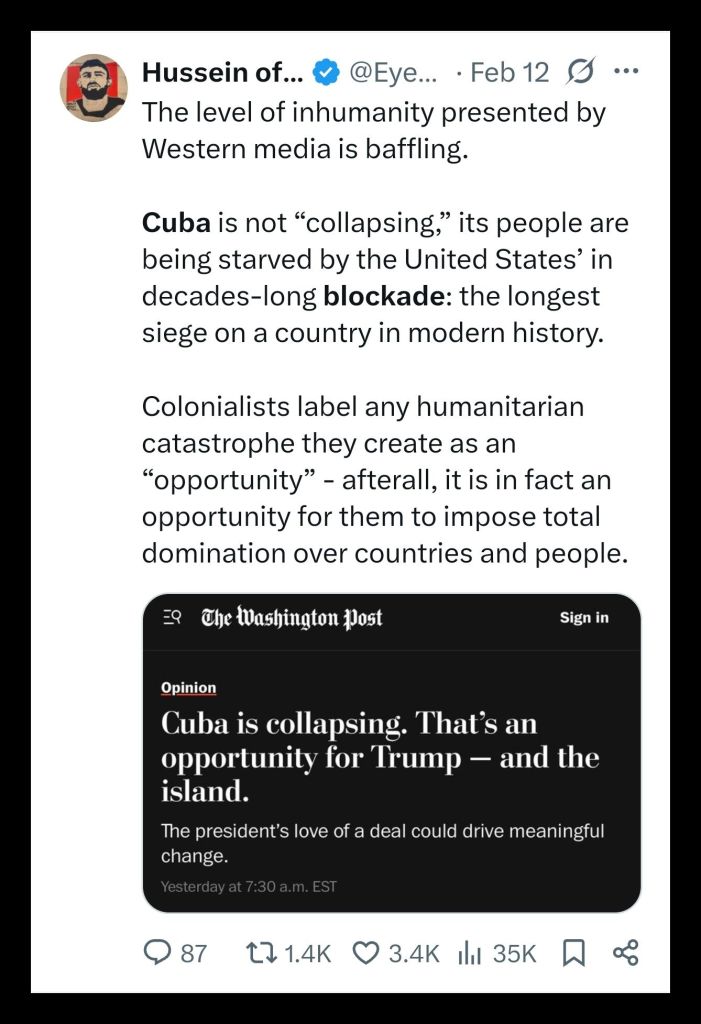
The structural impact of sanctions has historical precedent. Following the collapse of the Soviet Union in 1991 Cuba lost approximately three billion dollars annually in support. Gross domestic product contracted by thirty-five per cent, imports by seventy-four per cent, and real income by seventy-five per cent. The present sanctions regime operates within a more globalised financial system, amplifying its reach through digital payment platforms that block transactions referencing Cuba, including humanitarian donations.
Game theory provides a framework for analysing the strategic interaction. Washington increases economic costs to induce political concession, assuming that cumulative deprivation will alter domestic equilibria. Havana seeks to demonstrate resilience and to increase the reputational cost to the United States through multilateral diplomacy. The repeated interaction resembles a prolonged prisoner’s dilemma in which unilateral defection through sanctions is justified domestically as deterrence while cooperation in areas such as migration control and counter-narcotics persists when mutually beneficial. Chaos theory clarifies how marginal regulatory decisions within United States banking supervision cascade through interconnected financial networks, generating disproportionate effects on a small economy. The system behaves as a complex adaptive network in which minor perturbations propagate non-linearly.
Elements of the madman theory are visible in parallel signalling. Presidential documents label Cuba an extraordinary threat while officials maintain communication channels. Cabañas has observed that similar dual messaging appears in United States discourse toward Iran, where rhetoric of imminent strike coexists with claims of negotiation. Such signalling introduces uncertainty intended to destabilise adversary expectations and influence domestic audiences within Cuba.
Cuban resistance has combined institutional endurance with international engagement. Havana hosted negotiations contributing to the peace process in Colombia and participated in settlements relating to Angola and Namibian independence that were finalised in New York with United States involvement. Cuba has convened summits of the Non-Aligned Movement and supported organisations such as the Tricontinental and OSPAAAL. Cabañas has argued that sovereignty constitutes the axis of Cuban foreign policy and that constitutional referendums have affirmed non-negotiation under pressure. During Hurricane Melissa authorities evacuated 700,000 persons without recorded fatalities. Comparative references have been drawn to 1,800 deaths during Hurricane Katrina in the United States and to differential COVID-19 mortality rates relative to population size.
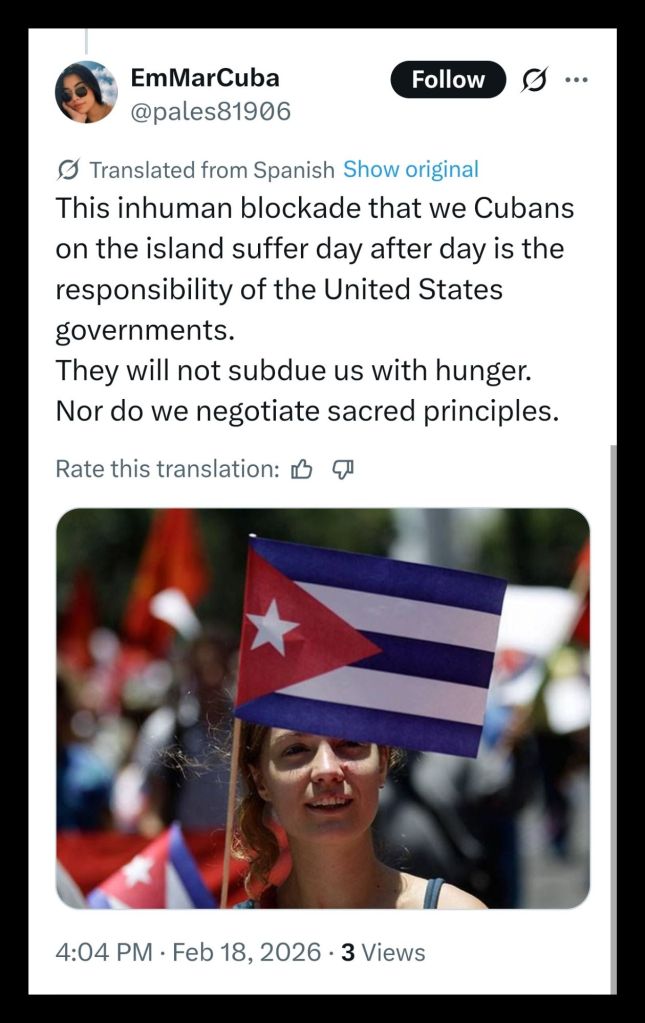
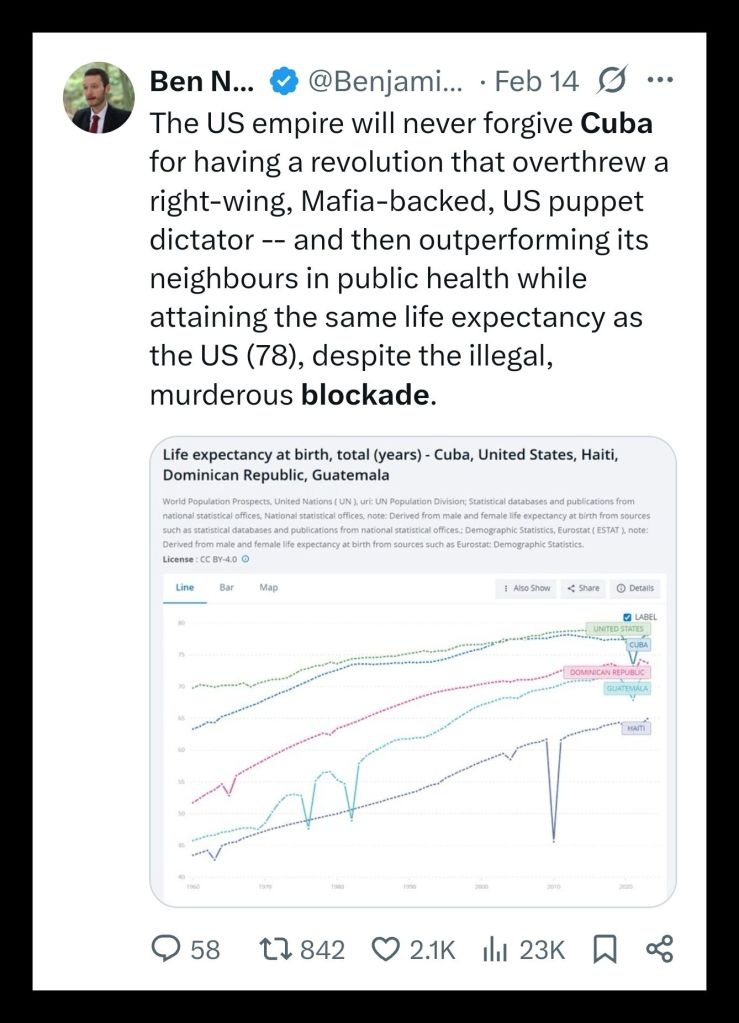
The blockade therefore operates as a comprehensive regime change instrument embedded within a doctrine of hemispheric primacy and neoliberal economic expansion. Cooperation acknowledged by United States agencies demonstrates that security interests overlap despite political hostility. The continuation of sanctions in the face of sustained international condemnation and domestic United States polling in favour of normalisation indicates that organised political constituencies and strategic signalling calculations outweigh public preference. Cuban resistance has relied on administrative capacity, international solidarity networks, and diplomatic engagement in peace processes to counter isolation.
Authored By: Global GeoPolitics
Thank you for visiting. This is a reader-supported publication. I cannot do this without your support. If you believe journalism should serve the public, not the powerful, and you’re in a position to help, becoming a PAID SUBSCRIBER truly makes a difference. Alternatively you can support by way of a cup of coffee:
https://buymeacoffee.com/ggtv |
https://ko-fi.com/globalgeopolitics |
https://buy.stripe.com/3cI5kDdnaeusckjd6Pawo00
References
Cabañas Rodríguez, José Ramón. Interviews and public statements as Director of the Centro de Investigaciones de Política Internacional (CIPI), Havana, 2023–2026, addressing US–Cuba security cooperation, sanctions enforcement, and sovereignty doctrine.
Centro de Investigaciones de Política Internacional (CIPI). Policy briefings and analytical reports on US–Cuba negotiations and memoranda of understanding, 2015–2024, Havana.
United States Department of State. Joint Statements and Memoranda of Understanding between the United States and Cuba, January 2015 – January 2017, including agreements on law enforcement cooperation (16 January 2017), environmental protection (2016), civil aviation (February 2016), maritime security and search and rescue (2015–2016).
United States Department of the Treasury, Office of Foreign Assets Control (OFAC). Cuban Assets Control Regulations (31 C.F.R. Part 515), originally issued July 1963; enforcement actions and penalty announcements including:
– BNP Paribas settlement, 30 June 2014 ($8.9 billion).
– HSBC settlement, 11 December 2012 ($1.9 billion).
– Société Générale settlement, 19 November 2018 ($1.34 billion).
– Standard Chartered settlements, 10 April 2019 (aggregate $1.1 billion across actions).
– ING settlement, 12 June 2012 ($619 million).
United States Drug Enforcement Administration (DEA). Public reports referencing Caribbean counter-narcotics cooperation, 2015–2019.
United States Coast Guard. Testimony and operational briefings on maritime coordination with Cuban authorities, 2015–2018.
United Nations General Assembly. Resolution A/RES/47/19 (24 November 1992) initiating annual votes on ending the embargo; subsequent annual resolutions including A/RES/78/7 (2 November 2023) and A/RES/79/— (October 2024), marking thirty-three consecutive condemnations.
National Endowment for Democracy. Annual grant disclosures relating to Cuba-focused programmes, 2005–2024.
US-Cuba Democracy PAC. Federal Election Commission filings and political contribution records, 2003–2024.
Center for a Free Cuba. Organisational records and public policy statements, 1997–2024; National Endowment for Democracy grant listings, various fiscal years.
Cuban Ministry of Public Health (MINSAP). Anuario Estadístico de Salud, editions 2019–2024, documenting medicine shortages, infant mortality rates, and health system indicators.
Cuban National Office of Statistics and Information (ONEI). Anuario Estadístico de Cuba, editions 1993–1995 (Special Period contraction data) and 2020–2024 economic indicators.
Data on post-Soviet contraction: Cuban GDP decline of approximately 35 per cent (1990–1993); imports decline of 74 per cent (1990–1993); real income contraction of approximately 75 per cent (early 1990s), reported in ONEI statistical series.
United States Presidential Determination continuing national emergency with respect to Cuba under the Trading with the Enemy Act, annual renewals including 10 September 2017, 12 September 2018, 10 September 2019, 2 September 2020, 10 September 2021, 13 September 2022, 11 September 2023, 10 September 2024.
Obama Administration policy changes:
– 17 December 2014 announcement of normalisation process.
– Embassy reopening in Washington and Havana, 20 July 2015.
– Resumption of scheduled commercial flights, 31 August 2016.
– Law Enforcement Memorandum of Understanding, 16 January 2017.
Trump Administration reversals:
– National Security Presidential Memorandum on Cuba, 16 June 2017.
– Termination of cruise travel authorisations, 4 June 2019.
– Remittance restrictions announced 23 September 2020.
Scholarly and analytical works:
Hufbauer, Gary Clyde, Jeffrey J. Schott, Kimberly Ann Elliott, and Barbara Oegg. Economic Sanctions Reconsidered, 3rd edition, Peterson Institute for International Economics, 2007.
Pape, Robert A. “Why Economic Sanctions Do Not Work.” International Security, Vol. 22, No. 2 (Autumn 1997).
Galtung, Johan. “On the Effects of International Economic Sanctions.” World Politics, Vol. 19, No. 3 (April 1967).
Baldwin, David A. Economic Statecraft, Princeton University Press, 1985.
Farrell, Henry, and Abraham L. Newman. “Weaponized Interdependence: How Global Economic Networks Shape State Coercion.” International Security, Vol. 44, No. 1 (Summer 2019).
Cuban Constitution of the Republic of Cuba, adopted by referendum 24 February 2019.
United States Constitution, drafted 17 September 1787; ratified 21 June 1788.


Leave a reply to Bob Carter Cancel reply