
dollar hegemony
-
The Yen Crisis is a Tsunami Like No Other on the Dollar Hegemony
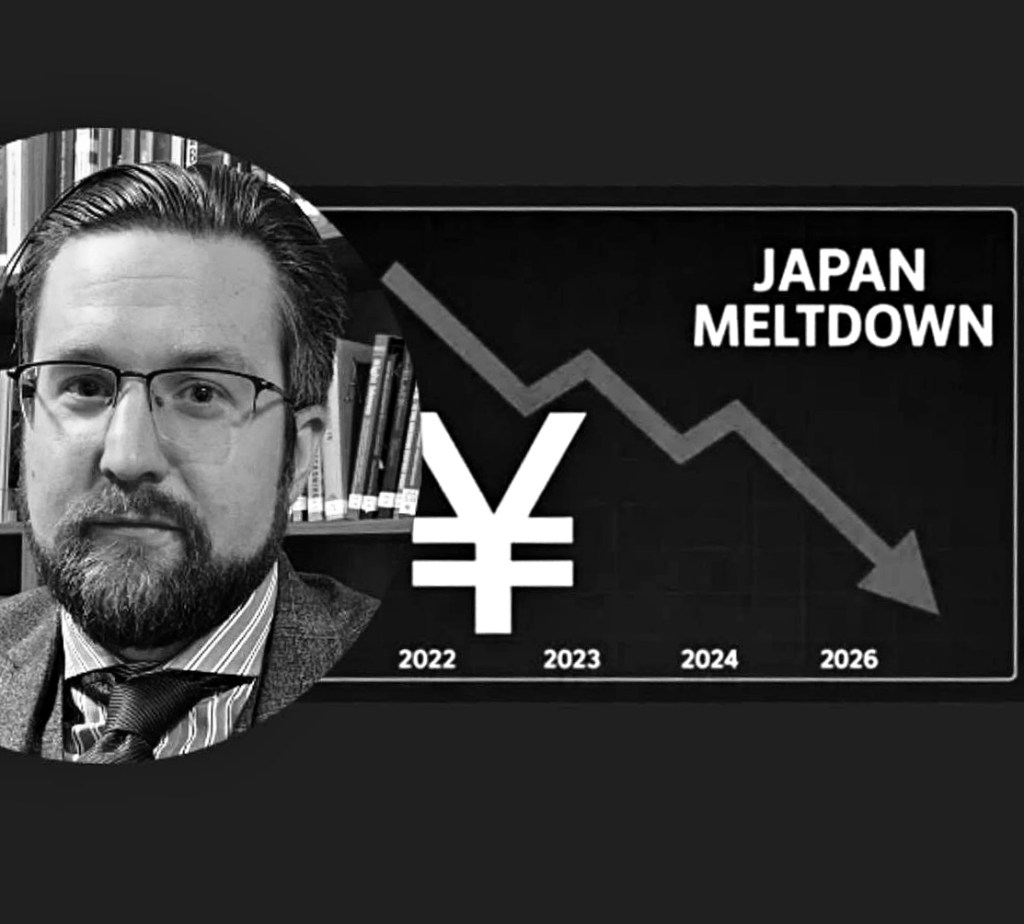
How Japan’s Financial Collapse Threatens to Trigger a Systemic Breakdown of the Global Dollar System Philip Pilkington’s analysis reveals that Japan’s financial instability represents the most immediate threat to the entire dollar-based international monetary system, with the yen functioning as the “canary in the coal mine” that signals an impending systemic collapse. The yen carry… Continue reading
-
The Petro-less Dollar
How Washington’s War on Iran Has Undermined the Financial Foundation of American Power The interruption of crude oil trade through the Strait of Hormuz and the Red Sea has produced an outcome that Washington’s strategic planners almost certainly did not anticipate when they launched military operations against Iran in February 2026 (1). Throughout the entire… Continue reading
-
Cloud Capital, Autonomous Weapons and the Fracturing of Dollar Hegemony

How platform rents, battlefield data extraction and payment-system alternatives are reshaping the political economy of conflict in the mid-2020s The concentration of computational power within a handful of privately owned platforms has begun to reshape both commercial exchange and the conduct of organised violence. Algorithms that once merely recommended consumer goods now perform target selection,… Continue reading
-
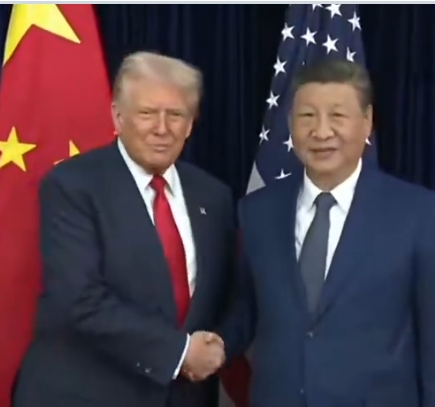
Trump’s Beijing Delegation Exposed the Real Structure of American Power [Extended Version]
![Trump’s Beijing Delegation Exposed the Real Structure of American Power [Extended Version]](https://globalgeopolitics.co.uk/wp-content/uploads/2026/05/img_20260513_235056.jpg?w=1024)
The Beijing visit exposed how transnational corporations, financial institutions, and technology monopolies now operate openly as the permanent power structure beneath American electoral politics. Donald Trump arrived in Beijing flanked by the commanding layer of American corporate and financial power because the visit exposed something Washington normally prefers hidden behind electoral theatre: transnational capital, technology… Continue reading
AI and Digital Control, America, China, economics, Energy, EUROPE, Financial markets, Foreign Policy, Geopolitics, Global Finance, iran, israel, middle east, Mineral Resources, NATO, politics, reserve currency, Russia, South East Asia, warAmerican decline, American empire, Apple, Belt and Road Initiative, blackrock, Boeing, China, Chinese Strategy, Corporate Globalism, corporate power, dollar hegemony, donald trump, economic warfare., elite power structures, energy security, Eurasia, Financial Capital, Financialisation, Foreign Policy, Game Theory, Geoeconomics, Geopolitics, global hegemony, global order, Goldman Sachs, great power competition, Indo-Pacific, Industrial Capacity, industrial policy, international relations, iran, manufacturing, Maritime Strategy, multipolarity, Nvidia, oligarchy, political economy, realism, Semiconductor War, Silicon Valley, Strategic Competition, strategic studies, supply chains, taiwan, technological sovereignty, Tesla, transnational capital, United States, US-China relations, wall street, Xi Jinping -
One Battle, Two Press Releases: Hormuz and the Crisis of American Deterrence
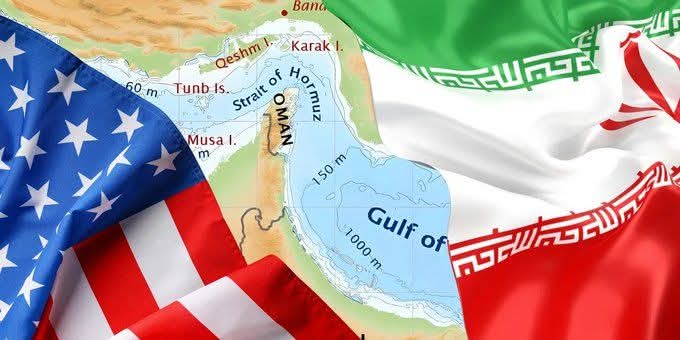
The Persian Gulf confrontation exposed the widening gap between military optics and operational control, while financial stabilisation and military escalation merged into the same strategic system A naval withdrawal inside the Strait of Hormuz would mark a strategic rupture extending far beyond one contested waterway, because the credibility of American maritime supremacy depends upon sustained… Continue reading
AI and Digital Control, America, China, economics, Energy, EUROPE, Financial markets, Foreign Policy, Geopolitics, Global Finance, iran, israel, middle east, Mineral Resources, NATO, politics, reserve currency, Russia, warAmerican Power, anti-access area denial, asymmetric warfare, Clausewitz, Coercive Credibility, Currency Systems, Defence Economics, dollar hegemony, energy security, escalation dominance, Financial markets, financial stability, Game Theory, Geoeconomics, Geopolitics, global order, Hormuz Crisis, imperial decline, international relations, iran, IRGC, maritime chokepoints, Maritime Strategy, Middle East security, military doctrine, Military Industrial Base, military strategy, Missile Saturation, multipolarity, Naval Warfare, Persian Gulf, Plunge Protection Team, political economy, realism, sea power, Strait of Hormuz, Strategic Geography, strategic studies, systemic risk, United States Navy -
China’s First Direct Rejection of U.S. Financial Jurisdiction
Why Beijing’s refusal to recognise American sanctions marks a structural shift in global financial power A legal border moved across the international system when China’s Ministry of Commerce instructed domestic firms not to recognise, enforce, or comply with United States sanctions against five Chinese refineries. Financial globalisation relied upon a silent assumption that American secondary… Continue reading
AI and Digital Control, America, China, economics, Energy, EUROPE, Financial markets, Foreign Policy, Geopolitics, Global Finance, Health, iran, israel, middle east, Mineral Resources, NATO, politics, reserve currency, Russia, warAnti-Foreign Sanctions Law, Belt and Road Initiative, blocking statute, China sanctions law, Chinese refineries, commodity security, cross-border finance, de-dollarisation, dollar hegemony, economic statecraft, energy geopolitics, energy security, extraterritorial jurisdiction, extraterritorial sanctions, financial coercion, financial decoupling, game theory in geopolitics, geopolitical economy, geopolitical risk, global financial order, global order transition, global supply chains, great power competition, international political economy, Iranian oil trade, legal sovereignty, multipolarity, realist international relations, sanctions compliance, sanctions enforcement, sanctions policy, sanctions resistance, secondary sanctions, sovereign jurisdiction, strategic autonomy, Strategic Competition, systemic rivalry, trade fragmentation, U.S. Treasury sanctions, U.S.–China relations, yuan internationalisation -
The Cost of Containing China to Maintain Primacy

After failed tariff policy and strategic miscalculation in Iran, Western strategy has shifted toward energy control and expanded conflict, seeking to defend the dollar system through measures that risk sustained global economic disruption in efforts to contain China Western strategy toward China has entered a compressed time horizon shaped by the perception among policy planners… Continue reading
AI and Digital Control, America, China, economics, Energy, EUROPE, Financial markets, Foreign Policy, Geopolitics, Global Finance, iran, israel, middle east, Mineral Resources, NATO, politics, reserve currency, Russia, warautomation, BRICS, China, de-dollarisation, dollar hegemony, economic warfare., energy markets, energy security, Geopolitics, global trade, globalisation, industrial decline, industrial policy, Infrastructure, iran, manufacturing, Middle East conflict, reserve currency, Strait of Hormuz, supply chains, tariffs, United States, yuan settlement -
Cuba in the Face of Economic Blockade

Economic coercion, financial dominance, regime change policy, and Cuban state resilience within a prolonged asymmetric conflict For more than six decades the United States has maintained a comprehensive system of economic coercion against Cuba that began under Dwight D. Eisenhower and was consolidated under John F. Kennedy following the failed invasion at the Bay of… Continue reading
AI and Digital Control, China, economics, Energy, Financial markets, Foreign Policy, Geopolitics, NATO, politics, Russia, warCaribbean geopolitics, Center for a Free Cuba, chaos theory, Cuba, Cuban health system, Cuban Revolution, dollar hegemony, economic blockade, economic sanctions, extraterritorial sanctions, financial warfare, Game Theory, humanitarian impact of sanctions, lobbying influence, madman theory, maritime interdiction, National Endowment for Democracy, neoliberalism, Non-Aligned Movement, Office of Foreign Assets Control, Oil Tanker Seizures, regime change policy, secondary sanctions, Sovereignty, United Nations General Assembly votes on Cuba, United States, US-Cuba Democracy PAC, US–Cuba relations, weaponised interdependence
