

Iran’s monetary independence’s refusal to submit to digital monetary surveillance and centralised financial control tyranny as the underlying driver of the war
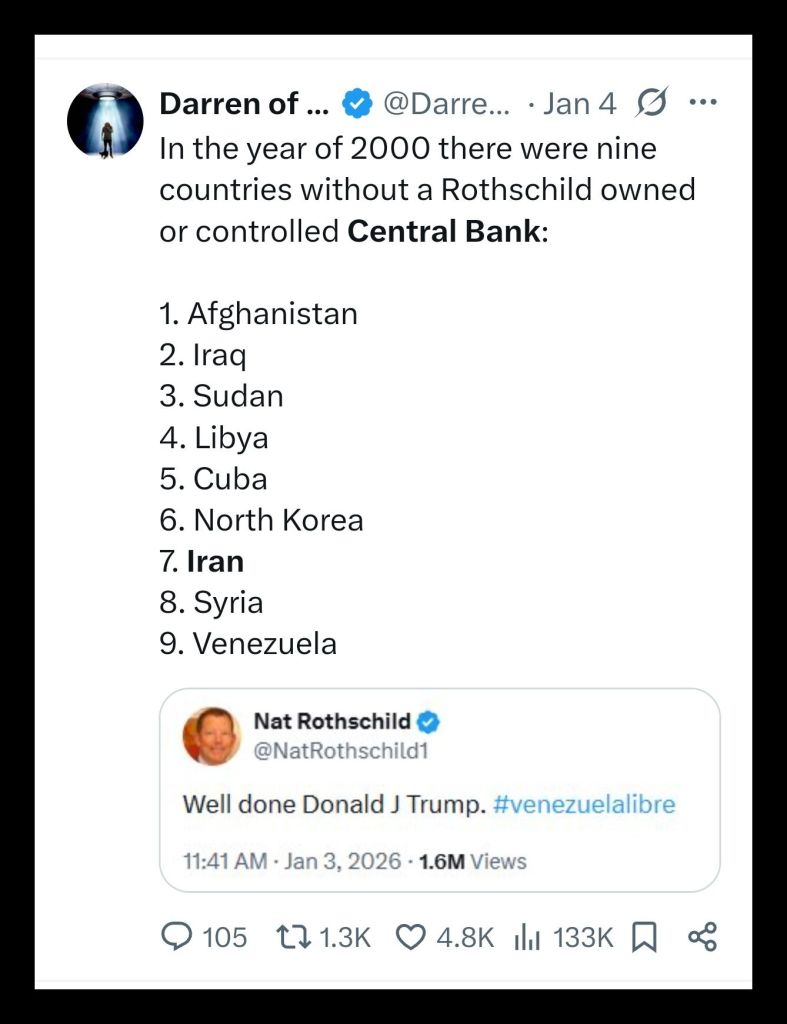
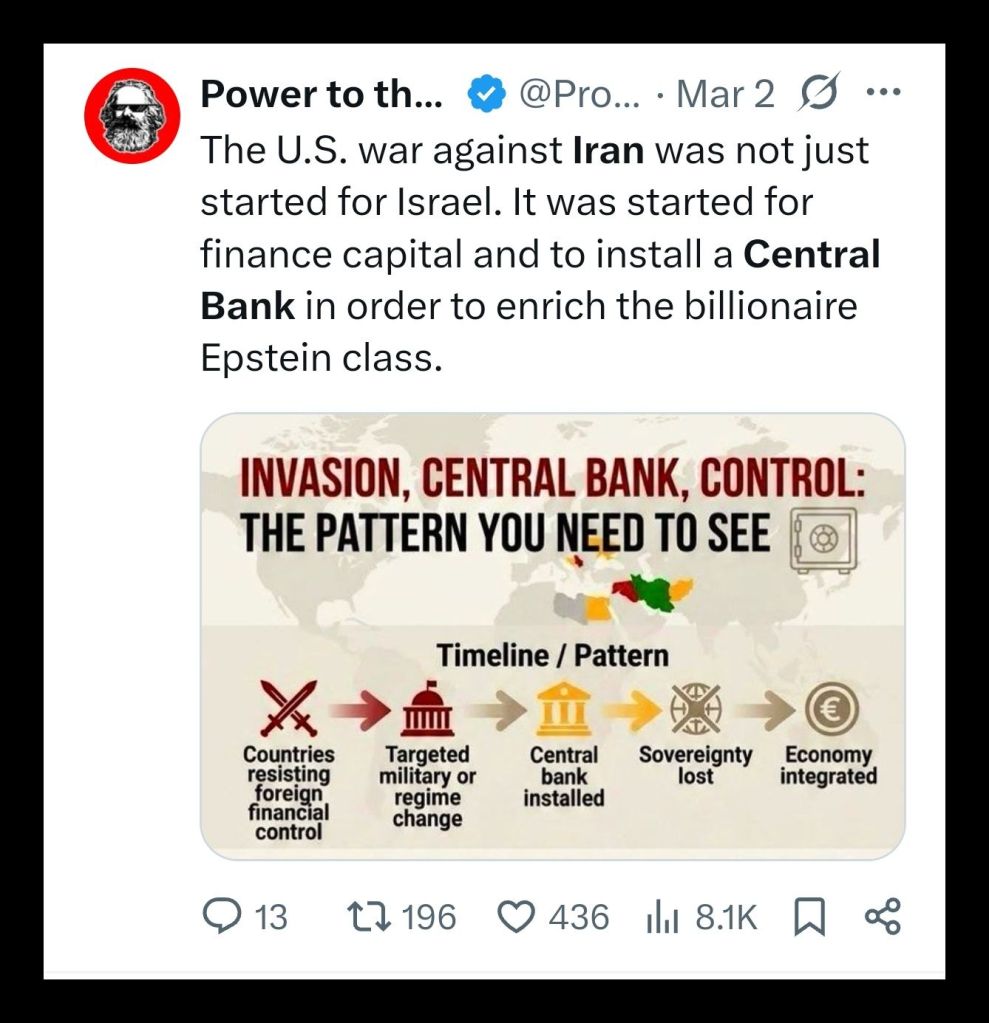
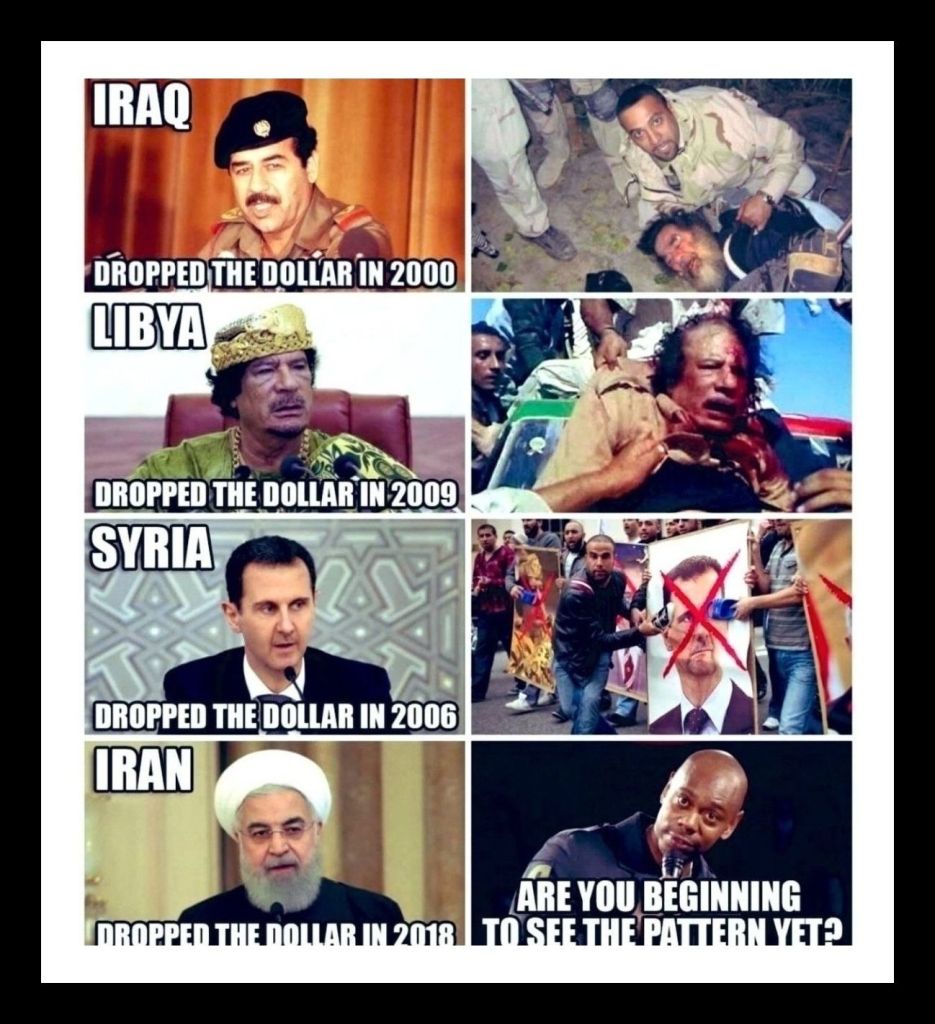
The sustained pressure applied against Iran over recent decades reflects a structural conflict over monetary sovereignty rather than episodic disputes over security or ideology. Examination of intervention patterns since the late twentieth century shows repeated targeting of states whose banking systems resisted integration into Western-managed financial infrastructure. Escalation correlated closely with the transition from analogue monetary governance toward digitised, rule-enforced financial systems requiring universal compliance.
Classical political economy distinguished clearly between fiscal authority exercised by elected governments and monetary authority delegated to central banks with limited mandates. Fiscal policy determined taxation, expenditure, and redistribution through political process, while monetary policy managed liquidity, interest rates, and settlement stability within constrained technical boundaries. That separation functioned as a constitutional safeguard against concentrated power by preventing any single institution from controlling both resource allocation and transactional permission.
Digital monetary architecture dissolves that separation in practice. Programmable currency embeds conditionality directly within the medium of exchange, allowing central authorities to determine not only money supply but also the permissible uses of money. Fiscal decisions traditionally debated in legislatures migrate into software code administered by unelected institutions. This shift constitutes a financial coup d’état executed through infrastructure rather than statute, replacing political accountability with technical enforcement.
Former Wall Street executive and former United States Department of Housing and Urban Development official Catherine Austin Fitts has articulated a sustained critique of digitised monetary governance centred on the loss of transactional sovereignty. Her analysis emphasises the role of physical cash as a decentralised monetary instrument that preserves individual autonomy by enabling exchange without permission, identity verification, or behavioural compliance. She argues that the transition toward fully programmable monetary systems transforms money from a neutral medium of exchange into a mechanism of governance, capable of enforcing policy objectives directly through transactional restriction. Within this framework, the removal of cash eliminates the final practical barrier separating monetary authority from total economic control, rendering participation in society conditional upon conformity with centrally defined rules.
Central banks operating programmable systems no longer influence behaviour indirectly through price signals. Transaction approval, denial, throttling, or expiration occurs automatically based upon encoded rules tied to identity credentials, geographic location, or compliance status. Monetary governance thereby absorbs fiscal authority, collapsing institutional boundaries that previously constrained state power.
Such systems require homogeneity to function effectively. Any jurisdiction maintaining alternative settlement mechanisms undermines enforcement coherence by enabling leakage outside the rule-set. Iran’s independent banking arrangements therefore represent systemic risk rather than ideological dissent, particularly as digital control frameworks approach operational maturity.
Authoritarian governance structures in parts of the Middle East present fewer institutional obstacles to rapid deployment of digital surveillance and monetary enforcement systems. Centralised authority, limited civil resistance, and constrained judicial oversight reduce friction during implementation. These environments function as proving grounds for architectures that would provoke significant opposition within Western societies accustomed to legal protections, privacy norms, and political contestation.
Western populations face material resistance to systems capable of restricting movement, consumption, and economic participation through monetary controls. Public backlash, legal challenge, and institutional inertia slow adoption. External theatres therefore assume strategic importance as testing environments where surveillance integration encounters minimal resistance and produces demonstrable administrative efficiency.
Iran’s resistance disrupts this sequencing. Independent transaction capacity, alternative energy settlement, and alignment with non-Western financial blocs reduce the ability to present digital monetary governance as inevitable. Iran’s oil exports to China settled outside dollar-clearing arrangements weaken sanction credibility and erode the incentive structure required for universal adoption.
The expansion of BRICS coordination amplifies this effect. Parallel payment systems, reserve diversification, and bilateral clearing arrangements reduce dependency upon Western settlement infrastructure. Iran’s participation extends resource depth and geographic continuity, increasing the viability of non-aligned financial ecosystems capable of operating at scale.
Historical testimony supports the centrality of banking independence within intervention planning. Former NATO commander Wesley Clark described strategic sequencing that prioritised states maintaining independent financial systems rather than those presenting immediate military threats. Subsequent intervention patterns across multiple regions align with that framework.
Digital identity integration intensifies these pressures further. Monetary programmability functions most effectively when currency links directly to verified identity credentials. Spending permissions, mobility access, and service eligibility converge within unified systems governed by central authorities. Sovereign refusal to adopt such frameworks therefore represents institutional non-compliance threatening overall system integrity.
Iran’s exploration of alternative digital settlement mechanisms and domestic financial technologies compounded these concerns. Platforms operating beyond Western regulatory reach reduce dependency upon centralised approval structures. Combined with resource exports and regional trade networks, such platforms enable sustained economic activity despite exclusion from dominant systems.
From a political economy perspective, regime-change pressure emerges as rational response to systemic vulnerability rather than moral judgement. Architects of unified monetary governance cannot tolerate durable exceptions without jeopardising enforcement credibility. Fragmentation introduces arbitrage opportunities, weakens deterrence, and undermines adoption incentives across compliant jurisdictions.
Military escalation, sanctions tightening, and diplomatic isolation therefore function as instruments designed to restore monetary alignment. These measures operate incrementally, intensifying when integration fails and receding when compliance resumes. Comparable patterns appear across interventions targeting states with independent banking arrangements irrespective of regional or ideological context.
The emerging digital monetary order concentrates authority within technical systems governed by central banks and regulatory bodies rather than representative institutions. Transaction rules encoded within software operate continuously, automatically, and transnationally. Sovereign discretion contracts accordingly, replaced by compliance logic embedded within infrastructure.
Warnings regarding such concentration of power predate contemporary technology. Friedrich Hayek cautioned that centralised economic control erodes freedom by replacing choice with administration. George Orwell warned that systems enabling total oversight transform authority from governance into domination. Their insights converge upon a single risk: technological efficiency applied without institutional restraint dissolves human agency.
The danger lies not in any single state or technology but in absolute control rendered frictionless. Monetary systems governing every transaction govern every decision. When permission replaces freedom, compliance replaces consent, and efficiency replaces judgment, political liberty becomes administratively obsolete.
Authored By: Global GeoPolitics
Thank you for visiting. If you believe journalism should serve the public, not the powerful, and you’re in a position to help, becoming a PAID SUBSCRIBER truly makes a difference. Alternatively you can support by way of a cup of coffee:
https://buymeacoffee.com/ggtv |
https://ko-fi.com/globalgeopolitics |
References
Fitts, C. A. (2020). The weaponization of finance: The rise of digital control systems in monetary governance. Solari Report.
Fitts, C. A. (2022). Central bank digital currencies and the end of cash as sovereign infrastructure. Solari Report.
Hayek, F. A. (1944). The road to serfdom. London: Routledge.
Hayek, F. A. (1976). Denationalisation of money: The argument refined. London: Institute of Economic Affairs.
Orwell, G. (1949). Nineteen eighty-four. London: Secker & Warburg.
Clark, W. (2007). Speech at Commonwealth Club of California on post-Cold War military planning.
Bank for International Settlements. (2021). Central bank digital currencies: Foundational principles and core features. Basel: BIS.
International Monetary Fund. (2019). Fintech and the future of finance. Washington, DC: IMF.
People’s Bank of China. (2020). Progress of research and development of e-CNY in China. Beijing.
European Central Bank. (2020). Report on a digital euro. Frankfurt.


Leave a comment