
America Is Losing in the Middle East And Fast, Decades of Military Might, Gone in Days.
Strategic analysis of the war involving Iran, the United States, and Israel must begin with a clear understanding of the form such a war would take and the structural realities shaping it. Conventional comparisons of aircraft carriers, military spending, and technological sophistication encourage a superficial belief that the United States and its allies would inevitably prevail. Such reasoning assumes that modern war will unfold according to the logic of conventional battles between symmetrical powers. Strategic analysis grounded in classical military theory and modern studies of asymmetric warfare reaches a different conclusion. A weaker state that forces a stronger empire into a prolonged war of attrition can impose costs that gradually exceed the political and economic capacity of that empire to sustain the conflict. Scholars such as Carl von Clausewitz and Sun Tzu recognised that the side which controls the conditions of the struggle often determines the final outcome. Contemporary analysis by Jiang Xueqin argues that Iran has spent more than two decades preparing precisely such a war, constructing a military doctrine built around endurance, decentralised operations, and cost asymmetry rather than conventional confrontation. Jiang describes the emerging confrontation as a war of attrition in which Iran deliberately drags the conflict across multiple theatres while increasing the economic and political costs imposed upon the American empire, its regional allies, and its dependent Gulf monarchies.
Iranian planners view this conflict not as a short military campaign but as a generational struggle shaped by geography, ideology, and strategic patience. Their objective is not immediate battlefield dominance but the gradual exhaustion of an overextended imperial system whose power depends upon global economic stability, maritime trade routes, and vulnerable regional infrastructure. Once the conflict is understood through this framework of asymmetric warfare and systemic pressure, the central argument becomes clear. Iran intends to win not by matching the military strength of the United States but by turning that strength into a strategic liability through time, geography, and cost. Thirty-five years ago, during the first Iraq War, television was filled with constant footage from Iraq. Smart bombs and cameras were a new phenomenon, and each night brought scenes of the conflict, often in night vision. Today, however, we see almost no video from the war zones.
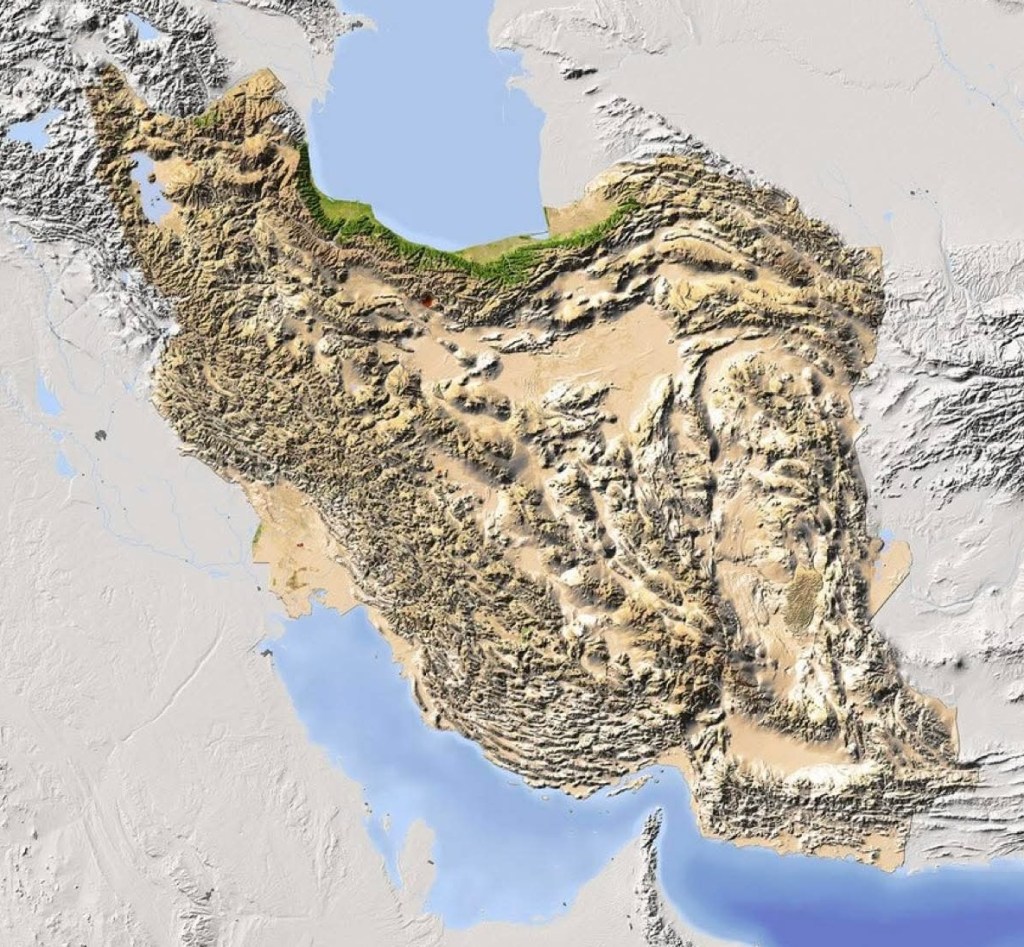
Geography alone establishes the central strategic fact governing the regional military balance because Iranian territory stretches along the northern coastline of the Persian Gulf and commands the northern approaches to the narrow maritime corridor known as the Strait of Hormuz, a passage that serves as the principal export route for a large share of internationally traded petroleum. Energy assessments produced by the International Energy Agency consistently identify this maritime corridor as the most sensitive chokepoint within the global hydrocarbon transport system because tanker traffic carrying oil from the Gulf monarchies must transit through a waterway only a few dozen kilometres wide at its narrowest navigable channels. Strategic planners recognise that even temporary disruption within this corridor would generate immediate consequences across international commodity markets, shipping insurance systems, and global industrial supply chains, and this geographic fact places the Iranian state in possession of an escalation lever unavailable to outside naval powers that must project force across vast distances from their own territorial bases.
Iranian military doctrine has evolved during several decades of sanctions and confrontation with technologically superior adversaries, and the strategic orientation adopted by the Islamic Revolutionary Guard Corps places emphasis upon asymmetric deterrence, dispersal of capabilities, hardened infrastructure, and the capacity to impose escalating costs upon an opponent rather than reliance upon traditional airpower dominance. Analysts including Anthony Cordesman have documented the extent to which Iranian missile forces, drone production, and underground logistical networks represent deliberate responses to anticipated air campaigns by Western forces, while strategic commentary from figures such as Glen Diesen and Pepe Escobar frequently highlights the manner in which these preparations aim to deny rapid decisive victory to technologically superior opponents. Hardened missile bases embedded within mountainous terrain, mobile launch systems concealed within civilian infrastructure, and dispersed command networks together create a military architecture designed for survivability under sustained aerial bombardment.
Regional political geography introduces another layer of strategic complexity because the Arab monarchies surrounding the Persian Gulf maintain security arrangements with Washington while simultaneously possessing economic systems highly dependent upon concentrated energy infrastructure and maritime trade routes. States including Saudi Arabia, United Arab Emirates, Qatar, Bahrain, and Kuwait host American military facilities, logistics depots, and naval installations forming the backbone of United States regional force projection. However, the economic model sustaining these states depends upon a narrow band of export terminals, refineries, pipelines, and desalination facilities located primarily along exposed coastlines within range of missile systems deployed across the Gulf. Strategic vulnerability associated with this infrastructure has already been demonstrated in past incidents affecting the Abqaiq oil processing facility in Saudi Arabia, where relatively inexpensive drones temporarily interrupted a substantial portion of global oil processing capacity. Military planners recognise that similar disruptions targeting energy terminals, desalination plants supplying drinking water to coastal megacities, and LNG export facilities could generate severe domestic pressure within states whose populations rely heavily upon imported food supplies and uninterrupted electricity generation.
Demographic composition within several Gulf monarchies introduces an additional structural vulnerability because expatriate labour forces constitute a large share of the population in urban centres across the Arabian Peninsula. Foreign workers operating port facilities, construction sites, and service sectors represent the operational backbone of many metropolitan economies in cities such as Dubai, Doha, and Manama, yet such populations lack the social cohesion and national mobilisation structures characteristic of states possessing large indigenous populations. Iranian territory by contrast contains a population exceeding eighty million inhabitants dispersed across a vast mountainous landscape, and this demographic scale provides manpower reserves alongside industrial capacity capable of sustaining prolonged resistance under wartime conditions.
Strategic depth within Iranian territory also derives from the physical geography of the Iranian plateau, where mountain ranges including the Zagros system create natural defensive barriers that complicate ground invasion scenarios. Military history illustrates that large-scale occupation of mountainous states requires immense logistical resources and long-term commitment, a point emphasised repeatedly by scholars analysing conflicts in regions such as Afghanistan and Iraq. Ground campaigns attempting to penetrate Iranian territory would confront narrow passes, dispersed urban centres, and defensive networks prepared during decades of contingency planning, and such geography shifts the operational burden onto expeditionary forces attempting to maintain extended supply lines across hostile terrain.
Iranian regional strategy also incorporates relationships with non-state armed organisations operating across several neighbouring theatres. Movements including Hezbollah in Lebanon, elements within the Popular Mobilization Forces operating inside Iraq, and the Yemeni movement commonly known as the Houthis constitute components of a broader network frequently described in strategic literature as the “axis of resistance”. These organisations maintain independent leadership structures yet share ideological and logistical connections with Tehran, and their geographic distribution across multiple states enables the possibility of simultaneous pressure against shipping routes, border regions, and military installations throughout the wider Middle East. Israeli defence planning documents have repeatedly acknowledged the strategic challenge posed by Hezbollah rocket arsenals positioned north of the Israeli border, while maritime analysts monitoring Red Sea shipping lanes have documented repeated disruptions linked to Houthi operations targeting commercial vessels.
Strategic analysis within Western institutions also emphasises the importance of air superiority within modern conflict, and any confrontation involving the United States would likely begin with extensive air campaigns designed to neutralise missile launchers, radar installations, and command centres. The United States Air Force together with naval aviation deployed from aircraft carriers possesses the capacity to conduct large numbers of precision strikes, cyber operations targeting communications networks, and electronic warfare designed to degrade adversary coordination. Such operations formed the central component of campaigns during the Gulf War and the subsequent Iraq War, where sustained aerial bombardment dismantled conventional Iraqi military formations before ground forces advanced. Iranian strategic planners have therefore emphasised concealment, mobility, and underground infrastructure as countermeasures intended to preserve retaliatory capability even under sustained bombardment.
Game theory models used in strategic studies often analyse such confrontations through frameworks describing escalation ladders and cost-imposition strategies. Scholars including Thomas Schelling demonstrated that adversaries engaged in deterrence relationships frequently attempt to manipulate risk by threatening actions capable of imposing unacceptable economic or political costs upon opponents. Within the Persian Gulf context, disruption of energy exports, attacks against desalination facilities supplying water to coastal cities, or missile strikes against refineries could trigger cascading effects across global energy markets and domestic political systems within states dependent upon stable fuel prices. Such scenarios illustrate how actors possessing fewer conventional military resources may nevertheless exert strategic influence by targeting nodes essential to the functioning of complex economic systems.
The broader international environment also shapes calculations within any regional conflict because global power distribution has evolved toward a multipolar structure involving large Eurasian states whose economic interests intersect with Gulf energy flows. Diplomatic and commercial relationships linking Tehran with China and Russia illustrate the growing integration of Eurasian economic networks seeking secure access to hydrocarbons transported through West Asian corridors. Neither state necessarily requires direct military participation in regional hostilities to influence the strategic environment, since financial cooperation, technological exchange, and diplomatic coordination within institutions such as the Shanghai Cooperation Organisation may alter the economic resilience available to actors engaged in conflict. Recent reporting from The Washington Post indicates that Russia has begun providing Iran with intelligence on the locations of U.S. military assets, including warships and aircraft, that could enhance Tehran’s targeting of American forces, marking a more direct form of strategic coordination even as Moscow publicly calls for de-escalation.
This development underscores a broader strategic calculation: great powers like Russia and China perceive systemic advantage not merely in battlefield outcomes but in shifting the international order away from unipolar dominance. While there is no evidence that Beijing is directly arming Iran, diplomatic calls for an immediate cease‑fire and its longstanding efforts to internationalise the renminbi and promote alternative financial infrastructure reflect an ongoing drive to reduce reliance on U.S.‑dominated monetary systems and sanctions networks.
Some analysts have argued that weakening the dollar’s primacy — particularly the longstanding U.S. petrodollar system that underpins global oil trade and reserve currency status — sits at the core of why emerging powers resist U.S. military and economic pressure in Venezuela, Iran, and other energy‑rich regions, though this interpretation remains debated. Proponents point to historical correlations between efforts to diversify away from dollar‑based oil trading and Western military interventions, even as critics caution that currency competition is one of many overlapping motives rather than the sole driver of strategic conflict.
Taken together, these dynamics suggest that Moscow and Beijing may see strategic leverage in prolonging or shaping outcomes in the Middle East that dovetail with broader objectives of fostering a multipolar financial order — one in which BRICS‑affiliated platforms and alternative payment systems incrementally challenge U.S. economic primacy.
The broader strategic picture therefore leads to a stark conclusion regarding the likely trajectory of such a war. Iran does not need to defeat the United States in conventional battle to achieve victory. Iranian strategy aims instead to transform the conflict into a long and widening confrontation that steadily drains the economic resources, political legitimacy, and regional stability upon which American power depends. Low-cost drones and missiles force defenders to expend far more expensive interceptor systems, creating a persistent imbalance in battlefield economics where inexpensive offensive weapons impose escalating financial burdens upon technologically advanced defence networks. Jiang Xueqin repeatedly emphasises that such asymmetry lies at the centre of Iranian war planning, noting that drones costing tens of thousands of dollars can compel the use of interceptor missiles costing several million each, a disparity that becomes unsustainable during prolonged conflict. Simultaneously, pressure against Gulf infrastructure, energy exports, maritime shipping routes, and desalination systems would destabilise the fragile economic structures supporting American military bases across the Arabian Peninsula. Disruption of oil flows through the Strait of Hormuz would transmit immediate shock throughout global financial markets, magnifying the strategic cost imposed upon Washington and its allies. Meanwhile Iran’s geography, population scale, and network of regional allies ensure that the conflict cannot remain limited to a single battlefield. The war expands into a distributed struggle across the Middle East where proxies, maritime disruption, and economic warfare operate simultaneously. In such a system the stronger power becomes trapped inside an increasingly expensive conflict while the weaker power retains the advantage of endurance.
Historical experience demonstrates that empires often collapse under the weight of prolonged wars fought far from their own territory, a pattern visible from classical Athens to more recent conflicts involving expeditionary powers. Iran’s strategy deliberately exploits this historical weakness. By extending the war in time and multiplying the number of pressure points across the region, Iran gradually raises the cost of empire beyond what the American political system and its allied states can sustain. Within that strategic framework the outcome becomes less mysterious. A disciplined regional power fighting a defensive asymmetric war on its own geographic terrain possesses structural advantages over a distant empire attempting to maintain dominance across an increasingly unstable system. Through endurance, cost asymmetry, and regional escalation, Iran’s strategy aims to convert apparent military inferiority into strategic victory.
Yet modern calculations of war are not measured purely in strategy. Pete Hegseth suggest that the conflict could last only eight weeks, costing nearly $1 billion per day, a staggering $50 billion total in that short period according to some analysts. Closure of the Strait of Hormuz will inflict some serious financial pain. This raises a central question: are the 0.1% willing to sacrifice their financial power to sustain such a war? History and human behavior indicate that the ultimate drivers of modern conflict are rarely military alone; financial and economic incentives often dictate outcomes more than battlefield performance. If military might alone determined global affairs, almost anything would be possible. But if the architects of big finance truly steer the course, then the war in Iran may conclude much sooner than anticipated. If this war lasts more that 10 days from now, I stand corrected.
Taking a moment of reflection, history offers a cautionary parallel. In 363 AD, Emperor Julian, the last pagan Roman Emperor, launched a campaign into Persia with grand ambitions, including rebuilding the Jewish Temple in Jerusalem at enormous expense. The project failed, and the Roman Empire bled itself dry in pursuit of an obsession thousands of miles from home. Sound familiar 1,663 years later? Empires that overextend themselves, economically, militarily, or politically, often pay the ultimate price.
Authored By: Global GeoPolitics
Thank you for visiting. If you believe journalism should serve the public, not the powerful, and you’re in a position to help, becoming a PAID SUBSCRIBER truly makes a difference. Alternatively you can support by way of a cup of coffee:


Leave a comment