
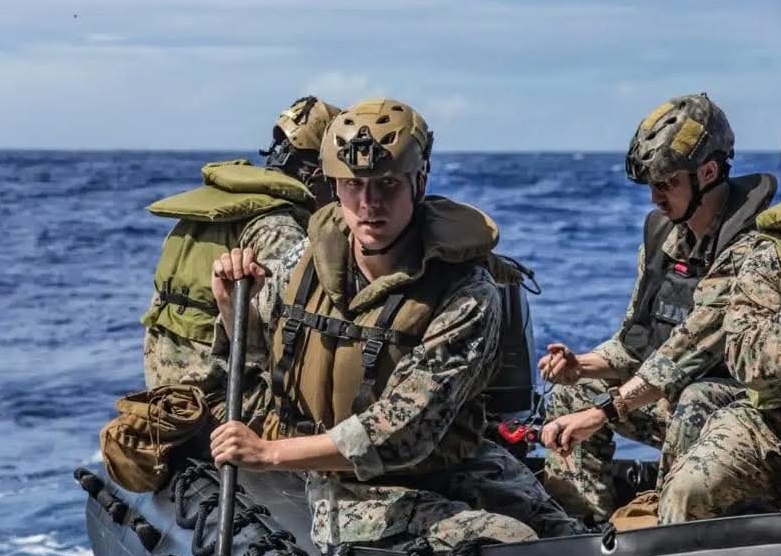
Amphibious forces position for interdiction and potential seizure of Iran’s primary oil terminal as Washington seeks leverage over oil flows and China-bound exports
The deployment of United States Marine Expeditionary Units into the Persian Gulf reflects a defined operational logic grounded in maritime control rather than territorial conquest. The force structure, doctrinal design, and historical employment of Marine Expeditionary Units indicate a role centred on sea control, interdiction, and limited objective operations rather than sustained land campaigns against a state such as Iran. Current positioning aligns with these capabilities and suggests an intention to exercise influence over maritime transit routes, specifically the Strait of Hormuz, while parallel policy discussions introduce the separate question of seizing critical energy infrastructure on Iranian territory.
Marine Expeditionary Units operate as forward-deployed, self-contained formations built around amphibious ready groups. Their composition allows for rapid boarding operations, seizure of vessels, and control of constrained maritime environments. Naval doctrine has long treated chokepoints such as the Strait of Hormuz as decisive nodes in global trade, where relatively limited force projection can yield disproportionate strategic leverage. The narrow geography of the Strait, with shipping lanes confined to a small navigable corridor, reduces the scale of force required to exert control while increases the vulnerability of commercial traffic to inspection or interdiction.
Current deployments correspond with a pattern of escalation management designed to establish legal and operational grounds for intervention. The creation of a pretext through maritime incidents or threats to navigation has precedent in United States naval operations. Once established, such conditions permit the framing of enforcement actions under the language of freedom of navigation and sanctions compliance. This framework provides the basis for boarding operations, inspection regimes, and selective denial of passage, all of which fall within the operational profile of Marine Expeditionary Units supported by naval assets.
Control of tanker traffic does not require full denial of access. Strategic effect derives from the credible ability to intervene. The introduction of a veto mechanism over shipping movements allows the United States to influence the destination and volume of energy exports without enforcing a total blockade. Such a posture transforms maritime control into an instrument of economic coercion. The ability to inspect, delay, or redirect shipments introduces uncertainty into supply chains and places import-dependent states in a position of dependency on United States approval.
Avoidance of territorial seizure reflects both operational constraints and strategic calculation. Iran maintains substantial capacity for asymmetric retaliation, including missile strikes, drone operations, and proxy engagements across the region. A ground invasion would impose high costs in personnel, logistics, and long-term occupation, with no guarantee of decisive outcome. Maritime control, by contrast, limits exposure while preserving escalation dominance within a narrower operational domain. The absence of a requirement to defeat Iranian forces on land reduces risk while maintaining pressure.
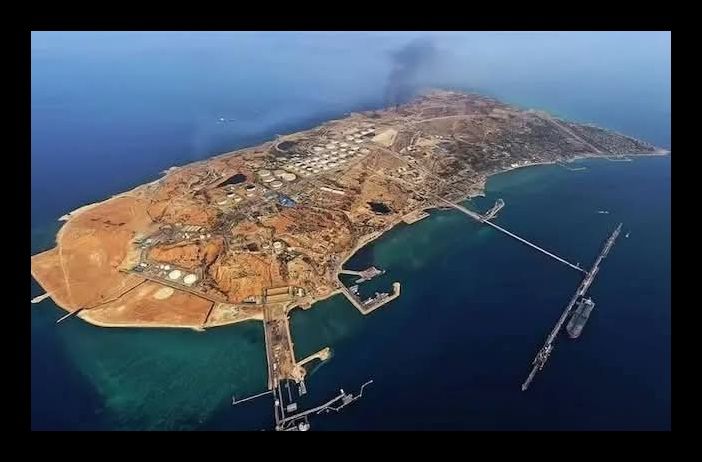
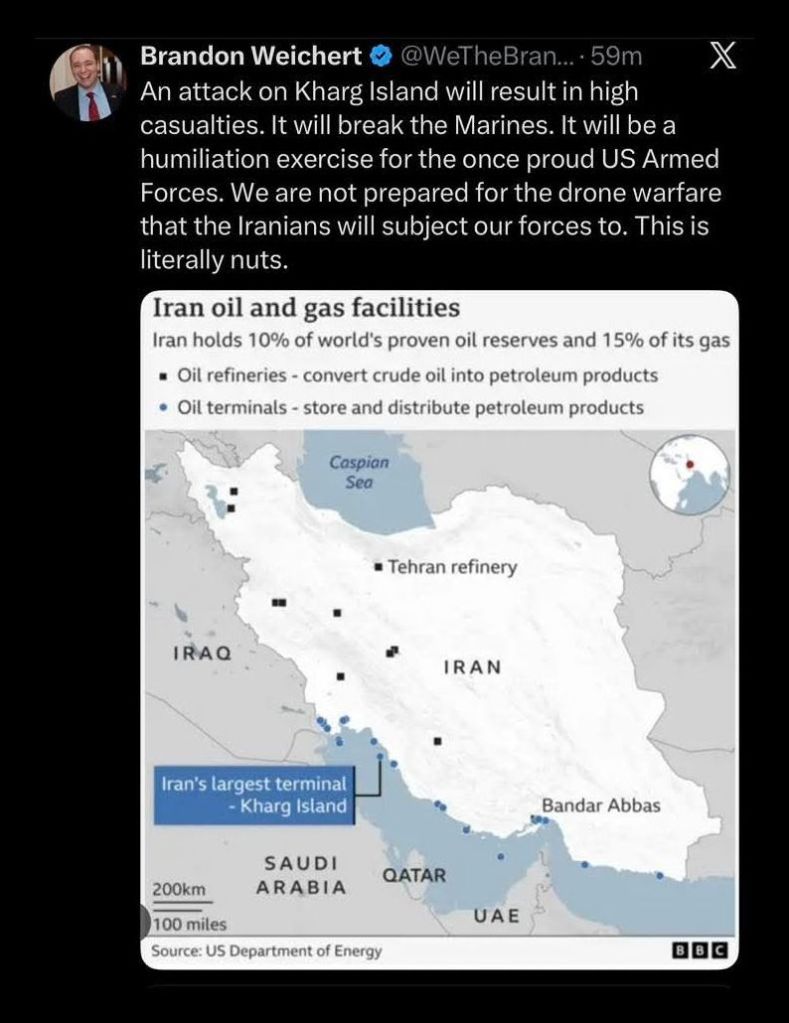
Parallel to this maritime strategy, policy signals within the United States political system have introduced the prospect of a limited objective seizure of Kharg Island, Iran’s principal oil export terminal through which the majority of its crude flows to international markets. Statements from senior political figures and reporting of allied consultations indicate that contingency planning includes a ground operation aimed at capturing the island. The comparison drawn in public discourse to the Second World War battle for Battle of Iwo Jima reflects the scale of amphibious assault required for a fortified position of similar geographic size, where 6,821 United States Marines were killed and over 19,000 wounded during five weeks of combat.
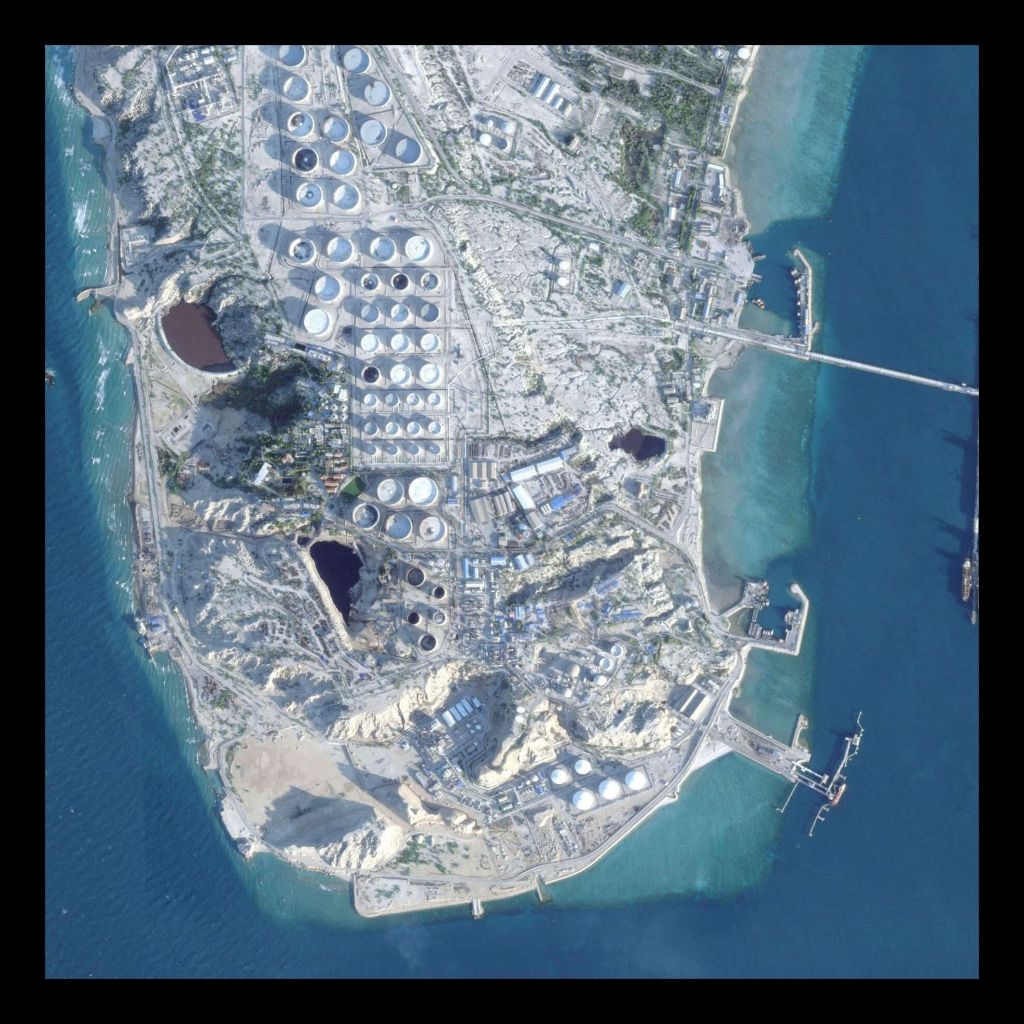
Operational realities diverge from such comparisons in ways that increase rather than reduce risk. Kharg Island functions as fixed energy infrastructure rather than a purely military objective. Its value lies in export capacity, storage, and loading facilities. Seizure does not guarantee continued operation. Iranian countermeasures include the immediate shutdown of mainland pipelines feeding the terminal or the destruction of facilities to deny their use. Either course removes the economic rationale for the operation while preserving escalation risk.
Force deployment patterns reinforce the dual-track nature of current planning. Amphibious ready groups centred on the USS Boxer and the USS Tripoli, carrying several thousand Marines and sailors, provide the capability for both maritime interdiction and limited amphibious assault. The aggregation of multiple amphibious ships and approximately 8,000 personnel increases operational flexibility, allowing a transition from sea control missions to potential land seizure operations without additional large-scale mobilisation.
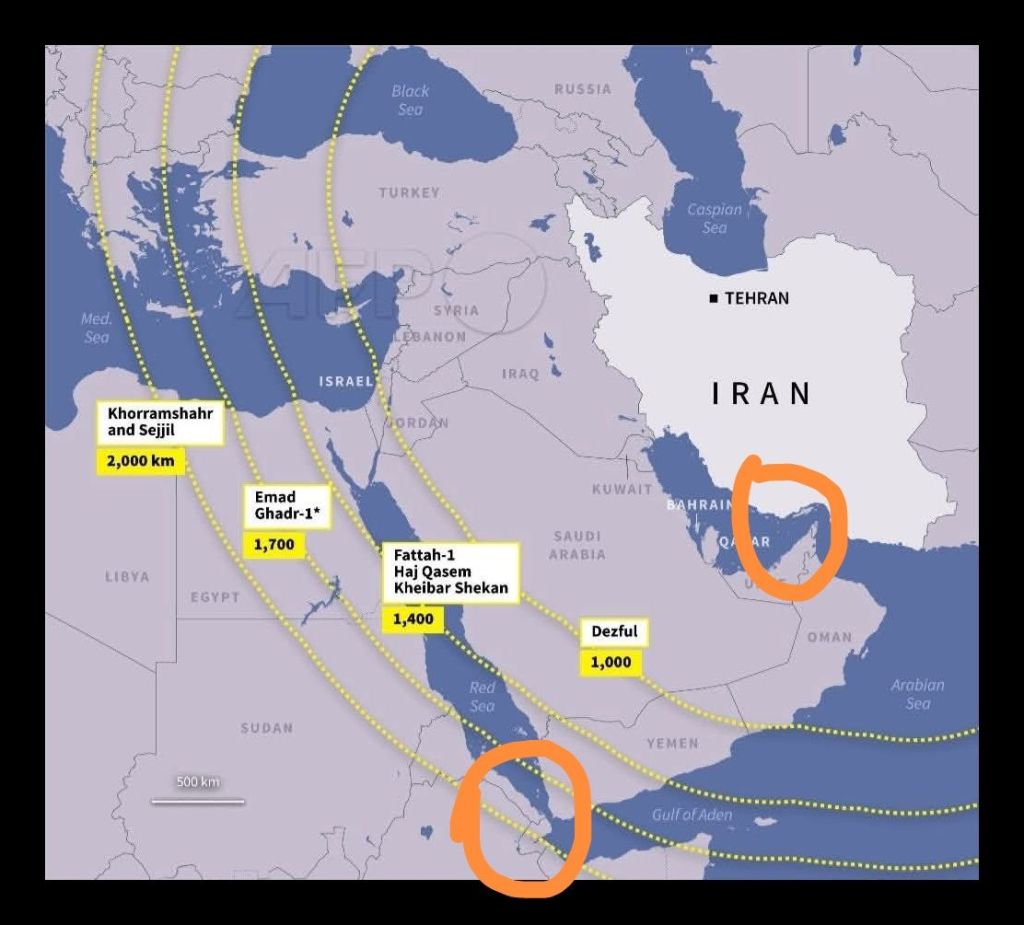
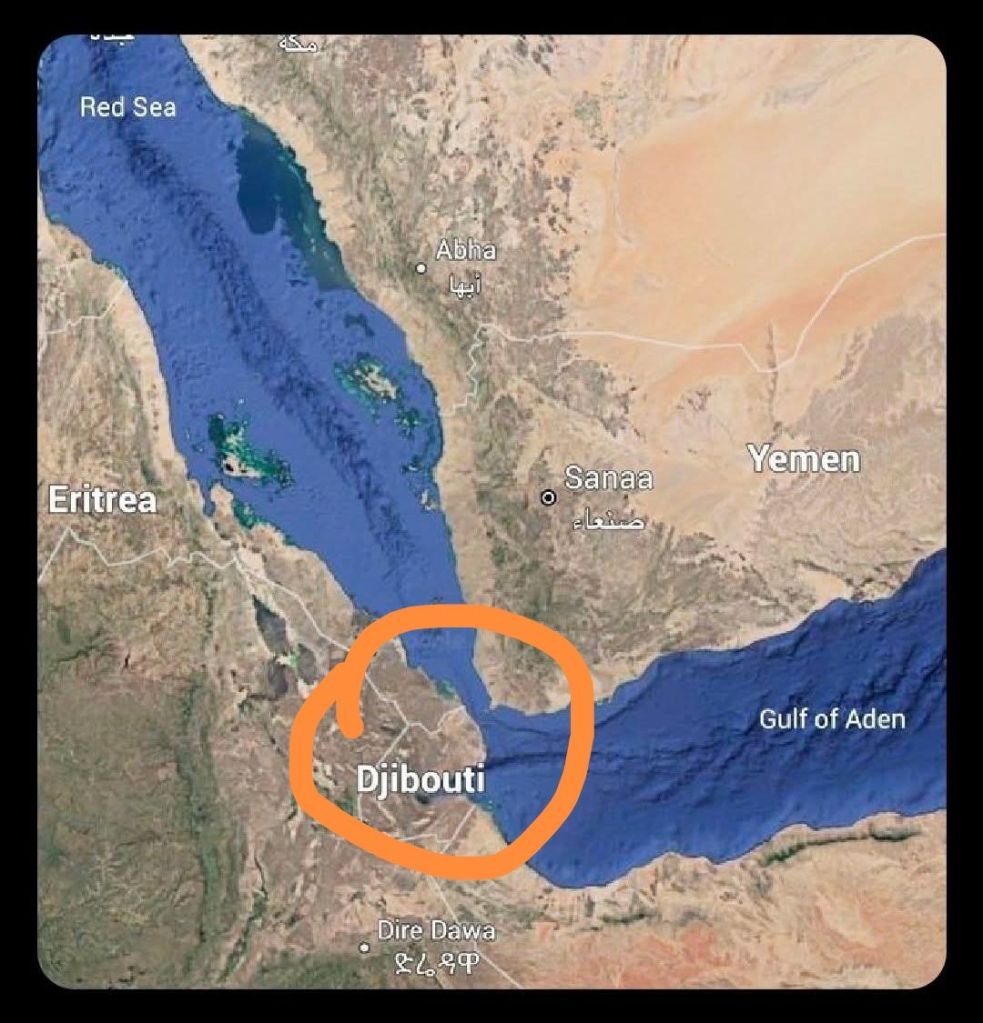
The integration of a Kharg Island operation into the broader maritime strategy introduces systemic escalation risks that extend beyond the Strait of Hormuz. Iranian responses are likely to target multiple maritime chokepoints simultaneously. Threats to the Bab el-Mandeb Strait, a critical passage linking the Red Sea to the Gulf of Aden, would compound disruption already present in the Gulf. Closure or sustained threat activity in both corridors would force global shipping to reroute around the Cape of Good Hope, increasing transit times, insurance costs, and energy prices across multiple markets.
Iranian military signalling indicates preparedness for escalation across regional theatres, including attacks on energy infrastructure and expansion of operational activity through allied non-state actors. Such actions would shift the conflict from a contained maritime enforcement posture to a distributed regional confrontation affecting the Red Sea, Gulf states, and potentially Mediterranean-linked supply routes. The vulnerability of fixed infrastructure across the Gulf increases the likelihood of cascading disruptions once escalation thresholds are crossed.
The strategic implications extend beyond Iran. China’s reliance on energy imports from the Gulf introduces a vulnerability that can be exploited through control of maritime routes. A veto over tanker traffic effectively places a portion of China’s energy security within the decision-making framework of the United States. Such leverage need not be exercised continuously to exert influence. The threat of disruption alone can shape behaviour, alter procurement strategies, and influence broader geopolitical negotiations. Seizure of Kharg Island would intensify this pressure by directly targeting a primary export node, though at the cost of potentially eliminating the very supply flows being leveraged.
Evidence of adjustment within Chinese policy has been observed in the expansion of overland energy corridors, including pipelines from Russia and Central Asia, alongside increased investment in domestic energy diversification. These measures indicate recognition of maritime vulnerability and an attempt to mitigate exposure to external control. The timing of maritime pressure therefore intersects with a transitional phase in Chinese energy strategy, where dependence remains significant but is gradually declining.
Gulf states occupy a constrained position within this framework. Their economic stability depends on uninterrupted energy exports, yet their security architecture remains tied to United States military presence. Limited capacity to independently secure maritime routes or deter Iranian retaliation reduces their strategic autonomy. Compliance with United States enforcement measures becomes a functional necessity rather than a policy choice. Escalation involving Kharg Island would further expose these states to retaliatory strikes against energy facilities, increasing internal economic risk while reinforcing external dependence.
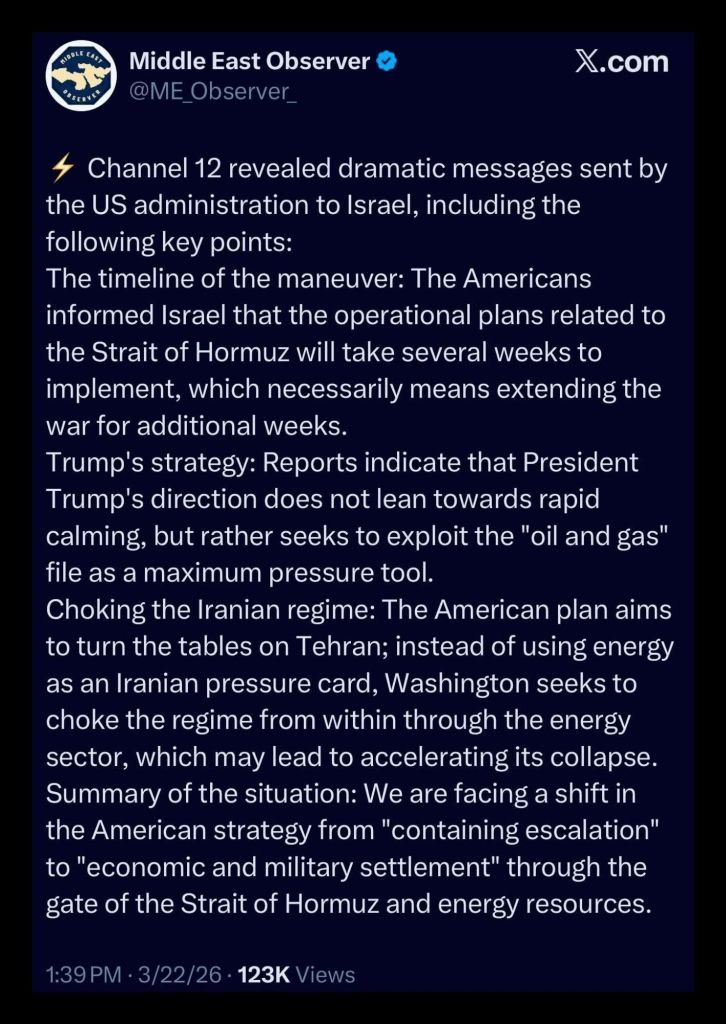
The operational model being implemented reflects a shift from conventional warfare towards economic coercion through maritime dominance, now coupled with consideration of targeted territorial seizure of critical infrastructure. The objective centres on control of flows rather than occupation of territory, though the Kharg scenario introduces a contradiction between control and destruction. Marine Expeditionary Units function within this model as instruments of enforcement at critical nodes, enabling selective application of pressure without large-scale mobilisation, while retaining the capability for rapid escalation into amphibious assault if political decisions shift.
The durability of this strategy depends on several factors. Sustained naval superiority remains a prerequisite, alongside political willingness to enforce interdictions that may provoke escalation. Countermeasures by affected states, including diversification of supply routes and development of alternative transport mechanisms, will influence long-term effectiveness. The introduction of a Kharg Island operation raises the probability of simultaneous disruption across multiple chokepoints, increasing the risk of systemic shock to global energy markets.
Authored By: Global GeoPolitics
Thank you for visiting. If you believe journalism should serve the public, not the powerful, and you’re in a position to help, becoming a PAID SUBSCRIBER truly makes a difference. Alternatively you can support by way of a cup of coffee:
https://buymeacoffee.com/ggtv |
https://ko-fi.com/globalgeopolitics |
Bitcoin: 3NiK8BoRZnkwJSHZSekuXKFizGPopkE7ns


Leave a comment