
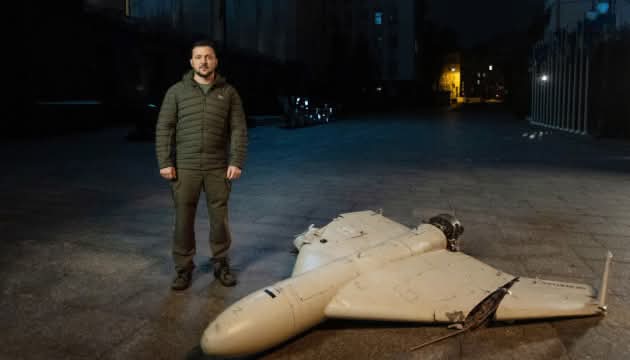
A reported attack on a drone defense site in the Gulf points to a widening, interconnected conflict landscape
Recent developments spanning the Middle East and Eastern Europe point to a potentially significant shift in how contemporary conflicts are structured, extending beyond geographically contained wars into interconnected theatres shaped by shared capabilities, strategic signaling, and alliance recalibration. Claims by Iran’s Islamic Revolutionary Guard Corps of a precision strike in Dubai targeting a facility allegedly linked to Ukrainian air defence and counter-drone operations alongside reports of a parallel strike on U.S.-associated infrastructure remain unverified by officials in the United Arab Emirates, Ukraine, or Washington. However, even as unconfirmed information, the claim itself functions as a strategic signal within an increasingly complex deterrence environment.
At the same time, Ukrainian President Volodymyr Zelenskyy has accelerated defense engagement with Gulf states including Saudi Arabia, the United Arab Emirates, and Qatar, focusing on air defense cooperation, counter-UAV systems, and long-term security arrangements. Ukraine’s battlefield experience against Russian drone warfare has effectively become an exportable strategic commodity, transforming it from a recipient of security assistance into a provider of niche military expertise. This repositioning carries implications that can be better understood through classical geopolitical theory and game-theoretic frameworks.
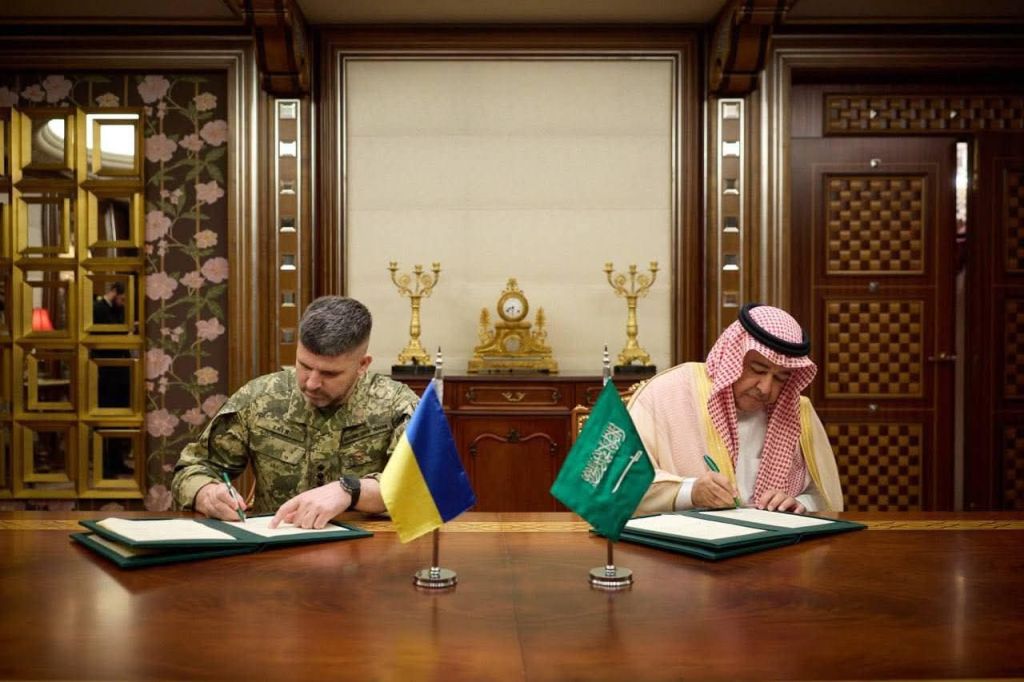
From a balance-of-power perspective, the situation reflects elements of both classical realism and neorealism, where states respond not only to immediate threats but to shifts in capability distribution. Iran’s potential targeting of Ukrainian-linked assets, if accurate, can be interpreted through the lens of preventive deterrence: acting early to disrupt an emerging capability that could alter the regional balance. In this framing, Ukrainian deployments in the Gulf may be perceived in Tehran not as neutral technical assistance but as a force multiplier for U.S.-aligned infrastructure, effectively extending adversarial capacity closer to Iranian strategic depth.
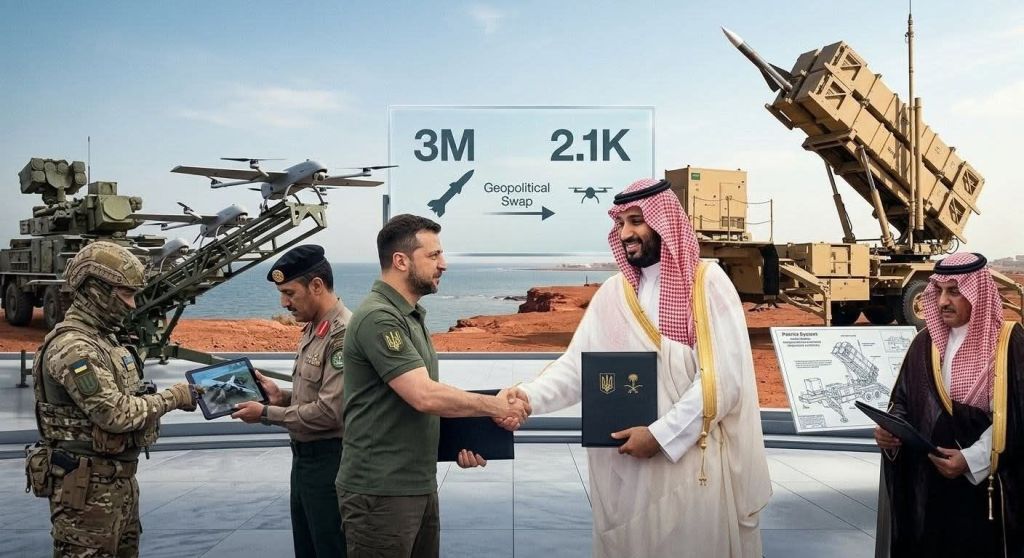
Game theory offers a useful structure for interpreting the interaction. The situation resembles a multi-player extension of a repeated signaling game under conditions of incomplete information. Each actor, Iran, the United States, Gulf states, and Ukraine, operates with partial visibility into the intentions and thresholds of the others. Ukraine’s deployment of counter-drone systems can be modeled as a cooperative move within a coalition framework, increasing collective defense utility. Iran’s claimed strike, in turn, functions as a costly signal intended to demonstrate both capability and willingness to escalate horizontally across theatres.
In deterrence theory, credibility is built not only through capability but through demonstrated action. If Iran did conduct or credibly signal such a strike, it may be attempting to shift the perceived payoff matrix: raising the cost of Ukrainian involvement in the Gulf while testing U.S. and allied response thresholds. The ambiguity surrounding verification further enhances the signaling effect, as uncertainty itself becomes a strategic tool, forcing adversaries to consider worst-case interpretations without providing a clear escalation trigger.
Ukraine’s evolving role also illustrates a transition from a single-theatre conflict actor to what might be described as a “capability broker” in a networked security environment. Its comparative advantage lies not in traditional force projection but in highly specialized knowledge derived from intensive exposure to modern drone warfare. This aligns with broader trends in military transformation, where operational experience, particularly in emerging domains like unmanned systems, electronic warfare, and adaptive tactics, becomes as valuable as hardware.
Classical theorists such as Carl von Clausewitz emphasized that war is a continuation of politics by other means, but in this case the inverse dynamic is also visible: political relationships are increasingly shaped by the transfer and deployment of war-derived expertise. Meanwhile, Thomas Schelling highlighted the importance of coercion and signaling in strategic interaction; here, both Ukraine’s deployments and Iran’s response, real or claimed, fit within a framework of compellence and deterrence bargaining rather than direct confrontation.
The situation also reflects elements of what some scholars describe as “entangled security dilemmas.” Gulf states, seeking protection against drone threats, particularly from Iranian or Iran-aligned actors, may rationally pursue partnerships with actors like Ukraine. However, this very move increases Iranian threat perception, prompting countermeasures that, in turn, validate Gulf security concerns. The cycle is self-reinforcing, with each defensive action interpreted as offensive preparation by the other side.
Russia’s position introduces an additional layer of strategic symmetry. As Ukraine expands its cooperative footprint with U.S.-aligned partners, Moscow has incentives to deepen coordination with Iran, particularly in areas such as drone technology and sanctions evasion. This creates a mirrored structure of indirect competition, where both sides leverage partners and proxies across multiple regions without necessarily engaging in direct confrontation. The result resembles a distributed form of great-power competition, less rigid than Cold War blocs but similarly global in scope.
From a systems perspective, the diffusion of drone warfare expertise marks a departure from traditional military hierarchies. Unlike nuclear weapons or advanced aircraft, drone systems and countermeasures are comparatively accessible, adaptable, and rapidly iterated. This lowers the barrier to entry for meaningful participation in high-impact military operations, enabling mid-tier powers and even non-state actors to influence strategic outcomes. Ukraine’s role in exporting such expertise underscores how knowledge transfer can reshape regional security architectures.
Statements attributed to Donald Trump denying U.S. reliance on Ukrainian assistance introduce further complexity, highlighting potential divergence between public messaging and operational coordination. In game-theoretic terms, such statements may be interpreted as attempts to maintain strategic ambiguity, reduce perceived escalation, or manage domestic political considerations, even as underlying cooperation continues or evolves.
Ultimately, whether or not the reported strike occurred as described, the convergence of Ukrainian military outreach, Gulf security concerns, and Iranian signaling behavior illustrates a broader transformation in conflict dynamics. Warfare is no longer confined to clearly bounded battlefields; instead, capabilities, personnel, and strategic effects are increasingly transnational, creating a system in which local actions can have global reverberations. The risk is not simply escalation in a single region, but the emergence of a tightly coupled network of conflicts, where moves in one theatre alter the strategic calculus in another, raising the stakes of miscalculation across the entire system.
Authored By: Global GeoPolitics
Thank you for visiting. This is a reader-supported publication. If you believe journalism should serve the public, not the powerful, and you’re in a position to help, becoming a PAID SUBSCRIBER truly makes a difference. Alternatively you can support by way of a cup of coffee:
https://buymeacoffee.com/ggtv |
https://ko-fi.com/globalgeopolitics |
Bitcoin: 3NiK8BoRZnkwJSHZSekuXKFizGPopkE7ns


Leave a comment