
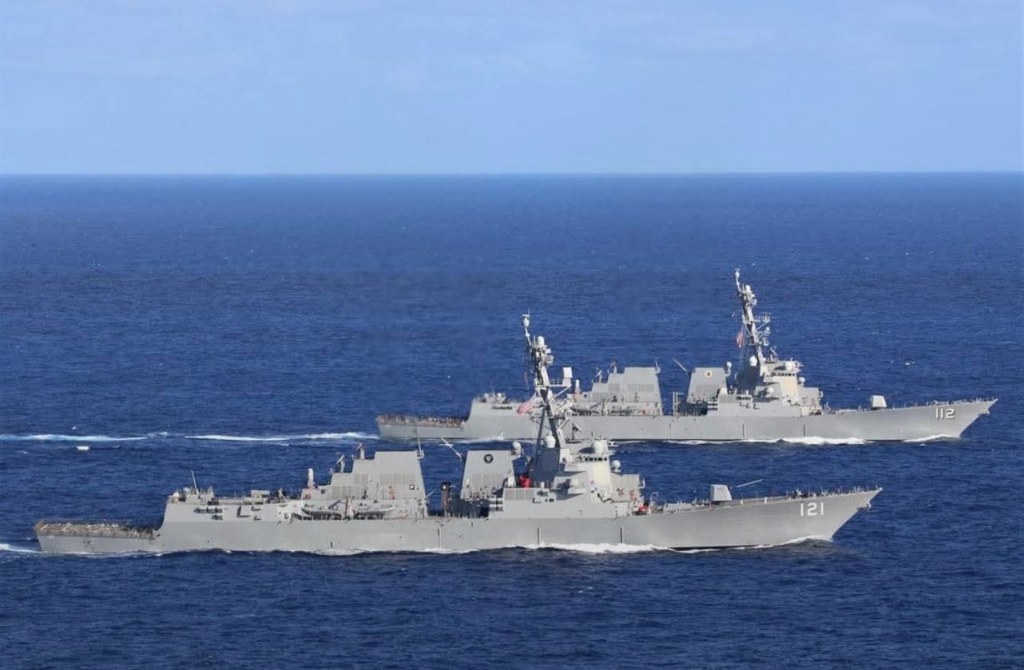
A blockade of the Strait of Hormuz exposes the gap between American power projection and its tolerance for loss
The proposed American blockade of the Strait of Hormuz is a strategic gamble in which the conditions for failure are much easier to reach than the conditions required for success. Washington is preparing to commit a significant portion of its naval and expeditionary capacity to an operation whose operational logic depends on uncontested dominance, while facing an adversary that has spent decades designing precisely the means to deny that dominance. The imbalance lies not in firepower, but in tolerance for loss, and that imbalance alone renders the operation structurally unsound from the outset.
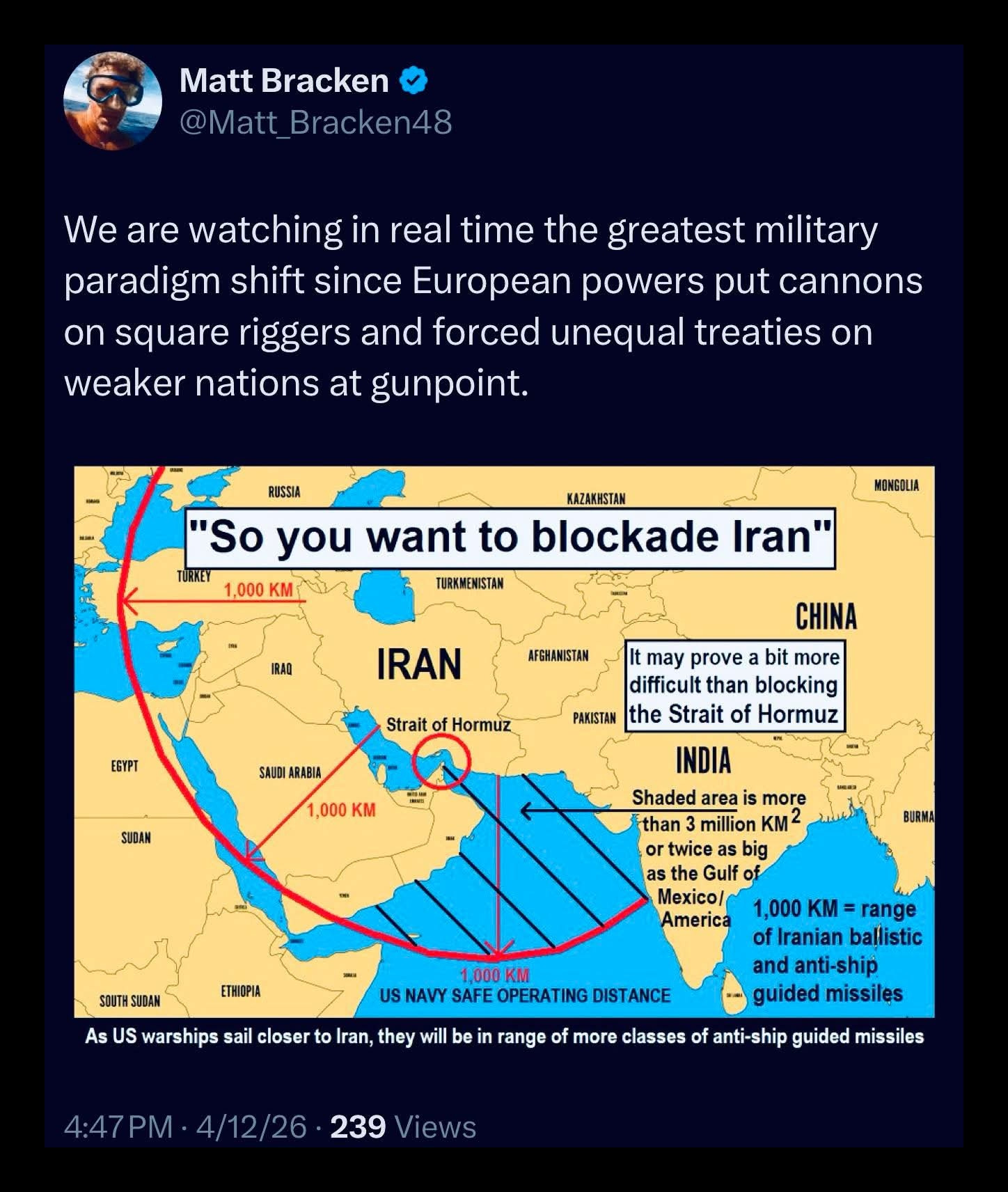
Scale defines the confrontation in a way that exposes the underlying asymmetry between appearance and reality. The proposed order of battle requires two aircraft carrier strike groups, more than twenty destroyers, additional frigates, amphibious assault ships, special operations forces, and the integration of allied Arab naval and air assets. This constitutes not a limited interdiction mission but a theatre-wide mobilisation of American military infrastructure. Opposing this concentration is not a conventional fleet seeking symmetrical engagement, but a distributed network of hundreds of fast attack craft, thousands of missiles, drones in multiple categories, submarines, mines, and layered air defence systems. The confrontation is therefore not between fleets, but between a centralised force dependent on survivability and a decentralised system designed to impose attritional cost.
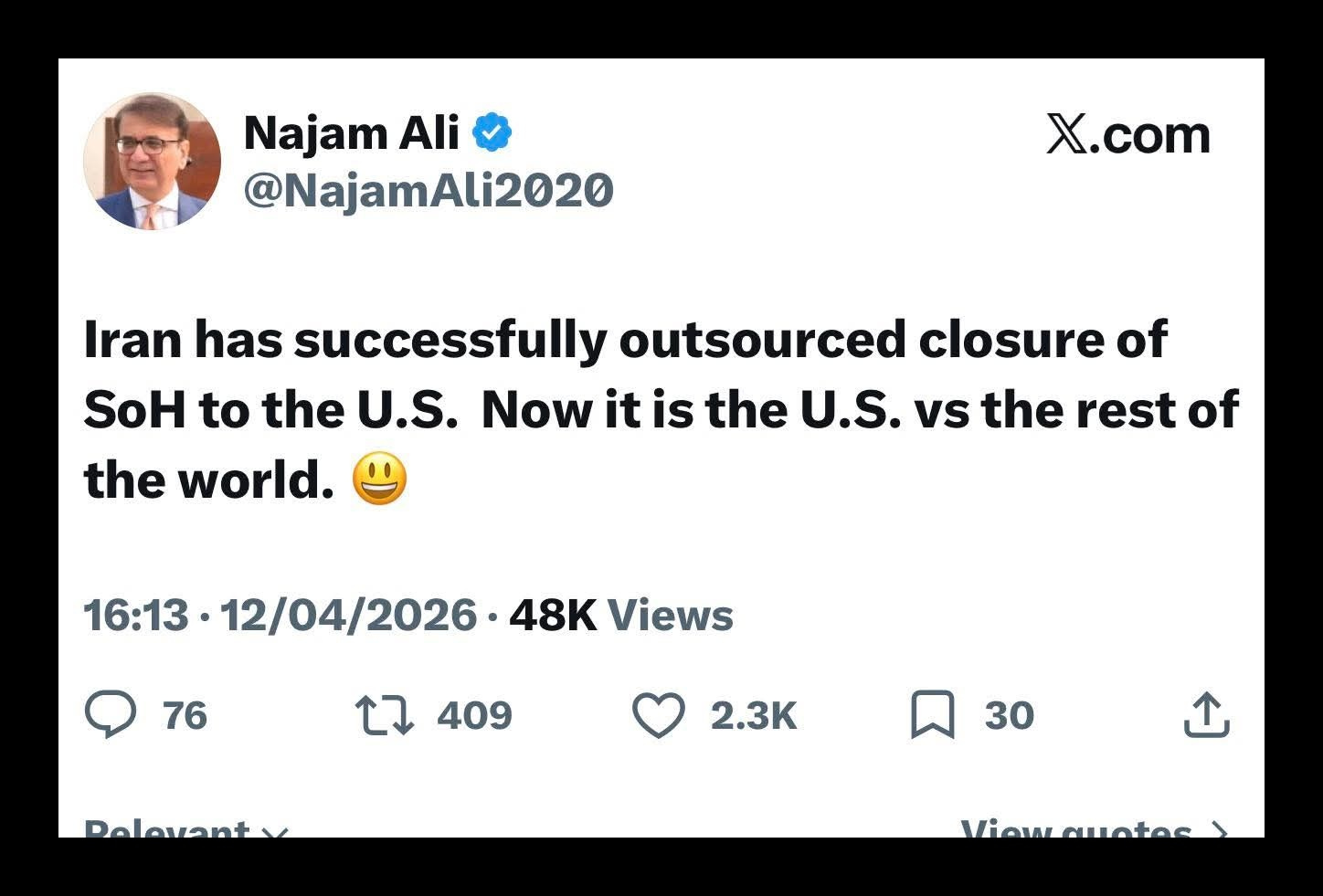
Strategic execution of such a blockade depends on controlling both entrances to the Strait of Hormuz while maintaining uninterrupted logistical and defensive coherence across a narrow and heavily contested maritime corridor. The requirement to “bottle it up on both sides” demands simultaneous dominance in the Gulf of Oman and the Persian Gulf, effectively splitting American forces into exposed operational clusters. Each cluster becomes a target-rich environment for an adversary that does not need to achieve sea control, but only to disrupt it. Iran’s doctrine has consistently prioritised denial over control, meaning that the objective is not to defeat the United States Navy in open battle, but to render its presence operationally untenable through sustained, multi-domain pressure. As energy analyst Marc-Antoine Eyl-Mazzega warned, such an operation would require “a permanent military presence… for months, even years,” a commitment he described as effectively unthinkable given the scale required .
Economic consequences transform this military confrontation into a systemic risk with global implications. The Strait of Hormuz is not merely a geographic chokepoint but a critical artery through which a substantial portion of global energy supply transits, with roughly one-fifth of global oil consumption passing through it daily . Any attempt to enforce a blockade would not only disrupt Iranian exports but also destabilise global oil flows, insurance markets, and shipping routes. Recent market reactions demonstrate that even the threat of disruption is sufficient to trigger sharp price increases and systemic anxiety, with oil prices surging above $100 per barrel following blockade announcements . This transforms the operation from a regional military action into a lever capable of destabilising the global economic system, imposing costs that extend far beyond the immediate theatre.
The operational environment amplifies Iran’s advantages by favouring distributed, low-cost, high-volume attack systems over concentrated, high-value assets. Fast attack boats equipped with anti-ship missiles and torpedoes can exploit proximity and numbers to overwhelm defensive systems. Unmanned surface and aerial drones introduce saturation dynamics that strain interception capabilities, while ballistic and cruise missiles extend the threat envelope across the entire operational space. Subsurface threats from mini-submarines and remotely activated mines further complicate manoeuvre and sustainment. Each layer of this system increases the probability that even a limited engagement will result in damage to high-value American assets. Analysts have already warned that such a confrontation would resemble a “guerrilla war” at sea, where dispersed attacks from multiple vectors erode conventional superiority.
Game theory clarifies why this configuration produces an unfavourable equilibrium for the United States. The interaction resembles an attritional contest in which one player possesses high-value assets with low tolerance for loss, while the other fields lower-cost systems with higher tolerance for attrition. Iran’s payoff structure rewards even limited success, such as damaging a destroyer or disabling a carrier, because such outcomes generate disproportionate strategic and psychological effects. The United States, by contrast, requires near-perfect defence to maintain credibility, because even minor losses would represent a significant deviation from expected dominance. In such a game, the side with lower loss tolerance faces a structurally disadvantaged position, as the threshold for unacceptable outcomes is far lower.
Historical precedent reinforces the dangers inherent in attempting to control maritime flows in the Persian Gulf under contested conditions. During the 1980s “Tanker War,” both Iran and Iraq targeted commercial shipping in the Strait of Hormuz and surrounding waters, resulting in hundreds of attacks on merchant vessels and significant damage to global trade flows . Despite extensive violence and external intervention, including American naval escorts for reflagged tankers, the conflict failed to produce decisive control over the waterway. Instead, it demonstrated that even sustained military presence cannot fully secure maritime transit in a contested environment, particularly when the opposing actor relies on asymmetric tactics such as mines, missiles, and small craft attacks . The current scenario replicates these conditions at a higher level of technological intensity, suggesting that escalation would produce disruption rather than control.
Legal and political constraints further complicate the feasibility of a blockade by limiting the scope of acceptable action against neutral shipping. Under international maritime law, the Strait of Hormuz constitutes an international waterway where transit passage is broadly protected, meaning that interference with neutral vessels risks violating established legal norms . Major trading powers, including European states, China, Japan, and South Korea, rely on uninterrupted access to the strait and retain the legal basis to challenge attempts at closure. The reluctance of multiple countries to participate in enforcement operations reflects these concerns, with several states declining involvement or offering only minimal support for any proposed naval task force . This absence of broad coalition backing undermines the legitimacy and sustainability of the operation.
The potential for escalation further complicates the strategic calculus by introducing scenarios in which limited tactical losses produce disproportionate political and geopolitical consequences. The sinking or severe damage of even a single destroyer would represent a significant event given the symbolic and operational value of such assets. The disabling of an aircraft carrier, even temporarily, would constitute an unprecedented shock to the perception of American naval invulnerability. Such outcomes would not only affect military operations but also reverberate through alliance structures, financial markets, and domestic political dynamics. The cost of failure is therefore not confined to the battlefield, but extends into the broader architecture of American power.
Systemic consequences of a failed or contested blockade would accelerate existing shifts in the global order. The inability to secure a critical maritime chokepoint despite significant force deployment would signal limitations in the capacity of the United States to enforce its strategic objectives unilaterally. This perception would influence the calculations of other actors, including major powers and regional states, who would reassess the reliability of American security guarantees and the risks associated with alignment. The integration of intelligence and support from external partners further indicates that the confrontation is embedded within a wider network of geopolitical competition, linking regional conflict to global strategic dynamics.
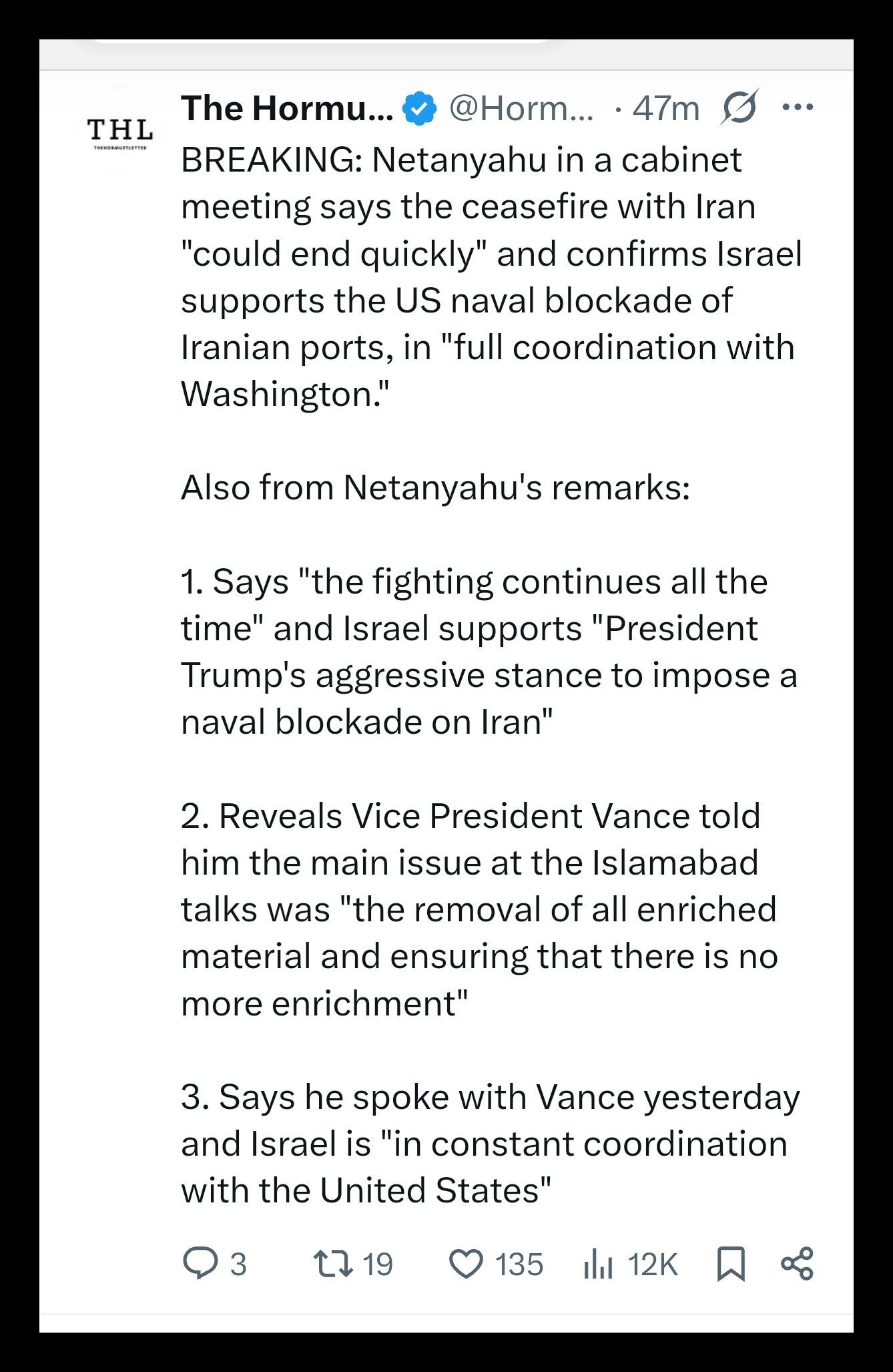
Future dynamics hinge on the interaction between operational risk and political tolerance for sustained engagement under conditions of uncertainty. A prolonged blockade effort would require continuous deployment, logistical sustainment, and defensive operations in an environment where threats are persistent and adaptive. The longer such an operation continues without decisive success, the greater the cumulative probability of loss. Conversely, a rapid escalation that results in significant damage would force a reassessment of objectives and methods. In both scenarios, the structural disadvantage created by the mismatch between objectives and risk tolerance remains constant.
The UnitedStates is preparing for a confrontation that requires a high degree of coordination, sustained force protection, and near-perfect execution across multiple operational domains in order to avoid material losses and maintain control over a narrow and contested maritime environment. Iran, by contrast, has structured its approach around systems and tactics that do not require decisive victory, but instead generate strategic advantage through limited, cumulative successes such as damaging high-value assets or disrupting maritime traffic. This creates an operational dynamic in which the United States must consistently prevent failure, while Iran only needs to achieve intermittent disruption to alter the strategic balance.
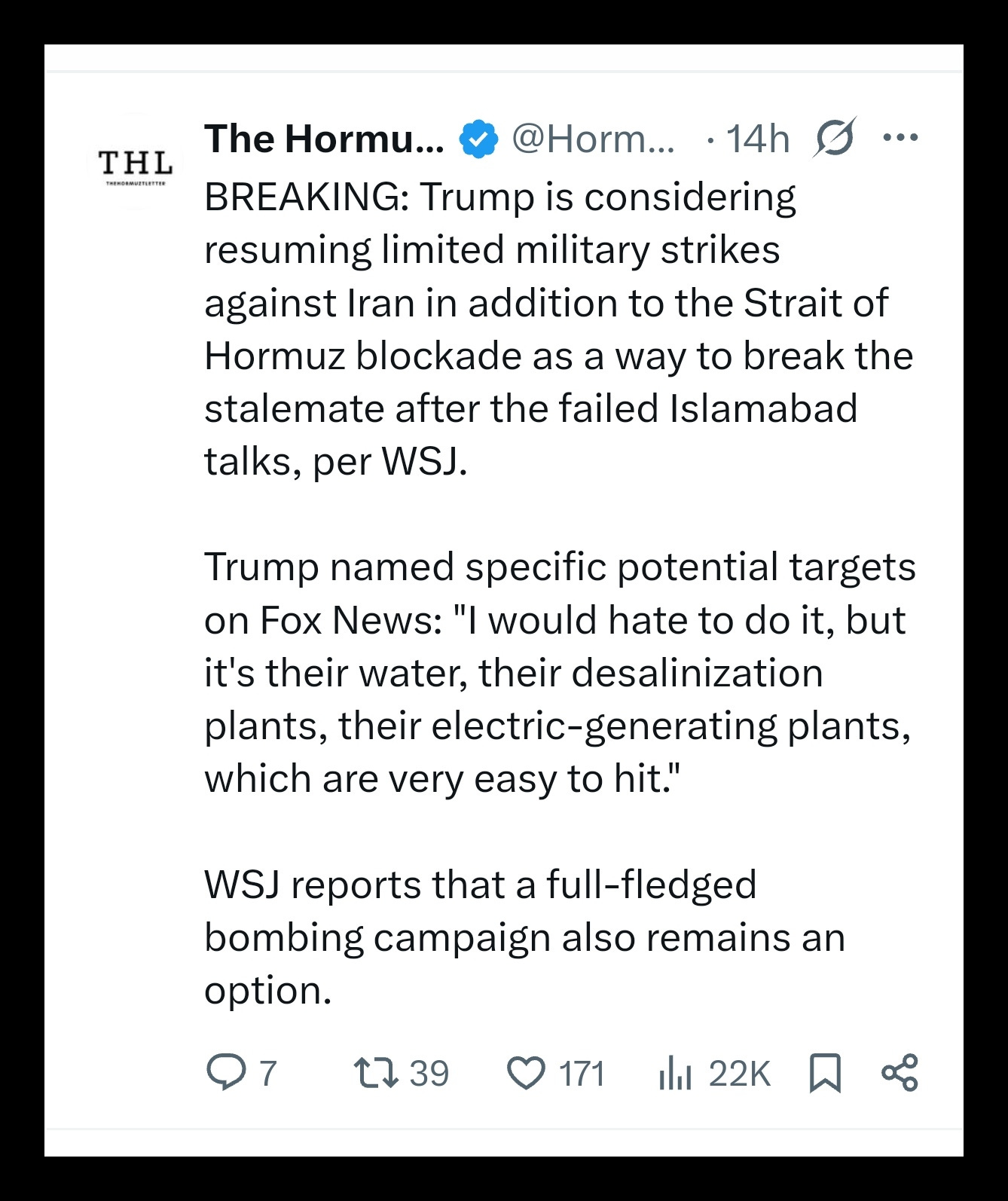
The economic consequences of such a confrontation are not confined to the immediate theatre, as any sustained disruption to the Strait of Hormuz directly affects global energy supply chains, shipping insurance, and pricing mechanisms that underpin industrial and financial systems. The threshold for unacceptable loss is therefore distributed unevenly, with the United States facing significant political and strategic repercussions from even limited asset damage, while Iran can absorb material losses without equivalent systemic impact. Under these conditions, the overall balance of risk does not support the intended objective of the operation, because the costs associated with potential failure outweigh the achievable strategic gains.
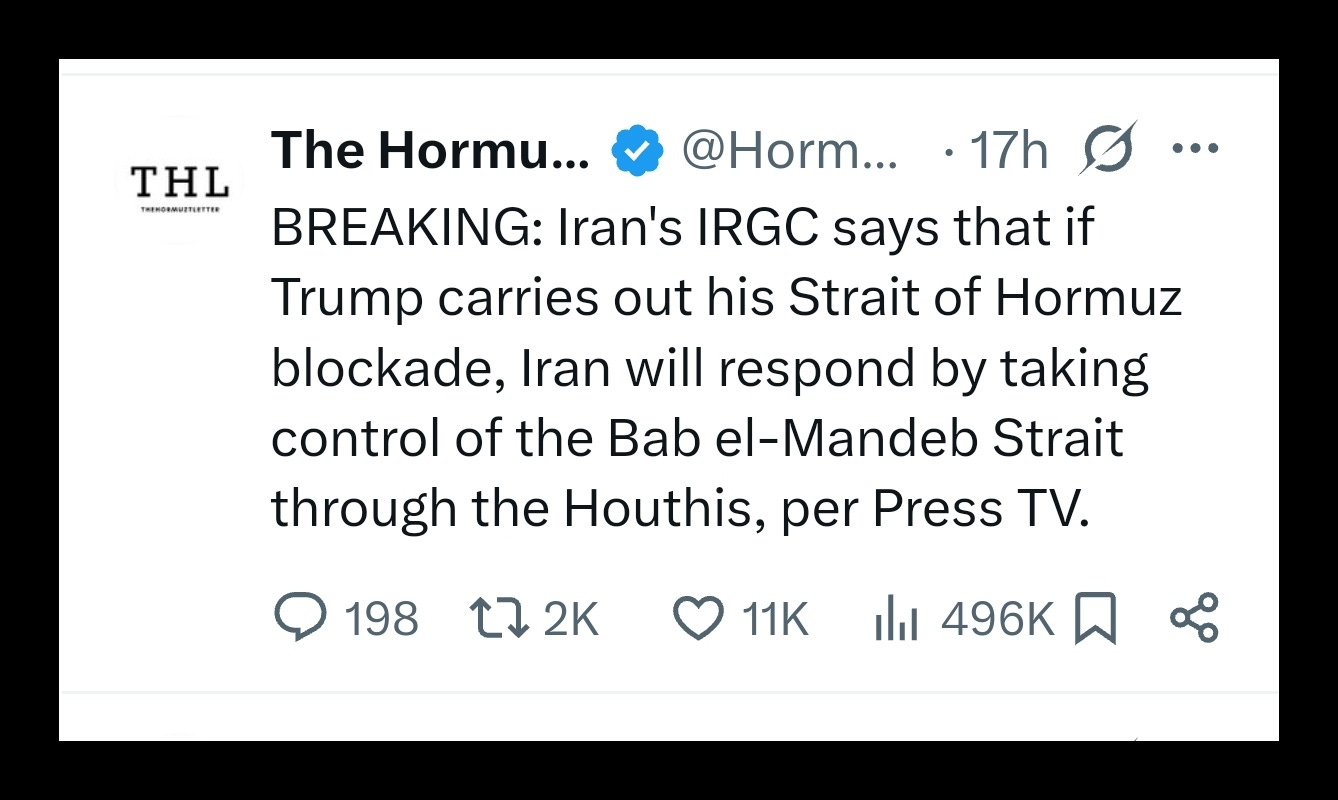
A blockade of the Strait of Hormuz whether it is a smokescreen for boots on the ground or otherwise, under these conditions does not represent a controlled application of power but an exposure of its limits. The attempt to impose order through concentration of force encounters a system designed to fragment, saturate, and erode that force over time. Strategic outcomes will not be determined by the quantity of assets deployed, but by the capacity to absorb loss without collapsing political and operational coherence. In that equation, the advantage does not lie with the side that must not lose.
Authored By: Global Geopolitics
Thank you for visiting. This is a reader-supported publication. If you believe journalism should serve the public, not the powerful, and you’re in a position to help, becoming a PAID SUBSCRIBER truly makes a difference. Alternatively you can support by way of a cup of coffee:
https://buymeacoffee.com/ggtv |
https://ko-fi.com/globalgeopolitics |
Bitcoin: 3NiK8BoRZnkwJSHZSekuXKFizGPopkE7ns


Leave a comment