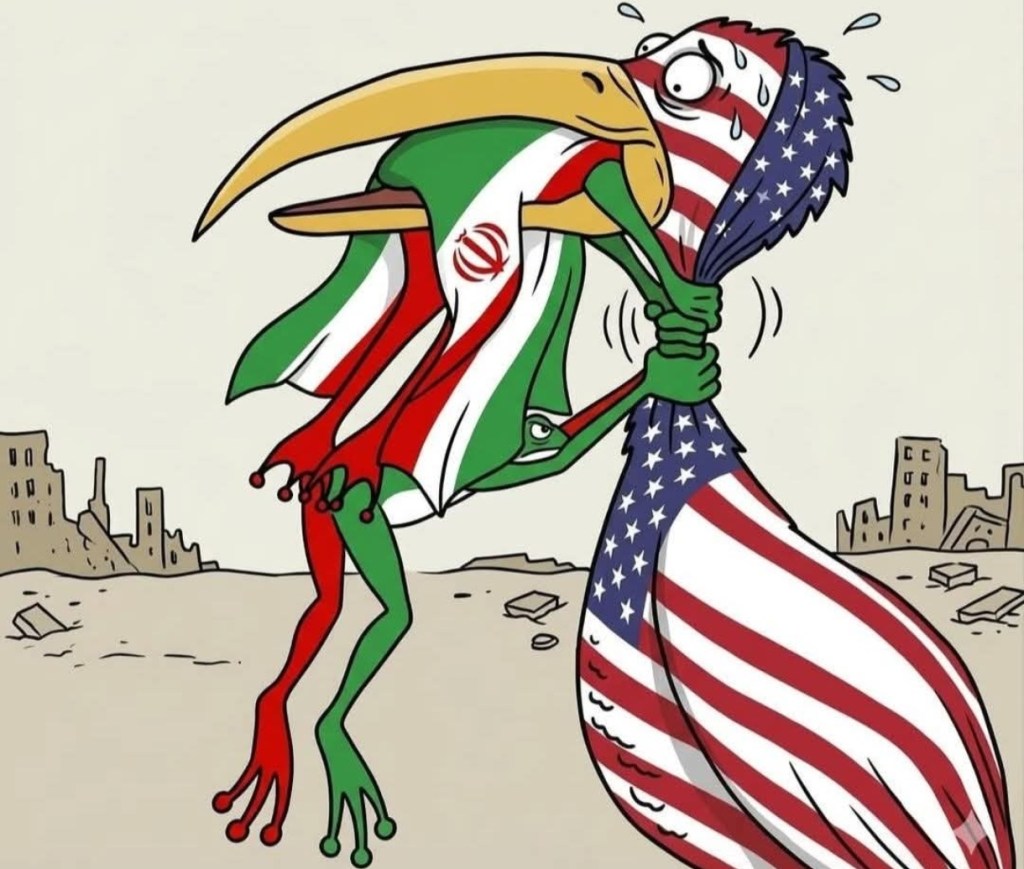
The war is transitioning from a short-term coercive campaign into a broader geopolitical standoff
IRAN WAR – DAY 59:
1. Trump rejects Iran proposal – nuclear issue remains core obstacle
President Donald Trump rejected Iran’s offer to reopen the Strait of Hormuz in exchange for sanctions relief while postponing nuclear talks.
Trump’s position remains absolute:
“There will never be a deal unless they agree that there will be no nuclear weapons.”
Geopolitical context:
This reinforces a maximalist U.S. objective: objective is to control Iran’s energy resources disguised as dismantlement of Iran’s nuclear capability before any economic normalization. Iran’s sequencing, economic relief first, nuclear concessions later, reflects a strategy to maintain leverage before entering binding negotiations. Iran won on the battlefield and shouldn’t be dictated to by the loser.
Iranian framing (general position reflected in official rhetoric):
Iran has consistently argued its nuclear program is peaceful and that sanctions must be lifted first, and rightly so invokes sovereignty and economic warfare concerns.
2. Pentagon leadership pressed on lack of clear war objectives
Defense Secretary Pete Hegseth faced intense questioning in Congress.
Rep. Adam Smith stated:
“Iran’s nuclear program is exactly what it was before this war started… What is the plan?”
Hegseth responded by attacking critics:
“The biggest adversary… are the reckless… words of congressional Democrats…”
Geopolitical context:
This exchange highlights a classic wartime tension: operational activity without a clearly articulated end-state. Critics argue the U.S. is engaged in coercion without a defined pathway to strategic resolution.
3. War Powers deadline approaching – constitutional tension rising
The War Powers Resolution deadline triggers legal pressure on the administration.
Sen. Susan Collins:
“The president has to obtain congressional approval…”
Geopolitical context:
Historically, presidents often test or bypass War Powers constraints during sustained operations. If ignored, this could escalate into a domestic constitutional conflict alongside the external war.
4. Trump-Putin call signals possible linkage between conflicts
Trump indicated both the Iran and Russia-Ukraine War could end on a “similar timetable.”
He did not rule out Russia handling Iranian enriched uranium, echoing earlier proposals tied to the Joint Comprehensive Plan of Action. Iran has categorically stated it’s enriched uranium stays in Iran.
Geopolitical context:
This suggests potential great-power bargaining: Russia reasserting itself as a mediator while leveraging both conflicts to regain diplomatic relevance.
5. Oil surge reflects global economic pressure
Brent crude reaching $116 underscores the centrality of energy markets.
Iranian Parliament Speaker Mohammad Bagher Ghalibaf:
“Next stop: $140.”
Geopolitical context:
Energy is Iran’s asymmetric weapon. Even under blockade, market disruption gives Tehran indirect leverage over Western economies and political stability.
6. U.S. planning for prolonged blockade
Meetings with energy executives indicate preparation for a sustained naval strategy.
Geopolitical context:
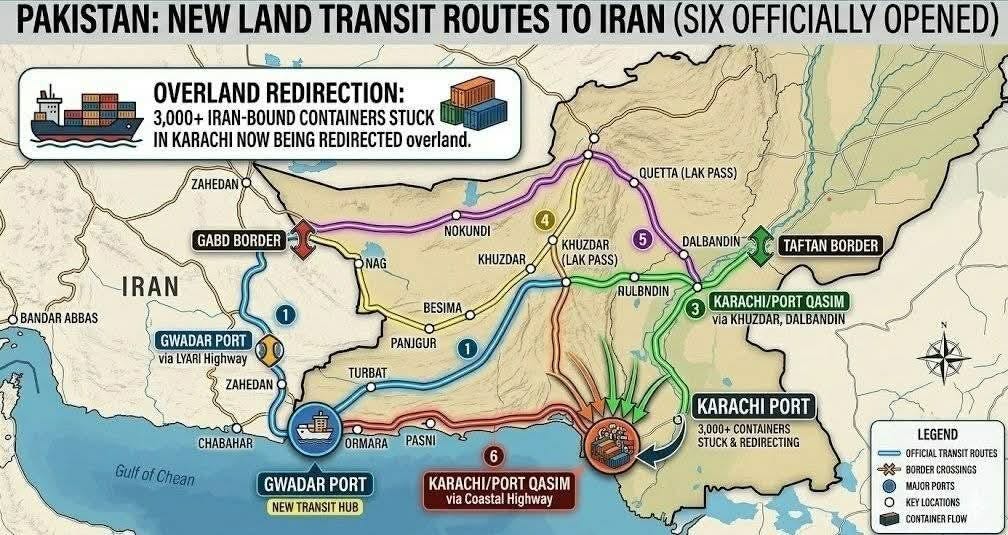
A long-term blockade shifts the conflict from rapid coercion to attritional economic warfare-historically difficult to sustain without escalation or unintended consequences. Iran appears to invoking landbridges to counter this. There are reports Pakistan has created 6 land bridges to facilitate this.
7. Human rights pressure: Nobel laureate in critical condition
Narges Mohammadi is reported to be in poor health while imprisoned in Iran. Her supporters and affiliated foundation have warned of a potentially serious or deteriorating medical situation and have called for urgent attention to her condition.
Geopolitical Context:
Western aligned human rights organisations frequently cite her case as part of broader concerns about the treatment of political prisoners and activists in Iran, including issues related to detention conditions and due process. Iranian authorities, however, maintain that individuals in such cases are prosecuted for offences related to national security and reject claims of political persecution.
As a result, her imprisonment is often referenced in international human rights reporting, while also being disputed by Iranian officials, reflecting the wider disagreement over how such cases are interpreted in geopolitical and legal terms.
8. Massive U.S. defense spending request
A $1.5 trillion defense budget signals long-term militarization.
Geopolitical context:
Large-scale spending suggests the conflict is not being treated as a limited engagement but as part of a broader strategic posture shift toward sustained confrontation.
9. Israel-Lebanon escalation continues
Israel strikes in Lebanon killed four medics.
Lebanese officials report over 2,500 deaths since March.
Geopolitical context:
This reflects conflict spillover. The Israel–Iran confrontation is increasingly regional, raising the risk of multi-front escalation involving proxy forces. This is also part of Israel’s expansionist agenda for The Greater Israel Project.
10. Strategic summary
- No agreement on nuclear terms
- No clear U.S. end-state publicly defined
- Legal pressure building in Washington
- Russia re-entering diplomatic space
- Energy markets under sustained stress
- Signs of a long-duration conflict strategy
- Regional escalation continuing
Bottom line:
The war is transitioning from a short-term coercive campaign into a broader geopolitical standoff involving economic warfare, legal tensions, and multi-theater risk, with no clear resolution pathway currently visible.
a US war on Iran is a US war on China, a blockade of hormuz is a blockade on China
The US waging war against Iran specifically to further isolate both Russia and China and the overarching goal here is ultimately to contain, degrade, destabilize and eventually collapse China.
What could the United States do to stop the rise in the multipolar world?
The overarching geopolitical objective is Primacy over the globe.
Authored By: Global GeoPolitics
Thank you for visiting. This is a reader-supported publication. If you believe journalism should serve the public, not the powerful, and you’re in a position to help, becoming a PAID SUBSCRIBER truly makes a difference. Alternatively you can support by way of a cup of coffee:
https://buymeacoffee.com/ggtv |
https://ko-fi.com/globalgeopolitics |
Bitcoin: 3NiK8BoRZnkwJSHZSekuXKFizGPopkE7ns


Leave a comment