
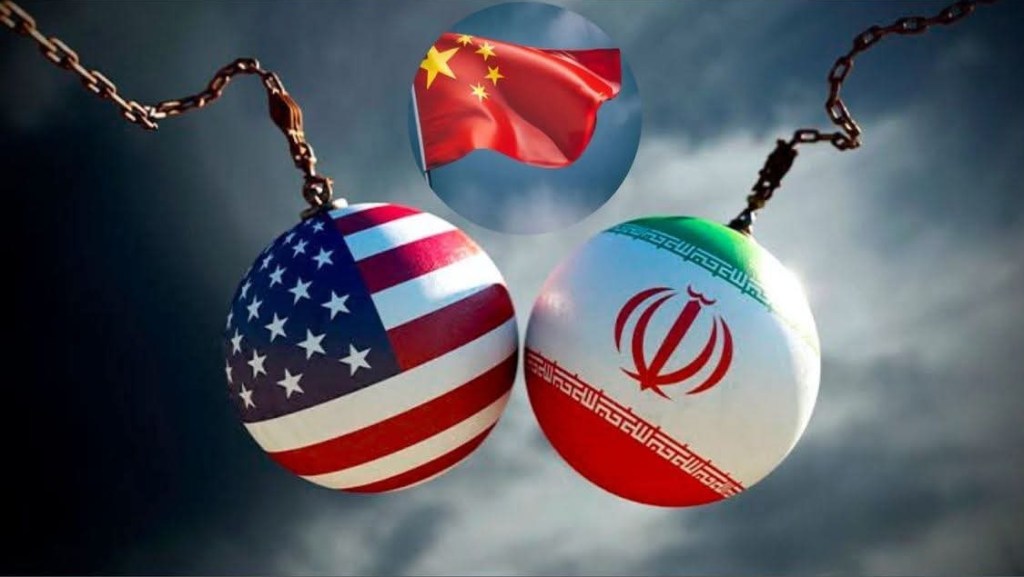
How ceasefire narratives mask the progressive tightening of global energy supply lines into China
Energy flows into China are contracting across several supply corridors at the same historical moment, and that contraction marks a structural shift in the organisation of global power. The reduction does not stem from ordinary market volatility, cyclical pricing, or temporary supply shocks. A pattern has emerged in which wars, sanctions, maritime interdictions, infrastructure attacks, and regional instability converge upon the same outcome: diminished energy transfer from major exporters into the Chinese industrial system. A geopolitical economy centred on uninterrupted hydrocarbon circulation now confronts deliberate fragmentation. The decisive fact lies not in whether every blockade succeeds completely, but in whether enough pressure accumulates to reduce strategic certainty for China’s long-term growth model.
A narrowing energy corridor changes the hierarchy of states more effectively than tariff regimes or diplomatic isolation. Industrial powers depend upon predictable energy density to sustain manufacturing, logistics, military production, and urban expansion. China remains the world’s largest importer of crude oil and liquefied natural gas, with the Middle East supplying a major share of those imports. Reuters reported in April 2026 that China’s share of imported crude originating from the Middle East had fallen from approximately fifty-two percent to near thirty-one percent, while total import volumes declined by around eleven percent as alternative suppliers failed to close the gap. Such figures matter because energy scarcity operates cumulatively rather than immediately. Industrial systems do not collapse after one disrupted shipment. They weaken when substitution becomes progressively more expensive, geographically distant, and politically uncertain.
The empirical claim that energy flows to China are falling carries significance beyond commodity markets. A reduction in imported energy weakens the certainty underpinning China’s export economy and complicates the transition toward high-value industrial dominance. Economic expansion requires stable throughput. Strategic rivals understand this relationship. Michael Hudson has argued that modern financial and geopolitical systems operate through control over payment networks, reserve currencies, and commodity settlement mechanisms. Energy constitutes the physical layer beneath those systems. Without secure access to energy, trade corridors lose reliability, currency systems lose confidence, and long-term industrial planning becomes constrained.
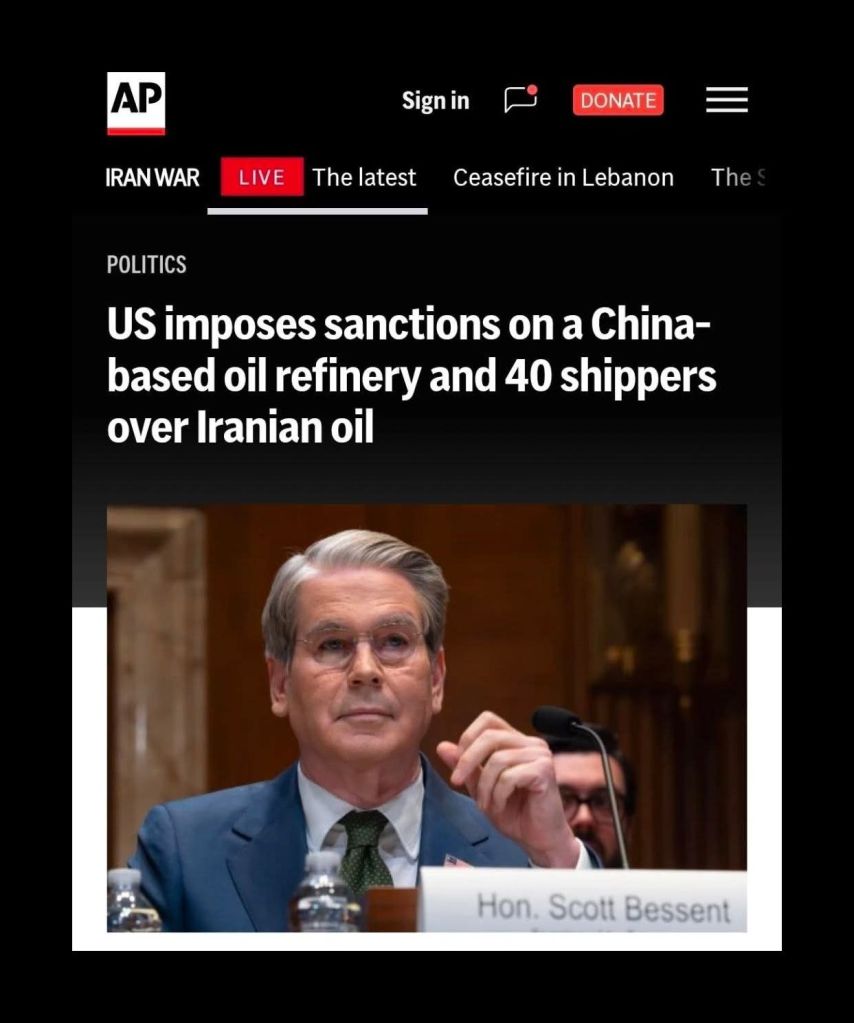
Military events across Eurasia and the Middle East reveal an increasingly coherent pattern. Iranian exports face maritime interdiction and partial blockade pressure. Russian energy infrastructure has endured repeated strikes against refineries, ports, storage depots, and tanker logistics linked to Black Sea shipping routes. Venezuelan exports remain constrained through sanctions architecture and diplomatic pressure that redirected market access away from Chinese preference. Each theatre appears distinct when examined separately. Combined, they reveal a strategic geography centred upon restricting energy partnerships that feed Chinese demand.
Strategic competition between the United States and China no longer revolves around abstract ideological rivalry. Material access determines relative power. A state that cannot guarantee long-term energy security becomes dependent upon maritime vulnerability and diplomatic concessions. Glenn Diesen has argued that multipolarity increasingly depends upon infrastructure autonomy rather than ideological alignment. Rail corridors, pipelines, settlement currencies, and overland logistics create resilience against maritime dominance. That argument clarifies why infrastructure competition has intensified across Eurasia. Energy access now functions as a battlefield of systems rather than merely a matter of supply contracts.
Policy planning literature across several decades anticipated this transition. The Pentagon’s long-standing concern with anti-access environments, maritime chokepoints, and supply denial appeared in doctrinal papers linked to sea control and Indo-Pacific containment. The 1992 Defence Planning Guidance associated with Paul Wolfowitz outlined a strategic objective of preventing the rise of peer competitors capable of challenging American primacy. Zbigniew Brzezinski’s The Grand Chessboard framed Eurasian integration as the principal geopolitical threat to maritime dominance. RAND studies on great-power competition repeatedly identified energy security, supply chains, and logistical dependence as vulnerabilities exploitable during conflict escalation. Later concepts such as the “Pivot to Asia,” the Indo-Pacific Strategy, and integrated deterrence translated those assumptions into operational planning. The cumulative argument embedded within these papers treated Chinese industrial expansion not simply as an economic challenge but as a systems-level competitor requiring strategic constraint.
Chinese infrastructure policy emerged as a direct hedge against that constraint. The Belt and Road Initiative did not function merely as a trade corridor programme or development platform. Overland transport routes through Central Asia, Pakistan, Russia, and inland Eurasia reduced dependence upon maritime chokepoints vulnerable to interdiction. Pipeline networks, inland dry ports, rail freight corridors, and industrial logistics hubs created alternatives to naval containment. The initiative therefore represented a preplanned adaptation to blockade risk rather than a commercial afterthought. Strategic petroleum reserves offered a short-term buffer. Belt and Road infrastructure offered a long-term bypass architecture designed to preserve industrial continuity under pressure.
The Iran conflict demonstrates how regional warfare can produce indirect strategic outcomes beyond regime pressure. Direct attacks on Iranian military and energy infrastructure damaged domestic export capacity, yet the wider consequence emerged through retaliation cycles across the Persian Gulf. Energy facilities in neighbouring Gulf producers entered periods of shutdown, repair, and force majeure declarations following strikes or defensive interruptions. Damage need not destroy an oil field permanently to alter supply calculations. Temporary outages create insurance spikes, shipping delays, risk premiums, and uncertainty among importers.
The historical sequence leading toward Iran matters because strategic campaigns rarely emerge in isolation. American intervention in Syria pursued more than regime pressure against Damascus. Control over Syrian territory shaped airspace access, intelligence positioning, and operational depth across the Levant. Removing or weakening the Syrian state reduced barriers between Israeli military operations and Iranian infrastructure. The Syrian theatre therefore functioned as a preparatory stage within a broader escalation ladder. A fragmented Syrian battlespace opened corridors through which pressure against Iran could intensify.
The transition from proxy conflict to direct confrontation followed a gradual path rather than a singular decision. Israeli strikes against Iranian-linked facilities in Syria, including the attack on the Iranian consulate in Damascus, established a precedent for cross-border escalation backed by American support. Iranian retaliation widened the operational theatre. Subsequent strikes inside Iranian territory transformed an indirect conflict into overt military pressure. Regime destabilisation and energy disruption existed simultaneously rather than sequentially. One objective supported the other.
Empire strategies become effective through cumulative preparation rather than sudden declaration. Infrastructure positioning, proxy alignment, sanctions architecture, intelligence integration, and regional basing arrangements create a framework within which escalation appears reactive rather than predesigned. Each conflict theatre contributes to a larger geography of pressure. Syria cleared corridors. Iran expanded the pressure zone. Maritime interdiction operationalised economic denial. Energy disruption therefore emerged as the strategic consequence of a long-prepared sequence rather than a spontaneous by-product of war.
A fragmented energy region delivers effects that exceed the destruction itself. China imports not only from Iran but from an integrated Middle Eastern export system. Reduced throughput from Qatar, Saudi Arabia, Iraq, the United Arab Emirates, and Iranian-linked routes compounds risk simultaneously. The significance lies in aggregate decline rather than singular disruption. Financial Times reporting in April 2026 indicated that Iranian tankers continued to bypass sections of maritime interdiction, yet roughly comparable numbers of vessels were redirected, intercepted, or forced to return to port. A partial blockade still changes aggregate flow. Half-functioning logistics systems rarely sustain pre-war trade volumes.
The operational logic behind such disruption resembles a strategy of cumulative denial. Military planners rarely seek immediate victory when confronting a larger industrial opponent. Attrition across supply chains produces delayed consequences. Andrei Martyanov has argued that contemporary military competition increasingly rewards strategic depth rather than tactical spectacle. Energy infrastructure represents strategic depth because industrial economies cannot improvise substitutes quickly. Crude oil, natural gas, petrochemical feedstock, and maritime shipping routes form a tightly linked network. Damage to one node elevates pressure elsewhere.
Game theory provides the clearest analytical framework for understanding this emerging structure. The interaction resembles a prolonged interdiction game between a dominant naval power and a continental industrial challenger. The United States occupies the position of maritime gatekeeper, controlling chokepoints, alliance networks, insurance regimes, and sanctions enforcement. China occupies the position of resource-dependent industrial consumer seeking redundancy through diversification.
The strategic game contains three principal players: the United States, China, and energy-exporting states. Each player faces constraints. The United States cannot permanently occupy every producer region or enforce absolute embargoes without excessive military cost. China cannot rapidly replace maritime energy dependency despite diversification efforts. Exporters cannot abandon Chinese demand because Asian markets absorb much of their revenue base.
Payoffs remain asymmetrical. Washington gains advantage by increasing uncertainty rather than eliminating supply entirely. Beijing gains advantage through resilience, redundancy, and overland alternatives. Exporters seek stability and revenue continuity. A stable equilibrium existed during periods of globalisation when energy markets remained politically open. That equilibrium has collapsed.
The present system resembles a repeated deterrence game with incomplete blockade enforcement. Each interdiction tests the willingness of China and exporters to absorb costs. Every redirected tanker, disrupted refinery, or sanctioned intermediary raises transaction costs. The objective need not be full exclusion. Marginal reduction across multiple theatres creates strategic compression.
Realist international relations theory interprets this pattern as balance-of-power behaviour. A dominant state seeks to constrain the rise of a peer competitor before parity emerges. Hegemonic stability theory reaches a similar conclusion through different language. Existing powers preserve system leadership by controlling trade architecture and security guarantees. Yet these frameworks often underestimate the role of infrastructure destruction as a means of preserving hierarchy. Systems theory offers a sharper explanation. States compete not merely for territory but for throughput control across networks. Energy routes function as arteries within that network.
China anticipated aspects of this pressure long before present disruptions intensified. Strategic petroleum reserves reportedly cover roughly one hundred days of imports under emergency conditions. Such reserves do not solve permanent shortages, yet they buy time for adaptation. The Belt and Road Initiative also reflects more than commercial expansion. Overland rail corridors, pipeline projects, and inland logistics hubs reduce exposure to maritime interdiction. Infrastructure therefore becomes a strategic insurance mechanism rather than a development slogan.
Chinese policy literature increasingly frames energy security as inseparable from national sovereignty. Defence white papers, Belt and Road planning documents, and research linked to Chinese energy institutions describe maritime vulnerability as a structural weakness requiring continental alternatives. The 2019 defence white paper, China’s National Defense in the New Era, connected overseas interests, shipping security, and strategic supply chains to national development objectives. Chinese state planning documents linked to the National Development and Reform Commission repeatedly identified diversification of import routes, pipeline construction, and overseas storage as safeguards against external disruption. Research from institutions such as the China Institutes of Contemporary International Relations and the Chinese Academy of Social Sciences emphasised that chokepoints including the Strait of Malacca created strategic exposure vulnerable to blockade or coercive interdiction.
Scholarship surrounding the Belt and Road Initiative repeatedly emphasises redundancy, corridor diversification, and insulation from chokepoint disruption. Chinese analysts such as Erica Downs documented the evolution of Beijing’s overseas energy strategy through long-term investments in oil fields, refineries, and logistics partnerships across Eurasia, Africa, and the Middle East. Mikkal Herberg’s work on Asian energy security highlighted China’s effort to reduce reliance on single-source suppliers by widening procurement networks and developing pipeline alternatives through Central Asia and Russia. Christopher Len’s analysis of the Maritime Silk Road framed port development and shipping access as part of a broader attempt to secure transport continuity during geopolitical instability.
Iranian strategic thinking developed along a parallel track. The doctrine of a “Resistance Economy,” promoted within Iranian state planning and articulated by Ayatollah Ali Khamenei, prioritised sanctions endurance, domestic production, diversified partnerships, and reduced reliance upon Western-controlled financial channels. Rather than treating sanctions as temporary punishment, Iranian planners framed them as a permanent feature of the strategic environment requiring institutional adaptation. Policy discussion inside Iran’s Center for Strategic Research and the Institute for Political and International Studies increasingly stressed integration with Asian markets, local-currency trade, and alternative banking arrangements.
Tehran’s twenty-five-year cooperation framework with China reinforced that logic by anchoring Iranian energy exports to long-term Eurasian demand. Iranian participation in the Shanghai Cooperation Organisation and engagement with the Eurasian Economic Union reflected an effort to institutionalise trade relationships outside Atlantic financial structures. Iranian analysts such as Seyed Mohammad Marandi frequently described multipolar integration as a hedge against isolation, while figures including Mohsen Rezaei emphasised economic sovereignty and resilience under pressure. Studies examining sanctions adaptation also documented Iran’s development of shadow shipping networks, ship-to-ship transfers, barter trade, and intermediary financial channels designed to preserve export continuity.
A legitimate counterbalance therefore exists within the same strategic system. Chinese and Iranian planning did not emerge reactively after recent disruptions. Strategic reserves, inland infrastructure, alternative payment systems, shadow shipping networks, and Eurasian trade integration demonstrate years of preparation for a world in which maritime openness could no longer be assumed. These measures do not eliminate vulnerability, yet they complicate any expectation that pressure alone guarantees strategic capitulation.
Preparation does not guarantee immunity. China’s industrial structure remains deeply tied to seaborne imports crossing vulnerable chokepoints. The Strait of Hormuz, Malacca Strait, Bab el-Mandeb, and Indian Ocean shipping lanes create geographic exposure that cannot disappear quickly. Diversification into Russian pipeline imports and Central Asian routes provides partial insulation. Replacement capacity remains limited compared with the scale of Chinese consumption.
Long-standing doctrines have already reversed. Globalisation promised that trade interdependence reduced incentives for systemic conflict. Energy markets once rewarded efficiency over resilience. Maritime openness formed the operating assumption of post-Cold War economics. Those assumptions no longer govern strategic planning.
Trade no longer guarantees neutrality because commercial integration increasingly occurs within contested geopolitical environments rather than politically insulated markets. States deeply connected through trade continue to impose sanctions, restrict technology transfers, and weaponise access to shipping, insurance, and payment systems. Economic exchange no longer guarantees strategic restraint. The freezing of reserves, expansion of export controls, and use of secondary sanctions demonstrate that commercial dependence may deepen exposure rather than reduce rivalry.
Energy infrastructure has become an increasingly visible military target because it occupies a central role in sustaining industrial output, fiscal stability, and wartime logistics. Pipelines, export terminals, refineries, electrical grids, and storage facilities represent concentrated nodes of economic power. Attacks against such infrastructure impose costs that extend beyond the battlefield by reducing state revenue, increasing insurance premiums, and undermining investor confidence. Strategic studies from the International Energy Agency and security research institutions have repeatedly warned that energy systems represent high-value targets during periods of geopolitical escalation.
Supply chains now function as instruments of coercion because access to manufacturing inputs, shipping capacity, rare materials, and logistics networks can be restricted without formal declarations of war. Export controls, customs restrictions, sanctions compliance regimes, and maritime inspections permit states to influence adversaries through administrative pressure rather than open conflict. The weaponisation of semiconductors, shipping insurance, and critical minerals demonstrates that logistical interdependence creates leverage for those controlling chokepoints within the system.
Blockades have returned as tools of great-power rivalry, although modern blockades rarely resemble the total maritime sieges associated with earlier centuries. Contemporary interdiction operates incrementally through sanctions, inspection regimes, restricted financing, vessel seizures, insurance denial, and legal pressure upon intermediaries. Maritime dominance allows powerful states to regulate access to trade corridors without declaring universal embargoes. Analysts examining naval doctrine increasingly describe economic denial as a graduated form of coercion rather than a binary act.
Economic interdependence no longer restrains escalation because rival states increasingly accept commercial losses in pursuit of strategic objectives. The expectation that globalisation would make conflict irrational underestimated the willingness of governments to absorb costs for geopolitical advantage. Trade relationships persist alongside sanctions regimes, military deployments, and proxy conflicts. Interdependence therefore alters the cost structure of rivalry without eliminating rivalry itself.
Industrial vulnerability has become a measurable strategic liability because production systems rely upon uninterrupted access to inputs distributed across geographically dispersed networks. Dependence upon imported energy, specialised components, maritime transport, or narrow logistics corridors creates exposure that adversaries may exploit during crisis. Strategic resilience now depends upon redundancy, diversification, and domestic fallback capacity. RAND studies on supply-chain security and energy resilience repeatedly conclude that vulnerability emerges less from scarcity itself than from concentration and lack of alternatives.
The wider implications extend beyond China alone. Russia gains incentive to deepen energy integration with Asian consumers outside dollar settlement systems. Gulf states face pressure to balance security dependence on Washington against revenue dependence on Asia. Europe absorbs higher costs through energy fragmentation and maritime insecurity. Commodity pricing becomes increasingly political rather than market-driven.
Currency systems also shift under pressure. Hudson’s analysis of the petrodollar system emphasises that reserve dominance depends upon commodity settlement patterns. Energy rerouting creates incentives for alternative clearing mechanisms. Bilateral currency swaps, yuan-denominated contracts, and non-Western settlement channels gain relevance whenever sanctions or interdictions threaten conventional transactions.
A fragmented energy system encourages regional blocs rather than universal markets. Exporters seek stable buyers. Buyers seek politically secure suppliers. Insurance firms, shipping registries, and financial institutions become instruments of strategic competition rather than neutral intermediaries. Such fragmentation increases friction across every stage of trade.
Destination: China
Future dynamics depend upon endurance rather than battlefield outcomes. The central question concerns whether China and its partners absorb attrition long enough to create alternative infrastructure faster than interdiction pressure expands. Maritime disruption favours the established naval power in the short term. Infrastructure adaptation favours patient continental integration in the long term.
A prolonged blockade environment creates incentives for escalation. China may intensify investment into overland corridors through Central Asia, Pakistan, and Russia. Exporters may deepen energy agreements outside Western enforcement structures. Naval competition across the Indo-Pacific may increase as escort missions and tanker protection become more important. Military conflict becomes less about territorial conquest and more about preserving circulation.
A decisive asymmetry remains. The United States does not need to eliminate Chinese imports completely. Sustained uncertainty alone raises costs, deters investment, and complicates industrial planning. China therefore confronts not a singular blockade but a distributed geography of friction.
Energy denial has become a central mechanism through which strategic competition is exercised between major powers. Modern industrial economies depend upon continuous access to hydrocarbons, electricity inputs, shipping insurance, and logistics infrastructure that cannot be replaced quickly during crisis. Maritime control therefore generates economic leverage because naval dominance influences chokepoints, tanker routes, insurance premiums, and the perceived security of trade corridors. The U.S. Navy’s long-standing emphasis on sea-lane control, combined with Indo-Pacific doctrine focused on access denial and maritime deterrence, reflects the understanding that control of circulation routes may shape economic outcomes more effectively than direct territorial conquest.
Regional wars increasingly generate global economic consequences because energy infrastructure, shipping corridors, and commodity markets are deeply interconnected. Disruption in the Persian Gulf affects Asian manufacturing supply chains, European pricing structures, and global freight costs simultaneously. Research by the International Energy Agency has repeatedly demonstrated that oil-market shocks transmit rapidly through industrial economies because crude pricing, petrochemical production, and transportation networks remain globally integrated. In such an environment, supply interruption may carry greater long-term strategic weight than tactical battlefield success. Temporary disruptions to export facilities, pipelines, refineries, or tanker traffic raise costs across entire systems even when no decisive military victory occurs.
Infrastructure resilience therefore becomes a determining factor in strategic survival. States capable of maintaining redundancy through storage reserves, overland pipelines, diversified suppliers, and protected logistics corridors can absorb disruption more effectively than states dependent upon singular routes. Industrial power ultimately depends upon uninterrupted circulation of energy, commodities, finance, and transport capacity. Economic strength no longer rests solely upon domestic production. It depends upon preserving access to the networks that allow production to continue under conditions of geopolitical friction. The International Energy Agency and numerous strategic studies from the RAND Corporation have emphasised that energy security now rests as much on infrastructure continuity and supply diversification as on resource ownership itself.
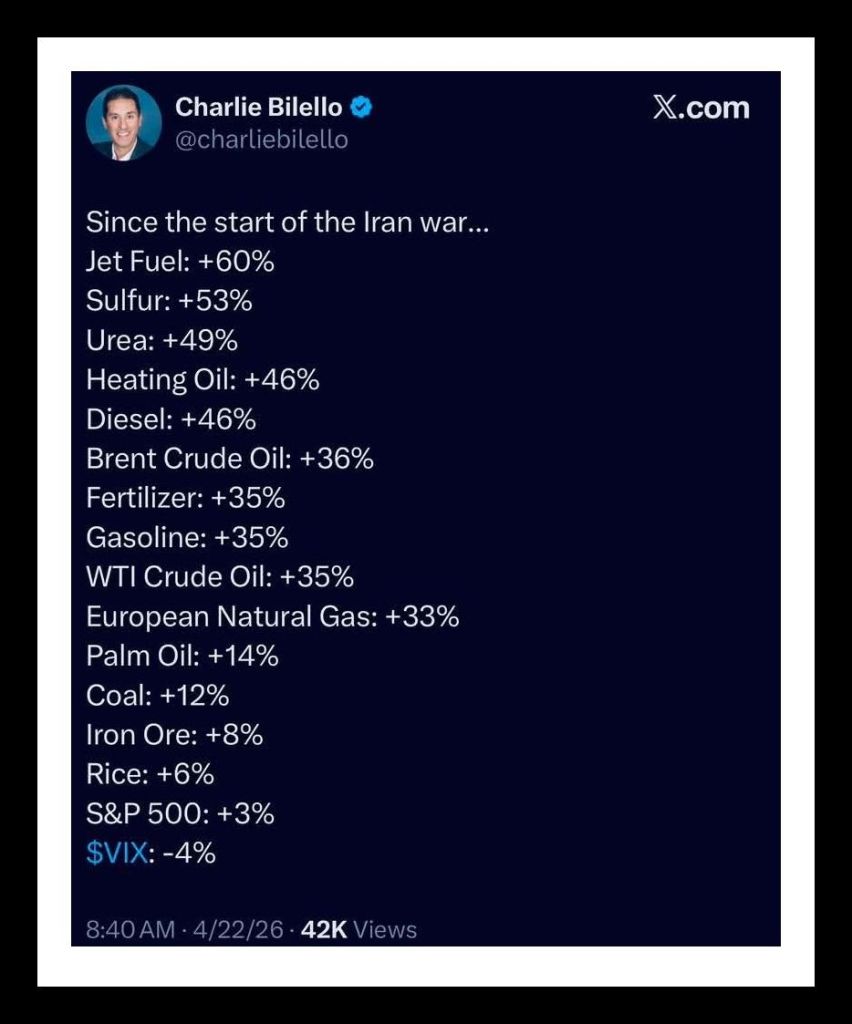
The emerging order does not resemble a return to Cold War bipolarity. A fragmented system has replaced assumptions of open global trade. Energy flows now move through contested corridors shaped by sanctions, naval pressure, insurance restrictions, and geopolitical bargaining. The decline in energy flows to China therefore marks more than a temporary market imbalance. A struggle over industrial continuity has begun.
History rarely signals structural change in advance, and major transitions are usually only recognised after political, economic, and military systems have already begun to shift in practice rather than in declared form. Change appears first in logistics, insurance costs, shipping routes, and interrupted commodities. Empires weaken through overextension or displacement. Rising powers falter when access to material foundations becomes uncertain. The contest surrounding China’s energy supply reveals a larger judgement about the present era: power belongs less to those who produce energy than to those who decide where energy may safely travel.
Authored By: Global GeoPolitics
Thank you for visiting. This is a reader-supported publication. If you believe journalism should serve the public, not the powerful, and you’re in a position to help, becoming a PAID SUBSCRIBER truly makes a difference. Alternatively you can support by way of a cup of coffee:
https://buymeacoffee.com/ggtv |
https://ko-fi.com/globalgeopolitics |
Bitcoin: 3NiK8BoRZnkwJSHZSekuXKFizGPopkE7ns
References
Brzezinski, Z. (1997) The Grand Chessboard: American Primacy and Its Geostrategic Imperatives. New York: Basic Books.
China Academy of Social Sciences (CASS) (2022–2024) Belt and Road Energy Cooperation and Security Strategy. Beijing: CASS Research Publications.
China State Council Information Office (2021) China’s International Development Cooperation in the New Era. Beijing: State Council.
Congressional Research Service (CRS) (2023–2024) Maritime Chokepoints and Global Energy Security. Washington, DC: U.S. Congress.
Diesen, G. (2024) The Ukraine War and the Eurasian World Order. London: Routledge.
Hudson, M. (2023) Super Imperialism: The Origin and Fundamentals of U.S. World Dominance. 3rd edn. Atlanta: Clarity Press.
Institute for Political and International Studies (IPIS) (2020–2024) Iran and Sanctions Adaptation Strategies. Tehran: IPIS Publications.
International Energy Agency (IEA) (2024) World Energy Outlook 2024. Paris: IEA. Available at: https://www.iea.org/reports/world-energy-outlook-2024 (Accessed: 26 April 2026).
Martyanov, A. (2019) Disintegration: Indicators of the Coming American Collapse. Atlanta: Clarity Press.
National Development and Reform Commission (NDRC), PRC (2015; updated 2017–2023) Vision and Actions on Jointly Building Silk Road Economic Belt and 21st-Century Maritime Silk Road. Beijing: NDRC.
RAND Corporation (2019) Extending Russia: Competing from Advantageous Ground. Santa Monica, CA: RAND Corporation.
RAND Corporation (2021–2023) China and the United States: Competition and Strategic Stability. Santa Monica, CA: RAND Corporation.
Reuters (2026) ‘China crude oil imports from Middle East fall to multi-year low amid supply shifts’, Reuters Commodities Report, April.
Reuters (2025–2026) ‘Global energy trade and diversification trends in Asian import markets’, Reuters Energy Desk Reports.
U.S. Department of Defense (1992) Defense Planning Guidance (Draft). Washington, DC: DoD.
U.S. Department of Defense (2019) Indo-Pacific Strategy Report: Preparedness, Partnerships, and Promoting a Networked Region. Washington, DC: DoD.
U.S. Department of Defense (2022) National Defense Strategy of the United States of America. Washington, DC: DoD.
Wolfowitz, P. et al. (1992) Defense Planning Guidance (Draft Internal Policy Document). U.S. Department of Defense.


Leave a Reply