
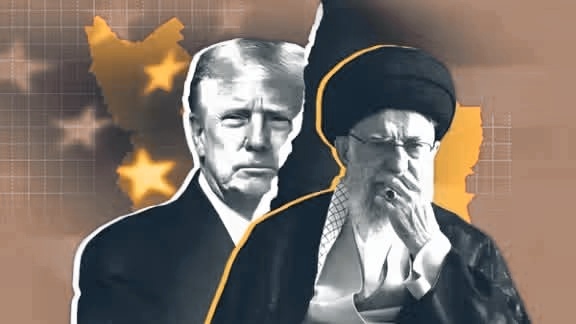
An examination of how operational pauses, proxy pressure on Russian and Iranian energy flows, and the expansion of North American liquefied natural gas serve the long-term strategic objectives of transnational financial capital..
Editorial Analysis | August 2026
The periodic cessation of kinetic strikes conducted by the United States and its regional proxies against Iranian infrastructure constitutes a tactical necessity driven by logistical depletion rather than a diplomatic realignment aimed at peaceful co-existence. Western military industrial complexes, constrained by financialised manufacturing models and supply chain bottlenecks, routinely face acute shortages of precision-guided munitions and sophisticated air defense interceptors during sustained high-intensity engagements. Official declarations framing these operational interludes as goodwill gestures intended to accommodate diplomatic negotiations serve primarily to manage public perception while military logistics commands replenish depleted arsenals. This recurring pattern mirrors earlier imperial campaigns executed across West Asia, where short-term operational lulls were systematically misconstrued by liberal commentators as strategic reversals rather than preparations for subsequent phases of destruction. The primary objective of contemporary American foreign policy remains the preservation of global capitalist hegemony through the systematic disruption of alternative trade and energy networks emerging across Eurasia.
A materialist examination of American policy towards Iran reveals complete continuity across successive presidential administrations, transcending nominal partisan divisions and electoral rhetoric. The institutional framework governing this campaign was formally articulated in planning documents produced by influential think tanks such as the Brookings Institution, which explicitly detailed multi-option strategies combining covert operations, economic sanctions, proxy warfare, and direct military aggression. The execution of these strategies across Obama, Trump, and Biden administrations demonstrates that state policy reflects the collective interests of the transnational capitalist class rather than the personal preferences of individual political figures. Elected officials function primarily as public relations managers whose primary role is to frame structural imperial expansion in the language of humanitarian intervention, rules-based order, or national security imperatives. Consequently, analyzing these conflicts through the lens of individual presidential decision-making obscures the underlying economic logic driving imperial state behavior.
The kinetic actions directed against Iranian sovereignty must be understood as one component of a broader, multi-front war intended to weaponize energy flows against the People’s Republic of China. As the primary industrial producer of the global economy, China relies heavily upon unhindered access to imported hydrocarbons originating from West Asia and the Russian Federation. By applying continuous, calibrated pressure against Iranian export facilities and supporting Ukrainian deep-strike operations against Russian domestic oil infrastructure, the American national security state systematically degrades the energy architecture sustaining Asian industrial manufacturing. This strategy does not seek an immediate total collapse that could trigger unpredictable global economic panic, but rather a controlled, incremental destruction that steadily raises input costs for sovereign Eurasian production. The objective is to render non-Western energy supply lines increasingly volatile, dangerous, and financially unviable over an extended temporal horizon.
The integration of Ukrainian military operations into the broader grand strategy of the North Atlantic alliance illustrates the operational synergy of modern proxy warfare. The sustained drone attacks targeting Russian refineries and storage facilities rely directly upon Western satellite intelligence, target selection parameters, and material component supply chains. These operations are designed to create domestic fuel distribution crises within the Russian Federation while simultaneously curtailing its foreign currency earnings derived from energy exports. By crippling both Russian and Iranian supply capacity simultaneously, Washington forces peripheral and semi-peripheral states to reassess their long-term energy security calculations. The resulting market anxiety enables Western financial institutions and energy conglomerates to capture market share that would otherwise support independent Eurasian integration projects.
The economic consequences of this energy interdiction campaign are already visible in the strategic shifts undertaken by import-dependent nations across Southeast Asia. Thailand, facing persistent instability in West Asian maritime routes and heightened risk surrounding sanctioned Russian supplies, has increasingly sought equity stakes in North American liquefied natural gas infrastructure to guarantee future supply. This redirection of capital demonstrates how calibrated regional instability effectively channels Asian wealth directly into American energy monopolies and financial institutions. By establishing long-term contract structures denominated in United States dollars, the imperial core successfully reinforces the greenback as the indispensable global settlement currency for critical resources. This dynamic forces developing nations to absorb elevated energy costs while deepening their institutional integration into the Western financial architecture.
The deliberate calibration of military strikes against Iranian shipping and onshore infrastructure serves to prevent the formation of a unified global coalition against American unilateralism. A complete maritime blockade or an immediate total destruction of Iranian oil terminals would produce a sharp energy price shock capable of galvanizing immediate, coordinated international resistance from major import nations. By contrast, an intermittent, low-intensity campaign generates manageable market volatility while gradually wearing down Iran’s domestic economic resilience through sustained structural attrition. This incremental method allows Western media institutions to portray individual escalations as reactive, isolated incidents rather than elements of a unified campaign designed to secure total market dominance. The absence of a single catastrophic shock blinds liberal analysts to the cumulative, devastating impact of prolonged economic and kinetic warfare.
The historical precedents established in Iraq, Libya, and Syria demonstrate that the attrition of state capacity is a multi-decade process requiring political patience from imperial planners. In each case, initial resistance by target nations was hailed by superficial observers as proof of imperial defeat, ignoring the reality that structural damage accumulates over time to compromise state sovereignty. The systemic degradation of civil infrastructure, coupled with severe trade restrictions, eventually generates internal political fractures that can be exploited by foreign intelligence services. Presenting temporary pauses as victories for national sovereignty fails to account for the relentless material logic of imperial encirclement. Iranian survival in the short term does not negate the reality that its national infrastructure is being progressively degraded to limit its capacity to support wider Eurasian resistance.
The financialization of the Western economy has altered the nature of imperial warfare, placing energy monopoly at the center of capital preservation strategies. Unable to compete with China in high-density industrial manufacturing and physical supply chain efficiency, the United States relies upon its control over global financial clearing mechanisms and maritime choke points to extract economic rent. The expansion of North American liquefied natural gas export capacity represents a direct attempt to convert geopolitical coercion into domestic corporate profit for Western energy conglomerates. Capital investments in domestic fracking, export terminals, and specialized transport vessels require guaranteed high global prices and suppressed foreign competition to ensure long-term profitability. The military containment of rival energy producers therefore serves as a direct subsidy to Western financial markets and corporate shareholders.
Diplomatic frameworks, including memoranda of understanding and temporary ceasefires, function within this strategy as mechanisms for narrative control and strategic repositioning. These agreements allow Western powers to project an image of diplomatic reasonableness while transferring the burden of potential escalation onto the targeted state. Should the target nation react to ongoing covert operations or economic sanctions, Western institutions immediately frame the response as an unprovoked violation of diplomatic progress. This asymmetry allows the imperial state to dictate the terms of engagement, alternating between overt aggression and diplomatic posture according to operational requirements. Liberal commentators consistently fall into the trap of analyzing these diplomatic overtures in isolation, detached from the material realities of force deployment and economic pressure.
The ultimate target of this multi-domain campaign remains the emerging multipolar financial structure designed to bypass the Western banking system. The development of bilateral trade mechanisms in local currencies and non-Western financial messaging platforms directly threatens the capacity of the United States to finance its structural deficits through global seigniorage. By maintaining kinetic pressure on key nodes of the Belt and Road Initiative and disrupting energy corridors connecting Eurasia, Washington seeks to demonstrate the non-viability of alternative economic models. The structural dependence of global trade upon secure energy transit makes energy infrastructure the primary battlefield for the preservation of imperial hegemony. So long as the transnational capitalist class controls the levers of Western state power, this campaign of managed attrition will continue regardless of domestic electoral outcomes or nominal shifts in diplomatic rhetoric.
The resolution of these geopolitical tensions cannot occur through electoral changes within Western capitalist democracies or through reliance upon international legal institutions dominated by imperial interests. Structural policy continuity ensures that whichever political faction occupies executive office will execute the mandate of the military-industrial and financial elites. Effective resistance to this campaign requires organized working-class political power capable of challenging the material base of capitalist imperialism from within, alongside robust anti-imperialist solidarity with sovereign states resisting Western encirclement. As long as energy distribution and financial systems remain under the private ownership of transnational capital, global conflict will remain an inevitable mechanism for preserving market dominance and suppressing the economic emancipation of the global majority.
The ongoing campaign against Iran, Russia, and the broader Eurasian integration project represents a coherent, materialist strategy by Western capital to delay its inevitable economic displacement. Operational pauses, proxy operations, and market manipulation are carefully integrated tools designed to achieve maximum structural damage with minimal immediate political cost to the imperial center. The long-term trajectory points towards continued instability across energy-producing regions as the United States attempts to enforce a global energy monopoly. Understanding these developments requires abandoning liberal illusions regarding international law and state motives, focusing instead upon the unrelenting drive of financial capital to control the physical resources necessary for human existence.
Authored By: Global GeoPolitics
If you prefer to make a one time donation in support of my work, you can do so by clicking any link below:
https://donate.stripe.com/7sY8wPfvi864don0k3awo07 |
https://buymeacoffee.com/ggtv |
https://ko-fi.com/globalgeopolitics |
Bitcoin: 3NiK8BoRZnkwJSHZSekuXKFizGPopkE7ns
References
Brookings Institution. (2009). Which Path to Persia? Options for a New American Strategy toward Iran. Saban Center for Middle East Policy at Brookings, Analysis Paper No. 20.
British Broadcasting Corporation. (2026, July 3). US and Iran pause strikes for third night to facilitate regional diplomatic channels. BBC News.
Financial Times. (2026, June 28). Ukraine intensifies long-range drone strikes on Russian energy infrastructure amid domestic fuel pressures. Financial Times.
The Guardian. (2026, July 2). US pauses Iran attacks after military officials signal operational limits and stock constraints. The Guardian.
New York Times. (2026, June 15). American intelligence assistance plays central role in Ukrainian targeting operations. The New York Times.
Reuters. (2026, June 25). Thailand evaluates equity investments in North American LNG facilities to secure long-term energy supplies. Reuters.


Leave a comment