
The Yen Crisis and the Unravelling of Dollar Hegemony: How America’s Energy War Is Breaking Its Own Financial System
Editorial Analysis | August 2026
Japan’s currency has experienced its most dramatic decline in four decades, with the yen plunging to 163.99 per American dollar on 23 July 2026, a level not witnessed since 1986. This collapse represents far more than a routine currency fluctuation or a temporary market correction; it signals the beginning of a structural transformation in the global financial architecture that has underpinned American hegemony since the collapse of the Bretton Woods system in 1971. The United States Treasury, faced with the prospect of its largest foreign creditor selling its vast holdings of American government debt, has been forced into an extraordinary intervention that reveals the underlying fragility of the dollar-centred international monetary order. Washington sold euros from its own reserves to purchase yen in a coordinated operation with the Bank of Japan, marking the first American intervention to strengthen the Japanese currency since 1998, while simultaneously directing Tokyo toward a previously untapped Federal Reserve facility designed to prevent the sale of US Treasuries on the open market. This manoeuvre, executed through Goldman Sachs and Morgan Stanley with a notepad in front of Treasury Secretary Scott Bessent photographed reading “buy Japanese yen 5 to 10 billion,” is the clearest possible signal that the post-1971 floating-rate system is devouring itself.
The connection between America’s energy war in West Asia and the crisis afflicting the Japanese yen is neither coincidental nor secondary to the strategic calculations of the war planners. Japan, which possesses negligible domestic energy production, depends entirely upon imported oil and natural gas to sustain its industrial economy, and the disruption of energy flows through the Strait of Hormuz has driven prices to levels that are systematically undermining the country’s current account position. Japan’s ability to maintain its extraordinary debt burden, which exceeds 250 per cent of gross domestic product, has historically depended upon a stable trade surplus that provided the foreign exchange earnings necessary to service its obligations and reassure international investors. The energy crisis has eroded this surplus with alarming speed, forcing the Bank of Japan to intervene repeatedly to support a currency that is being battered by both the rising cost of imports and the widening interest rate differential between Japan and the United States. The Bank of Japan currently holds rates at just one per cent while the Federal Reserve maintains a target range of 3.50 to 3.75 per cent, creating an interest rate gap that makes the yen extraordinarily vulnerable to speculative pressure and encourages the carry trades that have become a defining feature of the global financial landscape over the past decade.
The mechanics of this vulnerability are relatively straightforward but their implications are devastating for the stability of the entire dollar-centred financial system. Investors and institutions have borrowed yen at Japan’s exceptionally low interest rates and used the proceeds to purchase higher-yielding assets denominated in dollars, including US Treasuries, generating substantial profits from the interest rate differential. This carry trade has been a critical mechanism for channelling Japanese savings into American government debt, supporting the dollar and keeping US borrowing costs artificially low despite the country’s soaring fiscal deficits. The weakening yen, however, threatens to unravel this entire structure because it erodes the value of the dollar-denominated assets that carry traders hold while increasing the cost of repaying the yen-denominated loans. A significant unwind of the carry trade would trigger a cascade of forced selling across global markets, driving down asset prices and creating a liquidity crisis that would dwarf the 2008 financial collapse in its scope and severity. The City of London, which operates as a distinct jurisdiction with its own legal and financial infrastructure that no government fully oversees, has reportedly been preparing for exactly this scenario, with senior figures indicating that a full bloodbath is now imminent.
The United States Treasury has responded to this threat with a multi-pronged strategy that reflects both the severity of the danger and the limitations of the tools available to address it. The decision to sell euros rather than dollars to purchase yen was a deliberate choice designed to avoid signalling a weak dollar policy, which would have been politically catastrophic given that American core inflation stands at 3.3 per cent and any hint of dollar weakness could trigger a broader loss of confidence in the currency. Washington’s euro reserves, accumulated over decades of foreign exchange operations and trade surpluses with Europe, provided a source of dollars that could be deployed without the political consequences of an explicit dollar sale. The Federal Reserve’s Foreign and International Monetary Authorities Repo Facility, established in 2020 and designed to supply dollars to foreign central banks “other than sales of securities in the open market,” represents the second pillar of this strategy, allowing the Bank of Japan to pledge its US Treasury holdings as collateral for dollar loans rather than selling them outright. This facility, which has a limit of sixty billion dollars outstanding per counterparty and terms extending out to seven days, was built specifically for this situation, and last week it was activated for the first time, keeping Japanese Treasury holdings off the market and preventing a surge in American borrowing costs.
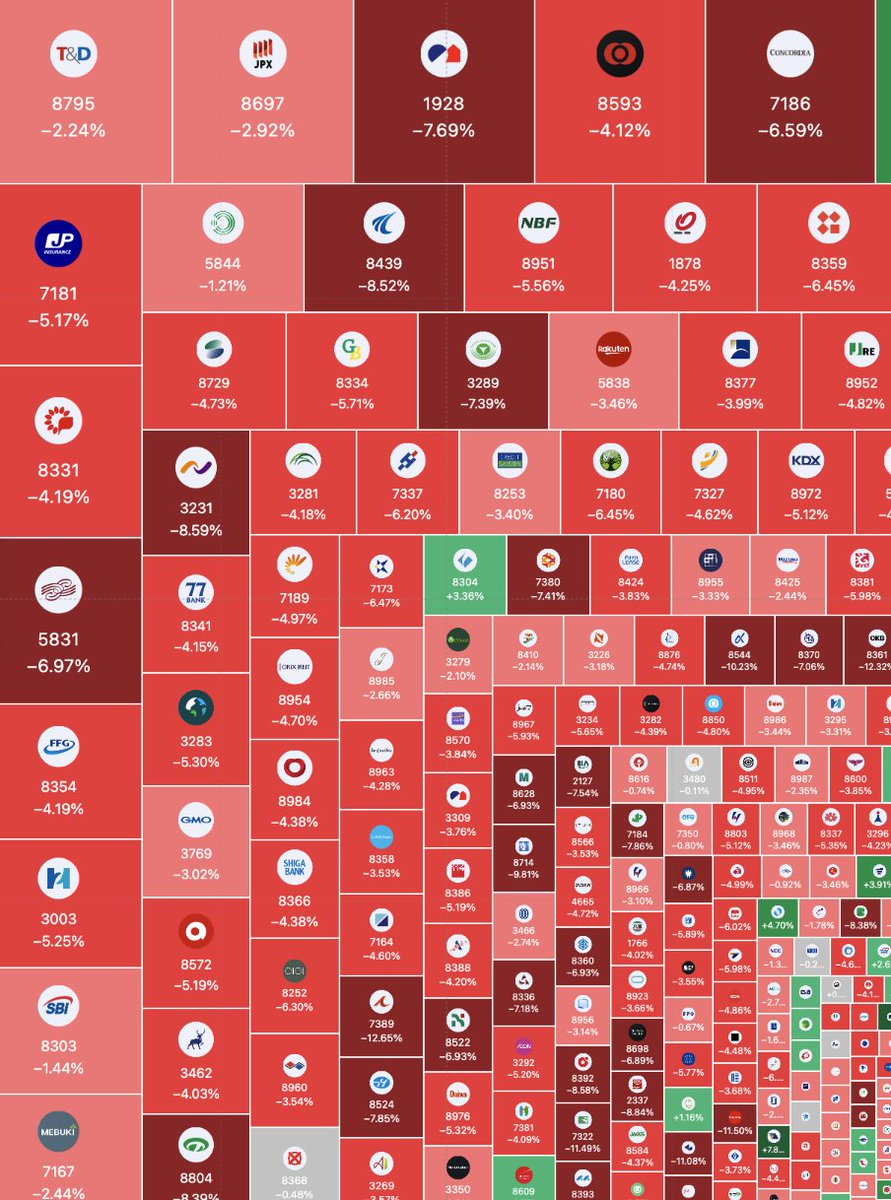
The fundamental problem facing Washington is that this facility is available only to central banks and official institutions, not to Japanese banks, insurance companies, pension funds, or the multitude of leveraged carry trade participants that hold the vast majority of Japanese Treasury assets. The trillion-plus dollars of Treasuries attributed to Japan in American data represent the total holdings of all Japanese entities, not merely the government portfolio, and the Federal Reserve’s facility can address only a fraction of the selling pressure that would emerge if Japanese private institutions began to liquidate their American assets. The Bank of Japan’s reserves have already fallen from 1.41 trillion dollars in February to 1.31 trillion dollars at the end of May, with seventy-seven billion dollars of that decline occurring in May alone. Japan has lost 40 trillion yen in the course of these interventions, and the Nikkei has fallen roughly sixteen per cent in a single month. The country is now being attacked from every direction simultaneously: currency intervention consumes foreign reserves, rising interest rates threaten to bankrupt the fifteen per cent of Japanese companies that cannot cover their interest payments, collapsing technology valuations are wiping out the gains that drove the Nikkei to record highs, and fears over Japan’s enormous debt pile are eroding investor confidence.
The broader implications of this crisis extend far beyond Japan’s borders and threaten the entire structure of American financial hegemony that has persisted since the end of the Bretton Woods system. The dollar’s status as the world’s primary reserve currency has depended upon a network of foreign central banks, particularly those of Japan and China, that have been willing to accumulate vast holdings of US Treasuries in exchange for export-led growth and the stability that dollar convertibility provides. This system, however, has always been premised upon the willingness of foreign creditors to continue financing American fiscal deficits, and that willingness is now being tested by the energy crisis that Washington itself has precipitated. The war in West Asia, which the United States has conducted with the explicit objective of disrupting energy flows to Asia and degrading the productive capacity of the Chinese economy, is simultaneously weakening the dollar by driving up energy prices for America’s largest creditor and forcing that creditor to reconsider the wisdom of holding dollar-denominated assets.
The United States cannot print its way out of this predicament without accelerating inflation and eroding the dollar’s value, but it also cannot allow Japan to sell its Treasury holdings without driving American interest rates to levels that would crash the domestic economy. The Federal Reserve’s FIMA facility offers a temporary reprieve by substituting collateralised loans for outright sales, but this merely defers the reckoning rather than resolving the underlying contradiction. The facility’s sixty billion dollar limit is dwarfed by the scale of Japanese private holdings, and the seven-day terms of the repos require continuous renewal and negotiation, creating an ongoing dependency that cannot be sustained indefinitely. The system is, as Alastair Crooke has observed, a post-1971 floating-rate system that is devouring itself, and the zombie companies that cannot cover their interest payments are the product of decades of cheap credit and financialisation that have obscured the underlying weakness of the real economy.
The proposed agreement between Iran and Oman regarding the management of the Strait of Hormuz represents one potential avenue for relieving the pressure on energy prices, but the political obstacles to any such agreement remain formidable. Under the terms of the deal described by the New York Times, Iran would ultimately control the strait while agreeing that ships entering would be monitored by Tehran and those exiting would use a southern route closer to Oman with Iranian approval, with fees to be shared between the two countries. The United States has set a deadline for response this week, and the inclination of the Trump administration, given its demonstrated hostility to any Iranian diplomatic achievement, is almost certainly to reject the proposal. Yet the financial pressures are mounting with each passing day, and the growing stresses in the global financial system may eventually force a reconsideration. Scott Bessent, who made his reputation working for George Soros in the currency markets before assuming the Treasury secretaryship, understands this dynamic intimately and is reportedly communicating the severity of the situation to the President directly.
The evidence of insider trading connected to the war announcements suggests that elements within the American political and financial elite have been profiting directly from the volatility they have helped create, raising uncomfortable questions about the motives driving the administration’s war policy. Iranian officials have documented a pattern of suspiciously timed trades in oil futures markets that preceded major war announcements, with Axios reports serving as the conduit for market-moving information. The timeline includes shorts placed fifteen minutes before Trump announced a postponement of strikes on Iran, shorts placed hours before a ceasefire announcement, and shorts placed seventy minutes before an Axios scoop claimed that a fourteen-point agreement was near. The cumulative profits from these operations have been estimated at nine billion dollars, and senior Iranian officials have reportedly warned the Vice President that Jared Kushner and Steve Witkoff were abusing negotiations for financial gain. Whether these allegations are ultimately proven or not, their existence reflects the extent to which American foreign policy has become a vehicle for private profit rather than national interest.
Japan’s exploration of digital assets as a potential escape route from dollar dependency represents another dimension of this unfolding transformation. The decision to permit Bitcoin as a treasury asset for banks and institutions, the partnership of more than fifty banks with Ripple to overhaul the banking system, and the choice of Solana and Ondo for tokenisation all point toward a strategic reorientation that would reduce Japan’s exposure to dollar-based financial infrastructure. The country has already experienced decades of zero-growth stagnation under the American-led global order, and the prospect of a further thirty-three per cent decline in living standards if dollar hegemony collapses has concentrated minds in Tokyo and elsewhere. The rest of the world, including the BRICS nations and the broader multipolar coalition, is watching these developments with considerable interest and is likely to accelerate its own efforts to establish alternative financial architecture in the coming months.
The underlying reality that this crisis reveals is that the United States cannot simultaneously wage war on the global energy order and maintain the financial system that depends upon that order. The war on Iran, the war on Russia, and the containment of China are all designed to disrupt energy flows to Asia, but those energy flows underpin the dollar’s role as the world’s primary reserve currency because they require dollar-denominated transactions and generate the surpluses that are recycled into American government debt. Disrupting those flows weakens the dollar by reducing demand for American exports and driving up the cost of energy imports for American allies and creditors alike. The United States is attacking its own financial foundations in pursuit of geopolitical objectives that the corporate class driving policy believes are essential to the preservation of its global hegemony. Whether this strategy can succeed is doubtful, but what is increasingly clear is that the consequences of failure will be borne by the American people through a reduction in their living standards and the destruction of the economic security that previous generations took for granted.
The yen crisis is not an isolated financial event; it is the first major rupture in a system that has been under mounting stress since the 2008 financial crisis demonstrated the fundamental instability of dollar-centred global finance. The City of London’s preparation for a full bloodbath, the Federal Reserve’s deployment of emergency facilities designed for exactly this situation, and the United States Treasury’s unprecedented intervention in the yen market all point toward a systemic crisis that will not be resolved through the application of more debt, more leverage, or more financial engineering. The post-1971 floating-rate system, which has allowed the United States to finance its deficits with foreign borrowing and export its inflation to the rest of the world, is reaching its natural limits, and the energy war is accelerating this process by simultaneously reducing the demand for dollars and increasing the costs that foreign creditors must bear.
The conclusion to this analysis is necessarily sobering. The United States has constructed a global financial architecture that depends upon the willingness of foreign creditors, particularly Japan and China, to continue accumulating dollar-denominated assets despite the declining value of those assets and the growing costs of the energy imports that the American system requires. That willingness is now being tested to its breaking point by the war in West Asia, which has driven up energy prices for Japan and exposed the vulnerability of its current account position. The Federal Reserve’s interventions can buy time, but they cannot resolve the underlying contradiction between America’s geopolitical objectives and its financial dependencies. The City of London is preparing for a bloodbath, the elites are positioning themselves to profit from the chaos, and the American people, who have been distracted by political theatre and the promise of cheap imported goods for decades, will ultimately bear the cost of a collapse that has been engineered by the very class that claims to act in their interest. The yen crisis is the first shoe to drop; it will not be the last, and the scale of what is coming should not be underestimated.
Authored By: Global GeoPolitics
If you prefer to make a one time donation in support of my work, you can do so by clicking any link below:
https://donate.stripe.com/7sY8wPfvi864don0k3awo07 |
https://buymeacoffee.com/ggtv |
https://ko-fi.com/globalgeopolitics |
Bitcoin: 3NiK8BoRZnkwJSHZSekuXKFizGPopkE7ns
References
Bessent, Scott. 2026. Photographed notepad at Camp David, 31 July. Financial Times.
Crooke, Alastair. 2026. “Bessent’s ‘Bail Out Japan’ Note.” The Duran, 4 August.
Drop Site News. 2026. “Iran Documented Oil Market Manipulation.” Investigative reporting, July.
Federal Reserve Bank of New York. 2020. “Foreign and International Monetary Authorities Repo Facility.” Press release, July.
Financial Times. 2026. “US Sells Euros to Buy Yen in Rare Intervention.” London: Financial Times, 31 July.
Financial Times. 2026. “Ukraine Striking Russian Energy Infrastructure at Unprecedented Rate.” London: Financial Times, July.
Goldman Sachs. 2026. “Currency Intervention Execution.” Internal memorandum, 31 July.
Kanzaki, Yuto. 2026. Bank of Japan remarks on currency intervention. Tokyo, August.
Lord Belgrave. 2026. “City of London Preparation for Financial Bloodbath.” Social media posts, July-August.
Morgan Stanley. 2026. “Yen Intervention Transaction Confirmation.” Internal memorandum, 31 July.
New York Times. 2026. “Iran and Oman Close to Hormuz Agreement.” New York: New York Times, 3 August.
New York Times. 2025. “The Secret History of America’s Involvement in the Ukraine War.” New York: New York Times, December.
Pilkington, Philip. 2026. “Japan: The First Shoe to Drop in the Unwinding of Dollar Hegemony.” Investment Watch, August.
Rand Corporation. 2019. “Extending Russia: Competing from Advantageous Ground.” Santa Monica: Rand Corporation.
Reuters. 2026. “Japan’s Nikkei Falls 16% in Month as Yen Crisis Deepens.” London: Reuters, 3 August.
Ripple. 2026. “Japanese Banking Overhaul: 50 Banks Partner with Ripple.” Corporate press release, July.
The Duran. 2026. “Japan in Trouble as Yen Collapse Threatens Global Financial System.” The Duran, 4 August.
United States Department of the Treasury. 2026. “Foreign Exchange Intervention Statement.” Washington, DC: Treasury Department, 31 July.
Witkoff, Steve. 2026. Alleged insider trading. Drop Site News investigation, July.


Leave a comment