
How a diplomatic call between Riyadh and Tehran exposes the structural tensions created by American military facilities on Arab territory during the 2026 conflict
General Article | August 2026
Saudi Arabia conveyed a formal warning to Iranian authorities in early March 2026, insisting that continued attacks on the kingdom and neighbouring Gulf states would compel Riyadh to respond in kind. Iranian sources subsequently confirmed to Reuters that the call had taken place and that the message from Riyadh left little ambiguity regarding the potential for escalation. Tehran’s reply framed the strikes as directed exclusively at United States interests and military installations located on Gulf territory, thereby seeking to differentiate between the host governments and the foreign forces they accommodate. Iranian officials further demanded the permanent closure of American bases across the region and an immediate cessation of intelligence cooperation between Gulf states and Washington, which Tehran asserts has been used to support operations against Iranian targets.
The distinction drawn by Iranian authorities between host territory and foreign military presence reflects a deliberate strategic doctrine of horizontal escalation. By treating American bases as legitimate military objectives regardless of the formal neutrality or limited involvement of the host governments, Tehran places the Gulf monarchies in a structurally difficult position. Hosting United States forces has long served as a deterrent against conventional Iranian aggression, yet that same presence converts national territory into an extension of the American battlespace once conflict begins. Official Iranian statements throughout the spring and summer of 2026 reiterated that any location from which American forces operate or that facilitates American intelligence collection would remain subject to attack.
Despite the March exchange, Iranian missiles and drones increasingly targeted United States facilities across the Gulf in the following weeks, with some strikes and debris affecting host-nation infrastructure and energy assets. American and Israeli operations against Iranian military and industrial sites intensified in parallel, while pressure on shipping through the Strait of Hormuz and attacks on regional energy facilities drove oil prices higher and heightened fears of a wider conflagration. Gulf governments responded with a mixture of diplomatic pressure, limited military measures and public statements affirming the right of self-defence. Saudi Arabia maintained channels of communication with Tehran even while conducting or signalling possible covert retaliatory actions, according to multiple sources familiar with the exchanges. The United Arab Emirates, Bahrain and Kuwait similarly found themselves absorbing Iranian drone and missile attacks directed at facilities associated with American operations.
Attempts at ceasefires and negotiations during the spring and early summer failed to produce a durable settlement. Fighting resumed, involving Iranian-backed groups and continued threats to Gulf energy facilities and shipping routes. In late July the risk of further escalation rose sharply after Houthi actions against Saudi-linked shipping prompted renewed American threats of major retaliation against Iran. Throughout these months the original Saudi concern that Gulf states would bear the costs of any widening of the United States-Iran confrontation remained a constant factor in regional diplomacy.
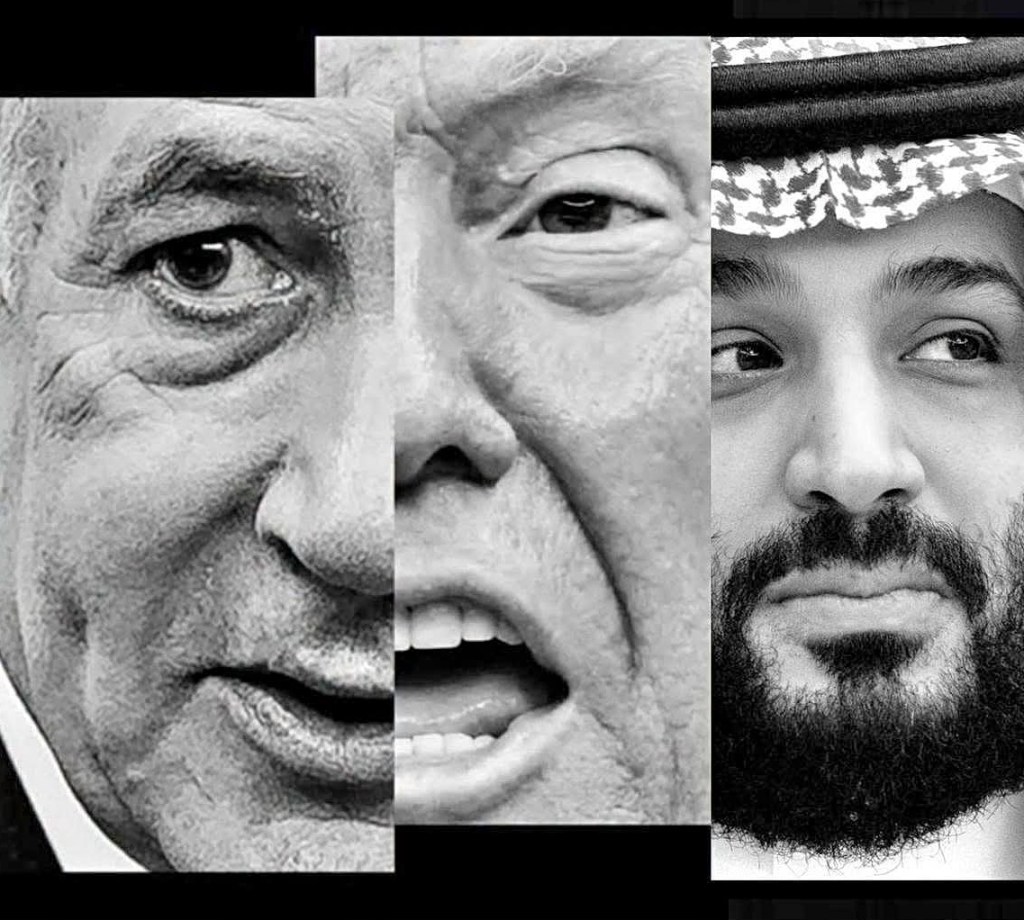
That same concern proved central to the decision taken on 1–2 August 2026, when President Trump announced that he would not proceed with a planned new round of American strikes. There’s little to suggest that the threats were genuine, the man is trying to wiggle out of a self created conundrum. Reporting from Reuters, the Associated Press and other outlets indicated that the pause followed representations from several Middle Eastern countries, including a direct intervention by Saudi Crown Prince Mohammed bin Salman, who urged prioritisation of dialogue because of fears that Iranian retaliation would target Gulf oil facilities and American bases located on Arab territory. The outline of a possible framework discussed at that moment reportedly included reopening the Strait of Hormuz and a return to negotiations over Iran’s nuclear programme, although no final agreement had been concluded.
The underlying political economy of security in the Gulf further complicates resolution. Decades of reliance on external military guarantees have shaped force structures, procurement patterns and intelligence architectures that remain deeply integrated with American systems. Any abrupt demand for the removal of those systems encounters practical obstacles ranging from the absence of alternative rapid-reaction capabilities to the risk of creating a security vacuum that other regional actors might exploit. Iranian insistence on the closure of bases therefore functions less as an immediate negotiating proposal and more as a means of highlighting the costs that Gulf states incur by remaining aligned with Washington.
Iranian officials have repeatedly warned throughout the 2026 conflict that any coalition assault on Iranian energy or nuclear infrastructure would trigger retaliatory strikes against the Gulf’s most critical water and power facilities, a category of targets whose destruction would immediately threaten the survival of urban populations across the region. Following Trump and Netanyahu’s planned resumption of a joint attack, Iran listed targets among the installations repeatedly identified by regional analysts and security assessments as high-value objectives: Saudi Arabia’s Ras al-Khair hybrid power and desalination complex, the Shuaiba plant on the Red Sea, and the Jubail cogeneration facilities that supply Riyadh; the United Arab Emirates’ Jebel Ali complex near Dubai, the Taweelah reverse-osmosis plant in Abu Dhabi, the Fujairah F1 and F2 installations, and the Barakah nuclear power station; Kuwait’s Doha West complex, which provides the majority of the country’s electricity and residential water; Bahrain’s integrated coastal co-generation plants; Qatar’s Ras Laffan industrial hub; and Jordanian water-supply infrastructure linked to logistical cooperation with Western forces. Successful strikes on these nodes would cascade into simultaneous failures of electricity grids, desalinated water distribution and industrial processing, producing an economic, social and environmental emergency of a scale that no regional
The continuity of Saudi concerns from the March warning through to the August pause demonstrates that the structural dilemma identified at the outset of the conflict has not been resolved by five months of kinetic exchanges and intermittent diplomacy. Future trajectories will depend on whether Gulf states can extract more explicit American guarantees against escalation spillover, whether Tehran can sustain pressure without triggering a broader Saudi or Emirati military entry into the conflict, and whether alternative regional security arrangements can emerge that reduce dependence on external bases. For the present, the reciprocal vulnerabilities created by the American military footprint remain unresolved, leaving both the Gulf monarchies and Iran locked in a pattern of warning, retaliation and incomplete de-escalation.
Authored By: Global GeoPolitics
If you prefer to make a one time donation in support of my work, you can do so by clicking any link below:
https://donate.stripe.com/7sY8wPfvi864don0k3awo07 |
https://buymeacoffee.com/ggtv |
https://ko-fi.com/globalgeopolitics |
Bitcoin: 3NiK8BoRZnkwJSHZSekuXKFizGPopkE7ns
References
Reuters. (2026, March 7). Saudi has told Iran not to attack it, warns of possible retaliation, sources say.
Reuters. (2026, May 13). Saudi Arabia launched covert attacks on Iran as regional war widened, sources say.
The Soufan Center. (2026, March 7). Gulf States Caught in the Crossfire of War with Iran.
CSIS. (2026, March 18). How Does Saudi Arabia See the War with Iran?
Middle East Institute. (2026, April 15). American Bases in the Gulf: Targets or Deterrents?
Reuters. (2026, July 17). US and Iran target infrastructure as strait shipping comes under further assault.
Reuters. (2026, July 20). Houthis announce Saudi naval blockade, threatening new front.
BBC. (2026, July 16). Iran targets military bases as US launches wave of strikes.


Leave a comment