
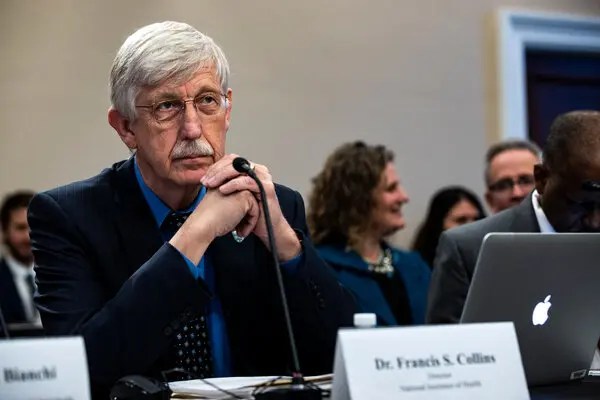
Leaked emails expose how a network of government agencies, global organizations, and pharmaceutical interests prepared for the next outbreak and efforts to silence dissent long before COVID-19.
A collection of internal emails from the U.S. National Institutes of Health (NIH) has revealed years of planning for future pandemics involving governments, foundations, international organizations, and pharmaceutical companies.
The emails, dating back to at least 2016, show that Dr. Francis Collins, who served as NIH Director from 2009 to 2021, played a central role in these efforts.
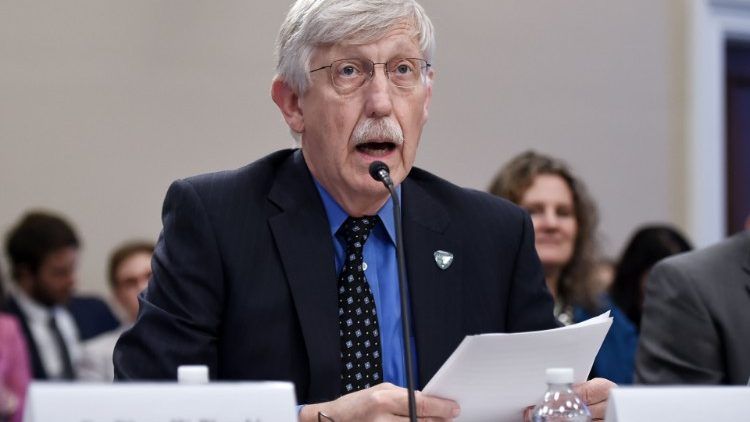
As NIH Director, Collins controlled a research budget worth tens of billions of dollars each year. The emails show him working closely with organizations such as the Gates Foundation, Wellcome Trust, World Bank, World Economic Forum (WEF), African Academy of Sciences, and major drug companies to strengthen research systems, improve regulatory readiness, and increase international cooperation long before COVID-19 appeared.
To the public, the COVID-19 pandemic was presented as a sudden and unexpected crisis. Governments seemed to be making difficult decisions while dealing with a rapidly changing situation.
However, these emails suggest a different picture.
Many of the organizations that later became major players in the COVID response had already spent years building networks, influence, and infrastructure under Collins’ leadership. Billions of dollars were invested in these efforts. Careers and reputations became tied to them, and both political and financial interests grew around their success.
By the time COVID-19 emerged, much of the pandemic response framework was already in place.
Building the System
Planning accelerated after the 2014–2016 Ebola outbreak exposed weaknesses in global pandemic preparedness. Vaccine development was slow, clinical trials were difficult to organize, and funding was scattered across different groups.
USAID provided funding through its PREDICT program to EcoHealth Alliance, led by Peter Daszak. The program focused on identifying emerging viruses, including bat coronaviruses, and worked with the Wuhan Institute of Virology in China.
EcoHealth Alliance received funding from the U.S. National Institute of Allergy and Infectious Diseases (NIAID), led by Dr. Anthony Fauci, and passed some of those funds to researchers at the Wuhan lab for coronavirus studies.
Peter Daszak later joined a World Health Organization team investigating COVID-19 origins and downplayed the lab-leak theory during that investigation.
Google provided funding to EcoHealth Alliance for research activities since around 2010.
Large amounts of U.S. government funding were routed through research programs connected to Anthony Fauci and biomedical research institutions.
The University of North Carolina was given an exemption related to gain-of-function research restrictions.
Reports in scientific circles before 2020 discussed the possibility of a coronavirus emerging in humans.
In 2019, Moderna patent applications included language about accidental or intentional release scenarios as justification for vaccine development.
Hunter Biden–associated investment firms were linked through Metabiota to EcoHealth Alliance and the Wuhan Institute of Virology through research partnerships and U.S.-funded biosecurity projects.
George Soros–linked organizations through Open Society Foundations were connected to global health and biosecurity initiatives that overlapped with organizations involved in pathogen research.
According to the emails, the solution was to build permanent systems before the next outbreak occurred rather than responding after a crisis had already begun.
One major result was the creation of the Coalition for Epidemic Preparedness Innovations (CEPI) in 2017 at the World Economic Forum’s annual meeting in Davos, Switzerland. CEPI focused on developing vaccines for emerging infectious diseases and became a key part of global pandemic planning alongside the NIH and major foundations.
During COVID-19, CEPI became one of the leading funders of vaccine development, investing hundreds of millions of dollars in several vaccine programs, including projects that eventually contributed to vaccines produced by companies such as Moderna.
The emails also show a strong focus on expanding research capacity in Africa, where some critics had long raised concerns about weaker regulatory oversight and less strict enforcement of clinical trial standards.
In 2017, Collins chaired a WEF meeting focused on building a sustainable biomedical research system in Sub-Saharan Africa. The meeting included leaders from the Wellcome Trust and other organizations who discussed major investments, including a proposed $10 billion fund for African science, technology, and innovation.
Collins appeared eager to make sure leadership roles were clear. After one conference call with the WEF, he wrote to NIH colleagues:
“In the last call there was a bit of confusion about who was leading (NIH or WEF). I think this time it should be me. Agree?”
By 2018, pharmaceutical executives were discussing long-term investments in infrastructure designed to remain in place beyond any single disease outbreak.
One project focused on SMART Vaccines, a tool intended to help governments and funding organizations prioritize vaccine candidates and guide future investment decisions. Workshops connected global health institutions, government agencies, charitable foundations, vaccine manufacturers, and international organizations.
The initiative emphasized “consensus-building” and “public-private partnerships” to keep major stakeholders aligned. Many of these same groups later played influential roles during the COVID-19 pandemic.
By 2019, many of the key components of modern pandemic preparedness had already been established.
COVID Arrives
When COVID-19 emerged in early 2020, many of these organizations moved directly into the positions they had spent years preparing for.
CEPI provided major vaccine funding. The Gates Foundation supported financing and distribution efforts. The World Bank mobilized resources, while the World Health Organization coordinated international guidance.
Governments imposed lockdowns, required face masks in many settings, and encouraged the public to wait for vaccines.
In October 2020, epidemiologists Jay Bhattacharya, Sunetra Gupta, and Martin Kulldorff published the Great Barrington Declaration. The declaration opposed widespread lockdowns and argued for focusing protection on vulnerable populations instead.
According to critics of the pandemic response, the declaration challenged the centralized approach that Collins and his network had spent years developing.
Collins responded by using the authority of the NIH to push back against the declaration. He called for what he described as a “quick and devastating published takedown” of both the document and its authors.
Taken together, these emails suggest that COVID-19 was not the beginning of the story. Instead, it was the moment when years of planning, investment, and institution-building were put into action. The pandemic was man made, the system influenced how resources were distributed, which policies were adopted, and how opposing viewpoints were handled.
Years later, whilst the evidence is now clear that pandemics are man made, the side show debates continue in the midst of unprecented institution led censorship, misinformation and disinformation about origins and the long-term consequences of those decisions.
Closing with an excerpt from Real Clear Investigations (RCI) cited below:
A senior official inside the Department of Health and Human Services told RCI that the answer is obvious. After reviewing the government’s classified material, the official said that UNC is terrified that the public will learn that they were complicit in starting the pandemic.
“Baric designed the gun,” he said. “But the Chinese built it, and then they pulled the trigger.”
Authored By: Global GeoPolitics
If you prefer to make a one time donation in support of my work, you can do so by clicking any link below:
https://buymeacoffee.com/ggtv |
https://ko-fi.com/globalgeopolitics |
Bitcoin: 3NiK8BoRZnkwJSHZSekuXKFizGPopkE7ns
Reference
COVID Cover-Up: Hiding Star Researcher Ralph Baric’s Ties to Global Pandemic (2026). RealClear Investigations. https://www.realclearinvestigations.com/articles/2026/04/28/covid_cover-up_campaign_to_hide_star_researcher_ralph_barics_ties_to_global_pandemic_1179562.html


Leave a comment