
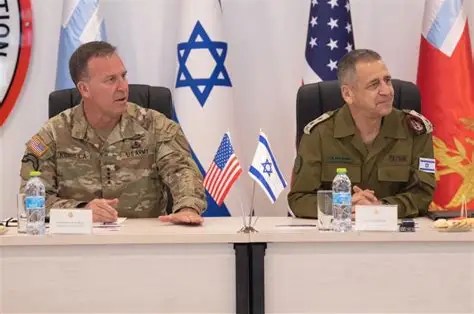
How US logistical support, intelligence sharing, and operational integration make Israeli military action inseparable from American strategic objectives
Introduction: The Question of Agency
Among the most persistent fictions in contemporary geopolitical commentary is the proposition that Israel acts as an independent military power, capable of initiating and sustaining major military operations without American approval or support. This fiction serves a dual purpose: it provides diplomatic cover for the United States in conflicts where it wishes to avoid direct responsibility, and it sustains the myth of Israeli strategic autonomy cherished by certain constituencies within both countries. The operational reality, however, tells a different story, one in which Israel’s military capabilities are so thoroughly integrated with and dependent upon American systems that the distinction between US and Israeli military action has become, in practical terms, a distinction without a difference.
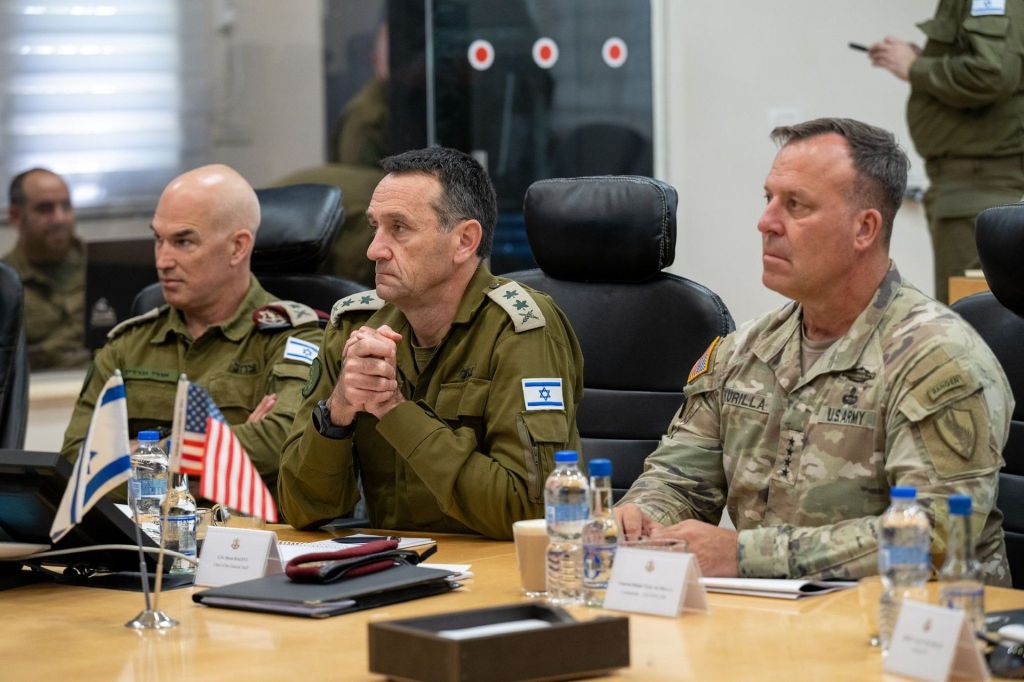
The legal framework governing this relationship is codified in the doctrine of Qualitative Military Edge (QME), formally embedded in US law through the Naval Vessel Transfer Act of 2008 and reinforced by subsequent legislation. QME requires the United States to guarantee that Israel can defeat “any conventional military threat, from a single state, a coalition of states, or resistance groups, with minimal casualties” (9). Under this principle, Israeli weaponry, technology, and training must remain significantly more advanced than those of any potential adversary in the region. The doctrine compels the United States to subordinate its relationships with other regional partners to Israeli military priorities, requiring formal assessments of any proposed American arms sales to regional countries to ensure they do not impair Israel’s military advantage (9). What this means in practice is that Israel does not merely receive American weapons; it receives the most advanced American weapons, often years before they are offered to other allies, and receives them at subsidised prices through Foreign Military Financing that exceeds three billion dollars annually (9).
The Operational Reality: Operation Roaring Lion and the Iran Conflict
The 2025-2026 conflict with Iran has exposed the depth of Israeli military dependence on American support with unprecedented clarity. Operation Roaring Lion, as the Israeli campaign was designated, demonstrated what Israeli commentators themselves have acknowledged: without American logistical support, the operation would have been impossible to sustain (7). The Israel Hayom analysis of the operation explicitly addresses the “cold, sobering reality that we must stop repressing”: Israel’s Roaring Lion was possible “only because of the US strategic and logistical oxygen pipeline” (7). This is not an accusation from a hostile source but an admission from within the Israeli establishment.
The scale of American support is staggering. Modern high-intensity warfare consumes munitions at a “monstrous rate” (7). Iron Dome and David’s Sling interceptors cost a fortune, smart bombs are expensive, and none of these systems can be produced in sufficient quantity by Israel’s domestic defence industry. The Israel Hayom analysis acknowledges that “without the unceasing air and sea lifts from the US, Israel’s war machine would have run into dangerous friction, perhaps even partial paralysis, within a matter of weeks” (7). The financial dimension is equally critical: a war of this scale costs the Israeli economy billions of dollars daily, and the special aid packages approved by the Trump administration, totalling tens of billions of dollars, provide “the safety net preventing the Israeli economy from collapsing under the burden of fantastical defence expenditures” (7).
The operational integration during the Iran conflict reached levels never before seen in the US-Israel relationship. For the first time in history, the American and Israeli militaries fought “as a single, unified force” (2). American and Israeli F-15s and F-35s flew “side by side in simultaneous strike packages,” shared intelligence, relied on the same refuelling tankers, and divided targets inside joint command centres where Israeli officers adopted English as the primary language of the war (2). This was not the older model of the alliance, where one side provided weapons and political backing while the other did the fighting. This was operational integration of a qualitatively different order.
The moment that perhaps best symbolised this partnership was the strike that killed Supreme Leader Ali Khamenei. According to accounts that have since emerged, the CIA obtained precise intelligence from a human source about Khamenei’s location and passed it to Israel (2). Israel then launched a massive air operation into Tehran, sending roughly one hundred aircraft to strike the compound and eliminate Khamenei along with other senior officials around him (2). Whatever one thinks of the war, it represented a historic moment in the relationship between Washington and Jerusalem, a level of trust and battlefield cooperation unlike anything the two countries had ever demonstrated (2).
The Doctrine: “Leave It to Bibi”
The strategic logic behind using Israel as a proxy military force was formally articulated in the 2009 Brookings Institution policy paper “Which Path to Persia? Options for a New American Strategy toward Iran” (1)(6). Chapter 5 of the paper outlines the “Leave it to Bibi” option, which the authors describe as “allowing or encouraging an Israeli military strike” against Iran. The rationale is explicit: the United States would encourage and perhaps even assist Israel in conducting strikes, “in the expectation that both international criticism and Iranian retaliation would be deflected away from the United States and onto Israel” (6). The paper was produced by the Saban Center for Middle East Policy at the Brookings Institution, a mainstream Washington think tank, and involved scholars including Kenneth Pollack, Daniel Byman, Martin Indyk, Suzanne Maloney, Bruce Riedel, and Michael O’Hanlon (6). It was not a fringe document but a mainstream policy analysis presented to the Obama administration (6).
The “Leave it to Bibi” option is not a secret conspiracy theory but a publicly available policy proposal, published by one of America’s most respected think tanks, available for anyone to read. The Brookings event launching the paper was attended by mainstream journalists and policy analysts (6). The paper has been implemented, in substantial measure, across successive administrations from Obama to Trump (8). When Israel strikes Iran, the pattern follows the blueprint: US intelligence is shared, US refuelling tankers extend Israeli range, US suppression of enemy air defence capabilities clears the path, and US diplomats maintain plausible deniability while the White House issues statements about having urged restraint.
The consistency of this pattern across presidential administrations is striking. In 2024, under the Biden administration, Israel conducted strikes against Iran with US support. In 2025 and 2026, under the Trump administration, the pattern continued. In June 2026, when Israel struck Iran following Iranian missile launches, the US official line, reported by CBS News correspondent Jennifer Jacobs, was that “the US military didn’t take part in the Israeli attacks against Iran” (3). This denial of involvement, repeated across administrations, follows the same playbook outlined in the 2009 paper. The US was “not involved” in the operational sense that American pilots were not in Israeli aircraft, but the US was deeply involved in the logistical and intelligence support that made the operation possible. The distinction is maintained for political consumption, not operational reality.
The Broader Strategic Context: Energy Security and Maritime Chokepoints
The US-Israel military relationship serves objectives that extend far beyond the immediate theatre of operations against Iran. The broader strategic logic involves securing energy supply chains, controlling maritime chokepoints, and maintaining the dollar’s status as the global petrocurrency. The Strait of Hormuz, through which approximately twenty percent of the world’s oil and LNG passes, is central to this calculus.
Recent energy market analysis reveals the scale of the disruption caused by the US-led conflict with Iran. Goldman Sachs estimated that the Strait of Hormuz disruption created a supply gap of approximately 80 million tonnes per year of LNG (10). This disruption has created a structural shift in global energy markets: with Middle Eastern supply curtailed, Asian buyers have been forced to seek alternative sources. The result has been a surge in US LNG exports to Asia. American LNG exports to Asia increased from six percent of total exports in February 2026 to twenty-five percent in April 2026, as Asian buyers scrambled to replace Qatari supply cut off by the conflict (10).
This energy market reconfiguration serves American strategic objectives in multiple ways. First, it creates energy dependence on the United States across Asia, giving Washington leverage over Asian economies that might otherwise align more closely with China. Second, it reduces the flow of petrodollars to Middle Eastern producers, weakening their economic power and their ability to fund activities that challenge US interests. Third, it strengthens the US position in the global energy market, reinforcing the dollar’s status as the petrocurrency. The Alaska LNG project, which received enthusiastic support from the Trump administration, explicitly markets itself on the basis of avoiding “contested waters” and providing “reliable” supply from a “trusted ally” (5). The implicit argument is that US supply is more secure because the US controls the shipping lanes, a self-fulfilling prophecy when the US is the actor creating the insecurity in alternative routes.
The US naval blockade of the Strait of Hormuz, combined with Iran’s retaliatory closure, has effectively cut off traditional Middle Eastern supply routes to Asia. This is not a passive outcome of conflict but an active strategic objective. The 2009 Brookings paper’s assumptions about the centrality of chokepoint control to American strategy have been translated into operational reality. The same logic that justified the “Leave it to Bibi” option justifies the interdiction of Iranian shipping and the suppression of Iranian naval capabilities. Each serves the larger objective of controlling the flow of energy from the Middle East to the world.
The Public Dimension: Eroding Support and the Political Risk
The operational integration of US and Israeli military power continues regardless of American public opinion, but the political sustainability of this arrangement is increasingly uncertain. Pew Research survey data from April 2026 found that sixty percent of American adults now hold an unfavourable view of Israel, up from fifty-three percent just a year earlier (2). Only thirty-seven percent said they viewed Israel favourably. The trajectory is stark: since 2022, favourable views of Israel have fallen by approximately twenty points (2). The generational breakdown is even more significant: approximately seventy percent of respondents under the age of fifty expressed unfavourable views of Israel. Among Democrats, the numbers are even more alarming, with about eighty percent holding unfavourable opinions (2).
Gallup polling showed a similar trend, with for the first time in twenty-five years more Americans expressing sympathy for Palestinians than for Israelis (2). Former State Department official Josh Paul, who resigned in protest over arms shipments to Israel, has stated that “Israel has lost the American public for a generation” and that “there has been an absolute transformation in the way Americans of all backgrounds, of all politics, of all ages think about the US relationship with Israel” (4). This erosion of public support represents a significant political risk for the US-Israel alliance. In a democracy, alliances are ultimately sustained by public support. When that support erodes, particularly among younger generations who will shape future policy, the strategic consequences may take time to appear but are almost certain to materialise (2).
The US-Israel alliance has reached what some analysts describe as “its highest point and its most politically dangerous one” (2). The military peak of the relationship, exemplified by the joint operations against Iran, coincides with the political foundation of that alliance eroding at an accelerating rate. The contradiction is sharp: on one hand, the US and Israel carried out what may have been the most sophisticated and ambitious joint military operation in the history of their alliance. On the other hand, the very public on which that alliance rests is drifting away (2).
Conclusion: The Extension of Empire
The proposition that Israel functions as a forward extension of American military power is not an accusation or a conspiracy theory but an empirical observation grounded in legal frameworks, operational realities, and strategic doctrines. The 2009 Brookings paper outlines the strategy explicitly. The operational integration during the Iran conflict demonstrates its implementation. The energy market analysis reveals its broader strategic purpose. The admissions from within the Israeli establishment confirm its necessity. The US provides the weapons, the intelligence, the refuelling, the suppression of enemy air defences, the rescue capability for downed pilots, and the diplomatic cover. Israel provides the boots on the ground, the airframes, the sacrifice of its citizens, and the public blame for actions that serve American strategic objectives.
The relationship is not one of coercion but of mutual convenience. Israeli leaders are not helpless puppets but willing partners who have their own reasons for pursuing the same objectives. The Netanyahu government has pursued a policy of military escalation against Iran and its proxies for decades, and this policy aligns with American strategic interests in the region. The relationship is symbiotic, not parasitic. Both parties benefit from the arrangement. What is significant is not the existence of the relationship but the denial of its nature. The fiction of Israeli independence serves a purpose: it allows the United States to maintain plausible deniability in conflicts where it wishes to avoid direct responsibility, and it sustains the myth of Israeli strategic autonomy that appeals to certain constituencies within both countries.
The strategic consequences of this arrangement extend far beyond the Middle East. By using Israel as its forward military arm, the United States has been able to pursue a policy of controlling energy supply chains, securing maritime chokepoints, and reinforcing the dollar’s petrocurrency status without bearing the full political cost of direct military action. The benefits accrue to the United States, more secure energy supply, greater leverage over Asian economies, and continued dominance in the global financial system. The costs, human, financial, and reputational, fall disproportionately on Israel and its neighbours. The arrangement is effective for American purposes, which is precisely why it has persisted across multiple administrations of both parties. But it is also, increasingly, unsustainable in the face of changing American public opinion and shifting global power dynamics. The empire has found a useful tool, but tools, like alliances, eventually wear out.
Authored By: Global GeoPolitics
If you prefer to make a one time donation in support of my work, you can do so by clicking any link below:
https://buymeacoffee.com/ggtv |
https://ko-fi.com/globalgeopolitics |
Bitcoin: 3NiK8BoRZnkwJSHZSekuXKFizGPopkE7ns
References
- Pollack, K.M., Byman, D., Indyk, M., Maloney, S., Riedel, B., & O’Hanlon, M. (2009). Which Path to Persia? Options for a New American Strategy toward Iran. Washington, D.C.: Saban Center for Middle East Policy, Brookings Institution Press. (1)(6)
- The Jerusalem Post. (2026, May 28). US-Israel alliance faces a political threat, despite military peak in Iran. The Jerusalem Post. (2)
- Jacobs, J. (2026, June 8). US military didn’t take part in Israeli attacks against Iran. TASS, citing CBS News. (3)
- Anadolu Ajansı. (2026, January 14). Former US official says Israel’s qualitative military edge push over Türkiye is ‘absurd’. (4)
- S&P Global Commodity Insights. (2026, April 28). US LNG arbitrage to Asia open via Panama Canal; laden flows limited. Platts. (5)
- Brookings Institution. (2009, June 23). Which Path to Persia? Options for a New American Strategy toward Iran. Saban Center for Middle East Policy. (6)
- Israel Hayom. (2026, June 13). Today’s offer: Strategic dependence on America. Israel Hayom. (7)
- Xinhua News Agency. (2026, June 11). Timeline: US-Iran-Israel tit-for-tat attacks spiral into worst escalation since April ceasefire. People’s Daily. (8)
- PressTV. (2025, September 15). Explainer: How ‘Qualitative Military Edge’ keeps Israeli regime’s survival dependent on US. (9)
- Cailian Press (May 11, 2026).
Goldman Sachs: The “rescue effect” of U.S. LNG is weakened as Asia’s rush to buy reduces effective supply. (10) - The New Atlas – Brian Berletic (June 10, 2026). Who Really Controls US Foreign Policy & What They Gain By Convincing You Otherwise… https://www.youtube.com/watch?v=XgnjltFXBCE7


Leave a comment