
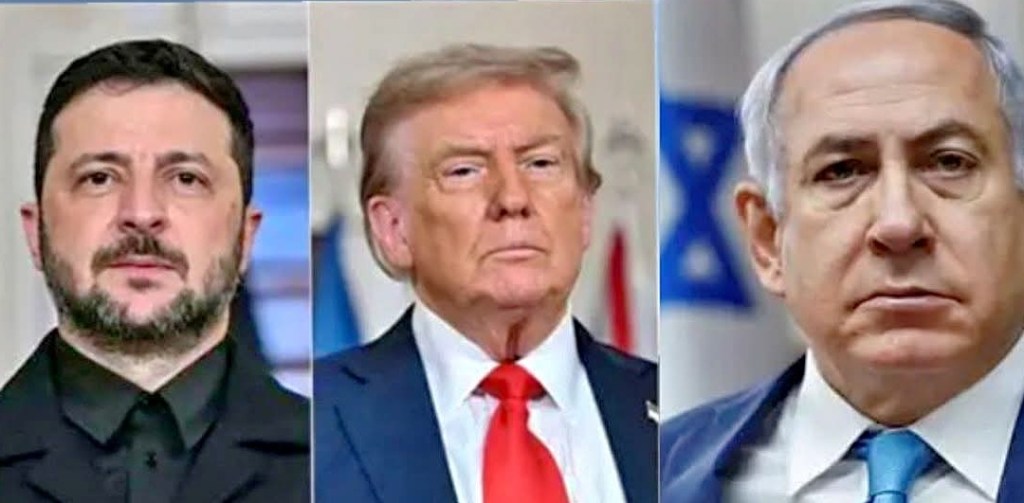
An Opinion Analysis of US-Israel-Ukraine Relations, the Integration of Military-Intelligence Infrastructure, and the Pursuit of Global Primacy
The United States Congress has moved with remarkable determination to permanently codify the US-Israel relationship through legislative mechanisms that transcend traditional alliance frameworks. Section 224 of the House version of the 2027 National Defense Authorization Act, titled the “United States-Israel Defense Technology Cooperation Initiative,” proposes a level of military-industrial integration that would surpass any comparable arrangement Washington maintains with another sovereign state.¹ The provision would establish bilateral research and development frameworks, joint ventures, licensing agreements, co-production manufacturing partnerships, and “network integration” and “data fusion” arrangements that would effectively merge both countries’ military data systems.²
What makes this development particularly significant is the institutional architecture it creates. The legislation requires the Secretary of Defense to designate an “executive agent” responsible for synchronising cooperative efforts across defence technology, including artificial intelligence, quantum computing, autonomous systems, directed energy, cyber operations, and biotechnology.³ This bureaucratic mechanism bypasses political and diplomatic oversight channels, embedding Israeli interests directly into the American defence procurement system in ways that would be exceedingly difficult to reverse.⁴
The parallel Intelligence Authorization Bill contains Section 622, titled the “United States-Israel Intelligence Sharing Enhancement,” which mandates that the President expand intelligence sharing with Israel on every topic of interest, particularly in the Middle East.⁵ Rather than case-by-case intelligence sharing between the CIA and Mossad, this provision would interlink digital infrastructure and institutionalise information flows.⁶ Former intelligence officials have characterised this as an effort to entrench the relationship so deeply within America’s own defence industrial base that it becomes “impossible to root out.”⁷
This represents a fundamental departure from the traditional aid-based model. The current ten-year Memorandum of Understanding, which provides Israel with approximately $3.8 billion annually in military assistance, expires in 2028.⁸ Formal negotiations have commenced to transition from this assistance framework toward a “completely reciprocal partnership,” according to Israeli Defence Ministry statements.⁹ Israeli Prime Minister Benjamin Netanyahu has publicly supported reducing and ultimately eliminating the financial aid package, arguing instead for a formalised operational and technological relationship.¹⁰
The strategic logic underlying this transformation is not difficult to discern. As Gen. Charles Wald (US Air Force, retired) observed, the timing of these negotiations, two years before the current memorandum expires, reflects concerns about a potential Democratic administration that would be less accommodating to Israeli interests.¹¹ By embedding the relationship in statute and bureaucratic infrastructure, Washington and Jerusalem are attempting to insulate their partnership from electoral volatility. The integration of defence technologies into the core US military supply chain creates constituencies, members of Congress representing districts with co-production facilities, defence contractors with vested interests, and intelligence agencies with operational dependencies, that would resist any attempt to dismantle the arrangement.¹²
This legislative momentum exists despite documented counterintelligence concerns. The Defence Intelligence Agency reportedly elevated its counterintelligence threat level for Israel to “critical”, its highest internal classification, in response to intensified Israeli surveillance efforts targeting senior American policymakers.¹³ Historical episodes of Israeli espionage, including the Jonathan Pollard case, and more recent allegations of surveillance against figures such as Steve Witkoff and Elbridge Colby, have not deterred congressional action.¹⁴ The failure of Rep. Ro Khanna’s amendment to remove Section 224 from the defence bill, supported only by Rep. Sarah Jacobs in a voice vote, demonstrates the political consensus favouring deeper integration despite substantive objections about foreign influence and accountability.¹⁵
The operational logic governing American support for Ukraine and Israel reveals a coherent strategic calculus that transcends the rhetorical justifications offered by successive administrations. In both cases, the United States enables and sustains military operations conducted by allied forces while maintaining sufficient deniability to manage escalation risks and deflect international criticism.¹⁶ This is not alliance politics as traditionally understood; it is indirect warfare through proxies. The United States has been fighting Russia through Ukraine and Iran through Israel.¹⁷ Every Israeli military capability, warplanes, ordnance, intelligence, aerial refuelling, and suppression of enemy air defences, is contingent upon American support.¹⁸ As one analyst observed, “If the United States of America does not assist Israel, no military attack of any sort of substantial scale can take place without US support.”¹⁹ This dependency renders claims that the United States was “not involved” in Israeli strikes on Iran manifestly implausible, notwithstanding repeated official denials.²⁰
The pattern of “leave it to Bibi” was explicitly identified in the 2009 Brookings Institution policy paper Which Path to Persia?, which catalogued options for American strategy toward Iran.²¹ Chapter five of that volume proposed “allowing or encouraging an Israeli military strike in the expectation that both international criticism and Iranian retaliation would be deflected away from the United States and onto Israel.”²² This blueprint, published more than a decade before the current conflict, has been implemented with remarkable fidelity.²³
The diplomatic component of this strategy serves a parallel function. Rather than representing genuine efforts to resolve conflicts, negotiations and ceasefires have been characterised as mechanisms to create pretexts for war or to buy time for rearmament and reorganisation.²⁴ “They’re using diplomacy to create a pretext for war with Iran,” one analysis contends. “They explain it very explicitly.”²⁵ The pattern of symbolic negotiations followed by renewed escalation, observable in both the Ukraine and Iran theatres, reflects a consistent operational rhythm: attack, negotiate, rearm, attack again.²⁶
This interpretation is consistent with analyses published in more conventional foreign policy journals. Rebecca Lissner, writing in Foreign Affairs, acknowledged that “divergent interests” between the United States and its quasi-allies create persistent friction, with Washington often seeking to calibrate involvement while quasi-allies pursue existential objectives with greater risk tolerance.²⁷ The United States has repeatedly attempted to restrain Israeli and Ukrainian escalation while simultaneously providing the capabilities that enable it, a contradiction that produces “suboptimal policies for both sides.”²⁸
The strategic rationale for maintaining pressure on both Russia and Iran extends beyond the immediate theatres of conflict to encompass global energy markets. The United States has pursued a coordinated campaign to reduce energy exports from competitors while positioning itself as a supplier of last resort to major importers, particularly in Asia and Europe.²⁹ This campaign operates through multiple mechanisms. Direct military action against Iran has demonstrably reduced energy exports from the entire Persian Gulf region.³⁰ The interdiction of shipping in the Strait of Hormuz, the targeting of Iranian energy infrastructure, and the broader destabilisation of the region have disrupted flows to major importers.³¹ Simultaneously, the United States has attacked Russian energy production, storage, and export infrastructure, seeking to degrade and ultimately reduce Russian energy exports.³²
The commercial logic underlying this strategy is evident in the development of American LNG export capacity targeting Asian markets. Projects such as Alaska LNG, which had “made no business sense at all whatsoever as long as there was Middle Eastern energy flowing to Asia,” are now positioned as strategically vital alternatives.³³ Industry presentations explicitly referenced “contested waterways” as a selling point, anticipating precisely the disruptions that have materialised.³⁴ The shorter shipping route from Alaska to Asia, through “uncontested and safe shipping lanes” compared to the alternative through the Panama Canal or around Africa, represents a 300 percent advantage in transport costs.³⁵
The global dimension of this strategy is unmistakable. The United States is not merely attacking Iran; it is “taking out Venezuela, cutting energy exports to China from Venezuela, attacking Russian energy production,” and seeking to “create energy dependence across Asia on the United States in the same way that has created energy dependence in Europe.”³⁶ This amounts to a comprehensive campaign to control global energy flows, with the explicit objective of giving the United States “more leverage over Asia to put additional pressure and to further isolate China.”³⁷
The coherence of American strategy contrasts sharply with the reactive posture attributed to its principal adversaries. Russia and Iran are characterised as strategically hesitant, lacking coherent long-term agendas, and trapped in reactive cycles that favour their adversaries.³⁸ This critique, while undoubtedly overstated, points to a genuine asymmetry in strategic culture. The Russian military is described as capable of ending the war in Ukraine within days, carpet-bombing cities, cutting logistics, and systematically destroying Ukrainian infrastructure, but has been restrained by political decisions that prioritise maintaining relations with the West over military victory.³⁹ The failure to destroy bridges across the Dnipro River, which would have isolated Ukrainian forces and dramatically shortened the war, is cited as a strategic error that transformed a potential short conflict into a prolonged war of attrition.⁴⁰ “Russia tends to stop fighting its wars… when it’s economically in trouble,” analysts observe, suggesting that economic constraints rather than military necessity shape Russian strategy.⁴¹
Iran faces a similar strategic deficit. Despite possessing considerable military capability and a network of regional proxies, Iranian leadership is characterised as overly committed to negotiation and restraint, failing to capitalise on strategic opportunities and underestimating the determination of its adversaries.⁴² The Iranians “have no agenda” in the sense that Israel possesses one; their objective is simply not to fight, to have peace, to make a deal.⁴³ This reactive posture, it is argued, explains why Iran “continually finds itself reacting rather than shaping events.”⁴⁴
Whether this characterisation accurately captures the strategic calculations in Moscow and Tehran is contestable. Russia and Iran may have different priorities and constraints than their American and Israeli counterparts, but these may reflect rational assessments of their relative positions rather than strategic incompetence. Russia’s war in Ukraine, for all its costs, has achieved the occupation of substantial territory and has demonstrated Russia’s willingness to endure significant economic pain. Iran’s survival despite sustained American and Israeli pressure suggests a resilience that pure retaliation strategies cannot explain. Nevertheless, the asymmetry in strategic culture identified in these analyses points to a genuine vulnerability for countries that define themselves primarily in opposition to American policy rather than through coherent positive agendas of their own. The United States and Israel pursue identifiable objectives, preservation of a unipolar order, control of global energy flows, containment of regional adversaries, while their opponents often appear defined by what they oppose rather than what they seek to build.⁴⁵
The strategy of maintaining pressure on multiple fronts simultaneously confronts significant resource constraints. American military-industrial production capacity, while substantial, cannot sustain high-intensity prolonged warfare across multiple theatres indefinitely.⁴⁶ This explains the pattern of “symbolic negotiations” that provide periodic pauses for reorganisation and rearmament.⁴⁷ The United States “cannot maintain a high intensity, prolonged war of aggression against Iran” in the same way Russia has sustained its campaign in Ukraine.⁴⁸
The broader geopolitical context is equally challenging. The United States is waging “global war against multipolarism and specifically against the central pillars of multipolarism: Russia, China, and Iran.”⁴⁹ Yet the emergence of a multipolar order appears increasingly inevitable. The economic rise of China, the military resilience of Russia, and the geopolitical position of Iran collectively challenge American predominance in ways that military pressure alone cannot resolve.⁵⁰
The strategic documents released by the Trump administration reflect a grudging acknowledgment of these constraints. The National Security Strategy and National Defense Strategy released in late 2025 and early 2026 describe a significant shift in American priorities, with restoring US pre-eminence in the Western Hemisphere now described as Washington’s most important foreign policy objective.⁵¹ The implicit downgrading of priorities in East Asia, the Middle East, and Europe reflects a recognition that the United States can no longer sustain its traditional global posture.⁵² The National Defense Strategy charges European partners to “take the lead for conventional security on their continent,” describing NATO allies as having “been content to let us subsidise their defence.”⁵³ The strategy explicitly states that “European efforts and resources are best focused on Europe” and encourages European capitals to concentrate on regional security rather than areas that “might compete with US market aspirations.”⁵⁴ Europe is urged to “buy US military equipment, maintaining the national markets as defence customers rather than military partners.”⁵⁵
This transactional approach to alliance management carries significant risks. Walker, a defence analyst at GlobalData, warned that “critical but limited support may not be enough to dissuade Russia and other adversaries from pursuing their territorial ambitions.”⁵⁶ A Russian breakthrough against Ukraine, if caused by American isolationism, would “shatter America’s standing on the world stage” and likely lower public approval.⁵⁷ Conversely, “a strong and independent Europe will limit American influence on the continent and thus in the world. America risks lowering itself to the status of a regional power if its relative power wanes compared to that of Europe.”⁵⁸
The demographic transformation of the Middle East, particularly the catastrophic decline of historic Christian populations, emerges as a significant but underreported consequence of regional instability. Across Iraq, Syria, Lebanon, Gaza, and the West Bank, Christian communities that have existed for millennia have been dramatically reduced through conflict, displacement, and deliberate targeting.⁵⁹ Jerusalem, once more than 30 percent Christian, now has a Christian population of approximately five to six percent.⁶⁰ This demographic transformation is not an incidental consequence of regional conflict but a direct result of the political and military dynamics that have reshaped the Middle East. The decline of Christian communities in Iraq, Syria, and Lebanon reflects the broader unraveling of pluralistic societies in the region, driven by sectarian conflict, the rise of extremism, and geopolitical interventions that have systematically undermined traditional social structures.⁶¹ The Israeli government’s expansionist agenda has contributed to this transformation through the displacement of populations in Gaza and the West Bank and the targeting of Christian communities that were once protected by the strategic calculations of Israeli leaders.⁶² This demographic erosion serves as a proxy indicator for the broader transformation of the Middle East. The disappearance of ancient Christian communities is not merely a humanitarian tragedy but a marker of the region’s inability to sustain the diversity that once characterised it. Whether this transformation is reversible or represents a permanent reconfiguration of regional demographics remains an open question, but its human consequences are undeniable.⁶³
The analytical framework advanced across these discussions returns repeatedly to a central theme: Israel is the only actor in the Middle East with a coherent long-term agenda.⁶⁴ The Zionist agenda, originating in the late nineteenth century, has sustained itself for more than a century, surviving wars, diplomatic setbacks, and demographic challenges, while regional adversaries have consistently failed to articulate alternative visions that could match its determination.⁶⁵ This agenda operates through a characteristic rhythm: “two steps forward, one step back.”⁶⁶ Palestinian statehood, the two-state solution, the Oslo Accords, each diplomatic initiative has been subsumed into a process that has advanced Israeli territorial expansion while preserving the appearance of negotiation.⁶⁷ Lebanon is now described as “part of greater Israel” by Israeli officials, with the occupation of southern Lebanon justified as defensive despite explicit statements of territorial ambitions.⁶⁸ Syria has similarly been incorporated into the expanding map of Israeli claims.⁶⁹
The failure of regional and international actors to acknowledge this agenda is identified as a fundamental strategic weakness. The Iranians, the Russians, the Arab states, and the Europeans all “refuse to acknowledge the reality of the situation,” preferring to believe that negotiation or restraint can produce outcomes that run counter to Israeli objectives.⁷⁰ This denial of reality, it is argued, guarantees continued Israeli success despite the country’s small population and geographic vulnerability.⁷¹
Whether this characterisation fully captures Israeli strategic culture is open to question. Israeli decision-making has been shaped by internal political divisions, shifting coalitions, and personal rivalries that have sometimes produced contradictory policies. The expansionist rhetoric of some Israeli leaders may not translate consistently into operational practice. Nevertheless, the cumulative effect of Israeli policy over decades has been territorial expansion, demographic consolidation, and the systematic weakening of Palestinian institutions, outcomes that are difficult to reconcile with any interpretation other than a coherent long-term agenda.⁷²
The United States and Israel have developed an increasingly integrated strategic relationship that serves both countries’ interests while imposing significant costs on regional and global stability. The legislative initiatives to embed Israeli defence technologies in American supply chains, integrate intelligence infrastructure, and transition from aid to partnership represent a fundamental transformation of the US-Israel relationship that deserves more public scrutiny than it has received. This deepening integration serves a broader geopolitical purpose: maintaining American pressure on Iran and Russia while allowing Washington to manage escalation risks through proxy operations. The energy dimension of this strategy, particularly the effort to reduce Middle Eastern energy exports and position American LNG as an alternative for Asian and European markets, reflects a coherent economic warfare approach that parallels the military dimensions of the conflict.
The sustainability of this approach remains uncertain. The United States cannot maintain high-intensity pressure across multiple theatres indefinitely, and the emerging multipolar order challenges the assumptions underlying American global primacy. Russia, China, and Iran each possess capabilities and strategies that complicate American objectives. The deepening integration of US-Israeli military and intelligence infrastructure may provide short-term benefits but risks embedding both countries in commitments that will prove difficult to disentangle as global power dynamics continue to shift. The strategic patience of Israel, contrasted with the reactive posture attributed to its adversaries, may prove to be Israel’s greatest asset. The Zionist project has sustained itself for more than a century through wars, diplomatic setbacks, and demographic challenges. There is little reason to believe that the commitment underlying this project will diminish in the coming decades. Whether Israel’s adversaries can develop comparable strategic coherence or whether they will continue to react rather than shape events will determine the trajectory of the region for years to come.
The broader lesson for the international community is that the conflicts in the Middle East and Eastern Europe cannot be understood in isolation. They are interlocking components of a global struggle over the distribution of power, the control of resources, and the structure of the international order. Addressing these conflicts requires recognition of their interconnectedness—a recognition that appears equally absent among the principal antagonists and the international institutions that purport to manage them. The preservation of a unipolar order through strategic coercion, proxy warfare, and energy dominance represents a gamble of immense proportions, and the consequences of its failure would reverberate far beyond the immediate theatres of conflict.
Authored By: Global GeoPolitics
If you prefer to make a one time donation in support of my work, you can do so by clicking any link below:
https://buymeacoffee.com/ggtv |
https://ko-fi.com/globalgeopolitics |
Bitcoin: 3NiK8BoRZnkwJSHZSekuXKFizGPopkE7ns
References
- “US Congress quietly moving to integrate American and Israeli military forces: Report.” Anadolu Ajansı, 29 May 2026.
- Deb, Kushal. “How Washington plans to embed Israel into America’s defence and intelligence ecosystem.” WION, 15 June 2026.
- “US Congress quietly moving to integrate American and Israeli military forces: Report.” Anadolu Ajansı, 29 May 2026.
- Deb, Kushal. “How Washington plans to embed Israel into America’s defence and intelligence ecosystem.” WION, 15 June 2026.
- “US Congress quietly moving to integrate American and Israeli military forces: Report.” Anadolu Ajansı, 29 May 2026.
- Deb, Kushal. “How Washington plans to embed Israel into America’s defence and intelligence ecosystem.” WION, 15 June 2026.
- Deb, Kushal. “How Washington plans to embed Israel into America’s defence and intelligence ecosystem.” WION, 15 June 2026.
- “A completely reciprocal partnership.” Cleveland Jewish News, 10 June 2026.
- “A completely reciprocal partnership.” Cleveland Jewish News, 10 June 2026.
- “A completely reciprocal partnership.” Cleveland Jewish News, 10 June 2026.
- “US Congress quietly moving to integrate American and Israeli military forces: Report.” Anadolu Ajansı, 29 May 2026.
- Deb, Kushal. “How Washington plans to embed Israel into America’s defence and intelligence ecosystem.” WION, 15 June 2026.
- Deb, Kushal. “How Washington plans to embed Israel into America’s defence and intelligence ecosystem.” WION, 15 June 2026.
- Deb, Kushal. “How Washington plans to embed Israel into America’s defence and intelligence ecosystem.” WION, 15 June 2026.
- Turan, Rabia İclal. “US House rejects bid to remove US-Israel military integration from defense bill.” Anadolu Ajansı, 5 June 2026.
- Lissner, Rebecca. “America’s Quasi Alliances.” Foreign Affairs, 14 November 2025.
- “Trump Just Showed Ukraine and NATO What ‘Ally’ Really Means to Washington.” Kyiv Post, 19 June 2026.
- “Bipartisanship Put to the Test: U.S. Policy Toward Ukraine, Israel, and Taiwan.” Zeitschrift für Außen- und Sicherheitspolitik, vol. 18, 2025, pp. 633-650.
- “Trump Just Showed Ukraine and NATO What ‘Ally’ Really Means to Washington.” Kyiv Post, 19 June 2026.
- “Bipartisanship Put to the Test: U.S. Policy Toward Ukraine, Israel, and Taiwan.” Zeitschrift für Außen- und Sicherheitspolitik, vol. 18, 2025, pp. 633-650.
- “Which path to Persia?” Library of Congress Catalog, 2009.
- “Which path to Persia?” Library of Congress Catalog, 2009.
- “Bipartisanship Put to the Test: U.S. Policy Toward Ukraine, Israel, and Taiwan.” Zeitschrift für Außen- und Sicherheitspolitik, vol. 18, 2025, pp. 633-650.
- Crawley, Mike. “Why Ukraine-Russia peace will be harder for Trump than Gaza deal.” CBC News, 17 October 2025.
- “Bipartisanship Put to the Test: U.S. Policy Toward Ukraine, Israel, and Taiwan.” Zeitschrift für Außen- und Sicherheitspolitik, vol. 18, 2025, pp. 633-650.
- Crawley, Mike. “Why Ukraine-Russia peace will be harder for Trump than Gaza deal.” CBC News, 17 October 2025.
- Lissner, Rebecca. “America’s Quasi Alliances.” Foreign Affairs, 14 November 2025.
- Lissner, Rebecca. “America’s Quasi Alliances.” Foreign Affairs, 14 November 2025.
- “Bipartisanship Put to the Test: U.S. Policy Toward Ukraine, Israel, and Taiwan.” Zeitschrift für Außen- und Sicherheitspolitik, vol. 18, 2025, pp. 633-650.
- “Trump Just Showed Ukraine and NATO What ‘Ally’ Really Means to Washington.” Kyiv Post, 19 June 2026.
- “Bipartisanship Put to the Test: U.S. Policy Toward Ukraine, Israel, and Taiwan.” Zeitschrift für Außen- und Sicherheitspolitik, vol. 18, 2025, pp. 633-650.
- “Trump Just Showed Ukraine and NATO What ‘Ally’ Really Means to Washington.” Kyiv Post, 19 June 2026.
- “Bipartisanship Put to the Test: U.S. Policy Toward Ukraine, Israel, and Taiwan.” Zeitschrift für Außen- und Sicherheitspolitik, vol. 18, 2025, pp. 633-650.
- “Bipartisanship Put to the Test: U.S. Policy Toward Ukraine, Israel, and Taiwan.” Zeitschrift für Außen- und Sicherheitspolitik, vol. 18, 2025, pp. 633-650.
- “Bipartisanship Put to the Test: U.S. Policy Toward Ukraine, Israel, and Taiwan.” Zeitschrift für Außen- und Sicherheitspolitik, vol. 18, 2025, pp. 633-650.
- “Bipartisanship Put to the Test: U.S. Policy Toward Ukraine, Israel, and Taiwan.” Zeitschrift für Außen- und Sicherheitspolitik, vol. 18, 2025, pp. 633-650.
- “Bipartisanship Put to the Test: U.S. Policy Toward Ukraine, Israel, and Taiwan.” Zeitschrift für Außen- und Sicherheitspolitik, vol. 18, 2025, pp. 633-650.
- “Bipartisanship Put to the Test: U.S. Policy Toward Ukraine, Israel, and Taiwan.” Zeitschrift für Außen- und Sicherheitspolitik, vol. 18, 2025, pp. 633-650.
- “Bipartisanship Put to the Test: U.S. Policy Toward Ukraine, Israel, and Taiwan.” Zeitschrift für Außen- und Sicherheitspolitik, vol. 18, 2025, pp. 633-650.
- “Bipartisanship Put to the Test: U.S. Policy Toward Ukraine, Israel, and Taiwan.” Zeitschrift für Außen- und Sicherheitspolitik, vol. 18, 2025, pp. 633-650.
- “Bipartisanship Put to the Test: U.S. Policy Toward Ukraine, Israel, and Taiwan.” Zeitschrift für Außen- und Sicherheitspolitik, vol. 18, 2025, pp. 633-650.
- “Bipartisanship Put to the Test: U.S. Policy Toward Ukraine, Israel, and Taiwan.” Zeitschrift für Außen- und Sicherheitspolitik, vol. 18, 2025, pp. 633-650.
- “Bipartisanship Put to the Test: U.S. Policy Toward Ukraine, Israel, and Taiwan.” Zeitschrift für Außen- und Sicherheitspolitik, vol. 18, 2025, pp. 633-650.
- “Bipartisanship Put to the Test: U.S. Policy Toward Ukraine, Israel, and Taiwan.” Zeitschrift für Außen- und Sicherheitspolitik, vol. 18, 2025, pp. 633-650.
- “Bipartisanship Put to the Test: U.S. Policy Toward Ukraine, Israel, and Taiwan.” Zeitschrift für Außen- und Sicherheitspolitik, vol. 18, 2025, pp. 633-650.
- “Bipartisanship Put to the Test: U.S. Policy Toward Ukraine, Israel, and Taiwan.” Zeitschrift für Außen- und Sicherheitspolitik, vol. 18, 2025, pp. 633-650.
- “Bipartisanship Put to the Test: U.S. Policy Toward Ukraine, Israel, and Taiwan.” Zeitschrift für Außen- und Sicherheitspolitik, vol. 18, 2025, pp. 633-650.
- “Bipartisanship Put to the Test: U.S. Policy Toward Ukraine, Israel, and Taiwan.” Zeitschrift für Außen- und Sicherheitspolitik, vol. 18, 2025, pp. 633-650.
- “Bipartisanship Put to the Test: U.S. Policy Toward Ukraine, Israel, and Taiwan.” Zeitschrift für Außen- und Sicherheitspolitik, vol. 18, 2025, pp. 633-650.
- Rumley, Grant; Tugendhat, Henry; Borshchevskaya, Anna; Cagaptay, Soner; Medini, Souhire. “Great Power Spillover from the Iran War: Implications for China, Russia, Turkey, and Europe.” Washington Institute for Near East Policy, 5 March 2026.
- “The new US national-security and defence strategies.” International Institute for Strategic Studies, March 2026.
- “The new US national-security and defence strategies.” International Institute for Strategic Studies, March 2026.
- “Top 5 highlights from the US National Defense Strategy.” GlobalData, 26 January 2026.
- “Top 5 highlights from the US National Defense Strategy.” GlobalData, 26 January 2026.
- “Top 5 highlights from the US National Defense Strategy.” GlobalData, 26 January 2026.
- “Top 5 highlights from the US National Defense Strategy.” GlobalData, 26 January 2026.
- “Top 5 highlights from the US National Defense Strategy.” GlobalData, 26 January 2026.
- “Top 5 highlights from the US National Defense Strategy.” GlobalData, 26 January 2026.
- “Bipartisanship Put to the Test: U.S. Policy Toward Ukraine, Israel, and Taiwan.” Zeitschrift für Außen- und Sicherheitspolitik, vol. 18, 2025, pp. 633-650.
- “Bipartisanship Put to the Test: U.S. Policy Toward Ukraine, Israel, and Taiwan.” Zeitschrift für Außen- und Sicherheitspolitik, vol. 18, 2025, pp. 633-650.
- “Bipartisanship Put to the Test: U.S. Policy Toward Ukraine, Israel, and Taiwan.” Zeitschrift für Außen- und Sicherheitspolitik, vol. 18, 2025, pp. 633-650.
- “Bipartisanship Put to the Test: U.S. Policy Toward Ukraine, Israel, and Taiwan.” Zeitschrift für Außen- und Sicherheitspolitik, vol. 18, 2025, pp. 633-650.
- “Bipartisanship Put to the Test: U.S. Policy Toward Ukraine, Israel, and Taiwan.” Zeitschrift für Außen- und Sicherheitspolitik, vol. 18, 2025, pp. 633-650.
- “Bipartisanship Put to the Test: U.S. Policy Toward Ukraine, Israel, and Taiwan.” Zeitschrift für Außen- und Sicherheitspolitik, vol. 18, 2025, pp. 633-650.
- “Bipartisanship Put to the Test: U.S. Policy Toward Ukraine, Israel, and Taiwan.” Zeitschrift für Außen- und Sicherheitspolitik, vol. 18, 2025, pp. 633-650.
- “Bipartisanship Put to the Test: U.S. Policy Toward Ukraine, Israel, and Taiwan.” Zeitschrift für Außen- und Sicherheitspolitik, vol. 18, 2025, pp. 633-650.
- “Bipartisanship Put to the Test: U.S. Policy Toward Ukraine, Israel, and Taiwan.” Zeitschrift für Außen- und Sicherheitspolitik, vol. 18, 2025, pp. 633-650.
- “Bipartisanship Put to the Test: U.S. Policy Toward Ukraine, Israel, and Taiwan.” Zeitschrift für Außen- und Sicherheitspolitik, vol. 18, 2025, pp. 633-650.
- “Bipartisanship Put to the Test: U.S. Policy Toward Ukraine, Israel, and Taiwan.” Zeitschrift für Außen- und Sicherheitspolitik, vol. 18, 2025, pp. 633-650.
- “Bipartisanship Put to the Test: U.S. Policy Toward Ukraine, Israel, and Taiwan.” Zeitschrift für Außen- und Sicherheitspolitik, vol. 18, 2025, pp. 633-650.
- “Bipartisanship Put to the Test: U.S. Policy Toward Ukraine, Israel, and Taiwan.” Zeitschrift für Außen- und Sicherheitspolitik, vol. 18, 2025, pp. 633-650.
- “Bipartisanship Put to the Test: U.S. Policy Toward Ukraine, Israel, and Taiwan.” Zeitschrift für Außen- und Sicherheitspolitik, vol. 18, 2025, pp. 633-650.


Leave a comment