
How the struggle for control over global oil resources is driving imperial conflict and threatening systemic financial collapse
Editorial Analysis | September 2026
The wars in the Middle East and Ukraine are not conflicts between nations over territory or ideology but battles in a broader struggle for control over the global energy system and the financial architecture that sustains Western capitalism. The United States has pursued a strategy of gaining control over global oil resources through the seizure of Venezuelan oil, the war against Iran, and the proxy war against Russia in order to force all oil to be traded in US dollars and maintain the petrodollar system upon which Western financial institutions depend. This strategy has produced a paradox because the disruption of oil production in the Middle East has created bad debts on Western bank balance sheets that now threaten the stability of the entire financial system. American banks leveraged at approximately fourteen to one and European banks at twenty-six to one or higher cannot absorb the losses that would result from the widespread default of loans tied to Middle Eastern oil production. The United States has simultaneously bet one point six five trillion dollars in off-balance-sheet debt on the promise of AI supremacy, a bet that has failed as Chinese models have achieved competitive parity. The only remaining option for the Western financial oligarchy is unlimited money printing, which will produce hyperinflation and the destruction of the middle classes. The energy wars are a symptom of a system in crisis, and the crisis will not be resolved until the system itself is replaced.
Energy has been the central factor in imperial wars for over a century, since the British Empire recognised oil as the fuel of the future and discovered that the Middle East possessed the world’s most abundant reserves. This historical pattern has not changed in the twenty-first century but has intensified as the contradictions of the capitalist system have deepened. The importance of energy to modern economies is difficult to overstate because fossil fuels perform more than fifty times as much work as human muscle, and per capita energy consumption correlates directly with living standards and prosperity. The more energy an economy uses, the wealthier it is, and this material reality explains why control over energy resources has been the principal objective of imperial powers throughout the industrial era. The United States’ pursuit of global oil control is not a recent development but a continuation of a strategy that dates back at least to the Second World War, when American planners recognised that control over Middle Eastern oil would be essential to maintaining global hegemony in the post-war era.
The Trump administration’s actions in seizing Venezuelan oil, waging war against Iran, supporting the proxy war in Ukraine, and attempting to block the Nord Stream pipeline represent the most recent phase of this long-standing strategy. The stated justifications for these actions, whether framed in terms of human rights, democracy promotion, or nuclear non-proliferation, are rhetorical devices that obscure the material interests at stake. Political propaganda takes hard interests and sells them as altruism, and the mainstream media performs this function by presenting the pursuit of oil control as a humanitarian intervention. The seizure of Venezuelan oil is particularly instructive because Venezuela possesses the world’s largest proven oil reserves, though these figures are self-reported and may be inflated because OPEC quotas are determined by reserve levels, creating incentives for cheating. The United States has a structural need for Venezuelan crude because American domestic oil production, even after the fracking revolution, consists primarily of light sweet crude that is suitable for gasoline production but lacks the heavier components necessary for diesel, jet fuel, and heavy fuel oil. Fracked oil cannot substitute for the heavier crudes that are essential for transport, aviation, shipping, and thermal power generation, and the United States therefore needs access to heavy crude from Venezuela, Canada, and the Middle East to meet its own industrial requirements.
The petrodollar system is the mechanism through which American financial institutions extract wealth from oil-producing regions and channel it toward Western money centre banks in London, New York, and Paris. When oil is traded in US dollars, the demand for dollars creates a global demand for US financial assets, which allows American banks to borrow at lower rates than they otherwise could and to finance deficits that would be unsustainable for any other country. This system is the modern mechanism of colonialism because it ensures that the wealth generated by oil production in Iran, Nigeria, Kazakhstan, or Venezuela ultimately flows to Western financial centres. A Western bank such as JP Morgan issues a loan to an oil company such as Chevron for the development of oil resources in a foreign country, and that loan becomes an asset on JP Morgan’s balance sheet. Chevron then services that loan by selling oil in US dollars, and regardless of where the oil is produced, the cash flows that service the debt are denominated in dollars and flow toward Western money centre banks. The wealth of the producing country is transformed into the assets of Western financial institutions through a system of financial extraction that operates through the enforcement of dollar-denominated oil trade.
The incentives for colonisation and war emanate from the Western financial system rather than from the oil companies themselves because a company like Chevron does not care whether it is paid in dollars or rials. A dollar is a dollar or a rial is a rial, and Chevron’s material interest is in extracting oil and selling it at a profit regardless of the currency of denomination. But Western banks like JP Morgan and Goldman Sachs get nothing if Chevron enters into a loan agreement with an Iranian bank or a Nigerian bank, and it is therefore in the Western financial system that the ultimate incentives for colonisation and war are determined. To ensure that companies like Chevron behave in ways that serve their bankers, the boards of directors of these corporations are populated with representatives from the major financial institutions, ensuring that corporate decision-making aligns with the interests of finance capital rather than the interests of shareholders or the populations of the countries where they operate.
The Trump administration has been explicit about the centrality of the dollar to its foreign policy, with Treasury Secretary Scott Bessent stating that the great success of the Venezuela operation was not just obtaining control over Venezuelan oil but ensuring that the oil would be sold in dollars to shore up the petrodollar system. The same logic applied to Iraq, where the objective was not merely to profit from Iraqi oil but to ensure that Iraq sold its oil in dollars and used the proceeds to purchase American agricultural products. This is the vision of victory that American planners articulated, a world in which all oil is traded in dollars, all oil revenues flow through Western banks, and all oil-producing nations are integrated into a global financial system that serves the interests of Western capital. This system is now under threat from the BRICS nations led by China, which are developing alternative payment systems, development banks, and currency arrangements that would allow oil and other commodities to be traded without using the dollar. Trump has said he wants to get rid of BRICS and has even claimed to have defeated it, but the reality is that the diversification of the global financial system is accelerating as more nations seek to escape the discipline of dollar-denominated trade. The petrodollar system is the foundation of American financial hegemony, and its erosion would have profound consequences for the ability of the United States to finance its deficits, sustain its military presence abroad, and maintain the standard of living of its population.
The Western banking system is highly leveraged and structurally fragile, with American banks leveraged at approximately fourteen to one, meaning that they hold roughly fourteen times as much in assets as they have in loss-absorbing capital. European banks are more highly leveraged still, with the IMF estimating that EU banks as a whole are leveraged at twenty-six to one, and some analysts arguing that many are well north of thirty to one. At a leverage ratio of twenty to one, a loss of five per cent of assets would wipe out the bank’s entire capital cushion, and at thirty to one, a loss of three point three per cent would be sufficient to render the bank insolvent. This structural fragility means that the banking system cannot absorb significant losses without risking systemic collapse, and the assets that are most at risk are those tied to oil production in the Middle East. Western banks have massive investments in the oil and natural gas sectors, and the cash flows from those investments service the debts that are the assets of these banks. If the cash flows stop because oil production is disrupted, because exports are blocked, or because the oil cannot be sold in dollars, those assets become non-performing loans, and the banks that hold them face the prospect of insolvency.
The disruption of oil production in the Middle East has already created conditions for a systemic banking crisis, as Qatar’s LNG exports have plummeted from around twenty million tons per quarter in 2025 to less than two million tons between April and June 2026, a decline of over ninety per cent. The Ras Laffan export plant, which was halted by a drone strike in March 2026 for the first time in nearly three decades of operations, has suffered damage that QatarEnergy estimates will cost twenty billion dollars in lost annual revenue and take up to five years to repair. Saudi Arabia’s oil production has fallen from ten point nine million barrels per day in February 2026 to approximately six point two million barrels per day in August 2026, and its exports have fallen to near zero at various points during the year. The East-West pipeline, which had been carrying four to five million barrels per day to bypass the Strait of Hormuz, was shut down following attacks in September 2026, with repairs expected to take several weeks. The scale of the disruption is without precedent in the history of the oil market because the closure of the Strait of Hormuz, which normally carries approximately twenty per cent of global oil supplies, has been compounded by the Houthi blockade of the Bab el-Mandeb, which has closed the alternative route for Saudi oil exports. The result is that Saudi Arabia, the world’s largest oil exporter, has been unable to export oil through either of its maritime routes, and the pipeline that would have allowed it to bypass the Gulf has been shut down. The global economy is facing the prospect of a prolonged loss of Saudi oil exports, which would impose costs not just on the kingdom but on consumers, businesses, financial markets, and governments around the world.
The United States has bet the ranch on artificial intelligence, investing one point three five trillion dollars in the AI industry with another one point six five trillion in off-balance-sheet debt that has been concealed from investors. The five largest AI infrastructure companies, including Alphabet, Microsoft, Amazon, Meta, and Oracle, hold roughly one point six five trillion dollars in off-balance-sheet obligations, exceeding the one point three five trillion they report on their main balance sheets. This hidden debt has grown eightfold over the past four years and is now larger than the official debt of these companies, with the mechanisms of concealment including long-term data centre lease commitments and GPU supply contracts structured as take-or-pay obligations that under US accounting rules are treated as off-balance-sheet items and disclosed only in footnotes to financial statements. The AI bubble was predicated on the assumption that the United States would achieve undisputed permanent global supremacy in AI and would be able to hold the world ransom by controlling access to the technology, but this assumption has proven false as Chinese AI models such as DeepSeek and Moonshot AI’s Kimi K3 have achieved competitive parity with American frontier models. The failure of the AI monopoly has profound implications for the financial system because the investments that were predicated on monopoly profits cannot be justified in a competitive market, and the AI companies that have accumulated one point six five trillion in hidden debt may find themselves unable to service that debt. The AI bubble is not an isolated phenomenon but a symptom of the broader crisis of accumulation in Western capitalism, as the declining rate of profit in traditional industries has driven capital into speculative ventures including the dot-com bubble, the housing bubble, and now the AI bubble, each of which has produced a temporary illusion of prosperity followed by a crash.
The Western financial system’s exposure to Ukraine is another source of systemic risk that prevents the ruling class from accepting defeat because Ukraine has been given loans by Western powers and has sold tens of billions of dollars’ worth of bonds to Western private investors. If the war were to end and the mainstream media acknowledged that it was lost, Ukrainian bonds, which were trading at approximately sixty cents on the dollar in 2024, would go close to zero, and the bondholders would face a complete wipeout. The Bank of England’s decision to accept questionable risky assets as collateral in the repo market was a political decision to treat Ukrainian bonds as good assets because the ruling class intended to win the war and was never going to allow Ukraine to stop fighting. If the war ends in defeat, the impairment of these assets would become permanent, and hundreds of billions of dollars of bondholders’ wealth would evaporate overnight, which is why the people at the top of the financial pyramid will never allow the war to end. The same logic applies to the war in Iran because the Western financial system has invested heavily in Middle Eastern oil production, and the disruption of that production has created bad debts on bank balance sheets. If the war ends in a negotiated settlement that leaves Iran intact and the Gulf states independent, the assets that are tied to Western control over Middle Eastern oil would be permanently impaired. The financial oligarchy therefore has a material interest in continuing the war, even if it cannot be won, because ending it would force the recognition of losses that would threaten the stability of the entire financial system.
This is the political economy of permanent war because the wars in Ukraine and the Middle East are not being fought for territory or ideology but for the preservation of a financial system that depends on the extraction of wealth from the periphery. The costs of these wars are borne by the working classes of the countries involved through taxation, military service, inflation, and the destruction of public services, while the benefits accrue to the financial institutions that hold the debt and the defence contractors that manufacture the weapons. When the news reports that the Iran war has cost the Pentagon thirty-eight billion dollars, the same transaction represents thirty-eight billion dollars in revenue for the military-industrial complex, and when the national debt is reported at forty trillion dollars, that figure represents assets held by corporations and foreign governments on the other side of the ledger. The Western financial system faces a choice between two catastrophic outcomes, with the first being a systemic banking collapse that would produce a depression, mass bankruptcies, massive unemployment, and the destruction of the middle classes. The second is unlimited money printing, which would produce hyperinflation and the erosion of the purchasing power of wages, savings, and pensions, and the financial oligarchy will choose hyperinflation because it is politically less risky than a banking collapse. A banking collapse would destroy the economy and create tens of millions of unemployed people in the streets, risking revolution or civil war, while hyperinflation allows the system to continue functioning while transferring wealth from the working class to the financial oligarchy.
The mechanism of hyperinflation is straightforward because the central banks create money digitally and provide it to their member banks to plug the holes in their balance sheets, and the banks remain liquid and do not fail. But the money that is created dilutes the purchasing power of all existing money, and people find that their savings, their retirement funds, and their wages buy less and less. The inflation that results is not a natural phenomenon but a deliberate policy of wealth transfer, and as the transcript notes, inflation is the way the system robs the population, not by going into their bank accounts and stealing their money, which would be too obvious, but by diluting the value of their money through the creation of new money that is given first to the banks. This process has historical precedents because the Weimar hyperinflation of 1922 destroyed the savings of the German middle class and created the conditions for the rise of fascism, while the collapse of the Soviet Union was accompanied by hyperinflation that wiped out the savings of the Russian population and created the oligarch class that now dominates the Russian economy. The hyperinflations in Zimbabwe and Argentina followed similar patterns, and in each case the monetary authorities responded to a crisis of corporate debt by printing money, with the result being the destruction of the middle classes and the concentration of wealth in the hands of those who had access to hard assets. The same process is now underway in the Western financial system, and the consequences will be equally devastating for the working class and the middle class alike.
A materialist analysis of the energy wars must begin by identifying the class forces and material interests that structure the conflict because the petrodollar system is a system of financial extraction that operates through the enforcement of oil trade in US dollars. It is a mechanism through which the surplus value extracted from the labour of oil-producing countries is appropriated by the financial oligarchy of the core capitalist nations. The wars in the Middle East and Ukraine are not conflicts between nations over territory or ideology but conflicts between fractions of the capitalist class over the distribution of surplus value. The financial fraction, represented by the major banks of Wall Street and the City of London, seeks to maintain the system of dollar-denominated oil trade and the financial flows that sustain its profits. The industrial fraction, represented by the oil companies and defence contractors, benefits from the wars themselves through increased demand for their products. The working classes of both the core and the periphery bear the costs of these conflicts through taxation, inflation, and military service, and they have no stake in the outcome of a struggle between rival fractions of the capitalist class.
The energy wars are a manifestation of the crisis of overaccumulation that Marx identified as inherent in the capitalist mode of production because the declining rate of profit in traditional industries has driven capital into speculative ventures, including the AI bubble and the oil wars, that produce temporary profits but ultimately exacerbate the underlying contradictions. The financialisation of the economy, which has accelerated since the 1970s, has allowed the financial fraction to extract profits from the productive economy through interest, fees, and speculative trading, but this process has also created a system of Ponzi finance in which the debts that sustain the system can only be serviced through the continued expansion of credit. When the expansion of credit reaches its limits, when the debts cannot be serviced, and when the assets that back the debts become impaired, the system collapses. The response of the capitalist class to this crisis is not to reform the system but to intensify the exploitation of the working class, and the hyperinflation that is now underway is a mechanism of expropriation that transfers wealth from wage earners and pensioners to the financial oligarchy. The wars that are being fought in the Middle East and Ukraine are mechanisms for the destruction of productive capacity in the periphery so that the core can maintain its monopoly on advanced production.
The working class has an interest in opposing these wars, in demanding the socialisation of the banking system and the oil industry, and in building the organisations necessary to challenge the power of the capitalist class. The energy wars are a symptom of a system in crisis, and the crisis will not be resolved until the system itself is replaced. The practical advice that emerges from this analysis is not a solution to the crisis but a set of buffers that can help working people survive its immediate consequences. Holding physical cash outside the banking system is a precaution against the possibility of bank failures or withdrawal restrictions, as occurred in Greece and Cyprus during the financial crisis of 2008 and 2009. Acquiring physical gold and silver is a hedge against the erosion of purchasing power that hyperinflation will produce. But these are passive assets and temporary refuges, and they do not address the fundamental problem of a system that is structurally incapable of serving the interests of the working class.
The more constructive response is to build alternative economic arrangements that operate outside the banking system and that prefigure the kind of society that could replace capitalism. Share farming arrangements, in which individuals pool their resources to fund farmers in exchange for a share of the produce, represent one such arrangement. A farmer who needs one hundred thousand euros to fund operations can receive funding from individuals who have savings to invest, and the repayment can be made in kind, with milk, eggs, meat, or potatoes rather than money. This arrangement is beneficial for farmers because they are not at risk of having their farm repossessed by a bank, and it is beneficial for the individuals who participate because they receive a reliable source of food that is not dependent on the banking system. If the banking system fails, the share farming arrangement continues to function because it is based on the direct exchange of goods and services rather than on the intermediation of financial institutions. This is a concrete example of decommodification that points toward the kind of alternative economic arrangements that could form the basis of a socialist future.
The energy crisis that was delayed is now arriving all at once, and the mechanism of its arrival confirms the analysis that the financial system’s attempt to suppress price signals has produced a cliff edge rather than a gradual adjustment. Philip Pilkington has argued that the biggest mistake of the Iran war may not have been failing to prevent the energy shock but pretending the shock was not happening, because with a huge chunk of global oil supply disrupted, prices should have been allowed to rise gradually to force consumers, businesses, and logistics networks to adjust before physical shortages appeared. Instead, Washington spent weeks suppressing the market and buying time, and the result, as Pilkington puts it, is that they made the thing a cliff edge. France is already reporting fuel shortages with eleven per cent of service stations out of stock of either gasoline or diesel, diesel prices approaching record highs, and shortages spreading through the wider economy as diesel, gasoline, and jet fuel become scarce. Diesel is where the problem stops being about what you pay at the pump because trucks, ships, and freight trains run on it, and once fuel stops reaching vehicles, goods stop reaching shelves. Pilkington expects the result to look less like an ordinary recession and more like the supply-chain chaos of the pandemic, except with one crucial difference: this is physical shortage, and you cannot regulate another barrel of oil into existence. The experience of Ireland demonstrates how quickly the social fabric can unravel when fuel stops flowing because four days without diesel sent truckers onto the motorways and turned sixty-five per cent of the public against their own government, and as Pilkington warns, civil unrest is potential if you start getting fuel shortages. If four days can produce that reaction, the consequences of a prolonged crisis are difficult to contemplate. Meanwhile, the United States economy looks great on paper, but bond yields will not stop climbing, and nobody in power knows how to pull them back down. Pilkington observes that they are getting more desperate to bring those bond yields down and they do not know how to get them under control, while the economy is running way too hot and sentiment indexes reveal that the paper boom is felt by nobody. A paper boom nobody feels and a financial crisis nobody is ready for is the precise configuration that precedes a systemic break, and the AI bubble is losing air at exactly the wrong moment because the speculative capital that inflated it is now being withdrawn to cover losses elsewhere. The Fed will be forced to choose between allowing bond yields to rise to levels that would bankrupt the Treasury and intervening to suppress them through money creation that would accelerate the inflation already underway. Either path leads to the destruction of the dollar’s purchasing power and the expropriation of the working class, and the only question is which mechanism of expropriation will be deployed first.
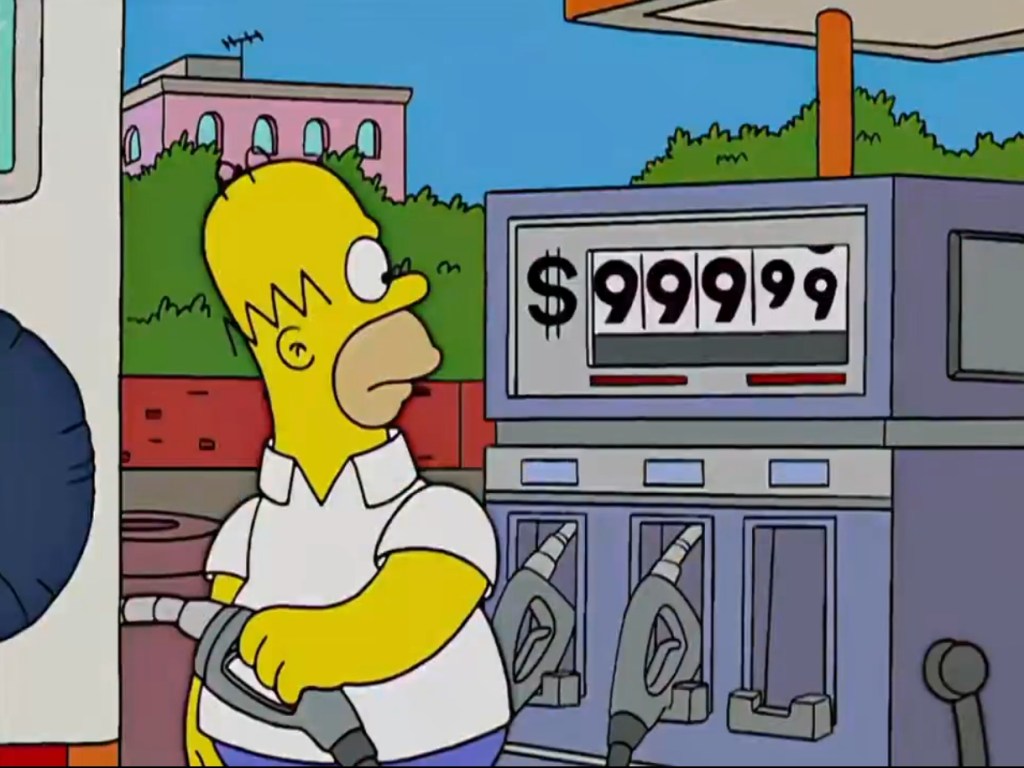
The gas station that ran out of fuel for the first time in thirty years is a vivid illustration of the immediacy of the crisis and the fragility of the supply chains on which modern life depends. Once people see that gas stations are turning away cars because they have no fuel, their next reaction is to panic and drive to the next station, and once that starts to happen, shortages and long lines at gas stations become self-reinforcing. The oil prices that are artificially suppressed by market manipulation cannot remain disconnected from the physical reality of shortages indefinitely, and eventually there will be a reckoning. Every empire on its way down has tried to bend the laws of economics to its will, and every single one of them has failed eventually. The Western financial oligarchy is holding the population hostage on a Titanic that has hit the iceberg, and they will try to save the ship even if they have to sacrifice every last passenger on it. The solution is not to rearrange the deck chairs but to build a new ship, and that requires the working class to organise, to resist, and to create the institutions of a post-capitalist future.
Authored By: Global GeoPolitics
Thank you for visiting. This is a reader-supported publication. If you believe journalism should serve the public, not the powerful, and you’re in a position to help, becoming a PAID SUBSCRIBER truly makes a difference. Alternatively you can support by way of a cup of coffee:
https://buymeacoffee.com/ggtv |
https://ko-fi.com/globalgeopolitics |
Bitcoin: 3NiK8BoRZnkwJSHZSekuXKFizGPopkE7ns
References
Anadolu Agency (2026) ‘Saudi Arabia’s East-West pipeline attacked’. Available at:
(Accessed: 25 September 2026).
Federal Reserve Bank of Kansas City (2024) ‘Tier 1 leverage ratios of US G-SIBs’. Available at:
(Accessed: 25 September 2026).
IMF (2024) ‘EU bank leverage ratios’. Available at:
(Accessed: 25 September 2026).
Energy Connects (2026) ‘Qatar Has Widest Deficit in a Decade as Hormuz Ties Up Gas Trade’. Available at:
https://www.energyconnects.com
(Accessed: 25 September 2026).
Atlantic Council (2026) ‘The Saudi economy can hold out through year’s end even if oil exports drop to zero’. Available at:
(Accessed: 25 September 2026).
Nikkei Asia (2026) ‘Hidden AI Debt at Five U.S. Tech Giants Reaches $1.65 Trillion’. Available at:
(Accessed: 25 September 2026).
World Energy Council Turkey (2026) ‘Why US Light Oil Cannot Replace Middle East Crude’. Available at:
(Accessed: 25 September 2026).
Trafigura (2021) ‘Perpetual Securities Offering Circular’. Available at:
(Accessed: 25 September 2026).
Reuters (2026) ‘Oil soars after attack on massive Saudi oil facilities’. Available at:
(Accessed: 25 September 2026).
European Central Bank (2026) ‘Leverage ratio band by reference period’. Available at:
https://www.bankingsupervision.europa.eu
(Accessed: 25 September 2026).
Bloomberg (2026) ‘Qatar LNG exports plummet’. Available at:
(Accessed: 25 September 2026).
International Energy Agency (2026) ‘Saudi oil supply hits more than three-decade low’. Available at:
(Accessed: 25 September 2026).
Global Times (2026) ‘Hidden debt of US tech giants reaches $1.65 trillion’. Available at:
(Accessed: 25 September 2026).
Nikkei Asia (2026) ‘AI debt risks’. Available at:
(Accessed: 25 September 2026).
Bank of England (2024) ‘Repo market operations’. Available at:
https://www.bankofengland.co.uk
(Accessed: 25 September 2026).
Financial Times (2024) ‘Ukraine bonds trading at 60 cents’. Available at:
(Accessed: 25 September 2026).
Bloomberg (2026) ‘Inflation and money printing’. Available at:
(Accessed: 25 September 2026).
Reuters (2026) ‘Hyperinflation historical precedents’. Available at:
(Accessed: 25 September 2026).


Leave a comment