
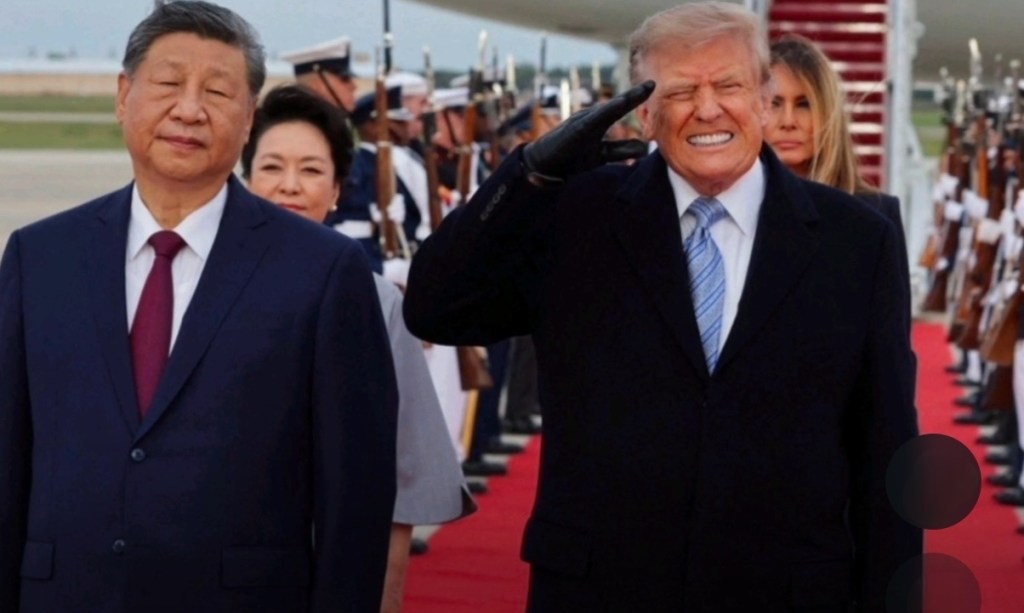
The ritualistic declarations of continued primacy reveal a deeper structural crisis that no amount of reassurance can conceal
Editorial Analysis | September 2026
The most revealing aspect of contemporary American discourse about China is not the substance of the claims but the frequency and ritualistic character of their repetition. For decades, the United States was simply assumed to be ahead, and it did not need to announce it constantly [2]. The assumption was embedded in the structure of the international system, in the dominance of the dollar, in the reach of American military power, and in the universal aspiration of the world’s brightest minds to study and work in American institutions. The current pattern, in which every Chinese technological advance is met with an immediate and public explanation of why the American lead remains intact, represents a departure from that earlier confidence. The explanations themselves vary in content but are uniform in function: they are reassurances, directed as much at the American public and at American allies as at China itself, that the hierarchy of global power remains unchanged [1][2].
(Trump’s reaction at his own air show, as he looked visibly scared. This will be the defining moment for this meeting.)
The domain of artificial intelligence provides the clearest illustration of this pattern. American officials and technology executives have responded to the rise of Chinese models such as DeepSeek and Moonshot AI’s Kimi K3 with a combination of public assurances about American leadership and private anxiety about the narrowing gap [1]. The empirical record does not support the confident tone of the public assurances. Stanford University researchers found that as of March 2026, Anthropic’s top model led the pack over its nearest Chinese competitor by only 2.7 per cent [3]. Chinese open-weight models such as Kimi K3 have attracted far more user traffic than expected, performing close to frontier models while remaining freely downloadable and adaptable [3][4]. The response of American officials has been to threaten sanctions and investigations rather than to compete on the merits, with Treasury Secretary Scott Bessent claiming that Chinese models may have been “distilled” from American ones and that the United States would have the ability to impose sanctions [3]. The Chinese response was direct: such actions “cannot make the US more competitive in the field of AI” and instead “reflect the anxiety among certain US politicians over China’s rapid advances” [3][4].
The semiconductor domain reveals a similar pattern of anxiety disguised as confidence. The United States has imposed successive rounds of export controls targeting advanced AI chips and semiconductor manufacturing equipment destined for China, with the Bureau of Industry and Security expanding restrictions in October 2023 and the Trump administration prohibiting NVIDIA and AMD from exporting the H200 and MI300X to China in April 2025 [5]. The stated purpose was to prevent China from developing cutting-edge AI models by denying it access to the most advanced chips. The empirical outcome has been the opposite of the intended effect. By mid-2025, NVIDIA had successfully lobbied for partial relaxation of export rules, and by early 2026, restrictions on the H200 were loosened further [5]. But by that point, something fundamental had changed inside China’s AI industry. Chinese companies had begun shifting toward domestic architectures, with DeepSeek’s V4 models emphasising compatibility with Huawei’s CANN architecture rather than NVIDIA’s CUDA [5]. The symbolic reversal was complete: instead of Chinese firms rushing to adapt to NVIDIA, NVIDIA found itself needing to adapt to China’s evolving AI ecosystem [5]. The export controls had accelerated the emergence of competing ecosystems that were now less dependent on American technology than before the restrictions were imposed.
The rare earths domain illustrates the material vulnerabilities that underlie American anxiety. China introduced export controls on terbium, dysprosium, and samarium in April 2025, creating acute supply pressures for sectors dependent on these materials [6]. The response of the American market was immediate and revealing. Platts assessed terbium oxide CIF North America at a premium of four thousand nine hundred dollars per kilogram, while dysprosium oxide was assessed at a premium of one thousand two hundred dollars per kilogram [6]. These premiums reflect structural supply constraints outside China, where producers have limited capacity to ramp up production of heavy rare earths [6]. The sole active American rare earth mine at Mountain Pass, California, produces only light rare earths, including neodymium and praseodymium, and cannot address the shortage of heavy rare earths that are critical for defence applications, electric vehicles, and humanoid robots [6]. The anxiety expressed by American officials about rare earth supplies is therefore grounded in a material reality that no amount of confident rhetoric can change: the United States does not possess the industrial capacity to process the critical minerals on which its military and technology sectors depend.
The shipbuilding domain offers the starkest quantitative evidence of the shifting balance of industrial power. In 2025, China once again dominated the world’s commercial shipbuilding orders, with more than sixty per cent of all orders going to Chinese yards, compared with sixteen per cent to South Korea and nine per cent to Japan [7]. China’s share of the global shipbuilding market has risen from approximately five per cent in 2000 to over fifty per cent in 2023, while the American share has shrunk to less than one per cent [7]. The Stimson Center, in testimony to a congressional hearing, acknowledged that China has completed the leap from “catcher-up” to global “leader,” with strengths that lie not merely in sheer scale but in command over the full industrial chain from raw materials to system integration [8]. The American response has been to reframe China’s commercial success as a “dual threat” to economic and national security, and to call for closer coordination with Japan and South Korea to counter China’s industrial advantages [8]. But the testimony also candidly identified high labour attrition, fragile supply chains, and insufficient market demand as core bottlenecks constraining any revival of American commercial shipbuilding, and it acknowledged that even if its proposals were implemented, they would require years to materially alter the competitive landscape [8].
The robotics domain represents the frontier of Chinese industrial expansion and the next source of American anxiety. China accounted for fifty-four per cent of all industrial robot installations worldwide in 2024, installing roughly two hundred and ninety-five thousand units and operating more than two million robots across its factories [7]. Chinese manufacturers have steadily displaced foreign rivals in their home market, accounting for fifty-seven per cent of China’s industrial robot sales in 2024, up from around twenty-eight per cent a decade earlier [7]. In humanoid robots, the trajectory is even more pronounced: China accounted for approximately eighty-five per cent of global humanoid robot deployments in 2025, with Chinese firms AgiBot, Unitree, and UBTech dominating production rankings, while American rivals such as Tesla and Figure AI shipped only a few hundred units or fewer [7]. The United States has responded by banning imports of new Chinese humanoid robots, citing national security and supply chain concerns, a move that Beijing accused Washington of abusing the concept of national security to justify protectionism [7]. The pattern is familiar: a Chinese advance in a strategic industry is met with a restrictive measure framed as security policy, while the underlying loss of competitiveness is acknowledged only in the fine print of official testimony.
The anxiety of American allies is a revealing dimension of the broader pattern. Ahead of the Trump-Xi summit in September 2026, America’s Asian allies expressed concerns that Washington might soften its support for Taiwan in return for economic concessions from China or Beijing’s assistance in ending the war with Iran [9]. Japan and the Philippines, in particular, feared that Trump could trade away their security interests as part of a grand bargain with Xi [9]. The Trump administration had postponed a planned fourteen billion dollar arms package for Taiwan following a previous summit with Xi in May 2026 and described arms sales as a negotiating tool in Washington’s relationship with Beijing [9]. The anxiety of American allies is not merely a response to Trump’s transactional style; it reflects a deeper recognition that the United States may no longer possess the material capacity or the political will to sustain the security architecture it constructed in the Indo-Pacific. The Gallup poll showing that global approval of American leadership stood at thirty-one per cent in 2025, compared with thirty-six per cent for China, underscores the extent to which the perception of American reliability has eroded [10].
The nuclear domain reveals the contradictions at the heart of American anxiety. The United States has repeatedly accused China of insufficient transparency regarding its nuclear testing activities and has attempted to draw China into “trilateral nuclear disarmament talks” with the United States and Russia, despite the vastly disproportionate sizes of the respective arsenals [11]. The United States spends fifty-six billion eight hundred million dollars annually on nuclear weapons, exceeding the combined expenditures of all other nuclear-armed states, and the Pentagon’s 2026 National Defense Strategy explicitly lists nuclear force modernisation as a core task [11]. The United States unilaterally withdrew from the Intermediate-Range Nuclear Forces Treaty in 2019, paving the way for the deployment of intermediate-range missile systems in the Asia-Pacific and Europe, and established AUKUS to provide Australia with nuclear submarine technology [11]. The anxiety that American officials express about China’s nuclear capabilities is therefore not a concern for global nuclear stability but a fear that the development of China’s nuclear forces will challenge American nuclear hegemony [11]. The double standard is transparent: the United States possesses the world’s most advanced and largest nuclear arsenal, yet makes groundless accusations against China’s normal defence buildup while repeatedly hyping the so-called China nuclear threat [11].
The discourse of decline and cognitive dissonance among Chinese observers provides an important perspective on American anxiety. Chinese analysts have noted that Western policymakers suffer from a cognitive dissonance in which they interpret China’s strategic restraint as weakness while simultaneously recognising that they face a system that cannot be destroyed by conventional military deterrence or unilateral sanctions [12]. The world has been conditioned by centuries of Western-defined “great power behaviour,” in which the rise of a power is accompanied by colonial expansion, military intimidation, and hegemonic struggle. When China chooses a different path, the West enters a profound experiential blind spot [12]. The Chinese public, for decades accustomed to viewing the United States as the unreachable centre of technology, capital, and institutional power, now experiences its own cognitive dissonance when it sees American politicians, media outlets, and AI companies constantly debating whether China has caught up or how America must maintain its lead [12]. The question that Chinese observers ask is revealing: “Wait a minute, since when did you become the nervous one?” [12]
The materialist and class analysis of American anxiety must begin by identifying the specific class interests that benefit from the narrative of continued primacy. The defence contractors, technology firms, and financial institutions that dominate the American economy have a material stake in the perpetuation of the narrative, because it justifies the massive expenditures on military modernisation, the export controls that protect domestic industries from competition, and the geopolitical alliances that sustain dollar hegemony [1][2]. The professional-managerial class that staffs the think tanks, intelligence agencies, and policy positions generates the intellectual justifications for these policies, earning salaries and institutional prestige in exchange for their analytical labour [1][2]. The political class that authorises the expenditures and provides the diplomatic cover receives campaign contributions, post-government employment, and the social capital that accompanies proximity to power [1][2]. The working class that bears the costs through taxation, military service, and the erosion of public services receives no corresponding benefit, and it is presented with a narrative of external threat to justify the diversion of resources away from domestic needs [1][2]. The anxiety of the American elite is therefore not merely a psychological condition but a material response to the erosion of the conditions that sustain their class power.
The contradiction at the heart of American anxiety is that the narrative of continued primacy is becoming increasingly difficult to sustain in the face of empirical evidence that the material foundations of that primacy are eroding. China’s share of global manufacturing, its dominance in critical minerals processing, its lead in shipbuilding and robotics, and its rapid advances in AI and semiconductors are not projections or aspirations but observable facts that are documented by American research institutions and acknowledged in official testimony [7][8]. The response of the American elite has been to intensify the narrative, to impose restrictive measures framed as security policy, and to demand that allies align with Washington’s position, all of which are symptoms of weakness rather than expressions of strength [1][2]. A hegemon that was genuinely secure in its position would not need to announce its lead on a daily basis or to impose restrictions on the export of critical technologies to prevent a rival from catching up. The anxiety that American officials express, and that Chinese observers perceive with a mixture of bemusement and concern, is the anxiety of a power that recognises, at some level, that the game is changing and that no amount of narrative can reverse the underlying material trends [12].
The implications for the future trajectory of the international system are significant and uncertain. The United States could continue on its current path, intensifying export controls, expanding military expenditures, and demanding that allies choose sides, while the material balance of power continues to shift in China’s favour [5][8]. It could attempt a strategic accommodation, accepting a multipolar world in which it negotiates with China rather than dictating to it, though the domestic political obstacles to such a course are formidable [9]. Or it could escalate to military confrontation, accepting the risks of a conflict that its own defence analysts acknowledge it might not win [11]. The indicators that would confirm or undermine each scenario are observable: the pace of Chinese advances in AI and semiconductors, the effectiveness of American export controls in slowing that advance, the willingness of American allies to align with Washington’s position, and the trajectory of American domestic politics as the costs of confrontation become more apparent [1][9]. What is clear from the evidence assembled here is that the anxiety of the American elite is not irrational but symptomatic of a structural crisis that no amount of confident rhetoric can conceal, and that the ritualistic declarations of continued primacy are themselves the clearest evidence that the primacy they proclaim is no longer self-evident [2][12].
Authored By: Global GeoPolitics
Thank you for visiting. This is a reader-supported publication. If you believe journalism should serve the public, not the powerful, and you’re in a position to help, becoming a PAID SUBSCRIBER truly makes a difference. Alternatively you can support by way of a cup of coffee:
https://buymeacoffee.com/ggtv |
https://ko-fi.com/globalgeopolitics |
Bitcoin: 3NiK8BoRZnkwJSHZSekuXKFizGPopkE7ns
References
Anadolu Agency (2026) ‘US envoy highlights AI rivalry with China, warns against domestic innovation caps’, Anadolu Agency, 20 September. Available at: https://www.aa.com.tr/en/americas/us-envoy-highlights-ai-rivalry-with-china-warns-against-domestic-innovation-caps/4062699 (Accessed: 24 September 2026).
BBC News (2026) ‘Trump and Xi meet as AI rivalry reshapes global power dynamics’, BBC News, 23 September. Available at: https://www.bbc.com/news/articles/c6gqdgg8w59xo (Accessed: 24 September 2026).
Global Times (2026) ‘US’ allegations against Chinese AI models reflect anxiety over China’s AI rise’, Global Times, 22 July. Available at: https://www.globaltimes.cn/page/202607/1322848.shtml (Accessed: 24 September 2026).
CGTN (2026) ‘The need for managing China-US competition in the AI era’, CGTN, 14 May. Available at: https://news.cgtn.com/news/2026-05-14/The-need-for-managing-China-US-competition-in-the-AI-era-1N8u06Tyj1m/share_amp.html (Accessed: 24 September 2026).
Sohu (2026) ‘深度解析:美国芯片管制为何加速中国AI自主生态崛起’, Sohu, 10 August. Available at:
(Accessed: 24 September 2026).
S&P Global (2026) ‘New Platts rare earth assessments reveal security-of-supply premiums in North America’, S&P Global, 31 March. Available at: https://www.spglobal.com/energy/en/news-research/latest-news/metals/033126-new-platts-rare-earth-assessments-reveal-security-of-supply-premiums-in-north-america (Accessed: 24 September 2026).
Economic Times (2026) ‘The next China shock could be bigger than solar, batteries and EVs’, Economic Times, 30 July. Available at: https://economictimes.indiatimes.com/news/international/global-trends/the-next-china-shock-could-be-bigger-than-solar-batteries-and-evs/articleshow/132744823.cms (Accessed: 24 September 2026).
China Daily (2026) ‘Securitizing shipbuilding: How US protectionism wears a security disguise’, China Daily, 30 July. Available at: https://europe.chinadaily.com.cn/a/202607/30/WS6a6ac861a310986e2b468236.html (Accessed: 24 September 2026).
CNBC (2026) ‘America’s Asian allies want a Trump-Xi truce , but not at their expense’, CNBC, 24 September. Available at: https://www.cnbc.com/2026/09/24/uss-asian-allies-want-a-trump-xi-truce-but-not-at-their-expense.html (Accessed: 24 September 2026).
Gallup (2025) ‘Global Approval of U.S. Leadership Remains Low’, Gallup, 15 April. Available at: https://news.gallup.com/poll/658340/global-approval-leadership-remains-low.aspx (Accessed: 24 September 2026).
China Military Online (2026) ‘Hegemony anxiety: Why the US so “allergic” to China’s nuclear ability?’, China Military Online, 14 August. Available at: http://eng.chinamil.com.cn/2025xb/O_251451/16479889.html (Accessed: 24 September 2026).
HK01 (2026) ‘天壇之問|西方為何長期誤讀中國的國家意志?’, HK01, 11 August. Available at:
國際分析/60378628/天壇之問-西方為何長期誤讀中國的國家意志 (Accessed: 24 September 2026).


Leave a comment