
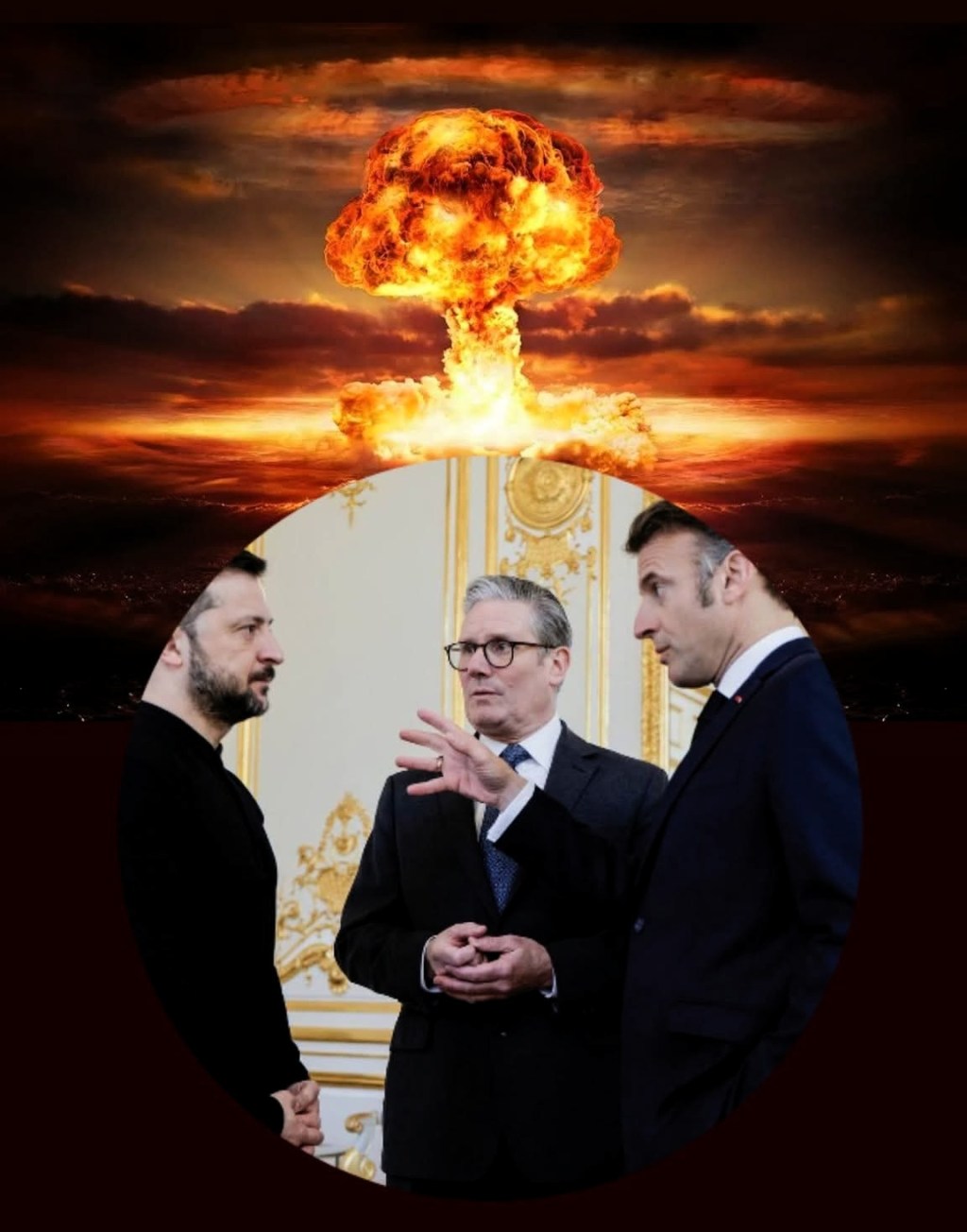
Russian claims of covert nuclear transfers to Ukraine and Black Sea pipeline sabotage point to escalation risks beyond conventional war, with consequences for non-proliferation and EU energy security
Recent statements from Vladimir Putin and Russia’s Foreign Intelligence Service have introduced allegations that certain NATO members are considering the covert transfer of nuclear weapons components to Ukraine, alongside claims of planned sabotage against Black Sea energy infrastructure. These assertions carry strategic weight because they combine nuclear proliferation concerns with the vulnerability of critical gas pipelines linking Russia and Turkey to European markets. Russian officials frame the allegations as evidence of escalation by Western capitals at a moment when the military balance in Europe is under renewed scrutiny.
According to the SVR, officials in United Kingdom and France have explored the covert provision of European-made nuclear components, equipment, and technical expertise to Ukraine. The same statement alleges consideration of transferring a French TN-75 warhead, ordinarily deployed on submarine-launched ballistic missiles, or facilitating the assembly of a radiological dispersal device. Russian intelligence further claims that an accompanying information campaign would present any emergent capability as an indigenous Ukrainian development rather than an external supply. Such an approach, if accurate, would seek to preserve formal adherence to non-proliferation commitments while altering the strategic equation on the ground.
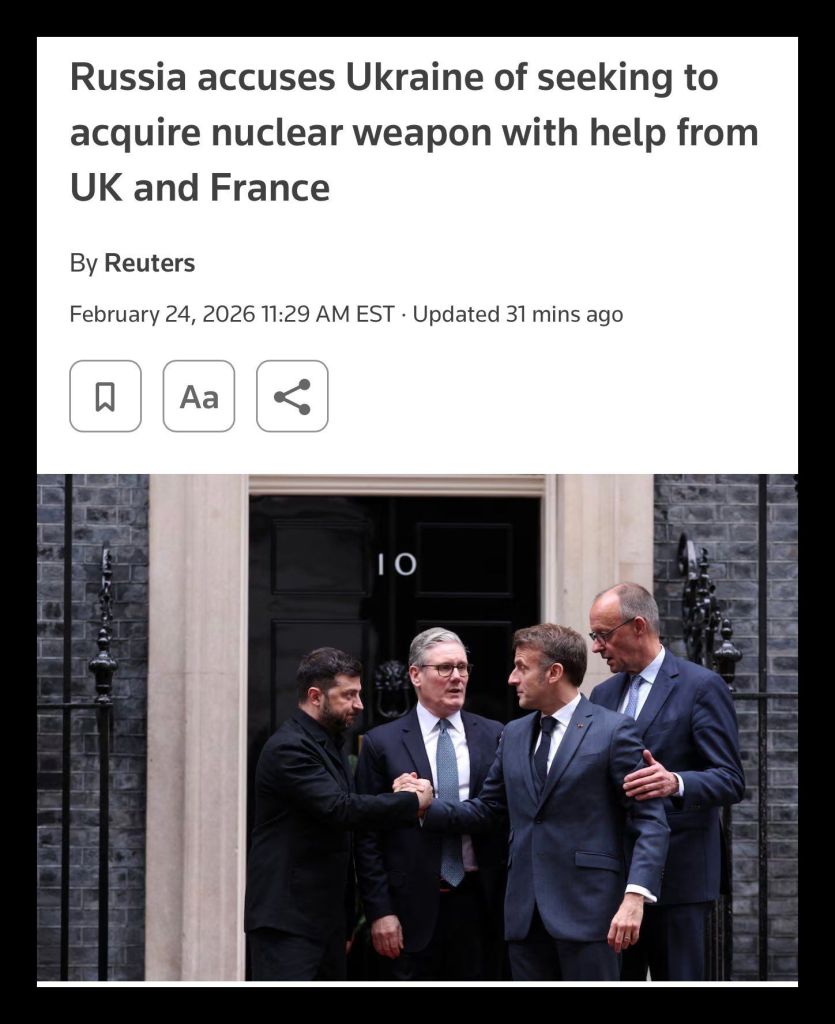
Kremlin spokesman Dmitry Peskov characterised the alleged plans as potentially dangerous, arguing that they would undermine the global non-proliferation regime constructed around the Treaty on the Non-Proliferation of Nuclear Weapons. Dmitry Medvedev stated that any direct transfer of nuclear weapons to a state engaged in active hostilities would constitute entry into a nuclear conflict with Russia, and that Moscow would reserve the right to respond with non-strategic nuclear means against both operational targets and supplier states. First Deputy Chairman Aleksey Zhuravlev echoed this line, asserting that supplier countries would automatically become parties to the conflict under such circumstances.
The allegations arise against the background of Ukraine’s post-Soviet nuclear history. The 1994 Budapest Memorandums provided security assurances to Ukraine in exchange for transferring Soviet-era nuclear warheads to Russia, although operational control of those weapons had never rested with Kiev. Ukrainian officials have argued that those assurances failed to prevent subsequent territorial losses, and President Volodymyr Zelensky raised the prospect of reconsidering non-nuclear status shortly before the 2022 escalation. Moscow maintains that Ukraine’s declared ambition to join NATO breached the neutrality framework underpinning its independence, thereby altering the political basis of the earlier settlement.
Beyond the nuclear dimension, Putin has alleged Ukrainian planning for sabotage operations against the TurkStream and Blue Stream pipelines running beneath the Black Sea. Both routes form part of the residual gas export architecture connecting Russia to Turkey and parts of southern Europe after the disruption of Nord Stream. Damage to these pipelines would tighten European energy markets and complicate diplomatic initiatives involving Ankara and Moscow. Russian officials interpret such prospective actions as attempts to foreclose negotiated outcomes by escalating economic warfare.
Assessment of the broader military balance informs the Russian reading of Western intent. The Institute of International Strategic Studies has reported that Russian defence industrial output has expanded under wartime conditions, while European states struggle to replenish munitions stocks and meet force generation targets. Commentators such as Alexander Mercouris argue that Western media portrayals of stalemate obscure asymmetries in artillery production and manpower reserves. Russian leadership presentations to the FSB have conveyed confidence that time favours Moscow’s position.
Parallel tensions in the Middle East compound these dynamics. Recent speeches by Donald Trump concerning Iran have been criticised by analysts who dispute claims about an active Iranian nuclear weapons programme, noting past assessments by United States intelligence agencies that found no current weaponisation effort. Reports that China may be supplying advanced anti-ship missiles to Iran, if confirmed, would affect calculations regarding United States naval posture in the Gulf. Think tank evaluations have suggested that existing American deployments might be insufficient for decisive regime-change objectives without substantial reinforcement. Such considerations shape Moscow’s perception that Western powers face constraints across multiple theatres.
Within Europe, political controversy has intersected with foreign policy debates. Prime Minister Keir Starmer has faced scrutiny over the appointment of Peter Mandelson as ambassador to Washington amid legal investigations touching figures including Prince Andrew. Allegations of misconduct in public office and disputes over disclosure to Parliament have generated claims of constitutional strain. Although domestic in character, such episodes affect perceptions of cohesion and credibility among NATO members during a period of heightened confrontation with Russia.
Chairman Vyacheslav Volodin has indicated that the Russian State Duma will consider a formal appeal to British and French lawmakers to investigate the SVR claims. Germany, according to Russian intelligence statements, has declined participation in any nuclear-related transfer. Public positioning by Berlin reflects sensitivity to escalation risks and to the integrity of non-proliferation norms that underpin European security architecture.
The convergence of nuclear allegations, infrastructure vulnerability, and shifting military balances marks a dangerous phase in the conflict. Introduction of even a radiological device into the theatre would transform the character of hostilities and erode longstanding taboos. Energy sabotage in the Black Sea would extend confrontation into domains affecting third countries and commercial shipping. Escalatory rhetoric from multiple capitals increases the probability of miscalculation, particularly where intelligence claims and counterclaims remain opaque.
Authored By: Global GeoPolitics
Thank you for visiting. This is a reader-supported publication. I cannot do this without your support. If you believe journalism should serve the public, not the powerful, and you’re in a position to help, becoming a PAID SUBSCRIBER truly makes a difference. Alternatively you can support by way of a cup of coffee:
https://buymeacoffee.com/ggtv |


Leave a comment