
Washington’s pursuit of rapid decapitation confronts Tehran’s doctrine of attritional survival
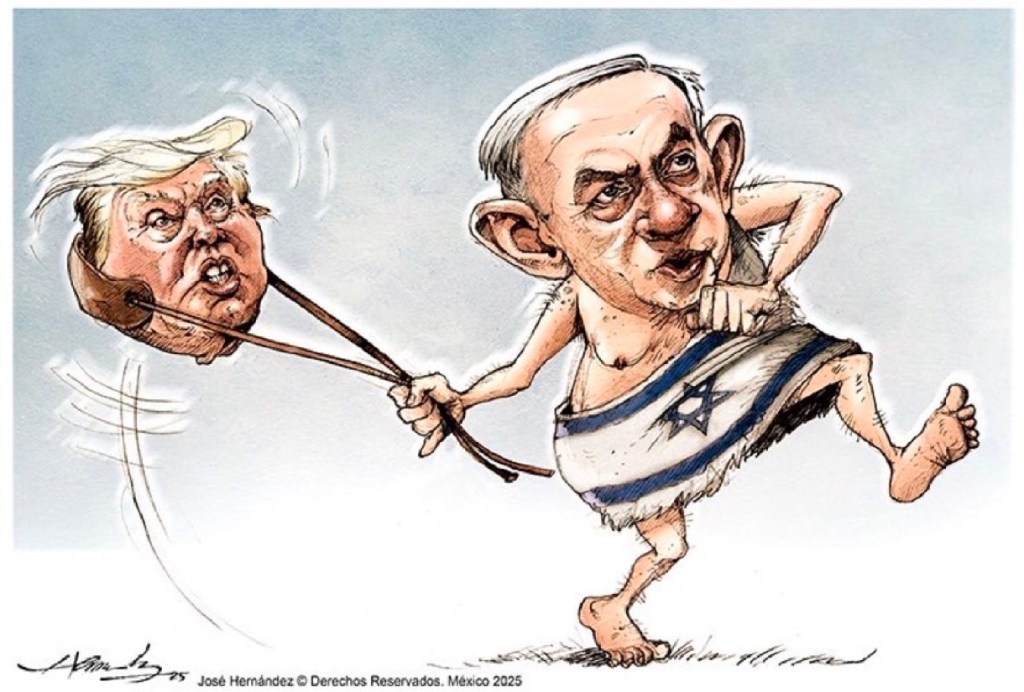
March 1, 2026 marked the second day of renewed United States military operations against the Islamic Republic of Iran, described by observers as either a new war of aggression or the continuation of hostilities initiated during the previous year. Early operational reporting indicated that Washington pursued a rapid decapitation strategy directed at Iran’s senior military and political leadership, combined with precision air and missile strikes against strategic infrastructure. International news agencies circulated claims that Iran’s Supreme Leader, Ayatollah Ali Khamenei, may have been killed during the opening wave, though confirmation remained disputed during the initial forty-eight hours.
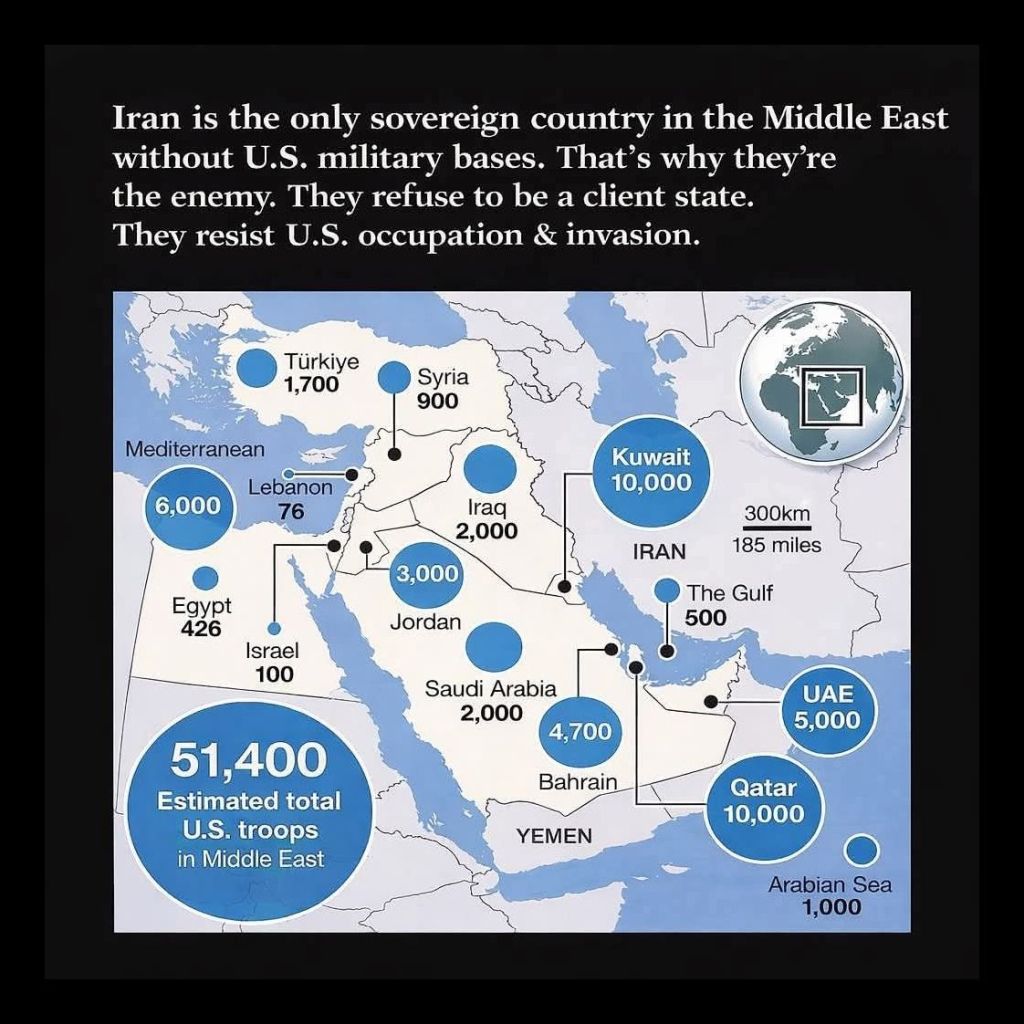
The operational design reflected a preference in Washington for concentrated bursts of force intended to achieve strategic shock before adversaries could consolidate defensive adaptation. United States political leaders have repeatedly declared an end to prolonged ground occupations, yet the emerging doctrine appears to substitute episodic high-intensity campaigns followed by operational pauses for replenishment and recalibration. Analysts at the Rand Corporation have documented this transition toward stand-off warfare, emphasising airpower, missile reach, and leadership targeting as instruments of rapid coercion. Such doctrine rests upon assumptions of technological superiority, command of escalation, and the psychological effects of sudden systemic disruption.
Strategic decapitation carries intellectual lineage within Western military theory, particularly within concepts of “centres of gravity” articulated by Carl von Clausewitz in On War. Clausewitz argued that conflict demands identification of the adversary’s focal point of strength, whether army, capital, or alliance structure, and the application of force against that nucleus. Modern decapitation strategies interpret political leadership as a contemporary centre of gravity, presuming that removal of command authority generates paralysis within subordinate structures. Scholars at King’s College London have cautioned that such assumptions neglect institutional redundancy and ideological cohesion within revolutionary or security-centric regimes.
Historical precedent tempers expectations of decisive paralysis. During the 2003 invasion of Iraq, coalition forces conducted targeted strikes against suspected leadership compounds in Baghdad, yet command continuity persisted beyond the initial “shock and awe” phase. Earlier operations under Operation Desert Storm demonstrated that extended bombardment can degrade infrastructure without automatically dismantling governing authority. Declassified assessments examined by scholars at the University of Chicago concluded that regime collapse requires convergence of military defeat, elite fragmentation, and loss of coercive capacity, rather than leadership removal alone.
Comparable patterns emerged during NATO intervention in Libya and subsequent operations in Syria, where air campaigns fractured territorial control yet produced protracted instability instead of immediate political settlement. Professor Stephen Walt of Harvard University has argued that external regime-change efforts often underestimate nationalist mobilisation and overestimate the transformative power of aerial dominance. Empirical research across cases of foreign intervention indicates that leadership targeting seldom substitutes for political settlement or internal elite realignment.
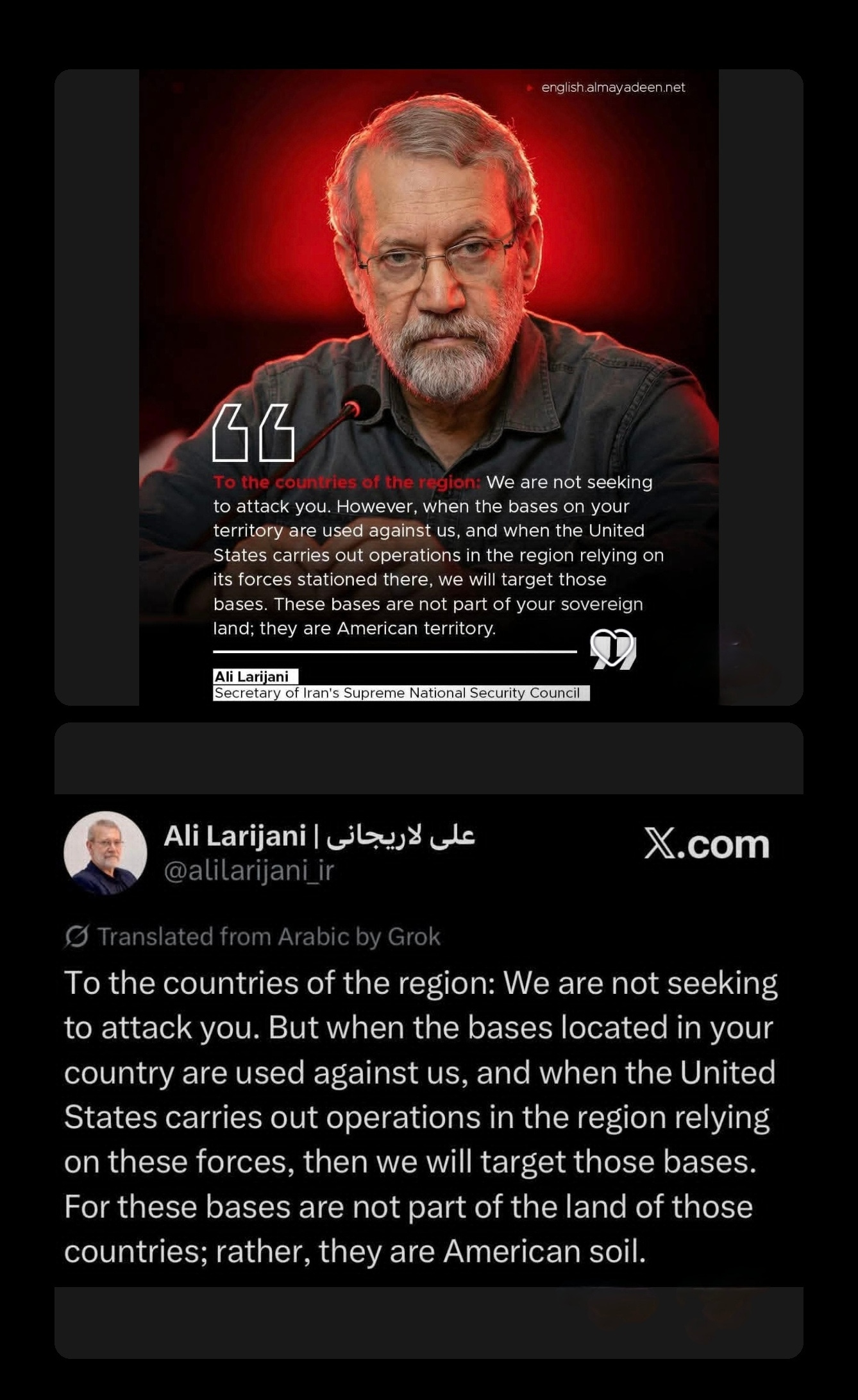
Iran’s military posture reflects adaptation to precisely such patterns of coercion. Analysts at the International Institute for Strategic Studies have detailed Iran’s diversified inventory of ballistic missiles, cruise systems, and long-range drones designed for distributed retaliation. Reports during the second day of hostilities described coordinated Iranian missile launches and unmanned aerial deployments, indicating command continuity despite leadership targeting claims. Strategic doctrine within Tehran emphasises survivability, hardened facilities, and decentralised networks, a posture examined in depth by researchers at the Center for Strategic and International Studies.
Sun Tzu’s Art of War instructs that endurance and deception may compensate for inferior conventional power, observing that protracted conflict favours the side capable of sustaining resources and morale. Iranian strategic culture, shaped by decades of sanctions and asymmetric confrontation, appears oriented toward absorption of shock followed by calibrated retaliation. Political economy studies of sanctioned states suggest that prolonged exposure to external pressure can generate parallel financial systems and internal cohesion rather than immediate capitulation.
Economic sustainability therefore assumes central importance in evaluating prospects of rapid victory. Data compiled by the Stockholm International Peace Research Institute demonstrate that precision munitions stockpiles diminish rapidly during high-tempo air campaigns, requiring sustained industrial replenishment. Iranian reliance upon comparatively lower-cost missile and drone systems alters cost-exchange ratios when hostilities extend beyond initial strike windows. Economists at the London School of Economics have argued that asymmetric cost imposition can erode technologically superior forces if political tolerance for expenditure declines over time.
United States planning appears oriented toward swift strategic decision, premised upon the belief that concentrated force can fracture command authority and trigger internal instability. Iranian planning appears structured around endurance, institutional redundancy, and gradual attrition of adversary political resolve. Comparative conflict research indicates that wars conclude when one side perceives objectives unattainable at acceptable cost rather than when destruction alone reaches a threshold.
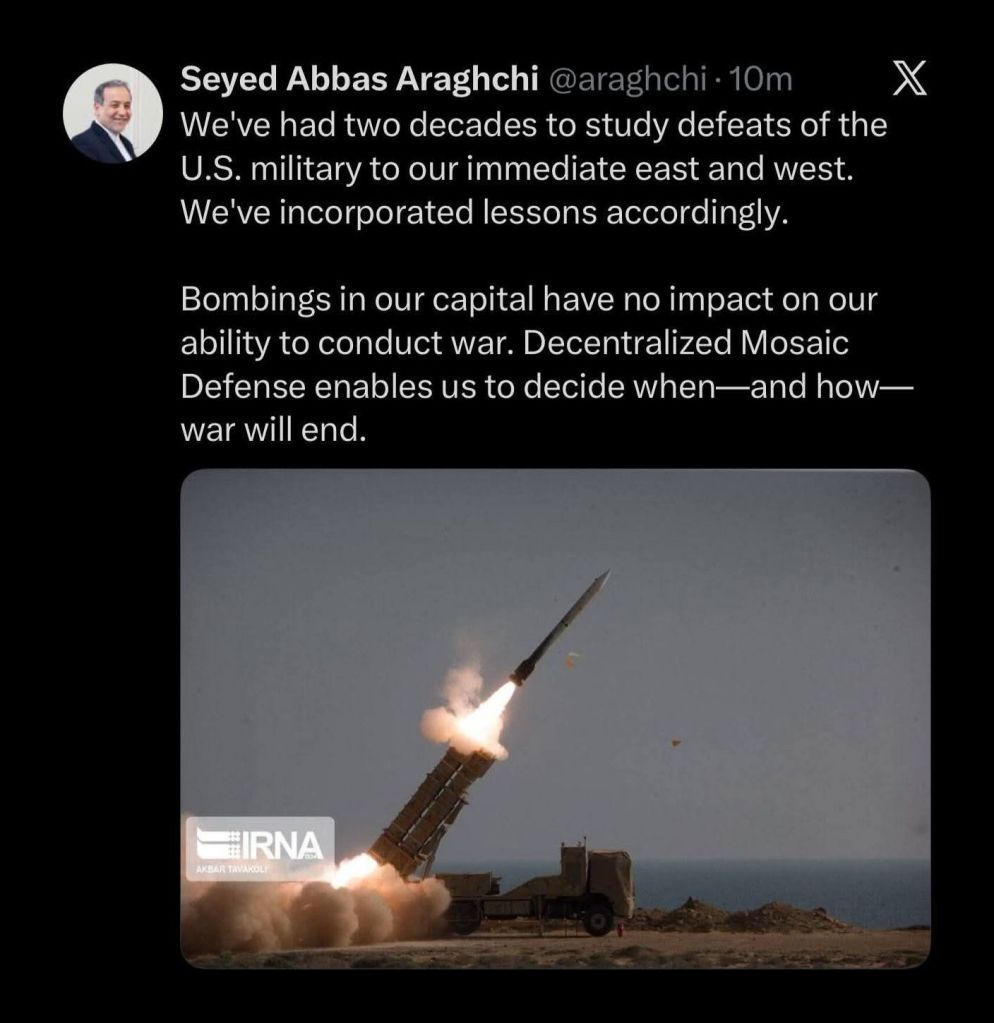
Iran’s capacity for endurance rests not only upon political will but upon a codified operational framework commonly described as mosaic defence, developed by the Islamic Revolutionary Guard Corps after observing the rapid collapse of centralised command structures during the 2003 invasion of Iraq. Under this doctrine, national territory is divided into decentralised provincial commands designed to function autonomously if central leadership nodes are neutralised, thereby reducing vulnerability to decapitation strategies. Analysts at the International Institute for Strategic Studies have noted that Iranian force restructuring emphasises dispersed missile units, hardened facilities, and layered territorial defence intended to complicate high-technology strike campaigns. Research published by the Center for Strategic and International Studies further assesses that the integration of regular forces with Basij militia formations creates a hybrid defensive grid capable of sustaining localised resistance even under degraded national command conditions. Such decentralisation aligns with Clausewitz’s warning that destruction of a capital or leader does not equate to destruction of organised resistance if the “spirit of the people” and subordinate structures remain intact. Mosaic doctrine therefore institutionalises strategic patience by embedding redundancy and autonomy into Iran’s command architecture, directly countering United States assumptions that leadership targeting alone can generate systemic paralysis.
International law considerations complicate leadership targeting strategies. Legal scholars have debated whether decapitation strikes during declared hostilities constitute lawful targeting of combatant leaders or unlawful assassination, depending upon proportionality, necessity, and clarity of armed conflict status. Ambiguity surrounding high-profile casualty claims increases the risk of escalation, miscalculation, and retaliatory overreach.
Temporal asymmetry therefore defines the confrontation. Washington seeks compressed timelines, decisive operational shocks, and demonstrable strategic gains within politically sustainable horizons. Tehran appears prepared for extended confrontation calibrated through missile deterrence and regional signalling. Clausewitz warned that war possesses its own grammar but not its own logic, meaning that political purpose ultimately governs military action.
Early exchanges reveal neither systemic collapse within Iranian command structures nor decisive termination of retaliatory capacity. Strategic outcomes will depend upon industrial sustainability, alliance cohesion, economic endurance, and domestic political thresholds within both states. History demonstrates that aerial superiority can overthrow regimes under certain convergent conditions, yet history also demonstrates that resilient systems absorb extraordinary punishment without surrendering political authority.
As Clausewitz concluded in On War, “the political object is the goal, war is the means of reaching it, and means can never be considered in isolation from their purpose,” a reminder that military action divorced from achievable political settlement rarely secures durable strategic victory.
Authored By: Global GeoPolitics
Thank you for visiting. This is a reader-supported publication. I cannot do this without your support. If you believe journalism should serve the public, not the powerful, and you’re in a position to help, becoming a PAID SUBSCRIBER truly makes a difference. Alternatively you can support by way of a cup of coffee:
https://buymeacoffee.com/ggtv |


Leave a comment