
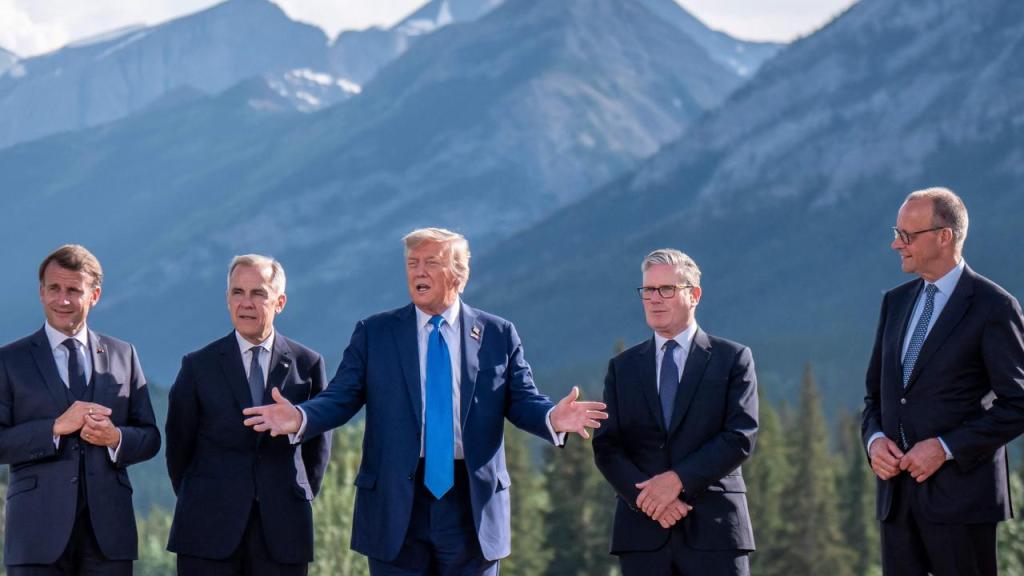
European and allied leaders join Washington’s Hormuz coalition while public opposition and legal questions remain unaddressed
Recent decisions by Keir Starmer, Emmanuel Macron, Friedrich Merz, Giorgia Meloni, Rob Jetten, Sanae Takaichi, and Mark Carney mark a coordinated shift in policy towards direct support for United States operations in the Strait of Hormuz. Public statements issued within hours of one another confirm alignment with the request made by Donald Trump for multinational involvement in securing maritime routes following Iranian closure of the strait. Earlier refusals by several of these governments indicate that the change did not arise from new material conditions on the ground but from political pressure applied through direct communication channels between Washington and allied capitals.
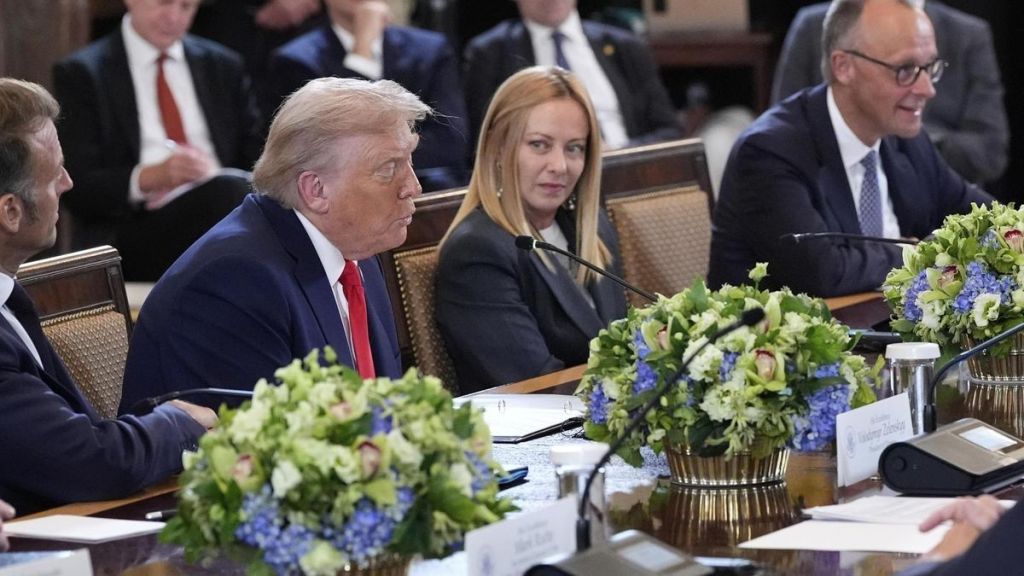
Available reporting describes a sequence of high-level calls over a short period, including direct engagement between Trump and Starmer, followed by rapid policy reversal among European and allied governments. Official justification centres on maintaining freedom of navigation, though prior reluctance to commit resources suggests that strategic interest alone did not initially compel action. Language used in the joint statement places responsibility on Iran for escalation, while omitting direct criticism of the preceding military strikes conducted by the United States and Israel under Benjamin Netanyahu.
Casualty figures from those strikes exceed three thousand Iranian deaths, including a significant number of civilians and children, according to available reports. Context surrounding those events includes ongoing negotiations in which Iran had reportedly been engaging with United States demands. Closure of the Strait of Hormuz followed these attacks, forming the immediate basis for current Western intervention plans. Western governments have framed Iranian actions as threats to global commerce, while declining to address the legality of the initial military campaign that precipitated the closure.
Western government statements shift responsibility away from the initiating actors and place it onto the state subjected to attack. Military action by the United States and Israel under Donald Trump and Benjamin Netanyahu occurred during an active negotiation phase in which Iran had been engaging with stated demands, establishing the sequence as one of interruption rather than response. Subsequent Iranian measures in the Strait of Hormuz followed those strikes, forming a direct reaction within an already escalated environment. Joint statements issued by Keir Starmer, Emmanuel Macron, and aligned leaders omit reference to the initiating use of force and instead frame Iranian actions as the primary threat to maritime security. Language calling for Iran to cease operations, including mining activity and missile deployments, proceeds without parallel demands directed at the parties responsible for the initial escalation. Reference to United Nations Security Council obligations is applied selectively within that framing, reinforcing a narrative that assigns fault to the responding state while excluding scrutiny of the initiating actions. Operational commitments within the proposed coalition remain undefined, with participating governments endorsing the position in principle while deferring material specifics.
Public opinion data across Europe, the United Kingdom, and the United States shows consistent opposition to further military escalation in the region. Government decisions therefore diverge from domestic political sentiment, raising questions regarding the mechanisms through which foreign policy is determined. Parliamentary oversight has not featured prominently in the rapid adoption of this position, and operational details regarding troop deployments or naval commitments remain unspecified.
Eastern states including China, Russia, Pakistan, and Somalia have taken a different stance, identifying the initial strikes as violations of international law and refraining from participation in any coalition response. Material constraints shape their positions, including existing military commitments, economic pressures, and internal political divisions. Absence of a unified global response reflects a fragmented international system where alignment follows strategic and economic dependencies rather than shared legal standards.
Military infrastructure distribution provides further context for Western alignment. A substantial number of United States military bases operate across the territories of the participating countries, embedding long-term security relationships that influence policy decisions. These arrangements extend beyond immediate defence concerns and form part of broader economic and strategic integration with United States power structures.
Arguments attributing these coordinated actions to transnational economic interests focus on the relationship between state policy and capital flows that operate across national boundaries. Governments involved maintain close ties with financial and industrial networks that benefit from stability in energy markets and continued control over key maritime routes. Securing the Strait of Hormuz aligns with these interests, given its central role in global oil transport.
Leadership behaviour in this instance follows obligations embedded within a wider system of power that operates above national governments and outside direct public control. Electoral processes remain in place, but they do not determine outcomes in matters of war, security, or strategic economic interest. Decisions of this scale align consistently with the priorities of entrenched networks linking state institutions, military structures, and transnational capital rather than with public opinion expressed through elections or surveys. Rapid policy reversal across multiple governments after direct contact from Donald Trump demonstrates that authority is exercised through established hierarchies within allied systems, not through independent national deliberation. Sovereign discretion exists in form, but in practice operates within boundaries set by those higher-level arrangements.
Focus on individual leaders provides only partial explanation for the outcome. Structural relationships between Western governments and transnational capital networks exert consistent influence regardless of changes in political leadership. Policy continuity across administrations and parties supports this view, with similar responses emerging under differing domestic political conditions.
Current developments in the Strait of Hormuz illustrate how quickly stated principles concerning international law and restraint can be set aside when strategic and economic priorities converge. Western governments have chosen active involvement despite earlier hesitation and in the face of domestic opposition. Consequences will depend on the scale of military engagement that follows and the responses from states currently remaining outside the coalition framework.
Clear assessment requires attention to underlying structures rather than surface-level political narratives. Decisions taken over recent days follow established patterns of alignment within Western alliances, shaped by long-standing military integration and economic interest. Outcomes will test the durability of those arrangements under conditions of escalating regional conflict and shifting global power balances.
Authored By: Global GeoPolitics
Thank you for visiting. If you believe journalism should serve the public, not the powerful, and you’re in a position to help, becoming a PAID SUBSCRIBER truly makes a difference. Alternatively you can support by way of a cup of coffee:
https://buymeacoffee.com/ggtv |
https://ko-fi.com/globalgeopolitics |
Bitcoin: 3NiK8BoRZnkwJSHZSekuXKFizGPopkE7ns


Leave a comment